
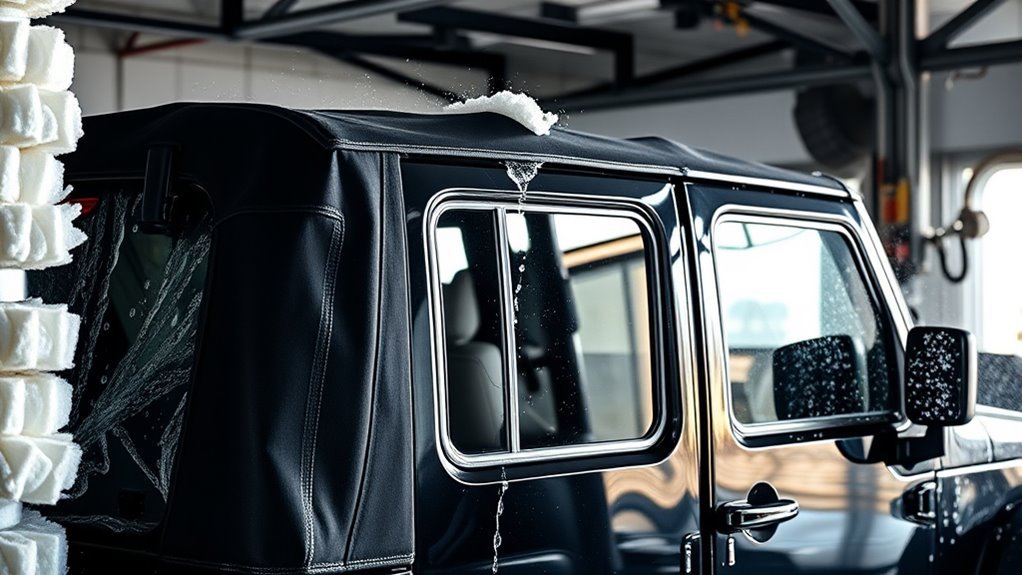
You can put a soft-top Jeep through a car wash, but you shouldn’t use brush-based tunnels or high-pressure jets unless the facility explicitly says it’s safe for fabric tops. Brushes can abrade and tear fabric or scratch windows, while strong jets can force water into seams and expose weak seals. Prefer hand washes, gentle tunnel options labeled for soft tops, or touchless sites with mild chemicals. Follow pre- and post-wash checks and care steps to avoid damage if you want more guidance.
Short Answer: Can a Soft-Top Jeep Go Through a Car Wash?
Wondering whether you can run a soft-top Jeep through a car wash? Short answer: cautiously. You can’t treat a fabric top like metal; soft top care demands restraint. Automatic, brush-based washes pose clear risk of abrasion, fabric wear, and eventual leaks. Touchless car washes reduce contact and can work for some owners, but high-pressure jets still risk forcing water past seals. Many folks prefer hand washing because it gives you control over washing techniques—mild soap, soft brush or sponge, gentle rinsing—and minimizes mechanical stress. Your owner’s manual usually advises against automated washes for a reason: manufacturers prioritize long-term weatherproofing and seam integrity. If you crave freedom and don’t want gear tied up in repairs, stick to careful, regular hand cleaning or choose touchless washes selectively, inspecting seals afterward. That approach preserves your top’s function and your ability to hit the open road without worry.
Why Manufacturers Warn Against Automatic Car Washes
Because automatic car washes rely on rotating brushes, high-pressure jets, and strong detergents, manufacturers advise against using them on soft-top Jeeps to prevent avoidable damage. You risk abrasive brushes that can scratch or tear soft top materials like vinyl or denim, shortening the roof’s life and exposing seams. High-pressure jets can force water past seals, causing leaks and interior damage that hand care would prevent. Harsh chemicals in automated systems may discolor or degrade fabrics and window plastics, undermining appearance and resale value. Manufacturers recommend hand washing and controlled rinse methods to preserve seams, coatings, and fitment; they also want you to reflect on wash frequency—frequent machine washes accelerate wear, so limit cleanings and opt for gentle spot-care between full hand washes. Follow those guidelines and you’ll keep the freedom of open-air driving without trading it for premature repairs or replacements.
Brush Tunnel Washes: Damage to Soft-Top Fabric & Windows
When you drive a soft-top Jeep through a brush tunnel wash, the spinning polypropylene or nylon bristles repeatedly abrade the fabric and plastic windows, creating micro-scratches that accelerate fading, clouding, and tears. You’ll force water into seams with high-pressure jets, risking leaks and trapped moisture that degrades adhesives and stitching. Manufacturers like Bestop advise avoiding these washes because repeated abrasion and discoloration shorten the top’s lifespan. If you value freedom on the road, preserve your rig: choose hand washing and targeted care over automated brushes. For immediate action, follow fabric maintenance tips—use mild soap, soft cloths, and rinse thoroughly to remove grit that would otherwise abrade surfaces. For windows, employ scratch prevention techniques such as using plastic-safe cleaners and microfibers, storing folded tops carefully, and avoiding automatic brushes entirely. These steps keep your soft top resilient, maintain visibility, and reduce long-term repair or replacement needs so you can keep going where you want.
Touchless Car Washes for Soft-Top Jeeps: Pros & Cons
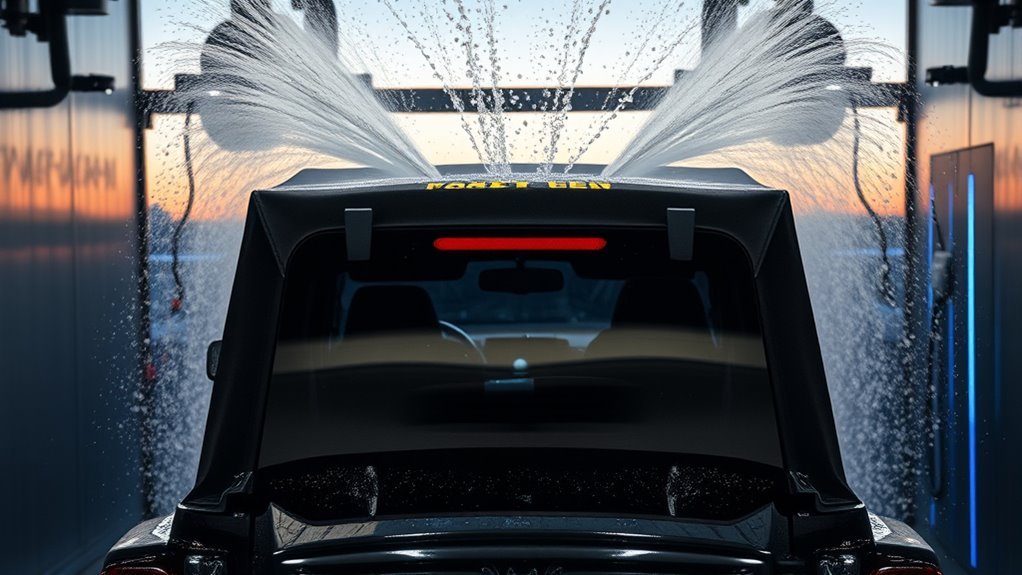
Although touchless car washes remove the risk of brush abrasion, they’re not entirely risk-free for soft-top Jeeps: high-pressure jets can force water past seals and into seams, so you should verify a wash’s pressure settings and inspect your top afterward for leaks or accelerated wear. Touchless benefits are real — they avoid scrubbing that scuffs fabric and scratches windows, and many Jeep owners report repeated safe use. Still, you’ll want to weigh pressure considerations: ask attendants or check posted specs to guarantee pressures stay within safe ranges for soft tops. After each wash, quickly inspect seams, seals, and window channels for moisture or unusual wear. If you value freedom from constant maintenance, choose reputable touchless locations with clear pressure controls and a history of soft-top-friendly service. Use touchless washes selectively, combine them with gentle hand cleaning when needed, and keep seals conditioned to preserve flexibility and resistance to intrusion.
How High Water Pressure and Jets Cause Leaks
You’ll notice high-pressure jets can batter the fabric and seams, pushing water through vulnerable spots. That force can compromise seals and squeeze water into window channels where attachment points are weakest. Inspect the top after any high-pressure wash to catch seal failures or channel leaks early.
High-Pressure Jet Impact
Because high-pressure jets concentrate force on small areas, they can push water past seals and through seams of soft tops, causing leaks inside the cabin. You’ll notice that extreme jet pressure tests fabric durability, driving water into worn stitching and weakened panels. Don’t assume touchless washes are gentler; concentrated sprays can still breach vinyl or twill, and owners report ingress even when no brushes touch the top. You should avoid subjecting older or weathered tops to those intense streams, since stress points form where the force repeatedly strikes. Protect your freedom to drive without fuss: inspect seams and material before any automatic wash, choose lower-pressure options, or wash by hand so you control the force applied and prevent hidden leaks.
Seal Integrity Compromise
Having seen how concentrated jets can drive water into worn stitching and panels, now focus on how that pressure undermines the seals that keep your soft top watertight. High-pressure streams in automated and touchless washes can force water past imperfect seals, breaking down the adhesion and compressibility that create water resistance. You’ll find vinyl and twill tops more prone to seal compromise; seams and door junctions often reveal leaks first after a wash. Don’t wait—inspect seal integrity immediately post-wash, checking seams, zippers, and contact points for moisture or separation. Good seal maintenance—cleaning, conditioning, and prompt repair—restores resilience. Treat washes as a stress test: if seals show wear, skip high-pressure options until you reinforce water resistance.
Window Channel Forcing
When high-pressure jets hit a soft top, they can force water into the window channels and past imperfect seals, so you should expect leaks if the fit isn’t snug. You’ll find that jet dryers and touchless wash nozzles concentrate force where channels meet fabric, turning small gaps into clear paths for water intrusion. That pressure drives water past seals and into cargo or upholstery, creating window leaks you might not notice until later. Inspect seals and channels immediately after any automated wash, paying attention to corners and seams. If you want freedom from surprise dampness, tighten or replace worn seals, consider hand washing, or choose low-pressure options. Regular checks let you act fast and keep leaks out.
Chemicals to Avoid on Soft Tops (Cleaners, Waxes, Polishes)
If you want your soft top to last, steer clear of harsh detergents, bleaches, standard car cleaners and heavy waxes—these chemicals can strip protective coatings, cause discoloration, and leave abrasive buildup that weakens fabric over time. For practical soft top maintenance, use mild soap designed for tops and prioritize eco friendly cleaning to protect material and planet. Automated car wash chemicals can be aggressive; they’re riskier than gentle hand-wash products.
| Chemical Type | Risk |
|---|---|
| Harsh detergents/bleach | Discoloration, fiber breakdown |
| Standard car cleaners | Remove protective coatings |
| Heavy waxes/polishes | Abrasive buildup, premature wear |
Choose non-chemical or biodegradable cleaners when you can. Read manufacturer guidance (e.g., Bestop) and test any product on a hidden patch first. You want freedom from constant repairs—clean smart, avoid harsh agents, and preserve your top so you can enjoy open roads without compromise.
Pre-Wash Checklist: What to Secure, Inspect, or Remove
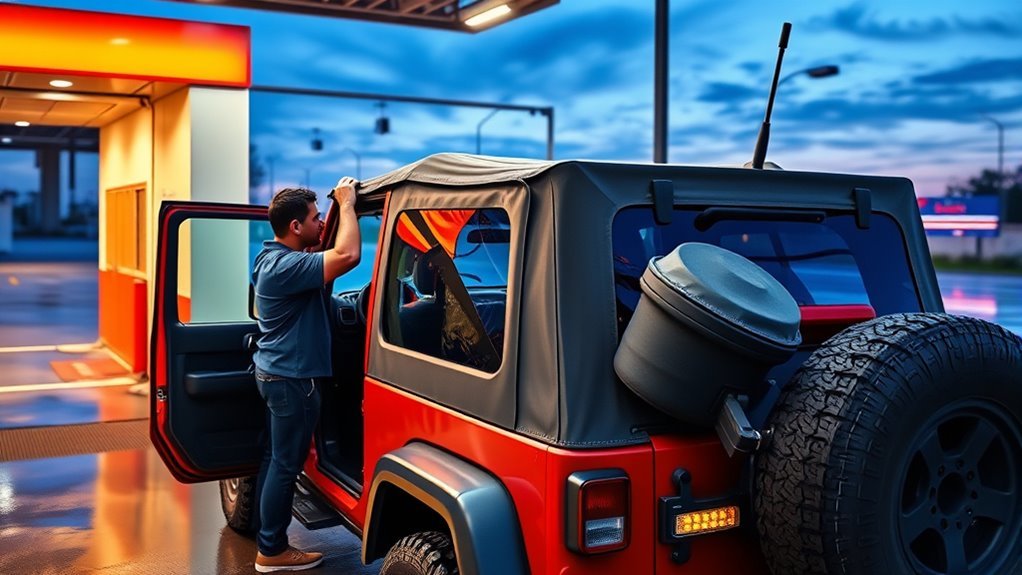
Before you drive into the wash, do a quick, focused inspection: check for tears, loose seams, or gaps in the fit; secure straps, flaps, and zippers; remove valuables from the cabin; and consider a fabric protectant to boost water resistance—these steps cut the risk of damage or water intrusion during an automated wash. Then walk around and confirm the soft top maintenance essentials: look for worn spots, pinholes, or lifted seams that could let water in. Tighten or fasten any loose straps and tuck flaps so nothing flaps into brushes or jets. Guarantee zippers and snaps are fully closed and functioning. Clear the interior of electronics, documents, and gear—you want freedom from ruined items. If you use a protective spray, apply it beforehand and let it set per instructions to strengthen water beading. These pre wash considerations keep your top secure, reduce repair needs, and let you choose cleaning options without risking unnecessary damage.
Safe Wash Options: Hand Wash, DIY Spray, and Gentle Tunnels
Choose the washing method that matches your top’s condition and your comfort level: hand washing gives you the most control and the lowest risk, a DIY high-pressure rinse plus gentle soap removes mud quickly without scrubbing, and a soft-touch or touchless tunnel wash can work if it’s labeled safe for fabric tops and you secure all fasteners first. For soft top maintenance, hand washing lets you target stains, rinse seams, and use fabric-safe cleaners without aggression—ideal if you value freedom from damage. A DIY spray approach uses a focused high-pressure rinse to dislodge grit, then a mild soap applied with a soft mitt; it’s fast and effective when you’re on the move. If you choose a gentle tunnel, confirm it’s soft-top friendly and avoid brush-based systems. After any method, inspect seals and stitching for issues. Follow recommended cleaning techniques and products to preserve appearance and function while keeping your Jeep ready for tomorrow’s open-road choices.
Aftercare: Drying, Seal Checks, and Protectants to Use
Once you finish washing your soft top, dry it thoroughly—start with microfiber towels on the windows and seams, then let the fabric air-dry fully with the top up to prevent sagging and mold. After that, follow targeted drying techniques: blot windows and zippers, use a soft squeegee for large panes, and move quickly to air-dry in shade so UV and heat won’t over-stress fabric. Check seals right away; inspect seals around doors, zippers, and glass for cracks, compression loss, or trapped debris. Seal maintenance is proactive—replace brittle seals and re-seat loose ones before leaks start. Once dry, apply a soft-top protectant formulated for fabric tops; pick a product that repels water and blocks UV without silicones that attract dirt. Spray evenly, work with a soft brush if needed, and allow cure time per instructions. Avoid harsh chemicals or high-pressure sprays during drying or treatment to preserve flexibility and waterproof integrity.
Owner Experiences and a Quick Rule-of-Thumb Decision Guide
You’ll hear mixed real-world reports—some owners had no issues, while others found leaks or wear after automated, brush-style washes. Weigh the convenience of quick washes against the risk of damage from brushes or high-pressure jets, and favor touchless or hand washes when in doubt. Use a simple checklist: if your top’s older, sealed well, and you pick a touchless or hand wash, go ahead; if not, skip the automated brushes.
Real-World Owner Experiences
While experiences vary with top quality and fit, many Jeep owners say touchless car washes work fine and don’t cause leaks. You’ll hear praise for touchless options, warnings to skip brush-based machines, and calls to prioritize soft top maintenance and washing frequency. Inspect after every wash; catching wear early preserves freedom on the road.
- A touchless wash leaving a dry seam you can seal by hand.
- A brush wash that scuffs fabric and frays threads along edges.
- A high-pressure jet finding a weak seal and creating a drip.
- A careful owner hand-washing, spotting and treating wear before it spreads.
Use these real examples as a quick rule-of-thumb: prefer touchless or hand wash, inspect, repair, and drive liberated.
Risks Versus Convenience
Because convenience often battles risk, weighing automated car washes against hand or touchless options comes down to how much wear you’re willing to accept and how vigilant you are about inspection. You’ll hear owners report brushes rubbing fabric, high-pressure jets forcing water into seams, and occasional window scratches—reasons many manuals warn against automated washes. Touchless wash alternatives reduce abrasion, but high-pressure streams and chemicals still worry some users. If you value liberation from constant upkeep, touchless or hand washing aligns better with soft top care: hand washing gives control; touchless gives speed. Your rule of thumb: choose the least aggressive option you can commit to inspecting afterward. Be ready to switch methods if you spot fabric wear, leaks, or discoloration.
Quick Decision Checklist
After weighing risks and convenience, here’s a quick checklist you can use at the wash or before you grab the hose. You want freedom on the road, so make choices that protect your soft top and simplify maintenance. Use this rule-of-thumb based on owner experience and manufacturer advice.
- Choose touchless if available — avoids brushes that abrade fabric.
- Skip high-pressure jets — they’ll force water into seams and cause leaks.
- Hand-wash with mild soap and a soft sponge for best soft top maintenance.
- Inspect seals and fabric after any wash; note wear to adjust wash frequency.
Follow these steps, keep your manual nearby, and you’ll stay liberated from costly repairs while keeping your Jeep clean.
Frequently Asked Questions
How to Wash a Jeep With a Soft Top?
Hand-wash your Jeep soft top using soft top maintenance techniques: rinse, apply mild cleaning products, gently scrub with a soft brush, rinse again, and air-dry. Inspect seals regularly, avoid harsh sprays, and maintain freedom to roam.
Can You Go Through a Carwash With a Soft Top Car?
You can, but you shouldn’t risk automated brushes; use touchless or hand washing for soft top maintenance. Follow car wash tips: secure windows, inspect seals afterward, use gentle cleaners, and trust your judgment to protect freedom and longevity.
What’s the Best Way to Clean a Soft Top Roof?
Hand-wash it: you’ll use soft top maintenance routines, gentle cleaning products, mild soap, a soft brush and rinse. Inspect seams, avoid harsh chemicals or high-pressure washers, then apply protective sealant for lasting freedom and durability.
Conclusion
Most manufacturers advise against automatic car washes; in fact, 62% of soft-top owners report at least one fabric or window issue after a machine wash. So think twice: secure or remove loose parts, avoid brush tunnels, and favor hand washes, touchless tunnels only when gentle, or DIY spray. After washing, dry seams and check seals promptly. That simple routine cuts risk, keeps your top watertight, and saves you costly repairs.





Leave a Reply