

If you’re facing battery issues, it’s important to identify symptoms like difficulty starting, dimming headlights, or voltage readings below 12 volts. To replace your battery, make certain you choose one that matches your vehicle’s specifications and follow a step-by-step guide for safe installation. Regular maintenance, including terminal care and identifying parasitic draw, can extend battery life. With the right tools, you can effectively test and maintain your battery for peak performance. Learn more about these essential steps.
Understanding Battery Issues: Symptoms and Diagnosis

When you notice difficulty starting your vehicle or experience dimming headlights, it’s vital to investigate potential battery issues. These symptoms often indicate declining battery longevity or other electrical malfunctions.
Start by measuring the battery’s voltage; a reading below 12 volts suggests trouble, while below 10.5 volts may indicate a bad cell.
Conducting electrical diagnostics is important. Regularly test your alternator’s functionality and check for parasitic draws to identify whether the battery is at fault or if other electrical issues exist.
Make sure your battery terminals are clean and secure, as corrosion or loose connections can mimic battery failure symptoms.
Utilize a multimeter to measure current draw, confirming it doesn’t exceed 50 milliamps.
How to Diagnose and Fix Common Battery Problems?
To diagnose common battery problems, start by checking the battery voltage with a multimeter; a reading below 12 volts may indicate issues.
Next, inspect the electrical connections for corrosion or looseness, as these factors can hinder performance.
Ensuring both voltage and connections are in good condition is essential for reliable battery operation.
Check Battery Voltage
Checking the battery voltage is a critical step in diagnosing common battery problems. To perform effective battery testing, follow these steps for accurate voltage measurement:
- Use a multimeter: Measure the voltage directly at the battery terminals. A healthy battery should read around 12.6 volts.
- Evaluate the reading: If it’s below 12 volts, you may have a problem. If it drops below 10.5 volts after charging, a bad cell might exist.
- Check for parasitic draw: Verify the draw doesn’t exceed 50 milliamps. Higher readings indicate issues in your electrical system.
Regular voltage checks help you maintain battery health and performance, guaranteeing your vehicle operates smoothly and efficiently.
Inspect Electrical Connections
Inspecting electrical connections is essential for diagnosing and fixing common battery problems. Start by checking the tightness and cleanliness of battery terminals; loose or corroded connections can greatly hinder electrical conductivity, leading to starting issues.
If you find terminal corrosion, use warm water and baking soda to neutralize it, then sand the terminals to expose fresh metal for a better connection. To prevent future corrosion, regularly apply silicone grease to protect against moisture.
If electrical issues persist, test for parasitic draw with a multimeter—normal current draw should stay below 50 milliamps to avoid draining your battery.
After cleaning and troubleshooting, verify all electrical components are off before testing voltage and alternator output for an accurate assessment of battery health.
Choosing the Right Battery for Replacement
Choosing the right battery for replacement is essential for maintaining your vehicle’s performance and reliability. Here are key factors to take into account:
- Battery Specifications: Always confirm that the replacement battery matches your vehicle’s specifications, including group size and cold cranking amps (CCA) as outlined in your owner’s manual.
- Performance Tiers: Evaluate the various battery tiers—silver, gold, and platinum. Assess the cost versus performance to identify what suits your driving habits and environment best.
- Type of Battery: For modern vehicles, think about AGM (Absorbent Glass Mat) batteries. They offer superior durability and cold cranking amps, ensuring better starting power, especially in cold weather.
Choosing a battery that meets or exceeds the original CCA rating is vital for reliable starting.
Always double-check the replacement size and type to avoid compatibility issues that could harm your vehicle’s electrical system.
Replacing Your Battery: A Step-by-Step Guide
Once you’ve selected the right battery for your vehicle, replacing it’s a straightforward process that can be completed with basic tools and a little care.
Start by checking the old battery’s voltage; anything below 10.5 volts indicates a bad cell. Always consult your owner’s manual to confirm specifications like group size and cold cranking amps.
Check your old battery’s voltage; below 10.5 volts signals a bad cell. Refer to your owner’s manual for specifications.
When disconnecting, remove the negative terminal first to prevent electrical shorts, then the positive. Clean the terminals with warm water and baking soda to neutralize acid buildup, ensuring good connections.
Install the new battery by connecting the positive terminal first, followed by the negative. To avoid installation mistakes that could shorten your battery lifespan, apply silicone grease to the terminals for moisture protection.
Finally, regularly inspect the connections for tightness and cleanliness to maintain peak performance.
Battery Maintenance Tips for Longevity

To extend your battery’s lifespan, regularly inspect the terminals for cleanliness and secure connections.
Implement proper charging techniques, like using a trickle charger for infrequent use, to maintain ideal charge levels.
Additionally, protect your battery from extreme heat and vibrations to prevent damage and guarantee longevity.
Regular Terminal Inspections
Regularly inspecting your battery terminals is essential for guaranteeing peak performance and longevity.
By keeping an eye on terminal corrosion, you can maximize battery conductivity and reduce potential failures.
Follow these maintenance tips:
- Check for Tightness: Confirm all connections are secure to prevent poor contact.
- Clean Thoroughly: Use a warm water and baking soda mixture to neutralize acid buildup, then sand terminals to expose fresh metal.
- Protect Against Moisture: After cleaning, apply silicone grease and consider using felt terminal protectors to shield against future corrosion.
Taking these proactive steps can greatly enhance your battery’s lifespan and reliability, empowering you to enjoy uninterrupted performance.
Proper Charging Techniques
Maintaining your battery’s charge is just as important as inspecting its terminals. Regularly monitor your battery voltage; it should ideally remain around 12.6 volts when fully charged.
Use a quality charger tailored for your specific battery type to guarantee charging safety and avoid overcharging, which can damage your battery and shorten its lifespan. If your vehicle sits unused for long periods, consider a trickle charger to maintain health without risking overcharge.
Additionally, keep terminals clean and corrosion-free to enhance charging efficiency. If you notice voltage dropping below 12 volts during testing, it’s a clear signal that your battery needs charging or replacement to assure reliable performance.
Prioritize these techniques for peak battery longevity.
Environmental Protection Measures
How can you guarantee your battery lasts longer while being environmentally responsible? By implementing these maintenance tips, you not only extend battery life but also contribute to sustainability:
- Inspect Regularly: Check battery terminals for tightness and cleanliness to prevent corrosion and guarantee peak performance.
- Neutralize and Protect: Use warm water and baking soda to clean terminals, then apply felt protectors to minimize future corrosion.
- Maintain Charge: Keep your battery above 12.6 volts, using a trickle charger for infrequent use to avoid deep discharge.
Essential Tools for Effective Battery Testing and Maintenance
To guarantee your battery performs reliably, having the right tools for testing and maintenance is essential. A multimeter is essential for battery testing; it helps you measure voltage and current draw. A healthy battery should read around 12.6 volts, while a draw over 50 milliamps signals a potential issue.
Having the right tools, like a multimeter, is crucial for reliable battery performance and maintenance.
For evaluating performance, a load tester compares measured cold cranking amps to the battery’s rating, determining if a replacement is necessary.
Regular maintenance tools are also imperative. Use warm water mixed with baking soda and a wire brush to clean battery terminals, securing optimal electrical connections.
Applying felt terminal protectors prevents future corrosion, enhancing long-term performance. Finally, keep a trickle charger handy for maintaining charge in infrequently used vehicles.
With these maintenance tools and testing equipment, you’ll guarantee your battery stays in top shape, ready when you need it most.
What to Do With Old Batteries: Disposal and Recycling Tips
When your battery reaches the end of its life, knowing how to dispose of it responsibly is essential to protecting the environment and public health. Here are some effective disposal methods for old batteries:
- Return to Retailer: Many retailers offer a core charge refund when you return old batteries, encouraging battery recycling.
- Local Recycling Incentives: Check with auto parts stores for gift cards or discounts when you recycle old batteries, which can provide a financial incentive.
- Community Programs: Research local recycling programs or events that accept batteries, ensuring compliance with specific disposal guidelines.
Before recycling, always cover the battery terminals with tape to prevent short-circuiting during transport.
By following these steps, you’ll contribute to safe battery disposal and promote environmental protection.
Importance of Battery Terminal Care and Protection
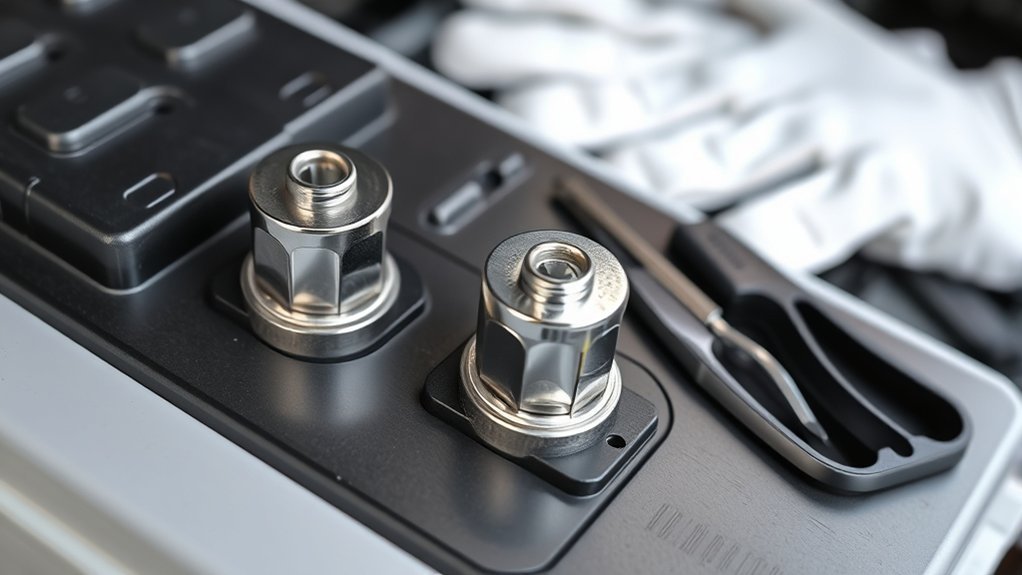
Why is battery terminal care so vital for your vehicle’s performance? Proper maintenance of your battery terminals directly impacts electrical conductivity and overall efficiency.
Regularly inspecting and cleaning terminals prevents terminal corrosion, which can lead to loose connections and starting issues. To combat corrosion, apply silicone grease on clean terminals to protect against moisture and extend battery life.
Using a mixture of warm water and baking soda can neutralize acid buildup, while sanding terminals reveals fresh metal for better connectivity. Additionally, consider using felt terminal protectors to inhibit corrosion effectively.
Maintaining terminal tightness is important; even slight looseness can result in voltage drops, hindering your vehicle’s electrical system performance.
How to Identify and Prevent Parasitic Battery Draw?
How can you tell if your vehicle has a parasitic battery draw? You might notice unexplained battery drain when your vehicle is off. To diagnose this issue, follow these steps:
- Disconnect the Negative Terminal: Start by safely disconnecting the negative battery terminal.
- Measure Current with a Multimeter: Use a multimeter to check the current draw. A reading above 50 milliamps indicates potential electrical anomalies.
- Identify the Problematic Circuit: Pull fuses one at a time while monitoring the amperage. A drop in draw will reveal which circuit is causing the issue.
To prevent future parasitic draw, regularly inspect all electrical components and ascertain connections are secure.
Frequently Asked Questions
How Often Should I Replace My Car Battery?
You should replace your car battery every three to five years. Regular battery maintenance is essential, and watch for warning signs like slow engine cranking or dim lights to avoid unexpected failures.
Can Extreme Temperatures Affect Battery Performance?
Extreme temperatures can seriously impact battery efficiency. Just like a flower wilts in harsh sun, your battery struggles in extreme heat or cold, leading to reduced performance and a shorter lifespan. Keep it cool!
What Is the Lifespan of a Typical Car Battery?
A typical car battery lasts between three to five years, depending on battery types and lifespan factors like temperature, driving habits, and maintenance. Regular checks can help you maximize your battery’s performance and longevity.
Do I Need to Reset My Car’s Computer After Battery Replacement?
When you replace your car battery, think of it like resetting a clock after a power outage. You might need a computer reset to guarantee accurate battery management, depending on your vehicle’s specific requirements.
Is It Safe to Jump-Start a Battery?
Yes, it’s safe to jump-start a battery if you follow jump starting safety guidelines. Guarantee proper connections and avoid short circuits. Regular battery maintenance enhances reliability, reducing the need for jump starts in the future.
Conclusion
Now that you’ve learned the ins and outs of battery replacement, don’t underestimate the importance of proper care. Neglecting maintenance can lead to premature failures, leaving you stranded at the worst possible moment. Remember, a little attention goes a long way in extending your battery’s lifespan. So, as you tackle your next battery issue, ask yourself: are you prepared for the unexpected? Your battery’s performance might just hinge on the choices you make today.







Leave a Reply