

Autocross classing is your roadmap to competitive racing, categorizing vehicles based on modifications and performance to guarantee fair competition. You’ll find various classes, each with specific rules that dictate what you can and can’t modify. Classes range from Street to Modified, allowing you to showcase your skills against similar cars. Understanding these categories can enhance your racing experience, and there’s even more to uncover about modifications and class specifics that could give you the edge you’re looking for.
Understanding Autocross Classing: Importance and Overview

Autocross classing is the backbone of competitive racing, ensuring that every driver has a fair shot at victory.
This system categorizes vehicles based on modifications and performance potential, allowing you to compete against similar cars.
The various classes, from Street to Modified, each come with specific rules that dictate what modifications you can make.
This structure guarantees competition fairness, as it prevents mismatches between vehicles of vastly different capabilities.
Key Modifications Allowed in the Street Class
In the Street Class, you’ll find that vehicles must stick closely to their factory specifications, with only a few key modifications allowed to enhance performance while maintaining street legality. These modifications are designed to elevate your driving experience without straying too far from the factory setup.
| Modification Type | Allowed Specifications | Purpose |
|---|---|---|
| Sway Bar | One aftermarket sway bar (front or rear) | Enhance handling |
| Tires | DOT legal tires, treadwear rating of 200 or higher | Suitable for street driving |
| Aftermarket Wheels | Match factory width (±1 inch), max offset 7mm | Improve performance aesthetics |
| Vehicle Eligibility | Must be production vehicles from the last 30 years | Focus on modern, accessible cars |
| Engine Modifications | Generally no changes allowed | Maintain factory integrity |
These factory modifications keep your ride fun and competitive while ensuring it remains street-legal. Enjoy the balance of performance!
Autocross Classing: Street Touring Category Modifications
While adhering to the spirit of performance and daily usability, the Street Touring category opens up a world of modifications that can greatly enhance your vehicle’s capabilities.
You can install two aftermarket sway bars to considerably improve handling during sharp turns. This sway bar installation helps minimize body roll, allowing for a more responsive driving experience.
Additionally, ECU tuning can release your engine’s potential by optimizing fuel and timing settings, providing an exhilarating boost in performance.
Unlock your engine’s true potential with ECU tuning for an exhilarating performance boost.
Vehicles in this category must run on DOT legal street tires with a treadwear rating of 200 or higher, ensuring you maintain that essential balance for everyday driving.
With allowances for improved braking systems, suspension upgrades, and aftermarket steering wheels, you can create a versatile daily driver that excites on the track.
Embrace these modifications, and enjoy the newfound liberation in your driving experience!
Understanding Street Prepared Class Specifications
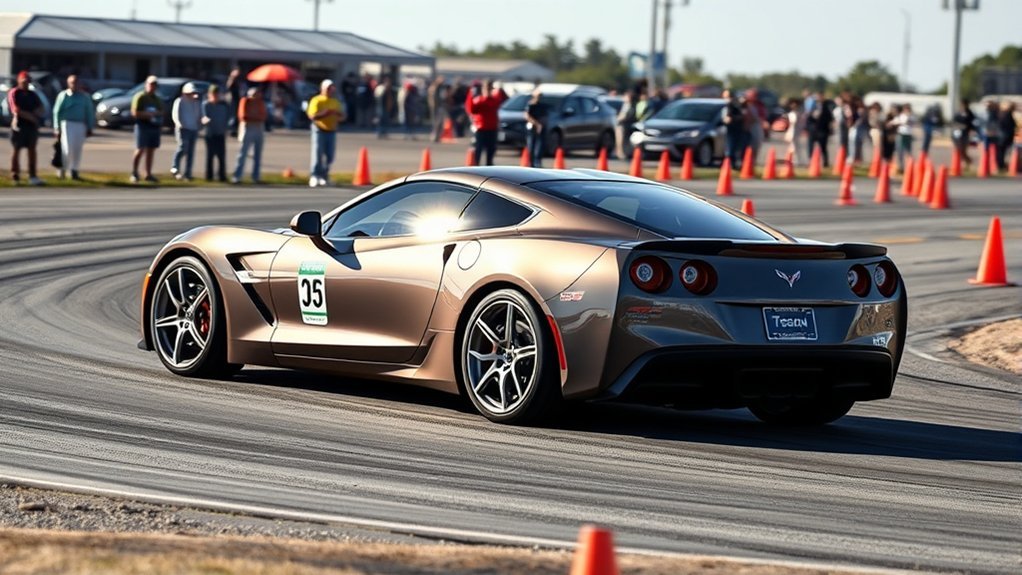
In the Street Prepared class, you can make a wide range of modifications that go beyond basic upgrades, enabling you to enhance your vehicle’s performance considerably.
From aftermarket suspension systems to the use of DOT-legal racing slicks, these specifications allow for a diverse array of setups while still maintaining street-legal characteristics.
Let’s explore the types of modifications allowed, typical vehicles in this class, and the performance enhancements that can give you an edge on the course.
Allowed Modifications Overview
The Street Prepared class offers a thrilling opportunity for enthusiasts to transform their vehicles into high-performance machines while still maintaining a level of practicality.
Here’s a quick overview of allowed Street Prepared modifications that enhance your ride:
- Drivetrain and Suspension: You can modify these systems for improved handling and performance.
- Racing Tires: Utilizing racing tires offers advantages like increased grip and improved cornering.
- Engine Modifications: Internal changes and forced induction systems can boost horsepower considerably.
- Body Enhancements: Add aerodynamic components like wings and canards to enhance downforce and stability.
These modifications not only elevate your vehicle’s performance but also keep it within the spirit of the Street Prepared class.
Embrace the liberation of crafting your ultimate racing machine!
Typical Vehicle Examples
Street Prepared class vehicles showcase a diverse range of modifications that elevate everyday cars into competitive machines.
You might see a Honda Civic with a turbocharged engine swap, enhancing its power while adhering to the manufacturer’s guidelines. Modification examples also include aerodynamic kits featuring wings and canards, which improve downforce and stability at high speeds.
Suspension upgrades are common too, allowing for better handling on tight autocross courses. These competitive vehicles strike a balance between street legality and performance, making them perfect for daily driving or dedicated racing.
As you explore this class, remember that all modifications must comply with the SCCA Solo Rule Book to maintain fair competition while revealing your vehicle’s true potential.
Performance Enhancements Allowed
While considering modifications for your vehicle in the Street Prepared class, it’s essential to understand the range of performance enhancements allowed.
You can access significant performance benefits while adhering to specific modification limits. Here’s what you can do:
- Use any engine block from the same manufacturer for upgrades.
- Install forced induction systems to boost power output.
- Incorporate aftermarket suspension components for improved handling.
- Add aerodynamic features like wings and canards for enhanced stability.
What You Can Modify in the Prepared Class
When you enter the Prepared Class, you’ll discover a world of modification possibilities that can greatly enhance your vehicle’s performance. Here, you can focus on weight reduction by removing interior components such as seats and sound insulation. You’re free to explore suspension tuning and upgrade your braking system and engine with aftermarket parts.
Additionally, you can choose any tire type, with many opting for racing slicks to maximize grip. Safety and rigidity are enhanced with roll cages, making your car track-ready. Bodywork modifications like aerodynamic wings and canards can also be added to optimize downforce.
Here’s a quick overview of what you can modify:
| Modifications | Description |
|---|---|
| Suspension | Upgrades for improved handling |
| Weight Reduction | Remove seats and insulation for speed |
| Bodywork | Add wings and canards for aerodynamics |
Embrace the freedom to innovate, and let your creativity shine!
Exploring the High-Performance Modified Classes
As you immerse yourself in the world of high-performance modified classes, you’ll quickly realize that these categories are designed for those who crave unparalleled speed and agility on the autocross course.
The Modified Class offers the ultimate playground for enthusiasts, featuring vehicles custom-built to push the limits of racing performance. Here’s what you can expect:
- Extensive modifications: Enjoy the freedom to enhance design and performance without restrictions.
- One-off constructions: Experience unique vehicles tailored for maximum speed and agility.
- Seven distinct classes: Choose from AM, BM, CM, DM, EM, FM, and KM, each catering to specific modifications.
- Rigorous competition: Witness the fastest vehicles engaging in intense time trials, showcasing their high-level racing agility.
Dive into the Modified Class, and you’ll gain access to a domain where modified performance reigns supreme, bringing your racing dreams to life.
Specialty Classes: Classic American Muscle and Xtreme Street

In the world of autocross, the Specialty Classes like Classic American Muscle (CAM) and Xtreme Street offer unique opportunities for enthusiasts.
CAM celebrates the heritage of American muscle cars, categorizing them into three distinct classes based on age and performance, while Xtreme Street embraces a diverse range of modified vehicles with fewer restrictions.
These classes not only enhance competition but also create a vibrant community around both classic and modern performance cars.
Classic American Muscle Overview
Classic American Muscle (CAM) offers a thrilling glimpse into the world of vintage and contemporary performance vehicles, with three distinct sub-classes designed to highlight the unique characteristics of American muscle cars.
Each class honors muscle car history while embracing a competitive spirit:
- Traditional (CAM-T): Focuses on vintage muscle cars, preserving their classic essence.
- Contemporary (CAM-C): Features newer domestic vehicles, allowing for modern enhancements.
- Sport (CAM-S): Caters to high-performance two-seaters, emphasizing agility and speed.
These classes encourage enthusiasts to engage in autocross events while maintaining fairness in modifications.
Xtreme Street Class Features
With minimal restrictions on modifications, the Xtreme Street Class (XA, XB, XU) invites both import and domestic sports vehicle enthusiasts to push their cars to the limit while maintaining street legality.
Here, you’ll find a vibrant blend of Xtreme Street modifications that enhance performance without going overboard. This class emphasizes quick course completion, urging you to optimize your vehicle’s capabilities while ensuring Xtreme Street safety with essential regulations, including DOT legal tires.
Unlike higher categories like Modified, Xtreme Street allows you to maximize your car’s potential while retaining everyday usability.
Replacing the former Region Special Class – Street Unlimited (SU), this structured class fosters competitive consistency, making it an exciting choice for passionate drivers keen to release their automotive freedom.
How to Determine Your Vehicle’s Class: A Step-by-Step Guide?
Wondering how to determine your vehicle’s class for autocross? It’s an essential step in the classification process to guarantee you’re competing fairly. Here’s how to get started:
- Identify your vehicle’s make, model, and year. Make sure it meets the vehicle eligibility criteria for SCCA Solo events.
- Input your details into the classification tool. This will show you the eligible classes, arranged from least to most modified.
- Review modification allowances for each class. This will clarify how much you can modify your vehicle while staying competitive.
- Seek advice if needed. Reach out to experienced autocrossers or consult the SCCA rulebook, especially if your vehicle has unique modifications.
Don’t hesitate to use the feedback mechanism for any questions during the classification process. Understanding these steps empowers you to take control of your autocross journey!
Frequently Asked Questions
Can I Participate in Multiple Classes With the Same Vehicle?
Yes, you can participate in multiple classes with the same vehicle, but class eligibility depends on your vehicle modifications. Make sure your changes comply with each class’s rules to maximize your racing potential and enjoyment.
How Often Are Class Specifications Updated by the SCCA?
The SCCA updates class specifications annually, ensuring you stay informed of any changes. By regularly checking for class updates, you can adapt your strategy and maintain a competitive edge in your autocross endeavors.
Are There Age Restrictions for Autocross Participants?
Yes, there are age restrictions for autocross participants. Youth participation is encouraged, but age eligibility varies by region and event. Check local SCCA guidelines to guarantee you’re meeting requirements while enjoying the thrill of racing.
What Safety Equipment Is Required for All Classes?
You’ll need a certified helmet and a fire extinguisher in all classes. Ensuring your safety gear meets regulations not only protects you but also enhances your experience, allowing you to focus on enjoying the race.
Can Modifications Affect My Insurance Coverage?
Modifications can elevate your vehicle’s performance but might also complicate insurance implications. While you crave freedom in customizing, be mindful of modification limits, as they could impact your coverage and claims in unexpected ways.
Conclusion
To sum up, understanding autocross classing is essential for getting the most out of your racing experience. You might think the rules are too complex, but breaking them down makes it easier to find your vehicle’s place on the track. By knowing the modifications allowed in each class, you can tailor your car to maximize performance without stepping outside the guidelines. So, immerse yourself, explore your options, and get ready to hit the cones with confidence!






Leave a Reply