
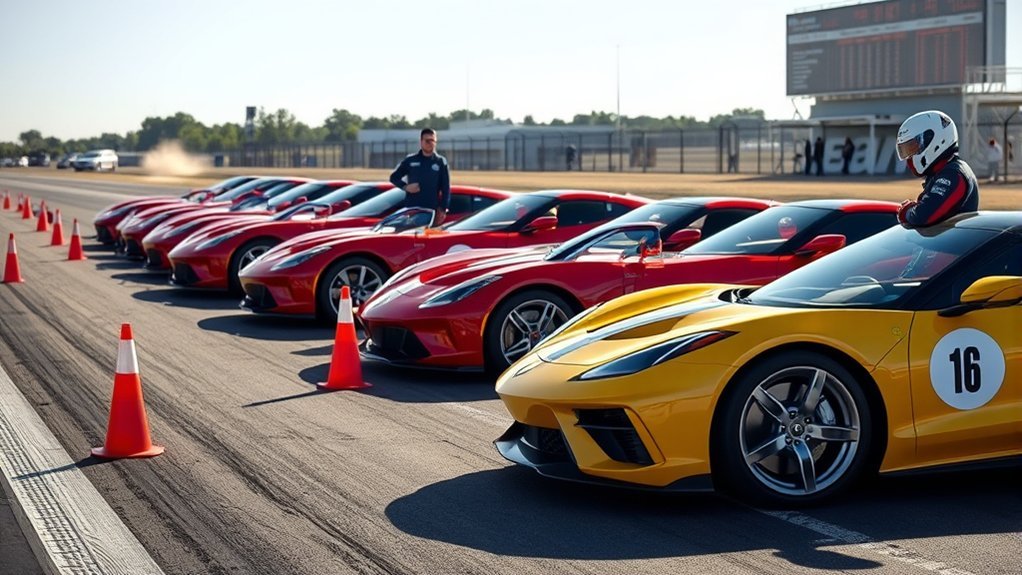
Autocross classing determines which vehicles compete against one another based on their performance potential and modifications. Choosing the right class is not just a matter of finding your make and model. You must also account for every nonstandard tire, wheel, suspension part, tune, engine component, aerodynamic device, and removed interior item before entering an event.
Quick Answer
To class an autocross car, identify its exact year, model, trim, drivetrain, and factory packages; list every modification; then check the current SCCA Solo Rules and Appendix A. Enter the least-modified category that permits every change. An online classifier may help, but the current rulebook and event officials are the final authority.
Key Takeaways
- A category controls the level of preparation; a class groups cars with similar expected performance.
- The correct class depends on the car and all its modifications, not only its engine or tire choice.
- Street has the fewest allowances, followed broadly by Street Touring, Street Prepared, Street Modified, Prepared, and Modified.
- In restricted categories, a modification is generally prohibited unless the rules expressly permit it.
- Competition legality does not automatically make a car legal, emissions-compliant, insurable, or suitable for public-road use.
At a Glance
| Time Required | About 10–30 minutes for a stock or lightly modified car; longer for a complex build |
| Difficulty | Moderate; exact trims, packages, and small modifications can change the result |
| Tools Needed | Current SCCA Solo Rules, Appendix A, factory vehicle details, and a complete modification list |
| Cost | Free to research; event entry, membership, tires, and preparation are separate costs |
How Autocross Classing Works
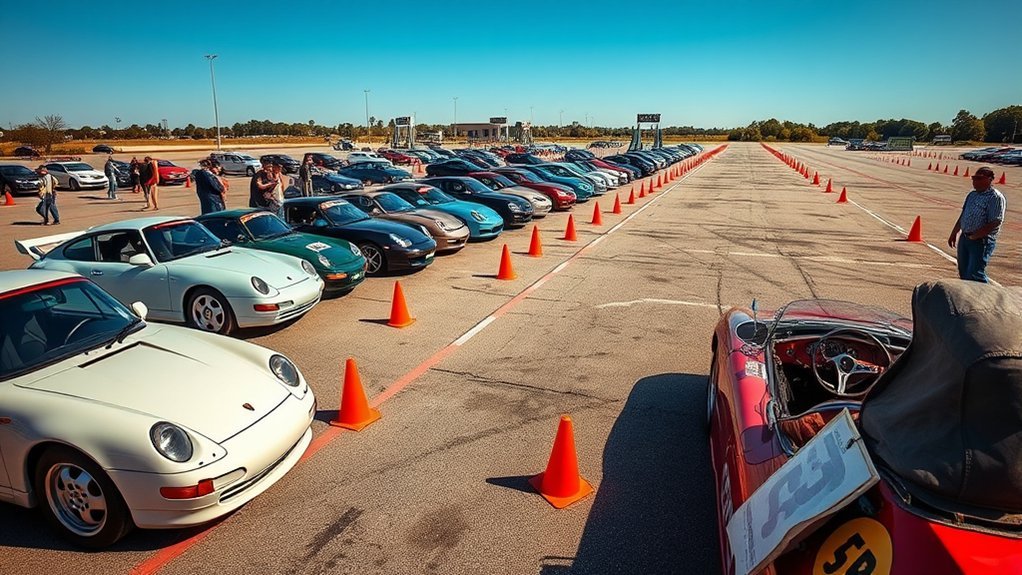
SCCA Solo, the Sports Car Club of America’s name for autocross, classes vehicles according to their modifications and performance potential. Each preparation category contains one or more classes so that a lightly modified economy car does not compete directly against a purpose-built formula car.
The two terms are related but not interchangeable:
- Category: The preparation level and modification rule set, such as Street, Street Touring, or Prepared.
- Class: The performance grouping within that category, such as A Street, C Street Prepared, or E Modified.
The SCCA autocross category overview describes the progression from near-stock Street cars to highly developed Modified vehicles. Exact vehicle assignments and preparation rules are found in the current SCCA Solo rules resources.
In a restricted autocross category, the safest rule-reading approach is simple: if the rules do not say you may make a change, assume you may not make it.
Warning: Class the car as it will actually compete. A hidden ECU tune, wider wheel, removed seat, nonstandard differential, engine swap, altered turbocharger, or unauthorized aerodynamic part can move the car into a different category even when the rest of the vehicle looks stock.
Autocross Categories Compared
| Category | Typical Preparation | Tire Type | Important Limit |
|---|---|---|---|
| Street | Near-stock cars with a short list of permitted changes | Eligible DOT tires with a 200-or-higher treadwear grade | Standard wheel width and no engine-performance modifications beyond express allowances |
| Street Touring | Common bolt-on suspension, brake, intake, exhaust, and tuning changes | Eligible 200-or-higher-treadwear street tires | Engines, transmissions, body structure, emissions equipment, and electronics remain subject to detailed limits |
| Street Prepared | Broader suspension, induction, exhaust, ECU, wheel, tire, body-clearance, and update/backdate allowances | DOT-approved tires without the Street-category treadwear floor | Not a general engine-swap or add-a-turbo category |
| Street Modified | Powertrain swaps, extensive tuning, custom suspension parts, limited interior removal, and larger aero | DOT-approved competition tires permitted | Minimum weights, body, seating, chassis, and configuration rules still apply |
| Prepared | Competition-focused production-based builds with extensive engine, chassis, body, and interior work | Non-DOT racing tires permitted | Vehicle-specific specifications and minimum weights apply |
| Modified | Purpose-built cars, formula cars, sports racers, specials, and radically modified production-based vehicles | Class-dependent racing tires | Each Modified class has its own construction, weight, powertrain, and aero limits |
This table is a starting point, not a replacement for the rulebook. Individual categories do not always inherit every allowance from the category below them, and vehicle-specific Appendix A notes can override a general summary.
Street Category: Near-Stock Cars
Street is the most restrictive core category. It is intended for production vehicles that remain close to their original configuration. Common allowances include replacement shocks or struts, brake pads, a cat-back or axle-back exhaust, normal alignment adjustments, and one nonstandard anti-roll bar at either the front or rear.
Street Tires and Wheels
- Tires: Nationally eligible tires generally need a Uniform Tire Quality Grading treadwear grade of at least 200 and must meet the rulebook’s availability and eligibility provisions.
- Wheel width: The wheel must retain the standard width.
- Wheel diameter: Diameter may normally increase or decrease by 1 inch. The current rules provide an additional provision for cars originally equipped with wheels of 21 inches or larger.
- Wheel offset: The installed offset must remain within ±7 mm of a standard wheel for the car.
The 200 treadwear number is a competition eligibility threshold, not a promise of tire life or wet-weather performance. The NHTSA guide to Uniform Tire Quality Grading explains that treadwear grades are comparative ratings measured under controlled conditions.
Street Vehicle Eligibility
There is no universal “last 30 years” rule. You must find the exact vehicle in Appendix A of the current Solo Rules. Check the year, trim, engine, drivetrain, body style, factory performance package, and any exclusion note. Two versions of the same model may be assigned differently.
Pro Tip: Decode the VIN and compare the car with its original window sticker, factory option list, or service documentation before assuming that a performance package was factory-installed.
Street Touring: Common Bolt-On Modifications
Street Touring builds on Street with a broader range of modifications that many enthusiasts use on dual-purpose street and autocross cars. The 2026 category includes Super Street Touring and lettered Street Touring classes, with exact vehicle assignments in Appendix A.
Typical permitted areas include:
- Front and rear anti-roll bars
- Springs, coilovers, and eligible shock changes
- Camber kits, bushings, and specified suspension adjustments
- Class-limited wheel and tire widths
- Eligible brake kits and brake ducts
- Intake components up to the defined engine inlet
- Headers, exhaust components, and qualifying catalytic converters
- Specified limited-slip differentials
- ECU reprogramming and other listed engine-management changes
- Eligible front seats and steering wheels
ECU tuning is not a blank check. The current rules specify which ECU methods, sensors, ports, boost controls, model years, and related parts may be changed. Original OBD functions and other required systems may still need to remain operational.
Street Touring uses true street tires with the applicable 200-or-higher treadwear requirement. It does not permit DOT R-compound competition tires simply because they carry a DOT marking.
Note: SCCA describes street legality as a goal for Street Touring, not an absolute guarantee. State equipment, inspection, emissions, registration, and tire laws can be more restrictive than the competition rules.
Street Prepared: Wider Competition Allowances
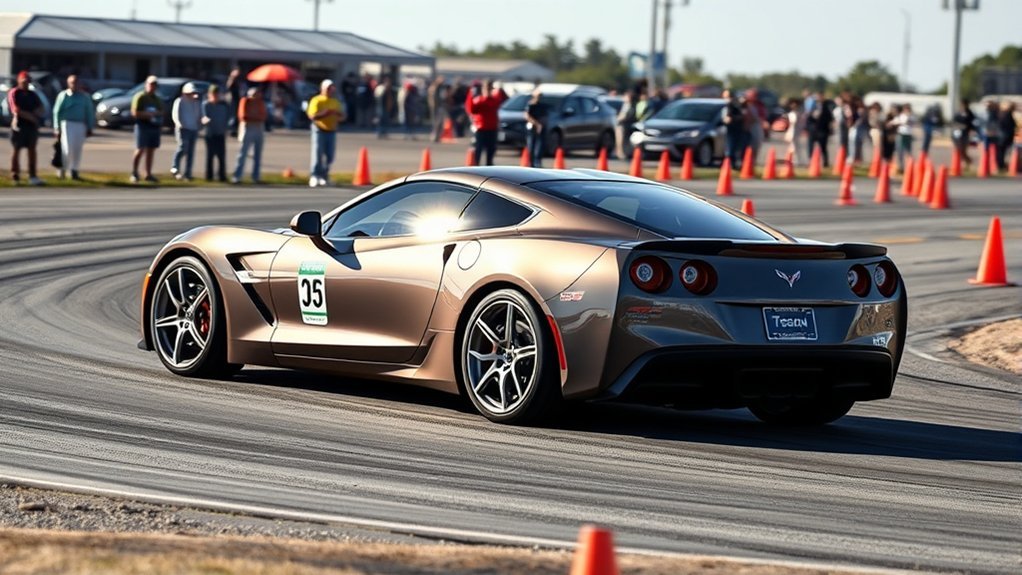
Street Prepared moves well beyond basic bolt-on changes. It allows eligible DOT-approved R-compound tires, wheels of broader dimensions, fender modifications for tire clearance, suspension changes, induction and exhaust work, ECU changes, specified weight reduction, and limited aerodynamic additions.
Common Street Prepared Allowances
- DOT-approved competition tires without the Street-category 200-treadwear minimum
- Wheels of permitted dimensions under the category rules
- Fender cutting, rolling, flaring, or replacement only where the applicable rule permits it
- Eligible splitters, spoilers, and related aerodynamic components
- Broader suspension and differential changes
- Unrestricted induction within the defined limits
- Aftermarket engine-management controls
- Broader exhaust changes
- Air-conditioning removal and other specified weight reductions
- Update/backdate exchanges between eligible years and models listed together in Appendix A
Street Prepared Powertrain Limits
Street Prepared is not a general engine-swap class. Update/backdate changes are limited to components from qualifying years and models listed on the same Appendix A line, and complete assemblies may have to be exchanged as units.
Turbochargers and superchargers generally may not be added, changed, or modified in Street Prepared. Cars originally equipped with forced induction receive specific intercooler, charge-pipe, bypass-valve, boost-control, and related allowances, but the complete Section 15 rule must be followed.
A naturally aspirated Honda Civic with a turbocharged engine swap, for example, would not remain in Street Prepared merely because the engine came from the same manufacturer. A build like that is more likely to require Street Modified, X Prepared, or another category whose exact rules permit the combination.
Warning: A DOT marking on a competition tire does not make it a true slick, guarantee safe wet-road performance, or establish that it is legal for every public-road use. Follow the tire manufacturer’s instructions and local law.
Street Modified: Swaps, Forced Induction, and Extensive Tuning
Street Modified fills the major gap between Street Prepared and the competition-focused Prepared category. It is intended for street-derived vehicles with extensive drivetrain, suspension, body, tuning, and aerodynamic changes.
The 2026 category includes:
- SSM: Super Street Modified for qualifying two-seat vehicles
- SM: Street Modified for qualifying vehicles originally configured with four seats
- SMF: Street Modified Front-Wheel Drive
Typical allowances include production-based engine blocks, powertrain swaps, added forced induction, open engine tuning, custom suspension components, extensive brake changes, limited interior removal, supplemental restraint-system removal, body cutting for clearance, splitters, rear wings, and DOT R-compound tires.
Street Modified is still regulated. Minimum weights can depend on displacement, induction, drivetrain, and other factors. The car must also meet the category’s seating, body, chassis, fuel-system, aero, and safety provisions. An engine swap does not automatically make every other modification legal.
Prepared: Competition-Focused Production-Based Cars
Prepared is designed for heavily developed, production-based competition vehicles. It permits non-DOT racing tires, substantial weight reduction, extensive chassis and body changes, internal engine work, open transmission and differential choices, and class-defined aerodynamic aids.
The main Prepared classes are:
- XP: X Prepared, with broader engine-swap and aerodynamic allowances
- CP: C Prepared, commonly associated with American muscle cars
- DP: D Prepared, commonly for lightweight four-cylinder rear-wheel-drive sports cars and coupes
- EP: E Prepared, commonly for front-wheel-drive cars
- FP: F Prepared, commonly for higher-performance sports cars and sedans
Prepared cars may remove or replace many interior and body components, but each class has detailed construction, roll-over protection, minimum-weight, engine, wheel, body, and aerodynamic limits. A roll cage or roll bar may be required depending on the vehicle and configuration; it is not merely an optional rigidity upgrade.
True non-DOT racing slicks belong here or in Modified—not in Street Prepared.
Modified: Purpose-Built and Radically Altered Cars
Modified contains the most open core Solo preparation rules. It accommodates purpose-built autocross cars, formula cars, sports racers, specials, approved kit cars, and production-based vehicles modified beyond Prepared limits.
The category has six main classes:
- AM: A Modified
- BM: B Modified
- CM: C Modified
- DM: D Modified
- EM: E Modified
- FM: F Modified
Each class has a distinct purpose. AM is the least restricted, while BM, CM, and FM include specified formula cars and sports racers. DM and EM accommodate highly modified, lightweight production-based or approved kit cars under different displacement and weight structures.
Kart Modified, abbreviated KM, is a kart class with its own rules. It should not be described as a seventh AM-through-FM Modified category class.
Specialty Classes: Classic American Muscle and Xtreme Street

Specialty and supplemental classes give vehicles that do not fit neatly into the core preparation ladder a suitable competition home. The current rulebook and event supplemental regulations determine which classes are offered.
Classic American Muscle
Classic American Muscle, or CAM, uses three national classes:
- CAM-T: Traditional muscle cars, vintage automobiles, and eligible trucks or SUVs. Under the 2026 rules, eligible body styles generally originate from 1948 through 2000 and must meet the listed manufacturer, drivetrain, seating, and minimum-weight requirements.
- CAM-C: Contemporary eligible domestic cars and trucks with body styles generally newer than 2000, plus qualifying CAM-T cars that meet CAM-C requirements.
- CAM-S: Eligible high-performance domestic two-seat vehicles and specified Cobra replicas.
The names alone are not enough to determine eligibility. Manufacturing origin, manufacturer, engine position, drivetrain, original seating, body-style origin, minimum weight, and specific inclusions or exclusions all matter.
Xtreme Street
Xtreme Street provides a place for extensively modified import and domestic vehicles that use automobile-based drivetrains or tractive systems. The 2026 structure includes:
- XA: Heavier sports sedans and coupes, with minimum weights based on drivetrain
- XB: Lighter sports cars, also using drivetrain-based minimum weights
- XU: Xtreme Street Unlimited, a supplemental class for qualifying high-performance production vehicles with minimal restrictions on aero, interior changes, and weight
Street-category stability exclusions and other Xtreme Street eligibility restrictions still apply. CAM-eligible cars are excluded from XA and XB, and certain kit or component cars are also excluded.
Other Supplemental and Regional Classes
Depending on the event, you may also encounter Club Spec, Electric Vehicle Experimental, Formula SAE, novice classes, indexed classes, Ladies classes, heritage or vintage groupings, and locally created regional classes.
These are not interchangeable with the national preparation categories. Read the event’s supplemental regulations before registering, particularly when a regional class combines several national classes using a performance index.
How to Determine Your Autocross Class
-
Identify the exact vehicle. Record the model year, manufacturer, model, trim, body style, engine, transmission, driven wheels, factory performance packages, and any special edition.
-
Create a complete modification inventory. Include tires, wheel width and offset, spacers, alignment parts, shocks, springs, sway bars, bushings, brakes, differential, intake, exhaust, catalytic converters, ECU software, boost controls, engine internals, swap parts, aero, seats, steering wheel, battery relocation, removed interior pieces, and body cutting.
-
Start with the current rules page. Confirm that you are reading the latest annual rulebook and any subsequently published updates on the official SCCA Solo Cars and Rules page.
-
Find the car in Appendix A. Do not rely only on a category summary. Read the complete line, footnotes, package restrictions, exclusions, and special preparation notes.
-
Read the entire category section. Confirm that every modification is expressly authorized. Check definitions because terms such as “standard part,” “engine inlet,” “wheel width,” and “update/backdate” have specific meanings.
-
Choose the least-modified category that permits everything. A car may be underprepared for a category and still run there, but it may not exceed that category’s allowances.
-
Check the event supplemental regulations. Verify offered classes, regional groupings, sound limits, entry requirements, number rules, passenger rules, and event-specific procedures.
-
Ask before competing when uncertain. Contact the event registrar or chief of tech for event procedures. For an official national rule clarification, use the request process linked from SCCA’s rules page.
Pro Tip: Save photographs, receipts, part numbers, tune information, factory documentation, and measurements in one folder. Accurate documentation makes registration, tech inspection, and any later compliance question much easier to resolve.
Common Autocross Classing Mistakes
- Classing only by model: The same model can appear in different classes based on year, trim, engine, package, or drivetrain.
- Ignoring software: ECU, transmission, differential, traction-control, and boost-control changes can count even when no hardware is visible.
- Confusing wheel diameter with width: Street normally permits a diameter change but requires standard width.
- Assuming DOT means Street-legal for competition: Street and Street Touring also use treadwear and other eligibility rules.
- Mixing category allowances: Do not assume every rule from another category carries over.
- Overlooking removed parts: Seats, carpet, trim, sound insulation, airbags, lights, and emissions equipment may affect classing.
- Using a classing website as the final decision: SCCA labels its linked online classifier unofficial. The rulebook governs.
- Copying another competitor’s class: Two similar-looking cars may have different modifications or factory packages.
Safety, Road Legality, and Insurance
Class eligibility is only one part of event compliance. A vehicle must also pass the applicable safety inspection. Common checks include secure wheels, sound tires, functional seat belts or harnesses, safe throttle return, acceptable fluid leakage, secure seats and cameras, and removal of loose items. The driver-side floor mat must be removed unless it is secured by a functioning approved retention system.
A helmet meeting a currently accepted certification must be worn while on course. Consult SCCA’s 2026 helmet certification label chart rather than relying only on a helmet’s age or appearance.
Warning: Motorsport can cause injury, death, or property damage. Follow event officials, complete the required waiver, use correctly installed safety equipment, and never compete with loose objects, damaged tires, fluid leaks, insecure wheels, or a mechanical fault that could affect control.
Minor Drivers
Drivers generally must be SCCA members and possess a currently valid automobile driver’s license or permit. Permit restrictions must be followed. Drivers under the age of majority also need the required parental consent and minor-waiver documentation. Regional events may impose additional entry requirements, so a young driver should confirm eligibility with the organizer before registering.
Street Legality and Emissions
An SCCA-legal modification is not automatically legal on public roads. Registration, inspection, lighting, noise, emissions, tire, windshield, restraint, and equipment laws vary by jurisdiction.
The U.S. Environmental Protection Agency states that the Clean Air Act prohibits tampering with required emissions controls and prohibits manufacturing, selling, or installing devices intended to defeat them. Review the EPA’s emissions-tampering guidance before altering catalytic converters, calibrations, sensors, or other emissions-related equipment.
Insurance Coverage
Modification and timed-competition coverage varies by insurer, policy, endorsement, and jurisdiction. Do not assume that a normal personal auto policy covers damage during an autocross. Describe the modifications and activity accurately and request written confirmation from the insurer or a qualified agent before relying on coverage.
Keeping Up With Rule Changes
SCCA publishes an annual National Solo Rules edition, but the annual book is not the only document that matters. In-season changes, clarifications, proposals, class adjustments, and effective dates may appear through Fastrack or other official publications.
Before the first event of a season—and again before a national event—check:
- The current Solo Rules download and its update date
- Recent Fastrack Solo items
- Current active rule proposals
- The event’s supplemental regulations
- Any current national tire exclusion list
- Regional class or index rules
A legal build from a previous season may need a new class, component change, weight adjustment, or documentation update under the current rules.
Frequently Asked Questions
Can I participate in multiple classes with the same vehicle?
Sometimes. A vehicle may be shared by multiple drivers, and some events allow the same car in more than one class, such as Open and Ladies, when registration rules and the run schedule permit it. Each entry must comply with its declared class. Check the event’s supplemental regulations before registering.
How often does SCCA update autocross class rules?
SCCA publishes an annual Solo Rules edition, but changes and clarifications can also be published during the season. Check the current rulebook, Fastrack, active proposals, and event supplemental regulations rather than relying on a saved older copy.
Are there age restrictions for autocross participants?
Drivers generally need a valid automobile driver’s license or permit and must follow all permit restrictions. Minors need the required parental consent and waiver forms. Regional organizers may impose additional entry requirements, while kart programs follow separate rules.
What safety equipment is required for ordinary autocross classes?
A currently accepted helmet is required while on course, and the vehicle must have compliant restraints and pass safety inspection. Loose objects must be removed. An in-car fire extinguisher is not a universal requirement for every ordinary Solo class, although specialized vehicles can have additional class-specific requirements.
Can vehicle modifications affect my insurance coverage?
Yes, they may. Coverage for modified vehicles and timed competition depends on the policy, insurer, endorsements, and local law. Disclose the vehicle’s modifications and request a written coverage answer before assuming that a personal auto policy applies at an autocross.
What happens if a modification is not mentioned in the rules?
In a restricted preparation category, treat an unlisted change as prohibited unless another applicable rule clearly authorizes it. Do not infer permission from the absence of a ban. Request clarification before competing when the wording is uncertain.
Is the online SCCA car classifier official?
No. SCCA’s rules page describes the linked classifier as unofficial. It can narrow the search, but the current Solo Rules, Appendix A, official updates, and applicable event regulations control the final classification.
Conclusion
Correct autocross classing starts with two accurate lists: the vehicle’s exact factory configuration and every modification installed on it. Compare both lists with the current SCCA Solo Rules, Appendix A, official updates, and the event’s supplemental regulations. Choose the least-modified category that expressly permits the complete build, then verify safety, emissions, road-law, waiver, and insurance requirements separately. Doing that work before registration protects fair competition and prevents an avoidable class change at the event.
Sources
- SCCA Solo Cars and Rules — current rulebook, Fastrack, proposals, helmet chart, and official rules resources
- 2026 SCCA National Solo Rules — vehicle preparation, classing, safety, driver, Appendix A, CAM, and Xtreme Street requirements
- SCCA Introduction to Autocross Classes — official overview of the core preparation categories
- SCCA Autocross Glossary — category, tire, safety, and competition terminology
- 2026 SCCA Helmet Certification Labels — accepted Snell, FIA, and SFI helmet certifications
- U.S. EPA Aftermarket Defeat Devices and Tampering — federal emissions-control tampering requirements







Leave a Reply