
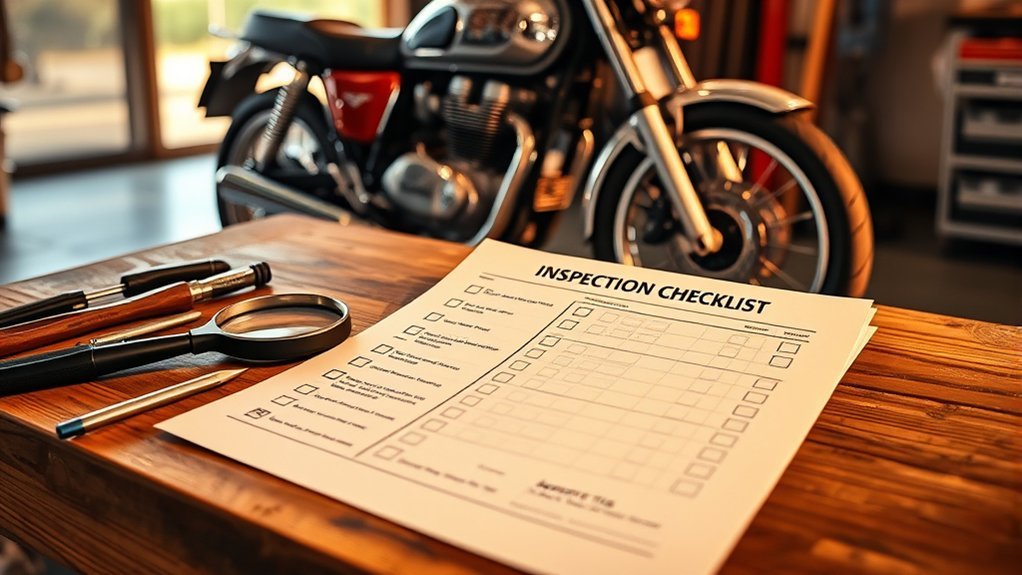
A motorcycle inspection checklist is a must for anyone buying a used bike. It helps you pinpoint key areas like frame condition, tire safety, and leak checks. Asking the seller specific questions about ownership and maintenance history can reveal hidden issues. Learning expert tips for thorough inspections boosts your confidence and bargaining power. Stick around to uncover more insights on negotiating the best price and ensuring a sound investment in your next ride.
Why You Need a Motorcycle Inspection Checklist
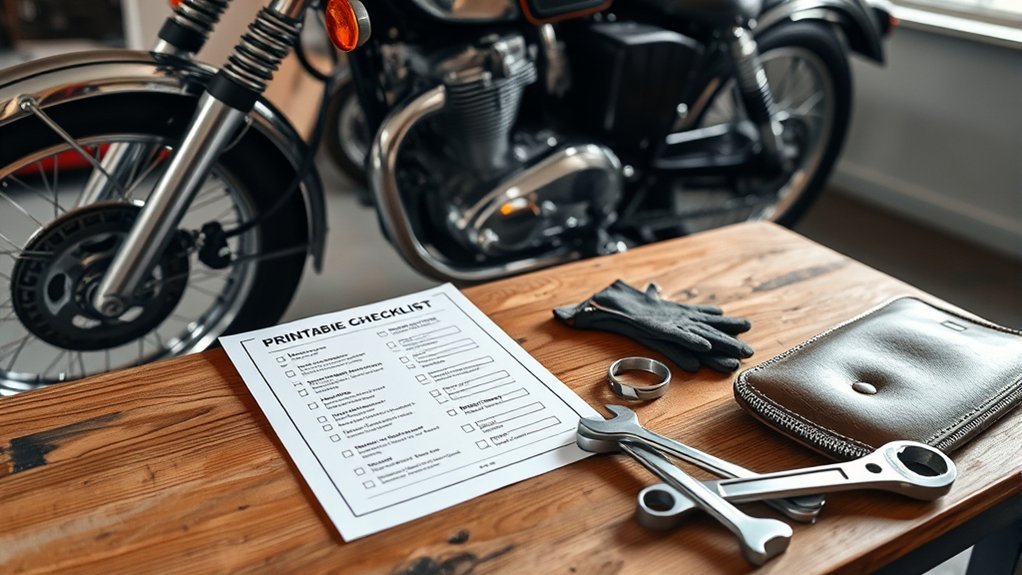
When you’re in the market for a used motorcycle, having an inspection checklist can make all the difference in your buying experience. This tool isn’t just a piece of paper; it’s your roadmap to an informed decision.
By following a tailored checklist, you immerse yourself in an important assessment of the motorcycle, ensuring you don’t miss critical issues that could lead to costly repairs down the line. You’ll gain insights into common problems specific to that model, empowering you to negotiate effectively with the seller.
Documenting any issues you find strengthens your position, enhancing your buyer confidence. You’ll be prepared to engage with sellers, showcasing your knowledge of motorcycle maintenance and potential pitfalls.
Ultimately, a thorough inspection checklist streamlines the process, ensuring you assess the bike’s mechanical integrity, safety features, and aesthetics. By being well-prepared, you take control of the buying experience, allowing for a more liberated and confident purchase.
Essential Inspection Areas for Used Motorcycles
A thorough inspection of essential areas is crucial when evaluating a used motorcycle. Start with the frame condition; look for any signs of crash damage or structural issues, as these can hint at serious hidden problems.
Next, conduct a tire assessment. Check the tread depth and sidewall integrity, since worn or damaged tires can greatly compromise your safety and performance on the road.
Conduct a thorough tire assessment, checking tread depth and sidewall integrity to ensure safety and optimal performance.
Don’t overlook fluid leaks; inspect the engine and transmission for any signs, as even minor leaks can lead to costly repairs later.
The electrical system deserves your attention too—ensure all lights and indicators are functioning properly and securely attached.
Finally, perform a cold start of the engine, listening for any unusual noises that could indicate underlying mechanical issues.
Key Questions to Ask the Seller?
What key insights can you uncover by asking the seller the right questions? To guarantee you’re making a wise investment, focus on the seller’s ownership duration and maintenance history. Here’s a handy table to guide your inquiries:
| Question | Purpose | Why It Matters |
|---|---|---|
| How long have you owned the bike? | Gauge seller’s familiarity and care | Longer ownership often indicates better care |
| What major repairs have you done? | Understand the bike’s repair history | Reveals potential future issues |
| When were the tires last changed? | Assess tire condition and replacement needs | Worn tires can lead to additional costs |
| Has the bike been used for stunts? | Identify wear levels and hidden damages | Stunt use can signal underlying problems |
| What oil and fuel have you used? | Learn about maintenance practices | Quality of oil affects engine longevity |
These questions will empower you with vital insights for your decision-making.
Pro Tips for Conducting a Thorough Motorcycle Inspection
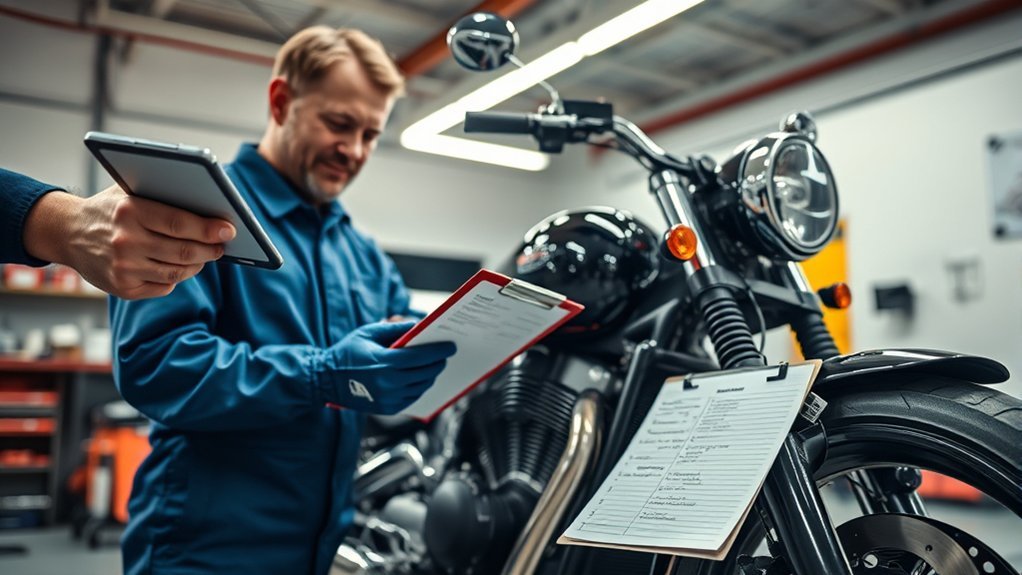
Starting your motorcycle inspection with a cold engine is essential, as it allows you to accurately assess the bike’s condition without the interference of heat-related issues.
First, check the VIN against the title and documentation—discrepancies can reveal past problems, like theft or title issues.
Verify the VIN against the title and documents to uncover any hidden issues, such as theft or title discrepancies.
Next, examine the body and frame for signs of crash damage, as this can impact safety and performance, potentially leading to costly repairs later on.
When you test the motorcycle, listen closely for unusual noises from the engine and drivetrain during the cold start and while shifting gears; these sounds can point to underlying mechanical issues.
Don’t forget to document all your findings, including any repairs needed. This information will be critical for motorcycle maintenance and provides a solid basis for negotiating the price.
A thorough inspection empowers you to make an informed decision about your purchase, ensuring your ride is both safe and exhilarating.
How to Negotiate the Best Price After Your Inspection
Negotiating the best price after your inspection can greatly impact your overall investment in a used motorcycle. Start by using the checklist of issues you discovered during your inspection; these findings provide solid evidence to support your negotiation strategies.
Aim for a price reduction of 10-20% based on significant repairs needed, which can drastically affect ownership costs.
Be ready to counter any seller offers with market research on similar motorcycles, ensuring your proposed price is reasonable and competitive. If the seller resists lowering the price, consider negotiating for additional items like spare parts or accessories to sweeten the deal.
Maintain a confident demeanor throughout the negotiations—sellers typically respond better to buyers who demonstrate knowledge and seriousness about their offer.
Frequently Asked Questions
How Do I Find a Reliable Motorcycle Mechanic?
To find a reliable motorcycle mechanic, check online mechanic reviews and ask for their service history. Talk to fellow riders for recommendations, and make certain they specialize in your motorcycle’s make and model for ideal care.
What Should I Do if I Find Issues During Inspection?
If you find issues during inspection, don’t panic! Use negotiation strategies to discuss repair estimates with the seller. You’ve got the power to guarantee you’re getting a fair deal on your potential ride.
Can I Use This Checklist for Any Motorcycle Type?
You can use this checklist for various motorcycle types, but tailor your inspection process to each model’s specifics. Understanding differences guarantees you identify unique issues and maintain the freedom riding brings. Stay informed and ride safe!
How Often Should I Inspect a Used Motorcycle?
You should inspect a used motorcycle regularly—don’t wait for trouble to knock at your door. Maintenance frequency is key; prioritize inspections to guarantee safety and performance. It’s essential for your riding freedom and enjoyment.
Is It Necessary to Take a Test Ride During Inspection?
Yes, taking a test ride is vital. It highlights the motorcycle’s handling, brakes, and performance—essential inspection benefits. You’ll feel its potential, ensuring it aligns with your desire for liberation on the open road.
Conclusion
Using a motorcycle inspection checklist is essential when buying a used bike, as nearly 30% of used motorcycles have undisclosed issues. By thoroughly inspecting key areas and asking the right questions, you can avoid costly surprises down the road. Plus, being informed gives you leverage when negotiating the price. So, take the time to assess the motorcycle properly—it’s an investment in both safety and savings. Happy riding!






Leave a Reply