

A towing safety checklist is crucial for ensuring a secure towing experience. You should inspect the coupler, hitch, and tire condition before every trip. Always verify your vehicle’s towing capacity and balance your cargo properly. Regular maintenance, including checking electrical systems and tire tread, keeps your trailer in peak condition. By using a printable checklist, you can stay organized and prepared. Continue exploring to uncover more essential tips and best practices for safe towing.
Why a Towing Safety Checklist Is Essential for Every Trip

When you hit the road with a trailer in tow, having a towing safety checklist is essential for ensuring a safe journey. This checklist allows you to inspect critical components like lights, brakes, and hitch connections, greatly enhancing accident prevention.
A towing safety checklist is vital for inspecting key components and ensuring a safe, accident-free journey with your trailer.
By regularly utilizing this tool, you can identify maintenance needs early, preventing costly repairs and roadside breakdowns while promoting the longevity of both your vehicle and trailer.
Moreover, documenting your inspections helps maintain compliance with local towing regulations, demonstrating due diligence in case of an incident. A checklist also aids in effective weight distribution management and cargo security, ensuring your vehicle remains stable and under control during towing.
Ultimately, implementing a towing safety checklist not only strengthens safety protocols but also boosts your confidence, providing peace of mind as you commence on your journey. Embrace this proactive approach for a liberating towing experience.
Key Safety Inspections Before Towing
Before you hit the road, inspect the coupler and hitch to guarantee a secure connection between your tow vehicle and trailer.
Also, check the tire condition on both vehicles for proper inflation and any signs of wear or damage.
These steps are vital for maintaining safety and preventing accidents during your towing journey.
Inspect Coupler and Hitch
Inspecting the coupler and hitch is vital for safe towing, and there are several key checks you should perform. First, verify the coupler fits snugly onto the hitch ball and is securely locked. Use a locking pin or latch for additional security. Next, inspect the hitch assembly for wear or damage, confirming its compatibility with the trailer’s weight. Don’t forget to cross safety chains beneath the trailer tongue, as they provide essential security in case of disconnection. Finally, perform a pull test by gently pulling the trailer to verify that the coupler is properly attached.
| Check | Action | Importance |
|---|---|---|
| Coupler Fit | Verify snug fit | Prevents accidental detachment |
| Hitch Inspection | Look for wear/damage | Confirms hitch compatibility |
| Safety Chains | Cross and secure | Provides added security |
Check Tire Condition
Proper tire condition is essential for safe towing, as it directly impacts handling and stability.
Start by inspecting both your tow vehicle and trailer tires for proper inflation, ensuring they meet the recommended pressure levels found on the tire sidewalls.
Look for visible signs of wear, like tread depth, bulges, or cracks—damaged tires can lead to dangerous blowouts.
Make sure lug nuts are securely tightened to prevent wheels from loosening during transit.
Regular tire maintenance, such as rotating and balancing tires, promotes even wear and extends their lifespan, particularly before long trips.
Finally, always carry a properly inflated spare tire and the necessary tools for tire replacement in case of emergencies while towing.
How to Verify Your Vehicle’s Towing Capacity
To verify your vehicle’s towing capacity, start by checking the owner’s manual or the compliance plate for maximum towing specifications.
These documents will provide vital information on the Gross Vehicle Weight Rating (GVWR) and the Gross Combined Weight Rating (GCWR).
Ensuring you understand these limits is essential for safe towing.
Check Owner’s Manual
Your vehicle’s owner’s manual is an essential resource for confirming its towing capacity. Start by locating this document, as it contains vital vehicle specifications that dictate your towing guidelines. Pay attention to the maximum towing capacity specified by the manufacturer, as exceeding this limit can lead to serious damage. Here’s a quick reference table to help you understand important figures found in the manual:
| Specification | Value | Notes |
|---|---|---|
| Gross Vehicle Weight Rating (GVWR) | [Enter Value] | Maximum weight your vehicle can handle |
| Maximum Towing Capacity | [Enter Value] | Specified by the manufacturer |
| Trailer Weight Distribution | [Enter Value] | Guidelines for safe towing |
| Recommended Accessories | [Enter Value] | Enhancements for towing safety |
| Additional Notes | [Enter Value] | Manufacturer-specific tips |
Always consult a professional if you’re uncertain about your vehicle’s capabilities.
Inspect Compliance Plate
The compliance plate serves as a critical resource for verifying your vehicle’s towing capacity. Typically located on the driver’s side door frame or under the hood, this plate contains essential compliance plate details, including the maximum towing capacity and Gross Vehicle Mass (GVM).
To check your vehicle’s towing capacity, refer to the manufacturer’s guidelines listed on the compliance plate, ensuring the combined weight of the trailer and cargo doesn’t exceed the specified limits. Exceeding these limits can lead to vehicle damage or unsafe driving conditions.
Additionally, the compliance plate may indicate the maximum towbar download. For a thorough understanding, consult your vehicle’s owner’s manual for further insights on vehicle specifications and safe towing practices.
Expert Tips for Securing Your Cargo Safely
Securing cargo is secured properly is essential for safe towing, as improper loading can lead to dangerous situations on the road. Start by distributing cargo weight evenly across the trailer, with 60% positioned over the front half to maintain stability. Use durable securing devices like ratchet straps or bungee cords to prevent shifting during transit.
| Tip | Details | Frequency |
|---|---|---|
| Weight Check | Verify you don’t exceed rated capacity | Before loading |
| Secure Loose Items | Close all doors, drawers, hatches | Before departure |
| Inspect Tie-Downs | Check for wear and tear | Before each trip |
| Replace Damaged Gear | Guarantee maximum safety | As needed |
Towing Safety: The Importance of Regular Trailer Maintenance
Proper cargo security is just one piece of the towing safety puzzle; regular trailer maintenance plays an equally essential role in guaranteeing safe travels. By committing to a consistent maintenance frequency, you can greatly enhance your trailer’s longevity and performance.
Start by greasing the wheel bearings and inspecting the electrical wiring to prevent costly repairs. After each use, wash your trailer, especially the undercarriage, to remove corrosive materials that can accelerate deterioration.
Grease wheel bearings and inspect wiring regularly; wash your trailer after each use to combat corrosion and extend its lifespan.
Regularly check your tires for proper inflation, tread depth, and wear to minimize the risk of blowouts. Verify all lights, including brake lights and turn signals, are functioning properly for ideal visibility, particularly in low-light conditions.
Additionally, don’t overlook the brake systems; routine checks can boost stopping power and decrease accident risks. Prioritizing these maintenance tasks won’t only secure your trailer but also empower your travels.
Printable Towing Safety Checklist for Quick Reference
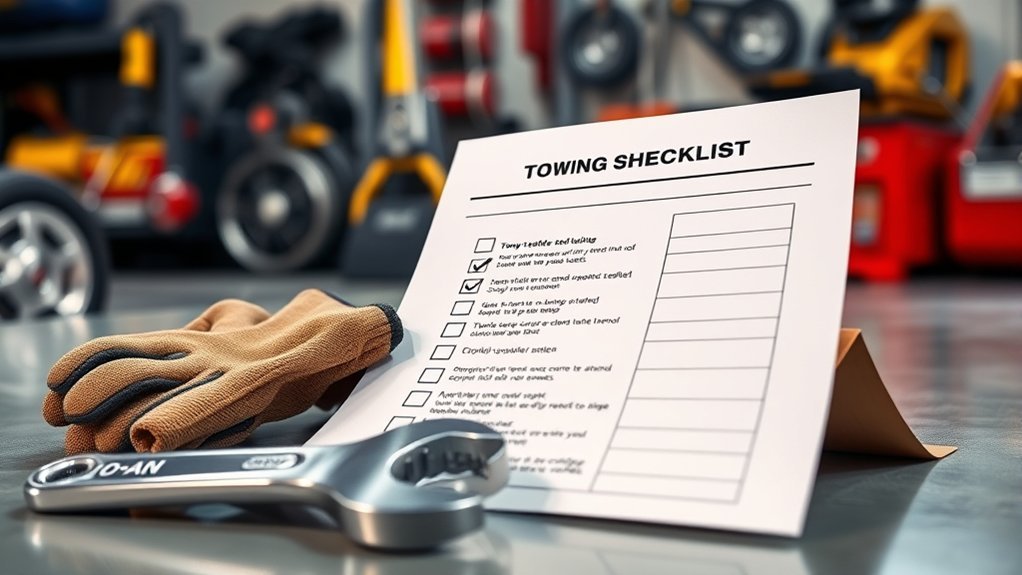
Before hitting the road, having a printable towing safety checklist at your fingertips can greatly enhance your preparation and peace of mind.
This checklist should include essential inspections of critical components, such as lights, tires, and hitch connections. Verify that all trailer lights function properly, check tire inflation and tread depth, and confirm the secure attachment of safety chains.
Balancing the load in your trailer is crucial—aim for 60% of the weight in the front half to guarantee stability and control.
Additionally, familiarize yourself with local towing laws to avoid legal complications. Regularly completing this checklist promotes preventative maintenance and helps identify potential issues early, saving you from costly repairs.
Keep a printed copy in your glovebox or trailer for quick reference, making sure you’re always prepared and confident while on the road with your trailer accessories.
Frequently Asked Questions
What Is the 80 20 Rule for Towing?
The 80/20 rule for towing states that 80% of your trailer’s weight should be at the front. This weight distribution guarantees ideal towing capacity, enhances stability, and improves handling, making your towing experience safer and more efficient.
What Is the 60/40 Rule When Towing a Trailer?
Think of your trailer as a seesaw; for stability, you need a 60/40 towing weight distribution. This balance enhances control, prevents fishtailing, and guarantees safer travel, optimizing both performance and tire wear on your journey.
What Is the 85% Rule for Towing?
The 85% rule for towing means you shouldn’t exceed 85% of your vehicle’s towing capacity. For instance, if your capacity is 5,000 pounds, the maximum trailer weight should be 4,250 pounds for ideal safety.
What Is the 110 20 Rule for Towing?
The 110 20 rule for towing means you should maintain 110 feet of distance for every 20 mph. Proper towing capacity and weight distribution are essential for safe braking and maneuvering, especially in adverse conditions.
Conclusion
To sum up, having a towing safety checklist isn’t just a good idea; it’s essential for your peace of mind on the road. By regularly inspecting your vehicle and trailer, verifying towing capacity, and securing cargo properly, you can prevent mishaps that could lead to accidents. Remember, even a trusty steed needs a bit of maintenance to keep it running smoothly. So, print that checklist, stay vigilant, and enjoy a safer towing experience every time you hit the road.






Leave a Reply