
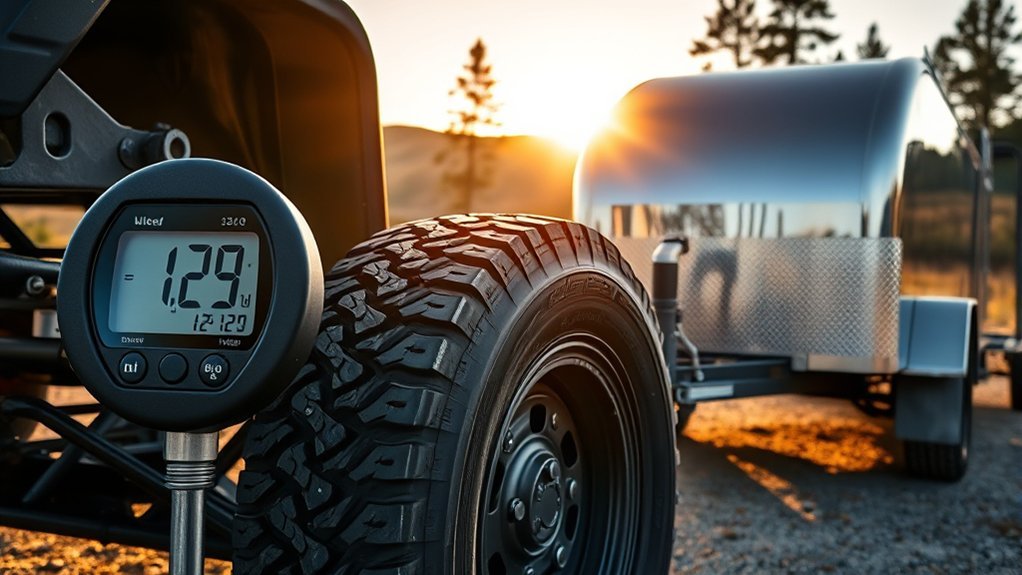
Proper tire pressure is essential for safe towing. Check your owner’s manual for specific recommendations, typically inflating tires to around 40 PSI or maximum cold pressure listed on the sidewall, often between 44 PSI and 65 PSI. Under-inflation can cause blowouts, while over-inflation can lead to harsh rides. Always consider the tongue weight of your load and adjust accordingly. Continue learning about common mistakes and tips for maintaining ideal tire pressure.
Why Proper Tire Pressure Matters When Towing
When you’re towing, maintaining proper tire pressure isn’t just a good practice; it’s vital for safety and performance. Tire safety hinges on correct inflation, which directly influences towing stability. Under-inflated tires flex excessively, generating heat that can lead to catastrophic tire failure.
Conversely, over-inflation results in a harsh ride and diminished grip, jeopardizing your control on the road.
To combat these risks, manufacturers typically recommend increasing tire pressure by 5 PSI or to the maximum cold pressure indicated on the sidewall when towing. This adjustment accommodates the additional load from your trailer, ensuring an adequate contact patch for peak traction.
Increasing tire pressure by 5 PSI or to the max sidewall rating is crucial for safe towing and optimal traction.
Regularly checking and adjusting tire pressure before and during your towing journey is vital, as temperature changes and loading can impact inflation.
Prioritizing proper tire pressure not only enhances your vehicle’s performance but also safeguards against accidents, empowering you to tow with confidence.
How to Adjust Tire Pressure When Towing
To guarantee peak performance while towing, adjusting tire pressure is essential. Start by checking your vehicle’s owner’s manual for specific tire pressure recommendations based on the Gross Vehicle Weight Rating (GVWR). Typically, increasing tire pressure to around 40 PSI enhances stability and minimizes tire wear due to the added load.
For maximum towing safety, inflate tires to the maximum cold pressure listed on the sidewall, which often ranges between 44 PSI and 65 PSI, depending on the load range.
Before and after loading the trailer, always check tire pressure. Proper inflation helps maintain vehicle handling and prevents tire failure from excessive flex and heat.
Remember, under-inflated tires can compromise towing safety, leading to instability and potential blowouts. Regularly monitor and adjust tire pressure based on load conditions to guarantee a safe and efficient towing experience.
Prioritize these adjustments for peak performance on the road.
Finding the Right Tire Pressure for Your Load
Adjusting tire pressure is a fundamental step in guaranteeing safe towing, but finding the right pressure for your specific load takes careful consideration.
Adjusting tire pressure is essential for safe towing and requires careful consideration of your load.
When towing heavy loads, you’ll need to adjust tire pressure to match the increased weight. Here’s how to determine the proper pressure:
- Check Manufacturer Recommendations: Refer to the vehicle and tire manufacturer’s guidelines, typically found on the tire sidewall, which indicate maximum cold pressures—like 44 PSI for Bridgestone Dueller AT tires.
- Account for Tongue Weight: With a tongue weight of 650 lbs, confirm your tires can handle this additional load while maintaining stability.
- Utilize Load and Inflation Tables: These tables provide a clear relationship between load capacity and necessary tire pressure, helping you maintain ideal performance.
Regularly check and adjust tire pressure, especially as temperature changes can affect inflation, guaranteeing safety and vehicle stability during towing.
Top Mistakes to Avoid When Adjusting Tire Pressure for Towing
Though many drivers understand the importance of proper tire pressure when towing, they often make critical mistakes that can compromise safety. Here are the top errors to avoid:
| Mistake | Impact on Safety | Correct Approach |
|---|---|---|
| Under-inflating tires | Increased heat buildup, risk of blowouts | Inflate to recommended levels |
| Relying on sidewall max pressure | Poor handling, unstable towing | Follow manufacturer’s towing specs |
| Ignoring tongue weight | Instability and swaying | Adjust tire pressure for added weight |
| Not monitoring pressure changes | Unsafe conditions due to heat | Regularly check tire pressure |
Easy Ways to Keep Your Tire Pressure Right While Towing
Maintaining the correct tire pressure while towing is essential for guaranteeing safety and performance. Here are some easy ways to keep your tire pressure right:
- Use Tire Pressure Monitoring Systems: Invest in a reliable tire pressure monitoring system (TPMS) to keep an eye on pressure levels continuously, especially under load.
- Check When Cold: Always check tire pressure when the tires are cold, as temperature effects can distort readings. Aim for a minimum of 40 PSI, increasing to the maximum sidewall pressure for heavier loads.
- Regularly Adjust and Monitor: Before and after each towing trip, adjust your tire pressure based on load specifics using load and inflation charts. This guarantees ideal contact patch and improves stability.
Frequently Asked Questions
What Tire Pressure Should I Run When Towing?
When towing, you should inflate your tires to around 40 PSI for ideal towing safety. Regular tire maintenance is essential; check pressure frequently, especially under load, to guarantee stability and performance throughout your journey.
What Is the 5 PSI Rule?
The 5 PSI rule symbolizes stability in towing safety. When you increase tire pressure by 5 PSI, you enhance tire maintenance, ensuring better load handling, reduced wear, and ultimately liberating your journey from unnecessary risks.
What Is the 4 PSI Rule?
The 4 PSI Rule suggests increasing your tire pressure by 4 PSI when towing, enhancing towing safety. This adjustment accounts for weight distribution and tire pressure factors, promoting better stability and reducing tire wear during your journey.
Is 40 PSI Too Much Tire Pressure?
Think of your tires as the foundation of a sturdy house. While 40 PSI isn’t too much for towing, it enhances towing safety and minimizes tire wear, ensuring a smooth, secure journey with your load.
Conclusion
In summary, maintaining the right tire pressure while towing is essential for a safe, stable, and successful journey. Properly inflated tires guarantee peak handling, enhance fuel efficiency, and minimize the risk of blowouts. By regularly checking and adjusting your tire pressure according to your load, you’ll foster a flawless towing experience. Remember, a few simple steps can make a significant difference, so don’t neglect this important aspect of vehicle maintenance. Safe travels and steady towing!






Leave a Reply