

For a successful sand driving adventure, start with a 4WD or AWD vehicle and lower your tire pressure to around 18-20 PSI for better traction. Maintain a steady speed of 15 MPH and use low-range gears for smoother acceleration. If you get stuck, clear sand around your tires, rock the vehicle gently, and utilize traction aids. Keep essential gear handy, like a shovel and tow strap, for recovery. There’s so much more to discover to enhance your beach driving experience!
Essential Vehicle Preparation for Beach Driving
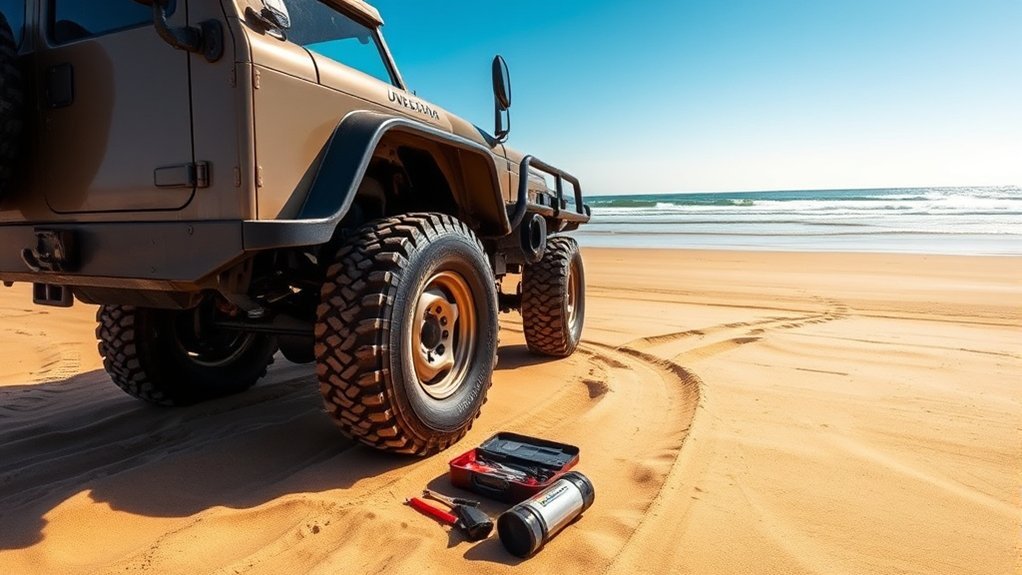
When you’re gearing up for a day of beach driving, ensuring your vehicle is prepared is essential for a safe and enjoyable experience.
Start with vehicle maintenance; choose a 4WD or AWD with high ground clearance, like a Mitsubishi Pajero Sport or Triton, to conquer sandy terrains effortlessly.
Ensure your vehicle is a 4WD or AWD with high ground clearance for tackling sandy terrains with ease.
Before you hit the sand, lower your tire pressure to 18-20 PSI. This simple adjustment boosts weight distribution, helping you glide over loose sand without getting stuck.
Pack essential tools, including a tire pressure gauge, shovel, traction aids, sand flag, and an air compressor for emergencies.
Upon arrival, inspect beach conditions, searching for packed, dark sand paths to navigate. Avoid loose, dry sand to minimize risks.
Finally, always check weather and tide conditions to steer clear of water hazards.
Choosing the Right Tires for Sand Conditions
When it comes to tackling sandy terrains, choosing the right tires is essential for a smooth ride.
You’ll want to evaluate options like dedicated sand tires or all-terrain models, and remember to adjust your tire pressure for best flotation.
The right tread pattern can make all the difference in maintaining traction and preventing you from getting stuck.
Tire Types to Consider
Choosing the right tires for sand driving can make all the difference in your experience on the dunes or beaches. Dedicated sand tires are your best bet, boasting wider treads and softer rubber for unbeatable traction on loose sand.
If you’re a casual beachgoer, all-terrain tires provide a nice balance, delivering comfort on the road while still handling packed and loose sand effectively. Mud tires can work, but their aggressive patterns may add rolling resistance.
For serious enthusiasts, consider BF Goodrich Baja tires—they excel in soft sand with excellent steering response.
Air Pressure Adjustments
Adjusting tire pressure is essential for maximizing your performance on sandy terrains. Lowering your tire pressure to around 18-20 PSI expands the tire’s surface area, enhancing traction and preventing you from sinking into loose sand.
If you’re feeling adventurous, airing down to 15 PSI can provide even better flotation, but be cautious—don’t drop below 10 PSI to avoid losing the tire bead.
Before making adjustments, assess the sand conditions by walking on the surface; this helps you determine if it’s loose or packed, guiding your decision.
Regularly check and adjust your tire pressure based on your vehicle’s load and the terrain, ensuring you maintain ideal traction and handling while conquering the sandy landscape.
Tread Patterns for Traction
To conquer sandy terrains effectively, selecting the right tread pattern is essential for maintaining traction and avoiding getting stuck.
Dedicated sand tires with wider treads offer superior flotation, allowing your vehicle to glide over soft surfaces effortlessly. While all-terrain tires might work for occasional beach trips, specialized sand tires greatly enhance your performance in loose, grainy conditions.
Look for tread patterns with larger voids and aggressive designs; these channel sand away, leading to improved grip and steering response.
For ideal traction improvement, don’t forget to air down your tires to around 15-20 PSI. Lower pressures expand the contact patch, helping prevent sinking and ensuring you stay free and mobile in the sand.
Choose wisely, and enjoy your sandy adventures!
Mastering Tire Pressure for Better Sand Traction
As you gear up for a day of driving on sandy terrain, mastering tire pressure can make all the difference in your vehicle’s performance. Lowering your tire pressure to around 18-20 PSI enhances traction by expanding the tire’s footprint, helping you glide over loose sand instead of sinking.
Mastering tire pressure is key for sandy driving; lower to 18-20 PSI for better traction and a smoother ride.
Start with 20 PSI and gradually adjust to 15 PSI for ideal flotation. While aiming for 10 PSI might sound tempting, it can lead to bead seating issues, so stick to 15 PSI for most sand conditions.
Regularly check your tire pressure based on your vehicle load and current sand conditions to guarantee you’re maximizing your vehicle’s capabilities. Keeping your pressure above 15 PSI generally means you won’t need beadlock wheels, simplifying your beach-driving experience.
With the right tire pressure, you’ll navigate sandy landscapes with confidence, embracing the freedom of the open dunes.
Beach Driving Techniques for Acceleration and Steering
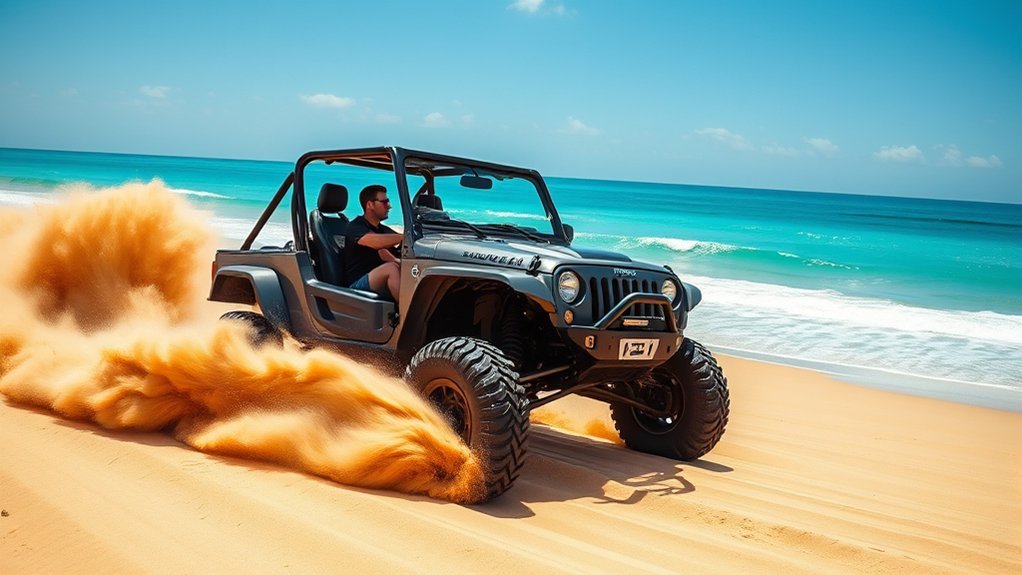
With the right tire pressure set, you’re ready to tackle the sandy terrain ahead. To navigate smoothly, maintain a steady speed of around 15 MPH. This guarantees you keep momentum without losing traction. Use low-range gears for ideal torque and smoother acceleration techniques, avoiding wheel spin.
While steering, make gradual adjustments rather than sharp turns to enhance stability. If you feel wheel spin, ease off the throttle instead of flooring it—this helps regain traction without digging deeper. Keeping your vehicle in four-wheel drive is essential for better performance on the beach.
| Acceleration Techniques | Steering Adjustments |
|---|---|
| Maintain 15 MPH | Smooth, gradual turns |
| Use low range gears | Avoid sharp angles |
| Ease off if spinning | Keep steady pressure on wheel |
| Stay in four-wheel drive | Adjust based on terrain |
Master these techniques for a liberating beach adventure!
Effective Recovery Techniques for Getting Unstuck on the Beach
Getting stuck on the beach can be frustrating, but knowing how to recover quickly can save your adventure. Start by clearing the sand from around your tires with a shovel, creating a path for better traction recovery.
If you can, try reversing slowly; the compacted tracks left by other vehicles can provide the grip you need to escape.
Utilize traction aids like MAXTRAX or wooden boards under your tires for sand assistance, giving you the boost to drive out of that tricky spot.
Another effective technique is rocking your vehicle—gently accelerate forward and then reverse to compact the sand and build momentum.
Remember, avoid continuous forward driving when stuck; it only digs your tires deeper into the sand.
What You Need to Know for Safe Beach Driving?
When it comes to safe beach driving, understanding the unique challenges of sand is essential for a smooth experience.
Start by lowering your tire pressure to 18-20 PSI; this boosts your traction and keeps you from sinking. Opt for low-range gearing when maneuvering through soft sand to maintain control and build momentum.
Always check local regulations and monitor weather and tide conditions—stay at least four meters from the high tide mark to avoid water hazards.
Stick to packed, dark sand where other vehicles have traveled; this greatly reduces your chances of getting stuck. Avoid loose, dry sand, as it can be treacherous.
Finally, carry essential recovery gear like a shovel and traction aids; you’ll thank yourself if you find your vehicle bogged down.
Embrace the freedom of beach driving, but prioritize beach safety to guarantee an exhilarating adventure without the worry.
Must-Have Gear for Beach Driving Adventures
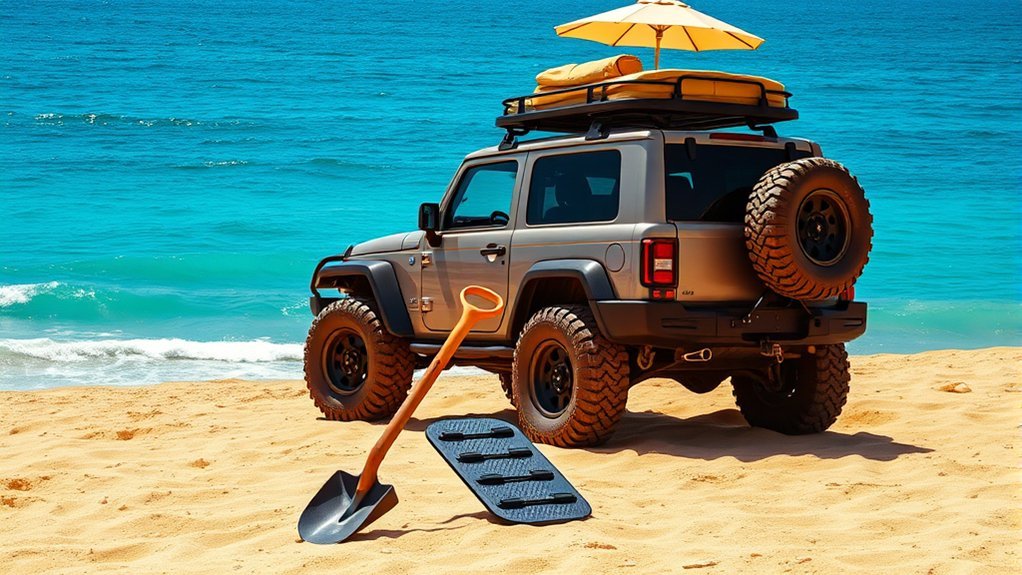
To guarantee your beach driving adventure goes off without a hitch, packing the right gear is essential. Here’s a quick look at must-have beach driving essentials:
| Gear | Purpose |
|---|---|
| Shovel | Dig you out if you get stuck in the sand |
| Tyre Pressure Gauge | Monitor and adjust tyre pressure for traction |
| Sand Flag | Enhance visibility and safety on busy beaches |
| Air Compressor | Reinflate tyres after driving on sand |
| Tow Strap | Assist in recovery situations when bogged down |
| First-Aid Kit | Address minor injuries or emergencies |
These items are more than just safety gear; they’re your ticket to freedom on the beach. With the right gear, you can navigate sandy terrain confidently and enjoy your adventure without worry. So gear up and embrace the open coastline!
Community Support Resources for Beach Drivers
Packing the right gear prepares you for the sandy challenges ahead, but connecting with the beach driving community can elevate your adventure even further. By engaging in local meetups, you’ll tap into a wealth of knowledge from seasoned drivers who can share invaluable insights and techniques for maneuvering tricky terrains.
You’ll find that many members are enthusiastic to assist, offering recovery support if you ever find yourself stuck in the sand.
Don’t underestimate the power of online forums and social media groups dedicated to beach driving. These platforms let you exchange tips, personal success stories, and advice with fellow enthusiasts, fostering a sense of camaraderie and support.
Plus, discussing local regulations within these circles keeps you informed and compliant with permits or restrictions. Building relationships with experienced drivers boosts your confidence and skills, making every beach adventure more liberating and enjoyable.
Embrace the community—your sandy escapades will thank you!
Frequently Asked Questions
What’s the Best Way to Drive on Sand?
To drive on sand effectively, lower your sand tire pressure to 18-20 PSI for better traction. Maintain steady momentum and smooth steering to guarantee vehicle stability, avoiding sharp turns for a liberating, enjoyable ride.
What Is the 123 Rule in Driving?
The 123 rule in driving emphasizes maintaining a safe distance—one car length for every 10 mph—ensuring driving safety. This approach helps you react promptly to sudden stops, especially in unpredictable conditions like sand.
What Are the 5 C’s of Safe Driving?
The 5 C’s of safe driving are car maintenance, control, caution, communication, and competence. By mastering these driving techniques, you’ll enhance your safety and confidence on the road, allowing for a liberating driving experience.
What Are the 4 D’s of Driving?
The 4 D’s of driving are: Drive steadily, Decline sharp turns, Dig out tires when stuck, and maintain Distance from water’s edge. These driving techniques enhance safety measures, ensuring a smooth and liberating experience on sandy terrain.
Conclusion
As you gear up for your beach driving adventure, remember that preparation is your best friend. With the right vehicle setup, tire pressure, and techniques, you’ll glide over the sand like a dolphin dancing through the waves. Embrace the thrill of the journey, and don’t hesitate to seek help if you find yourself stuck. With the right mindset and gear, you’re not just driving; you’re crafting unforgettable memories under the sun. Happy driving!






Leave a Reply