

If you’re looking to enhance your high-performance driving skills, racing schools in the USA offer a range of options, from beginner courses to advanced training. You’ll learn critical techniques, gain valuable feedback from experienced instructors, and boost your confidence behind the wheel. Costs vary widely, so consider what fits your budget. Plus, you’ll have opportunities for licensing and connecting with fellow racing enthusiasts. Keep exploring to discover how you can maximize your racing school experience further!
Understanding High-Performance Driving Schools
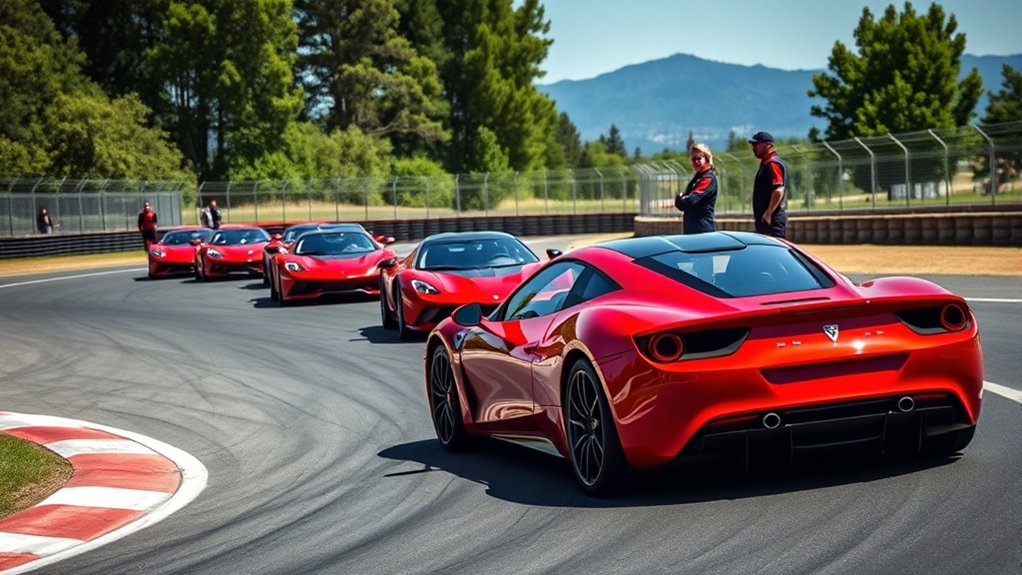
When you think about high-performance driving schools, you might picture adrenaline-fueled laps on a racetrack, but these programs are about so much more than just speed. They focus on enhancing your car control skills under high-performance conditions, emphasizing essential driving techniques for turning, braking, and throttle application.
High-performance driving schools enhance your car control skills, focusing on turning, braking, and throttle application beyond just speed.
Unlike racing schools, which prioritize competition, high-performance driving schools aim to improve your lap times and overall driving safety.
These programs cater to various skill levels, from novice to advanced, ensuring everyone can find a suitable fit. Many schools provide high-performance vehicles, allowing you to experience these powerful machines without needing your own.
Costs can vary widely, ranging from approximately $250 to over $3,000, depending on the services offered. By participating, you’ll not only refine your driving skills but also gain a deeper understanding of the thrill and responsibility that comes with commanding high-performance vehicles.
Types of Racing Schools: Finding Your Fit
If you’re looking to take your driving skills to the next level in a competitive environment, understanding the different types of racing schools is key.
High-performance driving schools enhance your car control and driving techniques, catering to various racing styles and skill levels. They typically offer programs ranging from $250 to $3,895, often providing vehicles for training.
On the other hand, specialized racing schools, like Team O’Neil Rally School and DirtFish Driving School, immerse you in unique experiences, focusing on rally driving or specific track types.
If you’re drawn to open-wheel racing, Skip Barber Racing School could be your ideal fit.
Additionally, programs from schools like Cadillac V-Performance Academy offer complimentary courses with vehicle purchases, appealing to new car buyers.
Completing certain programs can even pave your way to SCCA regional racing licenses, giving aspiring racers a competitive edge.
Choose wisely to find the right fit for your aspirations!
Key Benefits of Racing Schools
Attending a racing school not only boosts your driving skills but also builds your confidence in high-speed environments. You’ll receive hands-on instruction from seasoned instructors who teach you critical techniques like proper braking, throttle application, and cornering.
These advanced techniques enhance your overall car control and safety, allowing you to navigate tracks with ease. Many programs grant you the chance to earn an SCCA regional license, opening doors to competitive racing.
Advanced techniques improve car control and safety, enabling smooth navigation on tracks and the opportunity for competitive racing through an SCCA regional license.
You’ll experience realistic racing scenarios tailored to your skill level, whether you’re a novice or looking to refine your expertise. Graduates often report a newfound proficiency in both competitive racing and everyday driving, transforming each journey into an exhilarating adventure.
Ultimately, racing schools empower you with the skills and confidence to conquer the road, liberating your driving experience in ways you never imagined possible.
Cost Breakdown for Racing Schools
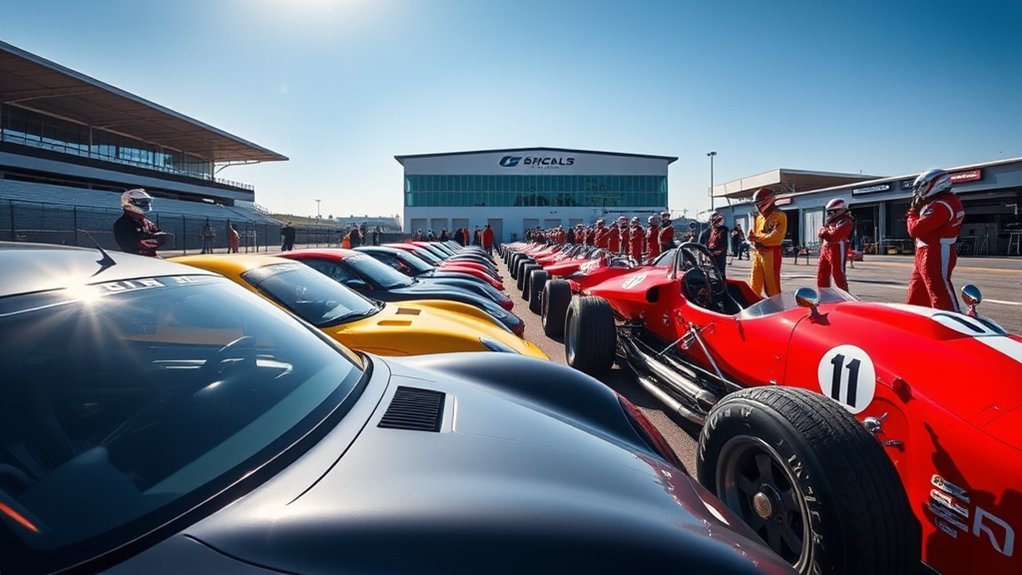
Racing schools can range considerably in cost, making it essential to understand what you’re getting for your investment. Programs like the Allen Berg Motorsports USA Inc. charge about $1,200 for a two-day Advanced Racing School, while the Ron Fellows Performance Driving School can set you back around $3,895 for three days.
Don’t forget the SCCA membership fee, typically $65 plus regional dues, and a Novice Permit fee of $110, which are necessary for participation.
When budgeting, consider potential rental fees for race-prepped cars, with Spec Miata rentals being a popular choice for beginners. The Cal Club Super School offers a more affordable option at about $440, but additional costs can quickly accumulate.
Overview of Racing School Curriculum and Activities
When you enroll in a racing school, you’ll experience a blend of core driving techniques and hands-on track sessions that sharpen your skills.
Instructors guide you through practical exercises, ensuring you grasp essential concepts while prioritizing safety and race etiquette.
This all-encompassing curriculum prepares you for the demands of competitive racing and enhances your overall driving finesse.
Core Driving Techniques
Mastering core driving techniques is essential for anyone looking to excel on the racetrack. Racing schools focus on critical skills like turning, braking, and throttle application, all designed to enhance your overall car control.
You’ll participate in practical sessions, including lead-follow laps, where you’ll shadow instructors to grasp the racing line and vehicle dynamics in real-time. Classroom instruction complements hands-on experiences, covering racing theory, vehicle handling, and safety protocols.
Tailored curriculums cater to various skill levels, ensuring both novices and advanced drivers find opportunities for improvement. Continuous feedback from seasoned instructors during on-track sessions refines your driving techniques, boosting your confidence in high-speed scenarios.
Embrace this journey, and watch your skills soar!
Track Sessions Overview
How do you make the most of your time on the track? Embrace the variety of track session formats your racing school offers. Each session is designed to enhance your on-track experiences, focusing on critical skills like braking, throttle control, and cornering.
You’ll engage in lead-follow laps, timed runs, and skill drills, all crafted to build your confidence and proficiency. While you’re honing these techniques, you’ll also grasp essential theoretical concepts, such as vehicle dynamics and racing lines.
With tiered programs available, both novices and advanced drivers find appropriate challenges to elevate their skills. Remember, every moment spent on the track is an opportunity to liberate your inner racer and refine your driving prowess.
Instructor Guidance Methods
While you immerse yourself in the curriculum at a racing school, you’ll find a balanced mix of classroom instruction and hands-on driving experiences designed to enhance your skills.
You’ll explore vehicle dynamics, racing lines, and advanced techniques, building both confidence and competence.
Through lead-follow laps, you’ll observe instructors in action, applying what you learn in real-time on the track.
High-performance driving sessions focus on threshold braking, cornering techniques, and throttle control, pushing the limits of your vehicle in a safe environment.
Throughout your journey, expect personalized coaching and instructor feedback tailored to your unique skill level and progress.
This tailored approach guarantees you gain the insights necessary for mastering the art of racing, preparing you for the track ahead.
Essential Equipment for Racing Schools
When you decide to enroll in a racing school, understanding the essential equipment you’ll need is important for both your safety and performance on the track.
First and foremost, you’ll need a race car; street vehicles aren’t allowed. A race-prepped car must include a roll cage, fire suppression system, a qualified racing seat, harness, and safety nets to protect you during intense maneuvers.
You’ll also need a valid logbook for the car, documenting its compliance with technical inspection standards.
Personal safety equipment is equally significant: a helmet, racing suit, gloves, and shoes that meet specific safety requirements guarantee you’re protected.
If you don’t own a race-prepped vehicle, consider renting a Spec Miata, a popular choice for beginners.
Investing in the right safety equipment and a reliable race car is essential for a successful and exhilarating experience on the track, allowing you to focus on honing your skills.
What Licensing and Certifications Can You Get After Training?
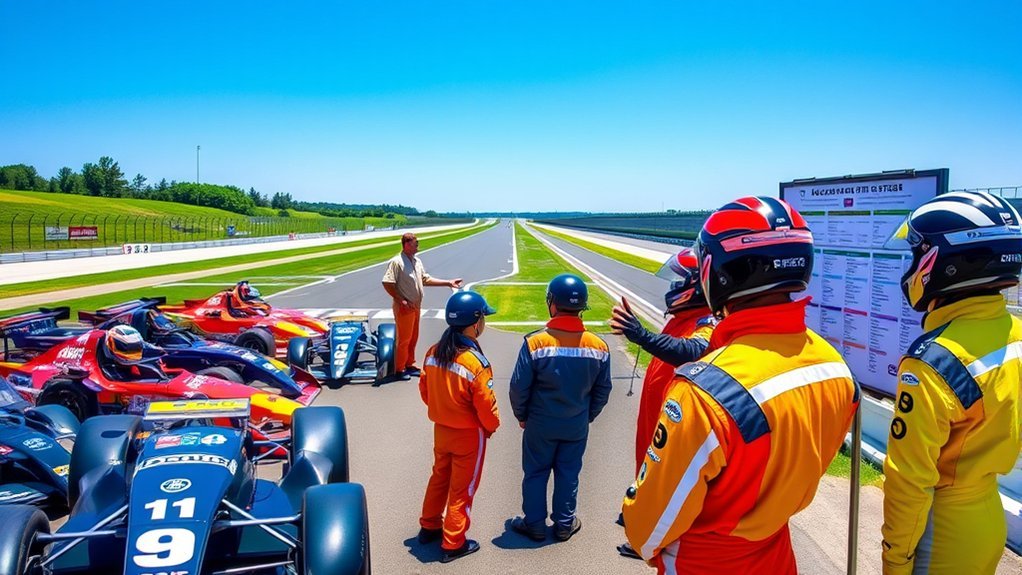
After completing your training at a racing school, you can access various licensing opportunities that enhance your competitive edge.
For instance, many programs qualify you for a novice permit or even a full regional racing license, allowing you to participate in sanctioned events.
Understanding these options can help you set your racing goals and take your passion to the next level.
Novice Permit Eligibility
Beginning your racing journey opens up exciting opportunities for novice drivers, especially when it comes to obtaining a permit. Completing specific racing programs, like the three-day Road Racing School, can make you eligible for a regional SCCA license. Many reputable schools, such as Skip Barber Racing School and Allen Berg Motorsports USA Inc, offer novice training that meets permit requirements.
| Program | Outcome |
|---|---|
| Road Racing School | SCCA License Eligibility |
| Skip Barber Racing School | Novice Permit |
| Allen Berg Motorsports USA | Classroom + Practical Experience |
| Additional Events | Enhanced Credentials |
| Advanced Programs | Pathway to Full Competition License |
With your novice permit, you can participate in thrilling racing events and gain invaluable experience.
Full Competition License
Earning a full competition license opens up a world of possibilities for serious racers, as it not only validates your skills but also grants access to a variety of sanctioned events.
This license sets the stage for your racing career, connecting you to vital competition pathways.
Here are some avenues to explore:
- Complete a three-day program at the Road Racing School for SCCA regional eligibility.
- Join the two-day Advanced Racing School at Allen Berg Motorsports USA for full competition licensing.
- Attend the Autobahn Driver Academy for a Novice Permit +2 School, perfect for honing skills.
- Finish the four-day Racing School at Fast Lane Racing School to gain your full competition license.
Understanding license requirements is essential for your journey toward professional racing.
Regional Racing License
A regional racing license is an essential stepping stone for aspiring racers, offering the chance to compete in various sanctioned events.
To meet regional license requirements, you’ll need to complete specific racing school prerequisites. Programs like the three-day Road Racing School and the Skip Barber Racing School can qualify you for an SCCA regional license upon successful completion.
Additionally, Bertil Roos Racing School provides pathways to this license, allowing you to engage in competitive racing. Many high-performance driving schools, including Allen Berg Motorsports and Autobahn Driver Academy, offer novice permits too.
These options enable you to progress through various levels of racing, helping you unlock your potential on the track and pursue your racing dreams.
How to Connect With Fellow Racing Enthusiasts
How can you immerse yourself in the vibrant world of racing and connect with fellow enthusiasts? Engaging with others who share your passion can elevate your racing experience.
Immerse yourself in racing and connect with fellow enthusiasts to enhance your passion and experience.
Here are some effective networking strategies to foster community engagement:
- Join local car clubs or organizations like the Sports Car Club of America (SCCA).
- Attend track days or high-performance driving schools to network with like-minded drivers.
- Utilize social media platforms and online forums, such as Reddit or Facebook groups, to expand your connections.
- Participate in racing events or volunteer at local races to meet other racers and industry experts.
Maximizing Your Racing School Experience
Maximizing your racing school experience requires careful planning and a proactive approach, so it’s essential to choose a program that aligns with your skill level and aspirations.
Research your options, like the Skip Barber Racing School for beginners or the Ron Fellows Performance Driving School for advanced training. Before you arrive, prepare mentally by familiarizing yourself with manual transmission operation, as it’s vital for most schools.
Physical conditioning also matters; stay fit to handle the demands of racing. Bringing a supportive friend can ease logistics and provide emotional support during those intense training sessions.
Review the curriculum and requirements ahead of time, ensuring you’re ready for any specifics, such as needing a race-prepped car.
Finally, embrace the feedback from your instructors. Their real-time insights are invaluable to enhancing your driving skills and boosting your confidence on the track.
Frequently Asked Questions
What Should I Wear to a Racing School?
You should wear race gear like a helmet, gloves, and a fire-resistant suit. Safety attire is essential; it protects you while allowing freedom of movement. Choose comfortable, breathable fabrics to enhance your racing experience.
Are There Age Restrictions for Attending Racing Schools?
While age requirements vary, most racing schools welcome participants 16 and older. Youth programs often cater to younger enthusiasts, fueling their passion for speed. So, check specific schools for details and ignite your racing journey!
Can I Bring My Own Car to Racing School?
You can often bring your own car to racing school, but check the specific car specifications and insurance requirements beforehand. Ensuring your vehicle meets their standards will enhance your experience and freedom on the track.
What Is the Average Class Size at Racing Schools?
The average class size at racing schools usually ranges from 5 to 15 students. This allows for personalized instruction, enhancing class dynamics and enriching your student experience, making learning both effective and engaging.
How Can I Prepare Mentally for Racing School?
To prepare mentally for racing school, focus on your race strategy. Studies show 90% of successful racers emphasize mental focus. Visualize scenarios and practice stress management techniques to enhance your performance and boost your confidence.
Conclusion
Ultimately, attending a racing school can transform your driving skills and deepen your passion for motorsports. Did you know that 70% of graduates report feeling more confident behind the wheel? This statistic highlights the significant impact these programs can have on your performance and enjoyment of driving. By investing in this experience, you’re not just learning to race; you’re joining a community of enthusiasts who share your excitement and drive for speed.


Leave a Reply