
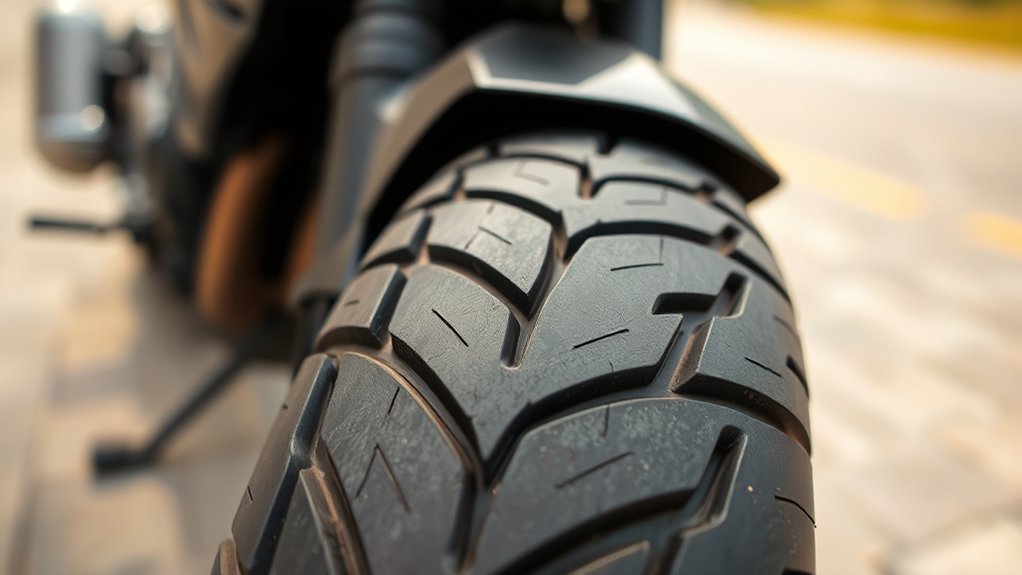
Understanding motorcycle tire wear is essential for your safety and performance. Pay attention to tire wear patterns like cold or hot tears, which indicate inflation issues. Regularly inspect for signs of deterioration, such as cracks, bulges, and uneven wear. Proper tire maintenance, including pressure checks and rotation, helps extend tire life. Replace tires when tread depth drops below 1.5mm or when visible damage occurs. Stay informed; there’s much more to explore about keeping your ride safe and enjoyable.
Understanding Motorcycle Tire Wear Patterns
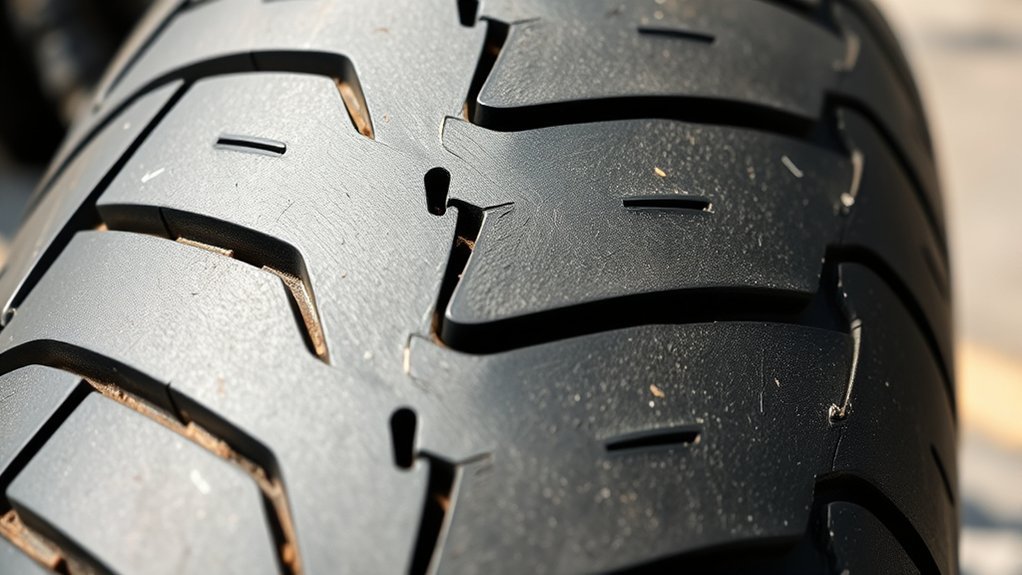
When you understand motorcycle tire wear patterns, you can diagnose potential issues before they escalate. Recognizing these patterns is essential for maintaining tire performance and ensuring your safety on the road.
Cold tears, deep and fingernail-shaped, often signal overinflation, while hot tears, shallow and arc-shaped, indicate underinflation. Also, keep an eye on suspension settings; improper adjustments lead to non-uniform wear, with raised edges on the tread.
Geometry tears, appearing as uniform bands, suggest your weight distribution is off, causing excessive front tire wear during turns. Aim for a peak wear pattern resembling a beach at low tide, showcasing balanced tread depth for longevity and grip.
Regularly inspect for discolored areas, especially a blue tint, which can reveal surface oils affecting your tires’ ability to perform effectively. Keeping these factors in mind empowers you to ride with confidence and freedom.
Recognizing the Signs of Deteriorating Tires
As you ride, being vigilant about your tires’ condition is essential for your safety and performance.
Regularly inspect your tire tread; it should never dip below 1.5mm for maximum grip. Look for tire aging signs, like small cracks or crazing on the surface, which can indicate potential slow leaks and lead to blowouts.
Inspect your tire tread regularly; it must stay above 1.5mm to ensure optimal grip and safety.
Bulges are a serious concern—these signify severe damage that requires immediate replacement. Uneven wear patterns, such as chicken strips, signal riding habits that may cause premature deterioration.
Keep an eye out for cuts, punctures, or any unusual wear; these issues can greatly affect performance. By recognizing these signs early, you can maintain your freedom on the road and guarantee a safer ride.
Always remember, a well-maintained tire isn’t just a necessity; it’s a commitment to your riding experience and safety.
Identifying Common Causes of Tire Degradation
Tire pressure management is essential for maximizing tire life and performance, as both underinflation and overinflation can lead to distinct wear patterns.
Additionally, improper suspension setup can cause uneven tire degradation, impacting your ride quality and safety.
Understanding these common causes will help you maintain ideal tire health and enhance your riding experience.
Tire Pressure Management
Proper tire pressure management is essential for ensuring your motorcycle’s performance and safety. Maintaining the correct tire pressure not only extends tire lifespan but also enhances grip and stability.
Check your tire pressure at least once a month and before long journeys, taking cold readings for accuracy. Underinflation can cause excessive heat build-up, leading to dangerous hot tears, while overinflation reduces the contact patch, increasing the risk of cold tears.
Regular pressure monitoring is vital, so inspect valve dustcaps and replace any that are damaged to prevent air loss.
Suspension Setup Issues
When your motorcycle’s suspension isn’t set up correctly, it can lead to significant tire degradation, impacting both performance and safety.
Improper spring adjustments or shock absorber damping can cause uneven wear patterns, reducing your tire’s lifespan. Suspension geometry issues, like misalignment, may also distribute weight unevenly, leading to premature degradation.
An overly stiff suspension results in a harsh ride, causing tires to lose contact with the road, while a soft setup allows excessive tire movement, leading to overheating and surface wear.
Regular suspension tuning, tailored to your riding style and conditions, is essential. By making these adjustments, you’ll enhance tire performance, guarantee ideal handling, and enjoy a safer, more liberated ride.
How to Inspect for Common Tire Wear Patterns
To keep your motorcycle tires safe and performing well, you need to conduct regular inspections for common wear patterns.
Start by visually examining the tread for signs like scalloping or flat spots, which can indicate underlying issues.
Don’t forget to check for cracks and bulges that could signal more serious damage, ensuring your tires are up to the task on the road.
Common Wear Indicators
Understanding how to inspect for common tire wear patterns is essential for maintaining your motorcycle’s performance and safety.
Start by checking your tire tread with a depth gauge or the dime test—ensure it’s at least 1.5mm deep for ideal grip.
Look for uneven wear patterns like chicken strips or flat spots; these can signal issues with your riding style or tire pressure that need correction.
Inspect for crazing, small cracks indicating aging, and bulges on the tire surface, which require immediate replacement.
Finally, watch for discoloration or unusual surface patterns, as these may point to overheating, impacting both performance and longevity.
Regular checks can empower your ride and keep you safe on the road.
Visual Inspection Techniques
Regular visual inspections are key to identifying tire wear patterns that could affect your motorcycle’s safety and performance.
Start by measuring tread depth; it shouldn’t drop below 1.5mm. Use the dime test: if the top of the dime’s mast is visible in the tread, it’s time for a replacement.
Look for signs of tire aging, like crazing or small cracks near the rim, which can lead to slow leaks and blowouts.
Check for bulges on the tire surface; these indicate severe damage requiring immediate action.
Finally, monitor for uneven wear patterns such as chicken strips or flat spots, pointing to improper riding habits or tire degradation.
Regular checks will keep your ride safe and liberating.
Key Tire Maintenance Practices for Extended Longevity
While it might be easy to overlook, proper tire maintenance plays an essential role in extending the life of your motorcycle’s tires. Start by regularly checking tire pressure at least once a month and before long rides, confirming it meets the manufacturer’s recommended levels. This simple step prevents uneven wear and enhances longevity.
Proper tire maintenance, including regular pressure checks, is crucial for extending your motorcycle tires’ lifespan and ensuring optimal performance.
Don’t forget about tire cleaning—removing debris and contaminants keeps your tires in top shape and guarantees peak grip.
Additionally, practice tire rotation periodically, especially if your motorcycle has uneven weight distribution, to promote even wear across all tires.
Inspect your tires for visible damage such as cuts or bulges, and replace them if they reach legal limits.
Finally, maintaining proper suspension setup and alignment is vital; incorrect settings can lead to uneven wear patterns, compromising both performance and lifespan.
Maintaining Proper Tire Pressure for Safety
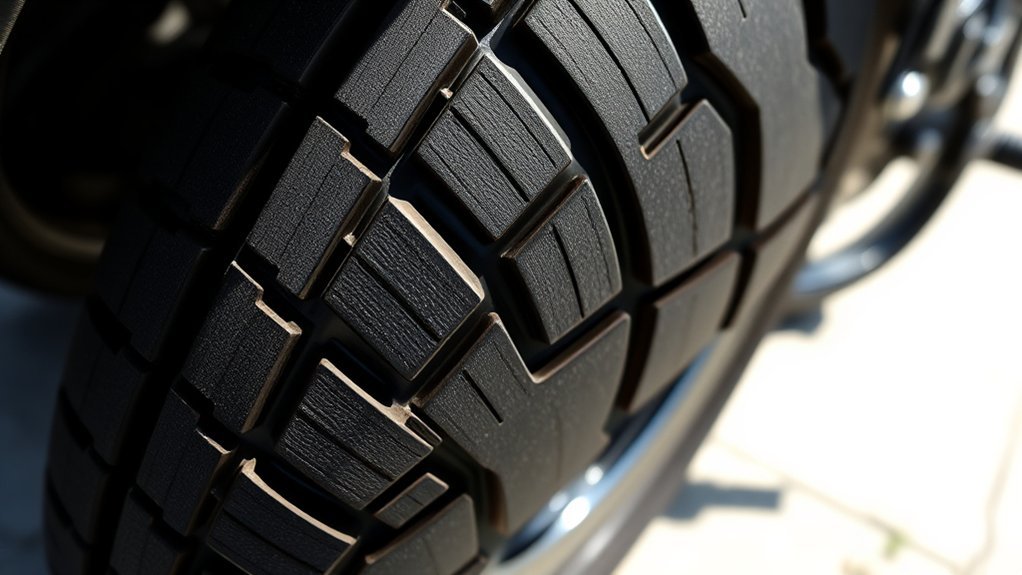
Maintaining proper tire pressure is essential for guaranteeing both your safety and your motorcycle’s performance. Regular checks can prevent issues that may arise from air loss or incorrect inflation.
- Always measure tire pressure when the tires are cold to guarantee accurate readings.
- Refer to your owner’s manual for the recommended tire pressure levels; this info is your guide to ideal safety.
- Replace valve dust caps and examine valve assemblies regularly to avoid any air loss.
Underinflated tires can lead to uneven wear and a higher risk of blowouts, while overinflated tires reduce grip and increase wear.
Make it a habit to check your tire pressure at least once a month and before long rides. By staying proactive, you guarantee your riding experience is exhilarating, safe, and free from unnecessary surprises.
Your motorcycle deserves the care, and so do you!
When to Replace Your Motorcycle Tires?
Knowing when to replace your motorcycle tires is crucial for your safety and performance on the road. Start by checking the tread depth; if it falls below 1.5mm, it’s time for tire replacement. Insufficient tread greatly compromises your grip, especially in wet conditions.
Inspect your tires for visual signs of aging like cracks, bulges, or crazing, which indicate they’re nearing the end of their lifespan, regardless of tread depth. Uneven wear patterns, such as excessive chicken strips or flat spots, also signal the need for replacement to maintain ideal handling.
Don’t overlook tire discoloration or surface degradation after heat cycles, as these can affect rubber effectiveness.
Finally, replace any tires showing visible damage like punctures or deformation immediately to prevent tire failure. Prioritizing these checks will keep your ride thrilling and safe!
Frequently Asked Questions
How Can I Choose the Right Motorcycle Tire for My Bike?
To choose the right motorcycle tire, check your bike’s tire specifications and match them with appropriate tread patterns. Consider your riding style and conditions, ensuring you find tires that offer the best grip and performance.
What Is the Average Lifespan of Motorcycle Tires?
Typically, motorcycle tires last about 5,000 to 10,000 miles. Proper tire maintenance and inspecting tread patterns can greatly prolong their life. Stay savvy and safeguard your ride for an exhilarating journey ahead!
Can I Mix Different Tire Brands on My Motorcycle?
You can mix tire brands, but it’s risky. Different tire performance can lead to safety concerns, affecting handling and stability. For the best ride, stick to the same brand and specifications for both tires.
How Does Riding Style Affect Tire Wear?
When you ride like the wind, your riding style greatly impacts tire wear. Aggressive cornering and braking habits can lead to uneven wear, shortening tire life and potentially affecting your motorcycle’s performance and safety.
Are There Specific Tires for Different Weather Conditions?
Yes, there are specific tires for different weather conditions. Selecting tires with suitable tire compounds enhances weather traction, ensuring safety and performance. Choose wisely to maximize your riding experience in various environments and conditions.
Conclusion
In the end, keeping your motorcycle tires in top shape isn’t just about safety; it’s about ensuring your ride remains as exhilarating as the day you bought it. By paying attention to wear patterns, practicing good maintenance, and recognizing when it’s time for a change, you’re not just prolonging tire life—you’re enhancing your journey. So, embrace the road ahead with confidence, knowing your tires are ready to carry you through every twist and turn.






Leave a Reply