

A thorough motorcycle buying checklist is essential for ensuring you don’t miss important details. Start by evaluating the bike’s overall appearance and mechanical performance, including inspections for leaks and the condition of tires and brakes. Test the electrical systems and take the bike for a test ride to gauge handling. Don’t forget to negotiate the price based on your findings. Want to make sure you’re fully prepared? There’s more expert advice to uncover.
Why a Comprehensive Motorcycle Buying Checklist Matters
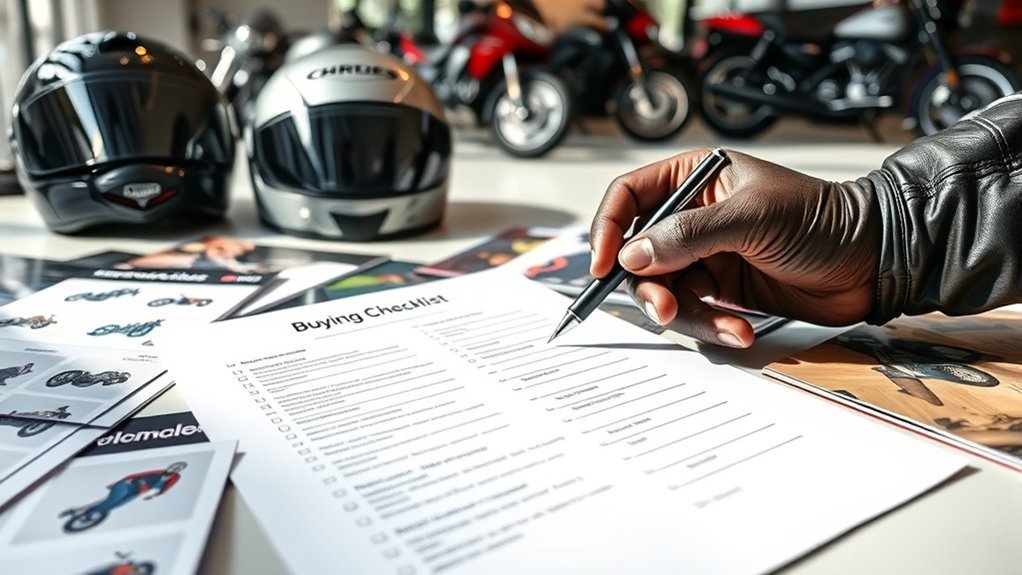
When you’re on the hunt for a motorcycle, having a detailed buying checklist is essential, as it helps you avoid potential pitfalls.
A comprehensive buying checklist is crucial when searching for a motorcycle to help you steer clear of common mistakes.
This all-encompassing tool guarantees you evaluate all critical aspects of the bike, from mechanical to aesthetic conditions.
The importance of documentation can’t be overstated; it allows you to keep track of any issues you find during the inspection.
You’ll feel empowered to negotiate effectively, armed with evidence that supports your requests for price reductions.
Key Components to Inspect Before Buying a Motorcycle
When you’re ready to inspect a motorcycle, start with the overall appearance to gauge its maintenance history and any signs of damage.
Next, evaluate the mechanical performance by checking the engine, brakes, and clutch; these elements are essential for ensuring a safe ride.
Finally, don’t overlook the electrical system’s functionality, as it can save you from unexpected issues down the road.
Overall Appearance Assessment
A motorcycle’s overall appearance speaks volumes about its history and maintenance.
Start by evaluating cleanliness standards; a well-maintained bike should show minimal dirt accumulation, especially in tight spots, and have clean, undamaged plastic fairings.
Next, look for accident signs—check the frame for dents, scrapes, or cracks, and run your hands over surfaces to identify hidden issues.
Don’t overlook the exhaust system; verify it’s securely mounted, free of corrosion, and has no leaks or dents that could impact performance.
Finally, evaluate the paint and finish; unevenness, fading, or rust often indicate neglect.
Tighten your focus on bolts and fasteners, as loose components suggest poor maintenance practices.
A thorough appearance evaluation sets the stage for a wise purchase.
Mechanical Performance Evaluation
After evaluating the overall appearance of the motorcycle, it’s time to focus on its mechanical performance.
Start by inspecting the engine for any oil leaks and listen for unusual sounds that could signal costly repairs. Check the exhaust system for solid mounting and any corrosion or leaks.
Next, test the clutch and brake performance; they should engage smoothly without snags. Verify that the brake rotors meet acceptable thickness limits.
Assess the chain tension and sprocket wear—ensure the chain doesn’t pull more than halfway off the sprocket and that teeth are free from damage.
Finally, evaluate the tires for even wear, sufficient tread depth, and check the age using DOT numbers; replace any older than six years.
Electrical System Functionality
Electrical system functionality is essential for guaranteeing a safe and reliable riding experience, so you’ll want to pay close attention to several key components before purchasing a motorcycle.
Start by inspecting the battery for cleanliness and checking for terminal corrosion; proper battery maintenance guarantees reliable starts.
Test all lights—headlights, brake lights, and turn signals—to confirm they meet safety standards.
Don’t overlook the wiring integrity; examine the wiring harness for secure attachments and verify there are no frayed or loose wires that could lead to failures.
Verify the ignition system and starter by starting the bike and listening for unusual sounds.
Finally, check the instrument cluster to verify all gauges function accurately, helping you monitor your ride effectively.
Preparing for Your Inspection: What You Need to Know
When you’re gearing up to inspect a used motorcycle, having the right tools on hand can make all the difference. Start by gathering essentials like a flashlight, tire pressure gauge, hand tools, and rags for cleaning. These tools will aid in your inspection techniques, enabling you to assess various components effectively.
Gather essential tools like a flashlight and tire pressure gauge to effectively inspect a used motorcycle.
Before you plunge into it, research the specific make and model to understand common issues and maintenance needs. This knowledge will guide your inspection focus.
Create a checklist based on expert recommendations and forums, which can help you track important points, including mechanical, electrical, and bodywork aspects.
Don’t forget to review the motorcycle’s history, including service records and previous ownership details, to inform your evaluation.
Finally, choose a well-lit area for your inspection; good visibility is essential for spotting potential problems. With these checklist tips, you’ll be well-prepared to make an informed decision.
Must-Have Tools for Evaluating Your Motorcycle Purchase
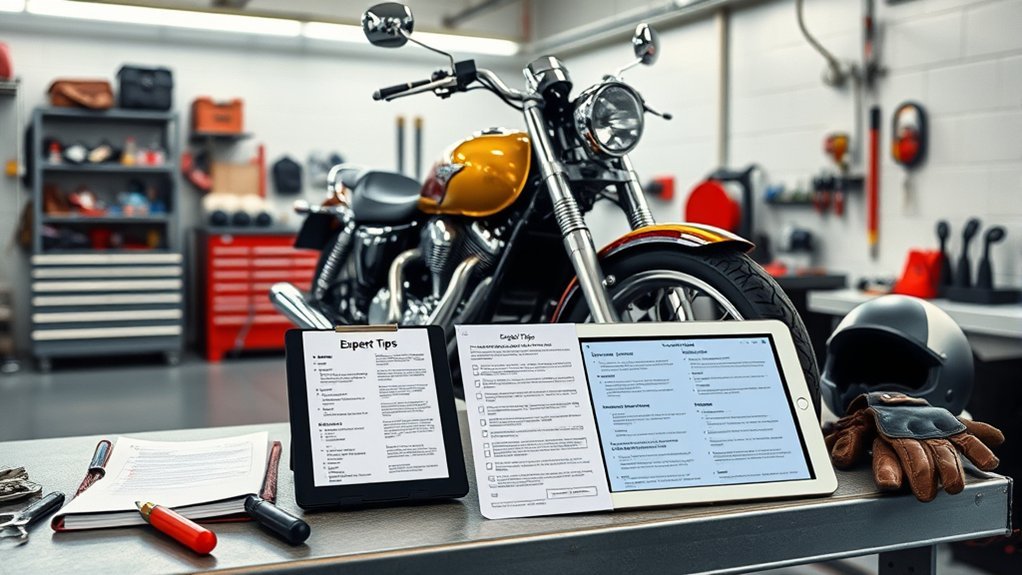
To effectively evaluate a motorcycle purchase, having the right tools at your disposal is crucial.
Start with a flashlight, which helps you inspect the fuel tank interior for rust or sediment, revealing potential maintenance issues. Hand tools like wrenches and screwdrivers are must-have accessories, allowing you to tighten loose parts or make minor adjustments during your inspection.
Don’t forget a tire pressure gauge to guarantee the tires are within the manufacturer’s recommended range for safety and performance.
A wooden dowel can be a game changer—place one end against the engine and the other against your ear to listen for unusual noises that could indicate deeper problems.
Finally, keep some rags handy to clean dirt and grime from critical areas, guaranteeing a thorough evaluation.
With these essential inspection tools in hand, you’re well-equipped to make an informed decision on your motorcycle purchase.
Assessing Condition and Performance of the Motorcycle
When evaluating a motorcycle’s condition and performance, start with a visual inspection to spot signs of maintenance, such as clean areas and intact fairings.
Next, check the exhaust system and other engine components for potential issues that could affect performance.
Visual Inspection Essentials
A thorough visual inspection is essential for evaluating the condition and performance of a motorcycle before you make a purchase.
Start with a bodywork inspection; look for dents, scratches, or any signs of damage that might indicate past accidents or poor maintenance.
Next, check the tire condition—ensure there’s no uneven wear and that the tread depth is adequate. Uneven wear can signal alignment issues or improper inflation.
Don’t overlook the exhaust system for corrosion or leaks, which can impact safety and performance.
Also, evaluate the engine’s cleanliness; excessive dirt or oil might suggest neglect.
Finally, test all lights and indicators to confirm the electrical system is functioning properly, as electrical failures can pose safety hazards on the road.
Engine Performance Indicators
Evaluating engine performance is essential for determining the motorcycle’s overall reliability and longevity. Start by listening for engine noise—unusual sounds like knocking or rattling can signal serious issues. A smooth cold start without excessive smoke indicates good health; dark smoke hints at fuel problems, while blue smoke often means burning oil.
Check for exhaust leaks, as they can severely affect performance. Monitor engine behavior during the cold start; it should run smoothly without stalling. Also, inspect the engine oil for cleanliness—black or milky oil suggests infrequent changes or contamination.
| Indicator | Meaning |
|---|---|
| Excessive Smoke | Fuel or oil issues |
| Unusual Engine Noise | Possible internal problems |
| Clean Oil | Good maintenance |
Why You Should Test Ride Before Buying?
Why take the plunge into buying a motorcycle without experiencing it firsthand? A test ride is crucial for understanding the test ride benefits that come with evaluating how a bike handles, accelerates, and brakes in real-world conditions.
You’ll discover whether the motorcycle fits your riding style and preferences.
During your ride, focus on comfort evaluation—check if you can easily reach the controls and maintain a proper riding posture. Listen for any unusual noises or vibrations that might indicate mechanical issues.
Feeling how the bike responds to different speeds and road conditions is essential for confirming it suits your intended use.
Before you hit the road, verify the brakes, tires, and controls are functioning properly to avoid safety concerns.
This firsthand experience not only boosts your confidence but also helps you find a motorcycle that truly liberates your spirit.
How to Get the Best Price When Buying
After you’ve taken that all-important test ride, it’s time to focus on getting the best price for your new motorcycle. Start by researching the current market value using platforms like Kelley Blue Book or NADA Guides. This establishes a fair price range and strengthens your position during price negotiation.
Use the inspection checklist to identify any issues, which can serve as leverage to lower the asking price. Building seller rapport is essential; ask questions about the bike’s history and express genuine interest. This connection can lead to more favorable negotiations.
Be prepared to walk away if the seller won’t budge—this tactic often prompts them to reconsider their price. Consider offering cash as payment; the immediacy can incentivize sellers to accept a lower price.
With these strategies, you’ll feel empowered and ready to secure a deal that aligns with your liberation on the open road.
Finalizing Your Motorcycle Purchase and Registering It
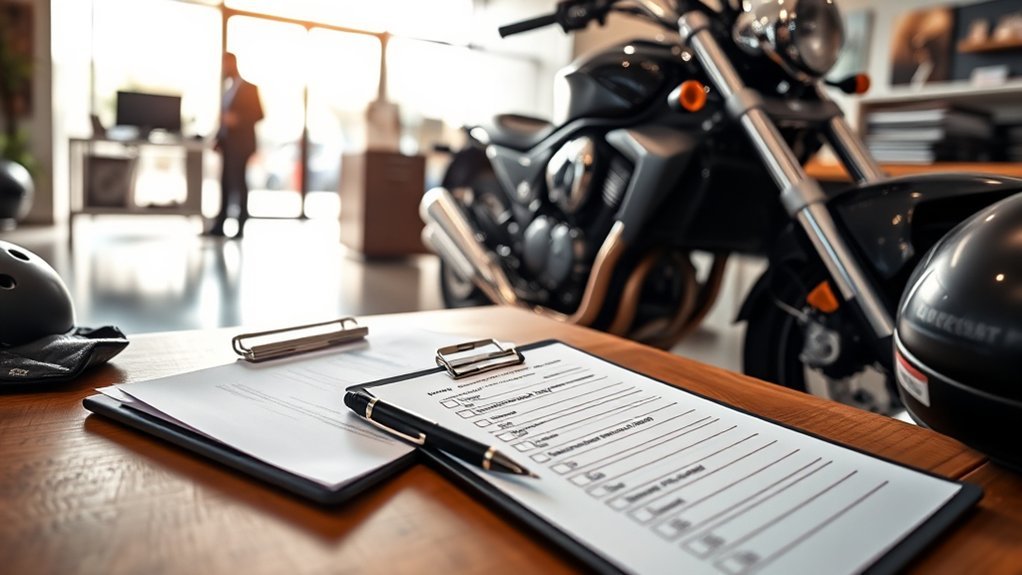
Once you’ve agreed on a price and secured your motorcycle, it’s essential to finalize the purchase correctly to guarantee a smooth shift to ownership.
Start by ensuring you receive the final paperwork, which includes a bill of sale detailing the purchase price, vehicle identification number (VIN), and both signatures for legal protection. The seller must also provide the motorcycle title, signed over to you, confirming your ownership.
Ensure you obtain the bill of sale and signed motorcycle title to confirm your ownership and protect your investment.
Next, familiarize yourself with your state’s registration process. Gather necessary documents like proof of insurance, identification, and any sales tax requirements to prevent delays.
Schedule a visit to your local DMV or use their online services to complete registration, which might involve an inspection for safety and emissions standards.
Finally, keep all purchase-related documents organized; they’ll be invaluable for future reference or potential resale. Embrace the freedom of your new ride!
Common Mistakes to Avoid When Buying a Used Motorcycle
Finalizing your motorcycle purchase is an exciting milestone, but it’s just the beginning of your journey. To truly enjoy your ride, you need to steer clear of common mistakes that can lead to purchasing pitfalls.
First, always verify the motorcycle’s VIN against its title and registration; this protects you from buying a stolen vehicle. Next, don’t skip a thorough mechanical inspection; hidden issues can result in costly repairs or unsafe riding.
Be sure to check the bike’s maintenance history, as poor upkeep can lead to unexpected failures. Additionally, never underestimate the importance of a test ride; it’s essential for evaluating handling, comfort, and performance.
Finally, resist the urge to rush into a purchase; compare market prices to guarantee you’re getting a fair deal. By avoiding these mistakes, you’ll set yourself up for a liberating and enjoyable motorcycling experience.
Frequently Asked Questions
What Should I Look for in a Motorcycle’s Title History?
You should check the title transfer for any discrepancies and review the ownership history for red flags like accidents or liens. Knowing this helps guarantee you’re making a wise investment in your motorcycle journey.
How Can I Verify if a Motorcycle Has Been in an Accident?
To verify if a motorcycle’s been in an accident, check the accident report and use an inspection checklist. Look for signs of damage or repairs and consult vehicle history reports for thorough details.
What Are the Signs of a Well-Maintained Motorcycle?
You’ll spot a well-maintained motorcycle by checking for clean oil, smooth tires, and responsive brakes. Use an inspection checklist to evaluate maintenance habits, ensuring you’re riding a reliable machine that’s ready for your adventures.
Should I Consider Buying a Motorcycle With Modifications?
Absolutely, consider buying modified motorcycles! Performance upgrades can enhance your ride, while aesthetic changes reflect your style. Just guarantee modifications are done professionally, as poorly executed changes might affect safety and reliability. Enjoy the freedom!
How Do I Determine a Fair Price for a Used Motorcycle?
To determine a fair price for a used motorcycle, research its market value using pricing resources like Kelley Blue Book or NADA Guides. Compare similar models and conditions to guarantee you’re making an informed decision.
Conclusion
In your motorcycle quest, remember this: preparation paves the path to perfection. By using this checklist, you’ll confidently cruise through inspections, ensuring your ride’s ready for the road. Don’t rush; take time to test, negotiate, and navigate the nuances of the deal. With diligence and a discerning eye, you’ll drive away with a dependable bike that delivers delightful adventures. So gear up, stay savvy, and enjoy the exhilarating experience of motorcycle ownership!





Leave a Reply