
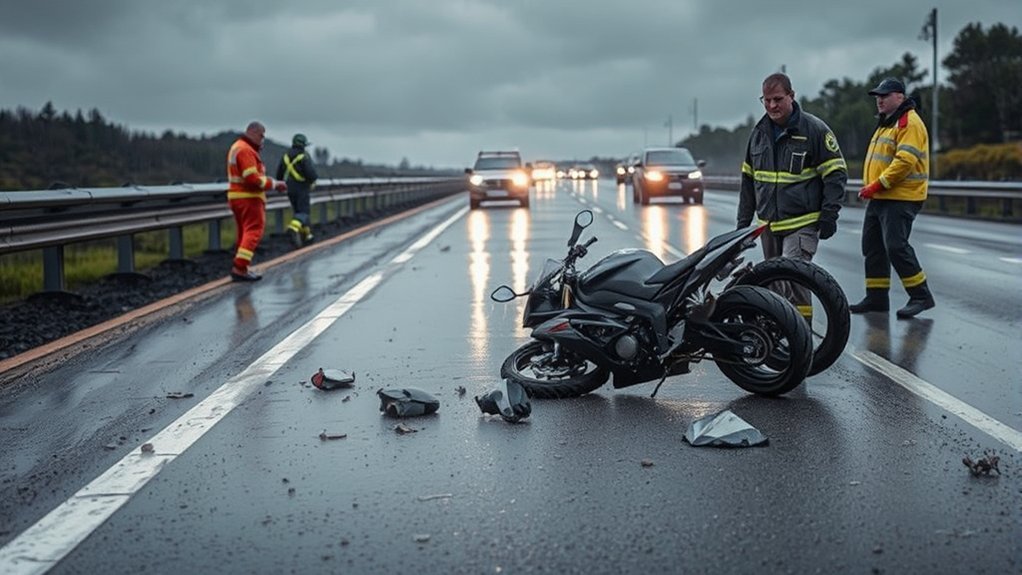
Motorcycle accident statistics reveal essential insights into rider safety. In 2023, motorcycles made up only 3% of registered vehicles, yet they accounted for 15% of traffic fatalities. Riders face a staggering 28 times higher death risk in crashes compared to car passengers. Remarkably, 42% of fatal accidents involve left-turning vehicles, and helmets reduce serious head injuries considerably. Understanding these statistics is critical for enhancing your safety on the road, and there’s more significant information to explore on this topic.
Why Motorcycle Accident Statistics Matter for Your Safety
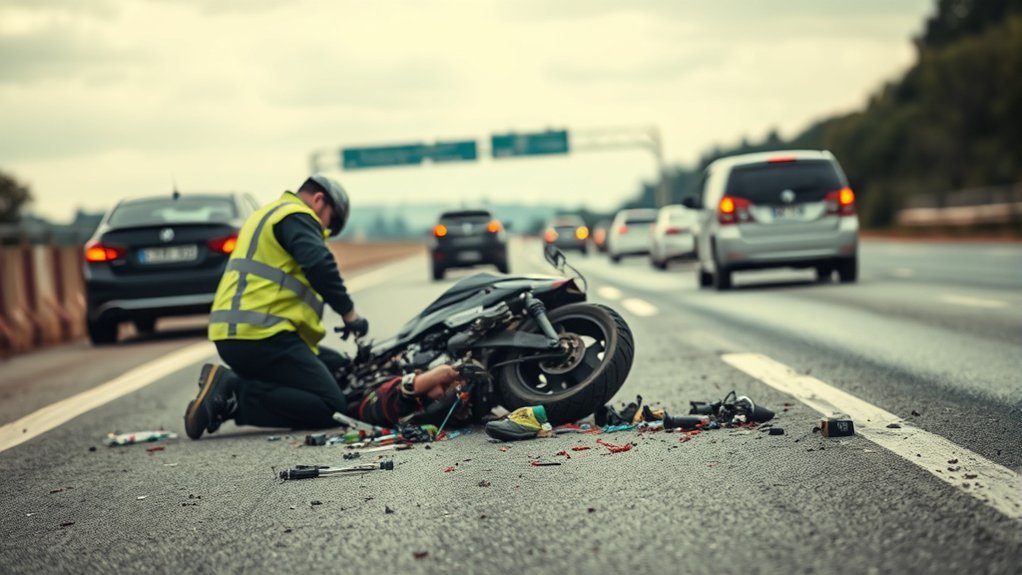
Understanding motorcycle accident statistics is vital for your safety, especially given the alarming rates of fatalities and injuries. In 2023, motorcycle accidents represented 15% of all traffic fatalities, emphasizing the pivotal need for rider awareness.
You’re 28 times more likely to die in a crash than a car passenger, which highlights the inherent risks of riding. Furthermore, 34% of motorcyclists involved in fatal crashes were unlicensed, indicating that proper licensing and training are essential safety measures.
Wearing a helmet markedly decreases the likelihood of traumatic brain injuries by 69%. Despite this, statistics reveal that 62% of fatalities involved helmeted riders, pointing to the necessity of thorough safety gear.
Top Causes of Motorcycle Fatalities You Should Know
While riding a motorcycle can be exhilarating, awareness of the top causes of fatalities is essential for your safety. A staggering 42% of fatal motorcycle accidents involve left-turning vehicles, underscoring the critical need for intersection safety.
Alcohol impairment greatly contributes as well; 26% of fatally injured motorcyclists had a blood alcohol concentration (BAC) of 0.08% or higher. Additionally, 74% of motorcycle accidents are head-on collisions, highlighting the importance of rider awareness and vigilance on the road.
Remember, motorcyclists are 28 times more likely to die in a crash than car occupants, making safety paramount. It’s also worth noting that around 64% of fatalities occur on urban roads, where traffic density increases risk.
How Helmet Use Can Prevent Serious Injuries
Understanding how helmet use impacts safety is essential for any motorcyclist.
Studies show that helmets can greatly reduce the risk of traumatic brain injuries and fatalities, yet misconceptions about their effectiveness persist.
Additionally, legal requirements for helmet use vary, which may influence riders’ behavior and safety choices.
Helmet Effectiveness Statistics
Wearing a helmet can reduce the risk of serious head injuries by an impressive 69% for motorcyclists involved in crashes. This helmet effectiveness is critical, yet usage among riders in the U.S. hovers only between 50 to 65%, revealing a significant gap in safety practices.
Alarmingly, 62% of motorcyclist fatalities involved riders who were wearing helmets, highlighting that while helmets save lives, they aren’t a foolproof solution.
Additionally, the CDC estimates that if all riders wore helmets, society could save $1.5 billion annually, underscoring the economic benefits of helmet use.
Riders who wear helmets not only protect themselves but also preserve their right to seek compensation for injuries sustained, reinforcing both legal and safety implications of helmet use.
Common Helmet Misconceptions
Have you ever questioned why some riders choose to forgo helmets despite overwhelming evidence of their protective benefits?
Many misconceptions surround helmet use, often leading to dangerous decisions. Here are common reasons riders might skip helmets:
- Discomfort: Modern helmets prioritize helmet comfort, designed for long rides.
- Limited mobility: Advances in helmet technology enhance helmet mobility, allowing better head movement.
- False security: Some believe helmets aren’t necessary due to perceived low risk.
- Peer influence: Social dynamics can pressure riders to conform to helmet-free norms.
It’s essential to recognize that helmets can reduce the risk of traumatic brain injuries by 69%.
Embracing helmet use not only enhances safety but also empowers you to ride with greater confidence and responsibility.
Legal Helmet Requirements
While some riders may underestimate the importance of helmets, legal helmet requirements play an essential role in enhancing safety on the roads. Studies reveal that helmet use reduces the risk of traumatic brain injuries (TBI) by 69%. In 2023, 62% of motorcyclist fatalities involved riders wearing helmets, highlighting their protective benefits. States with strict helmet law enforcement show significant decreases in fatalities, while helmet law variations lead to inconsistent usage rates between 50% and 65%. This inconsistency indicates a need for heightened compliance and awareness.
| State | Helmet Law Enforcement | Fatality Reduction |
|---|---|---|
| California | Mandatory | 30% |
| Florida | Partial | 15% |
| Texas | Optional | 10% |
| New York | Mandatory | 25% |
How Motorcycle Injuries and Fatalities Have Changed Over Time

Over the years, motorcycle injuries and fatalities have seen alarming changes, particularly in recent times. In 2023, motorcyclist fatalities reached 6,335, the highest since 1975, reflecting troubling historical trends.
The following points highlight key injury demographics:
- Motorcycle deaths surged by 38% over the last decade.
- The fatality rate now stands at 31.39 per 100 million vehicle miles traveled.
- Nonfatal injuries increased by 0.6% from 2022 to 2023, with a notable 19% rise in injury rate.
- 62% of fatalities involved helmeted riders, underscoring the critical role of helmet use.
These statistics reveal a stark reality: riding a motorcycle carries significant risks.
As you navigate the open road, awareness of these trends can empower you to make informed decisions about safety and risk management in your riding experience.
Must-Know Safety Tips for Every Motorcyclist
To enhance your safety on the road, it’s essential to wear appropriate safety gear, including a DOT-compliant helmet.
Regularly performing pre-ride inspections guarantees that your motorcycle is in good working condition, reducing the chances of mechanical failures.
Additionally, adhering to traffic regulations keeps you aligned with the flow of traffic, considerably lowering the risk of accidents.
Wear Appropriate Safety Gear
Wearing appropriate safety gear is essential for every motorcyclist, as it greatly enhances your protection on the road.
The stark reality is that a DOT-compliant helmet can prevent serious head injuries and reduce the risk of traumatic brain injuries by 69%. Yet, only 50 to 65% of riders wear helmets, leaving many vulnerable.
To maximize safety, consider the following:
- Cover arms and legs with leather or heavy denim to guard against abrasions.
- Invest in high boots or shoes that cover your ankles.
- Wear gloves to improve grip and hand protection.
- Opt for brightly colored clothing with reflective materials to enhance visibility.
Perform Pre-Ride Inspections
Before hitting the road, performing a pre-ride inspection is essential to confirm your motorcycle is in peak condition. Use a pre-ride checklist to assess tire pressure, tread depth, brakes, headlights, and fluid levels.
This inspection’s importance can’t be overstated, as it helps prevent accidents caused by equipment failure. Always check underneath the motorcycle for oil or gas leaks, as these can pose serious safety hazards.
If you’re carrying cargo, make sure it’s secured and balanced, adjusting the suspension and tire pressure to maintain safe handling. Remember, passengers should mount only after the engine starts and should hold on firmly.
Regular pre-ride checks can notably reduce the risk of accidents, making your rides safer and more enjoyable.
Follow Traffic Regulations
Following traffic regulations is essential for every motorcyclist, as adherence to laws, signals, and speed limits can greatly lower the risk of accidents.
Understanding the importance of traffic enforcement can empower your freedom on the road. Here are key tips to enhance your safety:
- Always obey speed limits; 34% of motorcycle collisions in 2017 were due to speeding.
- Maintain a safe distance from other vehicles to avoid crashes; 56% of fatal accidents in 2023 involved two vehicles.
- Approach intersections cautiously, yielding to pedestrians and vehicles to prevent left-turn accidents.
- Ride sober; 74% of operators in fatal crashes weren’t alcohol-impaired, underscoring responsible riding practices.
How Alcohol Affects Motorcycle Safety?
Although many riders may underestimate the dangers of alcohol, its impact on motorcycle safety is profound and alarming. Alcohol effects include impaired judgment and coordination, which drastically increase the risk of accidents. Statistically, riders under the influence are six times more likely to be involved in fatal crashes.
| BAC Level | Accident Risk | Fatality Rate |
|---|---|---|
| 0.00% | Baseline | Low |
| 0.05% | Increased | Moderate |
| 0.08% | considerably higher | 26% of fatalities |
| Nighttime | 46% with BAC > 0.08% | Higher severity |
| Sober | Reduced | Considerably lower |
In 2018, 43% of fatal motorcycle collisions involved alcohol, highlighting the critical need for sober riding practices. Remember, riding at night compounds these risks, emphasizing the importance of clear judgment on the road.
How Motorcycle Accidents Compare to Other Road Incidents

While the dangers posed by alcohol highlight the risks motorcyclists face, it’s important to understand how motorcycle accidents compare to other road incidents.
Despite comprising only 3% of registered vehicles, motorcycles are involved in 15.5% of traffic fatalities in 2023. This stark statistic illustrates the vulnerabilities inherent in motorcycle demographics.
Here are some key accident trends:
- Riders are 28 times more likely to die in a crash than car occupants.
- 74% of motorcycle accidents involve frontal collisions with other vehicles.
- Motorcycles account for just 11% of road accidents but result in 80% of injuries or deaths.
- The fatality rate stands at 31.39 per 100 million miles traveled, a significant risk compared to other vehicle types.
Understanding these comparisons can empower you to make informed decisions about safety and riding practices on the road.
Choosing the Right Safety Gear for Your Ride
When you hit the road on your motorcycle, choosing the right safety gear is essential for minimizing risks and enhancing your protection.
Start with a DOT-compliant helmet, as it reduces the risk of traumatic brain injuries by 69% in case of a crash. Your arms and legs should be covered with leather or heavy denim to guard against abrasions during falls.
High boots or shoes that cover your ankles offer significant support and help prevent foot injuries. Don’t overlook gloves; they improve grip on the handlebars while protecting your hands in an accident.
Additionally, opting for brightly colored clothing with reflective materials boosts your visibility to other drivers, a key factor in road safety.
Each piece of safety gear serves a purpose, making it important to invest in quality protective clothing for your rides.
Prioritize these elements to ride with confidence and reduce your risk on the road.
Resources for Motorcycle Safety Training and Education
Accessing quality resources for motorcycle safety training and education is essential for every rider, as it greatly impacts overall safety on the road.
With 34% of motorcycle operators involved in fatal crashes being unlicensed, proper training is vital. Here are some valuable resources to weigh:
- State-approved motorcycle rider education courses: These can waive on-cycle tests in some areas, ensuring you receive proper instruction.
- Local motorcycle safety programs: Participate in hands-on training to improve your riding skills and safety awareness.
- Online resources: Utilize various websites offering courses on safe riding practices and pre-ride checks.
- Safety gear seminars: Learn the importance of wearing appropriate gear to protect yourself on the road.
Frequently Asked Questions
What Demographic Factors Contribute to Motorcycle Accident Rates?
Age groups and gender differences greatly impact motorcycle accident rates. Younger riders often display riskier behaviors, while males generally have higher accident involvement. Understanding these factors helps you make informed decisions regarding safety and riding practices.
How Does Weather Impact Motorcycle Accident Statistics?
When rain falls like a curtain, it creates visibility issues that can obscure your path. Under these conditions, accidents increase considerably, as the slick roads and reduced sight make riding far more treacherous than usual.
Are Urban or Rural Areas More Dangerous for Motorcyclists?
Urban areas pose greater risks due to traffic density and unpredictable drivers, while rural settings present hazards like wildlife and poor road conditions. Both environments have unique dangers, demanding your awareness and cautious riding approach.
What Role Do Motorcycle Laws Play in Accident Rates?
“An ounce of prevention’s worth a pound of cure.” Motorcycle laws, like helmet laws and speed regulations, greatly reduce accident rates, ensuring you ride safer and promoting a culture of responsibility among all motorcyclists.
How Can I Report Unsafe Motorcycle Riding Behavior?
To report unsafe riding, contact local law enforcement or use online reporting procedures. Document the behavior, including date, time, and location, to provide accurate information. Your vigilance helps promote safer riding conditions for everyone.
Conclusion
In summary, understanding motorcycle accident statistics is essential for enhancing your safety on the road. By recognizing the top causes of fatalities and the importance of helmet use, you can greatly reduce your risk. Remember, riding isn’t just about the thrill; it’s also about responsibility. Just like a knight gears up for battle, you should equip yourself with the right safety gear and knowledge. Stay informed, stay safe, and keep the rubber on the road where it belongs.







Leave a Reply