
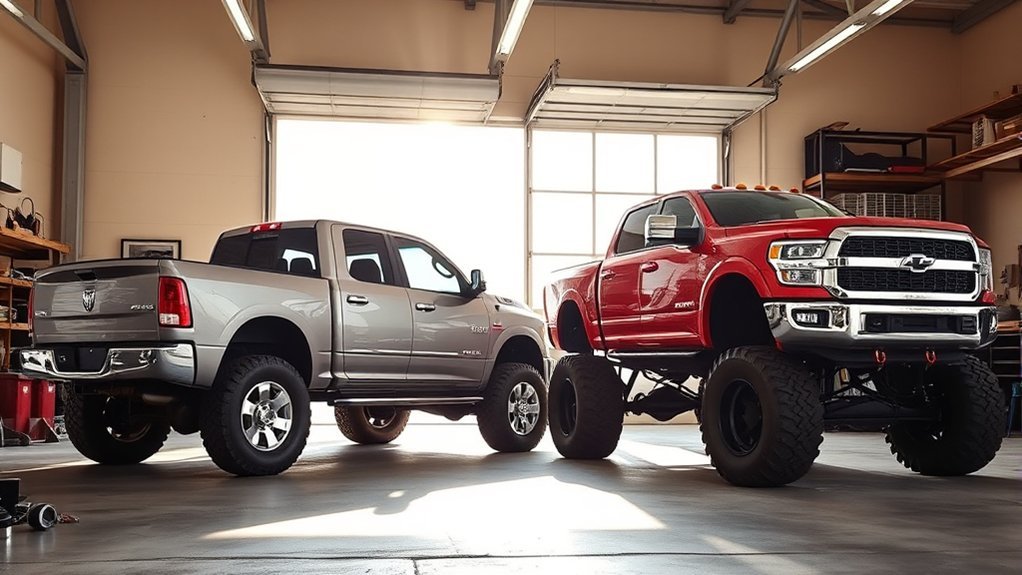
When choosing between a leveling kit and a lift kit in 2026, consider your needs. Leveling kits raise the front of your truck by 1 to 3 inches, maintaining ride quality and affordability. Lift kits offer a more significant height increase of 3 to 12 inches, enhancing off-road capabilities but at a higher cost and complex installation. Think about your budget, usage, and aesthetic goals. There’s plenty more to explore about these options to help you make an informed decision.
What Are Leveling Kits and How Do They Work?
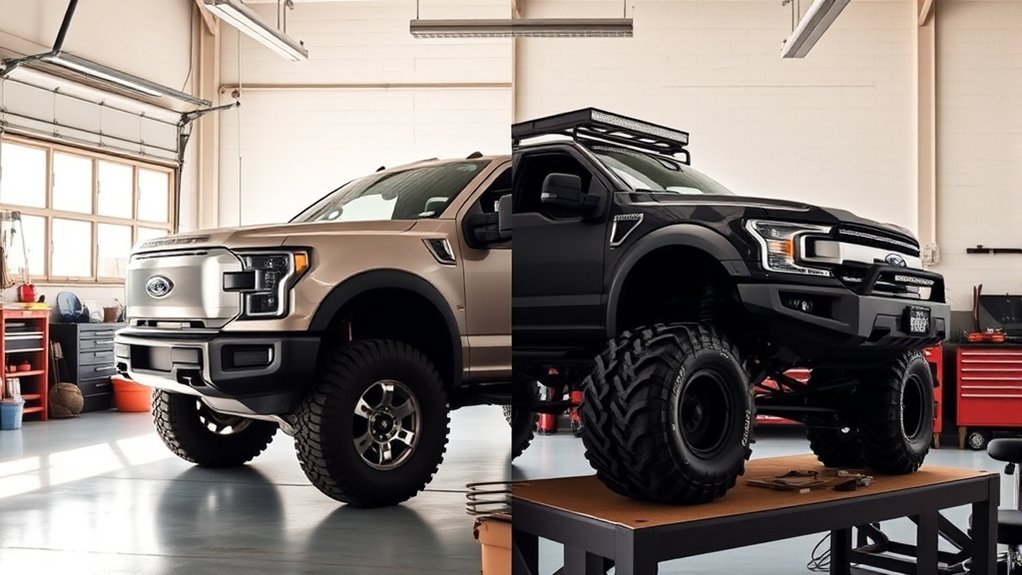
Leveling kits are a popular upgrade among truck enthusiasts looking to enhance their vehicle’s appearance and functionality. Designed to eliminate factory rake, these kits raise the front of your truck by 1 to 3 inches, matching it with the rear height for a more balanced look.
The most common leveling kit types include spacers and torsion keys, which you can install on top of the front struts or within the suspension system.
One of the main benefits is that leveling kits allow for slightly larger tire fitment without drastically altering your suspension geometry. Plus, they maintain factory ride quality, making them a cost-effective choice for many.
Leveling kits provide larger tire fitment while preserving factory ride quality, making them an economical upgrade.
Installation techniques for these kits are generally straightforward, typically costing between $100 and $400, which is much more accessible than the complexity of lift kits.
What Are Lift Kits and How Do They Compare to Leveling Kits?
Lift kits raise your vehicle’s entire height, typically offering significant increases in ground clearance, while leveling kits only adjust the front to eliminate factory rake.
Each option has its benefits, from enhanced off-road capabilities with lift kits to improved aesthetics with leveling kits.
When considering installation complexity, lift kits often require more extensive modifications than the straightforward setup of leveling kits.
Key Differences Explained
When it comes to modifying your vehicle’s suspension, understanding the differences between lift kits and leveling kits is essential for making the right choice.
Lift kits raise your vehicle’s height considerably—typically 3 to 12 inches—enhancing off-road capabilities and allowing for larger tires. However, lift kit drawbacks include complex installation and potential negative impacts on ride quality and handling.
In contrast, leveling kits primarily focus on correcting factory rake by raising the front 1 to 3 inches. They’re easier to install and maintain the vehicle’s factory ride characteristics, offering leveling kit benefits like improved aesthetics without sacrificing comfort.
Ultimately, your choice depends on whether you prioritize off-road performance or daily driving aesthetics.
Benefits Of Each Option
Choosing between a lift kit and a leveling kit can greatly impact your vehicle’s performance and appearance.
Lift kits offer significant performance enhancement, elevating your ride by 3 to 12 inches and allowing for larger tires, making them ideal for off-road adventures. They improve ground clearance and tackle rugged terrains with ease.
On the other hand, leveling kits provide a modest lift of 1 to 3 inches, focusing primarily on aesthetic upgrades. They eliminate factory rake, giving your vehicle a more balanced look without sacrificing ride quality.
While lift kits involve higher costs and modifications, leveling kits are budget-friendly and often DIY-friendly.
Ultimately, your choice depends on whether you prioritize off-road capabilities or a sleek appearance for daily driving.
Installation Complexity Compared
While both lift kits and leveling kits modify your vehicle’s height, their installation complexities differ considerably.
Lift kits often present significant installation challenges, requiring extra components like extended shocks and control arms, which can complicate the process. This complexity can lead to installation costs ranging from $1,000 to $5,000 and often necessitates professional recommendations to guarantee your vehicle’s safety and performance.
In contrast, leveling kits are designed for easier installation, usually involving simple spacers on existing struts, allowing you to tackle it as a DIY project for just $100 to $400. They maintain factory ride characteristics with minimal adjustments, making them a more straightforward choice for those seeking a quick lift without extensive alterations.
Comparing Leveling Kits and Lift Kits: Key Similarities
Both leveling kits and lift kits share the common goal of enhancing your vehicle’s height, which not only boosts its aesthetic appeal but also improves functionality for truck owners.
These kits facilitate larger tire installations, offering both aesthetic upgrades and performance enhancements.
Here are some key similarities:
- Both enhance your vehicle’s ground clearance.
- They improve overall driving visibility.
- Each option allows for customization and personalization.
- Both can be a gateway to off-road adventures.
Whether you’re looking to level out the stance or elevate your ride, both kits provide exciting opportunities for transformation.
Leveling kits typically offer a lift of 1 to 3 inches, while lift kits can raise vehicles considerably more.
Ultimately, both choices aim to empower your driving experience, letting you conquer the road with confidence while enjoying a fresh, bold look.
Major Differences Between Leveling and Lift Kits
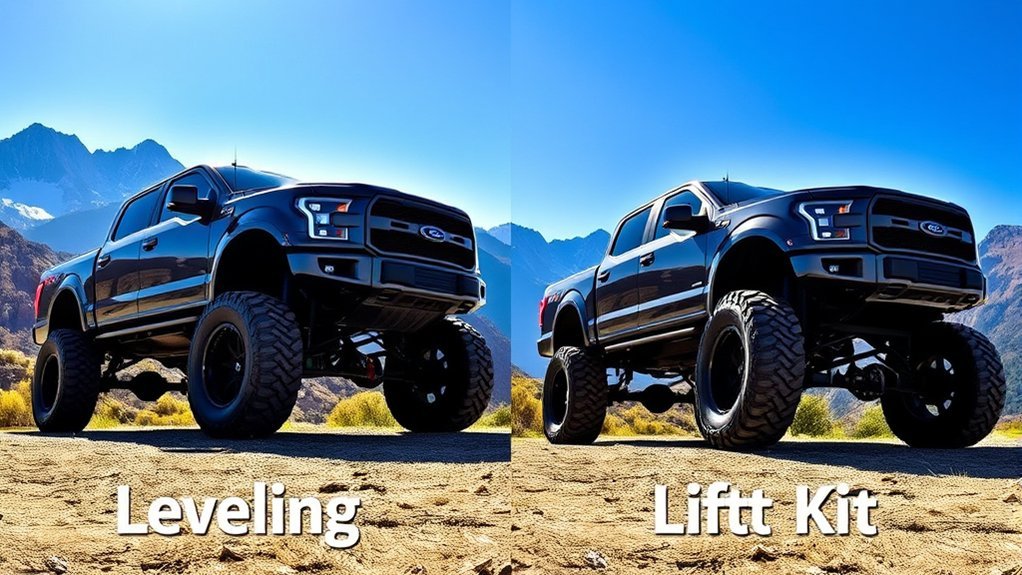
When you’re deciding between leveling kits and lift kits, it’s essential to understand their major differences, as each serves distinct purposes and offers varying benefits.
| Feature | Leveling Kits | Lift Kits |
|---|---|---|
| Lift Height | 1 to 3 inches | 2 to 12 inches or more |
| Installation Complexity | Easy and affordable ($100-$400) | Complex, costly ($1,000-$5,000+) |
| Ride Quality | Maintains factory characteristics | Alters suspension geometry |
| Intended Use | Aesthetic, daily drivers | Serious off-road performance |
Leveling kit features focus on eliminating factory rake, enhancing appearance, and allowing slightly larger tires. In contrast, lift kit advantages include significant ground clearance and the ability to fit much larger tires, making them ideal for off-road enthusiasts. Ultimately, your choice should reflect your vehicle’s intended use and your personal driving preferences.
Advantages and Disadvantages of Leveling Kits
Leveling kits offer several advantages that make them an appealing choice for many truck owners. With a lift of 1.75 to 2.5 inches, they effectively eliminate that pesky factory nose-down rake, providing both aesthetic improvements and performance enhancements.
Here are some key benefits:
- More affordable, with installation costs between $100 and $400
- Maintains factory ride quality for comfortable driving
- Simple and quick installation, often suitable for DIY enthusiasts
- Accommodates slightly larger tires without major modifications
However, it’s essential to evaluate the limitations, like restricted off-road usage due to their lift height.
While leveling kits can elevate your truck’s look and feel, they may not be the best fit if you’re aiming for extensive off-road adventures.
Ultimately, understanding these pros and cons will help you make a more informed decision tailored to your driving needs.
Benefits and Drawbacks of Lift Kits
If you’re considering taking your truck off the beaten path, lift kits offer significant benefits that can enhance both performance and appearance. Here’s a quick look at the lift kit advantages and disadvantages:
| Advantages | Disadvantages | Considerations |
|---|---|---|
| Increased ground clearance (2-12 inches) | Requires extensive modifications | Installation costs can exceed $1,000 |
| Ability to fit larger tires (33 inches+) | Alters center of gravity | May need additional upgrades |
| Improved off-road performance and aesthetics | Can negatively impact handling | Suspension geometry adjustments needed |
Lift kits can empower your vehicle to conquer rugged terrains, but they come with trade-offs. While you’ll enjoy enhanced off-road capabilities, be prepared for the potential handling issues and extra costs involved. Weigh these lift kit advantages against the lift kit disadvantages to decide if it’s the right choice for your needs.
Choosing Between Leveling Kits and Lift Kits?
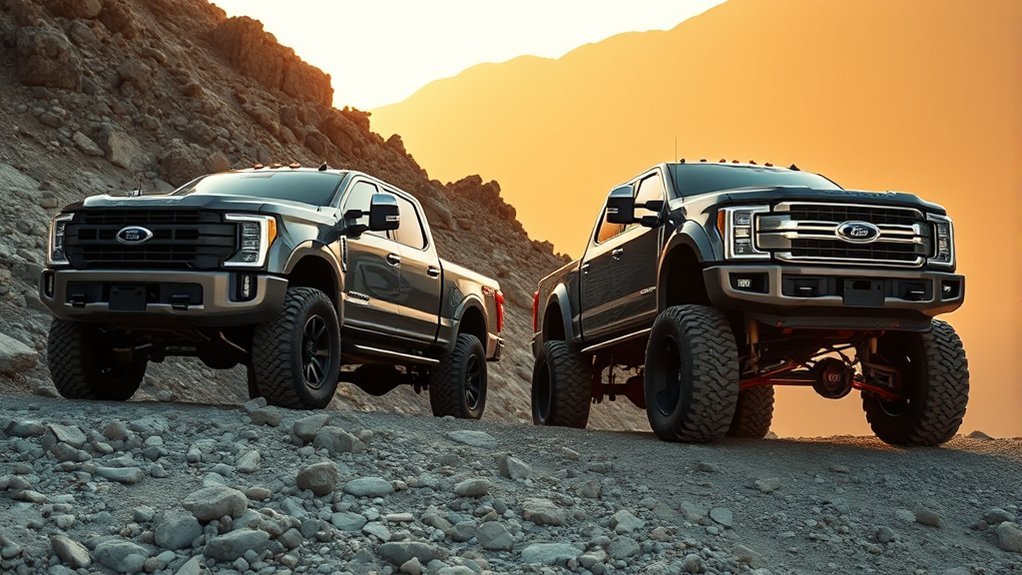
Wondering how to choose between leveling kits and lift kits? It’s essential to evaluate your vehicle’s purpose and your driving style.
Leveling kits offer practical leveling benefits, giving you a lift of 1.75 to 2.5 inches while preserving ride quality. They’re perfect for daily drivers who want a subtle aesthetic upgrade without breaking the bank.
Leveling kits provide a practical lift of 1.75 to 2.5 inches, enhancing aesthetics while maintaining ride comfort for daily drivers.
On the other hand, lift kits provide significant lift performance, ranging from 3 to 12 inches, ideal for off-road enthusiasts seeking adventure.
Here are some factors to keep in mind:
- Aesthetic improvements vs. off-road capability
- Lower cost vs. higher investment
- Easier installation vs. complex modifications
- Comfortable daily driving vs. rugged terrain handling
What to Budget for Leveling and Lift Kits
When budgeting for leveling and lift kits, it’s essential to compare the average costs of each option.
Leveling kits can be much easier on your wallet, typically ranging from $100 to $400, while lift kits can soar from $1,000 to over $5,000, especially when you factor in installation expenses.
Average Costs Comparison
Understanding the average costs of leveling and lift kits is essential for any truck owner looking to enhance their vehicle’s performance and appearance.
When considering your budget, here’s a quick cost analysis:
- Leveling kits typically range from $100 to $400, making them accessible for most budgets.
- Lift kits can set you back anywhere from $1,000 to $5,000, depending on complexity.
- Installation costs for lift kits are higher due to extensive modifications.
- Don’t forget potential extra expenses like alignment services and new tires.
Installation Expense Considerations
While you might be keen to enhance your truck’s performance with a leveling or lift kit, it’s important to factor in installation expenses as part of your overall budget. Here’s a breakdown to help you plan:
| Kit Type | Estimated Parts Cost | Estimated Installation Cost |
|---|---|---|
| Leveling Kit | $100 – $400 | $0 (DIY) or $100 – $200 |
| Lift Kit | $1,000 – $5,000 | $500 – $1,500 |
| Alignment Adjustments | $50 – $100 | Included in installation |
Leveling kits usually allow for simpler installation techniques, while lift kits require professional help. Remember to budget for additional costs like brake lines and suspension upgrades, especially for lift kits. Tailor your cost breakdown to your vehicle for an efficient upgrade!
Installation Tips for Leveling and Lift Kits
Installing leveling and lift kits can transform your vehicle’s performance and appearance, but it’s important to approach the process with care. Here are some essential tips to guarantee a successful installation:
Transform your vehicle’s performance and appearance with leveling and lift kits, but prioritize careful installation for the best results.
- Gather the right installation tools: a jack, jack stands, wrenches, and possibly a spring compressor.
- Follow the manufacturer’s instructions closely to confirm compatibility with your vehicle.
- Don’t overlook alignment importance; getting a professional alignment after installation is essential to prevent uneven tire wear.
- Remember to re-torque bolts and suspension components after your first 250-500 miles to maintain peak performance.
Common Questions on Leveling and Lift Kits
What should you know before choosing between a leveling kit and a lift kit? First, it’s essential to debunk some common misconceptions.
Leveling kits typically raise your vehicle by 1.75 to 2.5 inches, perfect for eliminating factory rake without sacrificing ride quality. If you’re looking for serious off-road enhancements, lift kits provide a substantial 3 to 12 inches of lift, allowing for larger tires and improved ground clearance.
However, they often require professional installation and can cost between $1,000 to $5,000, depending on the complexity and additional components needed.
When deciding, consider your budget, intended vehicle use, and aesthetic goals. Leveling kits are generally more affordable and easier to install, needing minimal installation tools.
In contrast, lift kits may alter handling and require careful consideration of safety. Ultimately, your choice depends on whether you desire cosmetic improvements or serious off-road capabilities.
Frequently Asked Questions
Should I Get a Leveling Kit or a Lift Kit?
If you’re looking for cost considerations and a simpler installation process, go with a leveling kit. However, if you crave serious off-road capabilities, a lift kit might be worth the investment. Choose based on your needs.
What Are the Negatives of Leveling Kits?
Leveling kits can compromise ride quality and may lead to installation complexity, requiring alignment adjustments. They don’t enhance suspension travel, limiting off-road capabilities, and could affect your vehicle’s warranty and performance.
Does a Lift Kit Affect Resale Value?
Imagine selling your truck with a lift kit; its rugged look could boost resale value factors. However, poorly installed kits may hurt desirability. Consider lift kit impact carefully to maximize your vehicle’s worth.
Why Do Trucks Not Come Leveled?
Trucks don’t come leveled due to factory design prioritizing stability and payload. The suspension geometry optimizes performance at stock height, ensuring better ride quality. Leveling kits allow you to customize aesthetics while maintaining functionality.
Conclusion
So, whether you’re leveling out the front for a sleek look or lifting it up like a giraffe at a fashion show, the choice is yours. Just remember, while lift kits might make you feel like a king of the road, leveling kits keep you grounded—literally! Ultimately, choose what suits your ride and your wallet. After all, who doesn’t want to be the envy of the parking lot while maintaining a sensible budget? Happy modifying!




Leave a Reply