
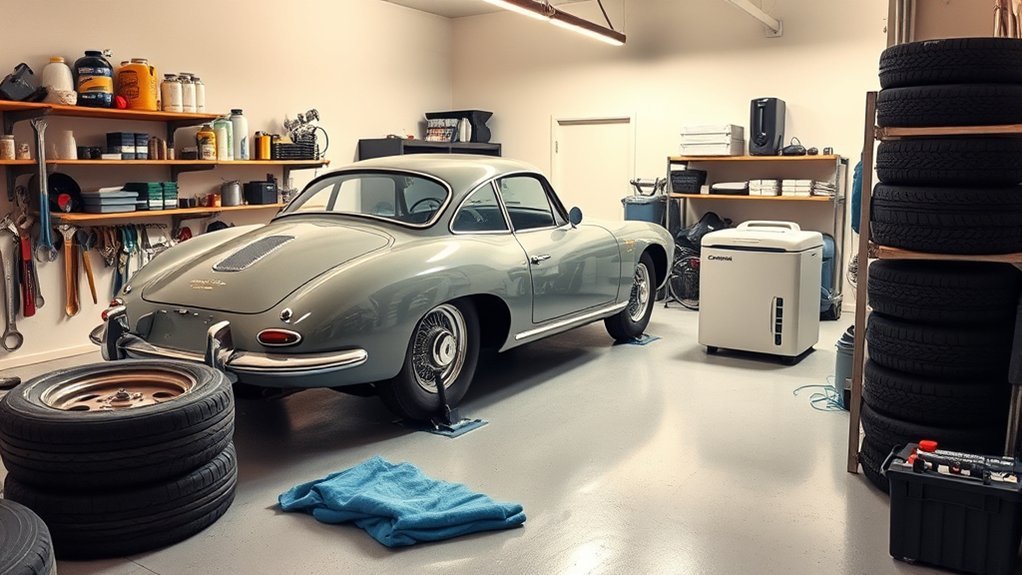
To store your classic car effectively, first choose a dry, well-ventilated space, preferably climate-controlled. Clean the vehicle thoroughly, change the oil, and fill the gas tank with stabilizer. Top off all fluids and inflate the tires to avoid flat spots. Regularly inspect for moisture, decay, and pests. Use quality covers and battery maintenance tools for protection. Avoid common pitfalls like neglecting inspections, and uncover more insights on ensuring your car’s longevity.
Choosing the Best Storage Environment for Your Classic Car
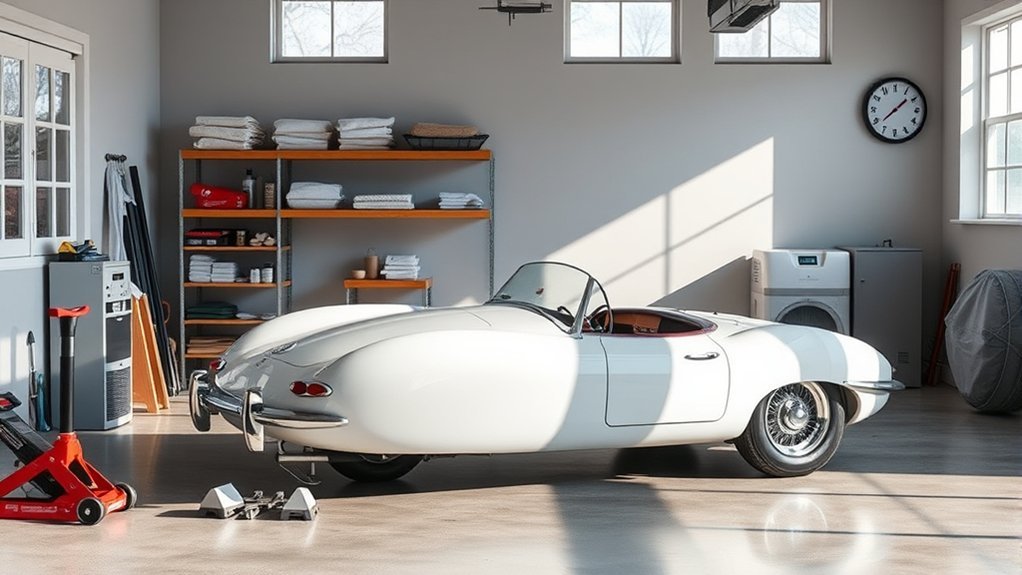
When it comes to storing your classic car, choosing the right environment is vital to preserving its value and condition. A dry, well-ventilated garage is essential to minimize moisture exposure, which can lead to rust and mold.
If your garage lacks adequate garage ventilation, consider using a dehumidifier in colder, poorly ventilated spaces to keep humidity at bay.
Security matters too; make sure to implement pest prevention measures, like rodent traps and marten guards, to protect your vehicle’s interior and wiring from infestations.
Investing in a quality indoor car cover will shield your classic car from dust and moisture, which can cause deterioration over time.
A high-quality indoor car cover is essential for protecting your classic car from harmful dust and moisture.
If available, opt for climate-controlled storage units, as they maintain stable temperatures that prevent condensation and corrosion.
How to Prepare Your Vehicle for Storage
Preparing your classic car for storage is essential to guaranteeing it remains in top condition. Start with thorough vehicle cleaning, washing both the exterior and interior, including the underbody and engine. This helps eliminate contaminants that could cause rust during storage.
Next, change the oil to remove acidic combustion residues and prevent engine damage from moisture. Fill the fuel tank to the brim to avoid condensation, and don’t forget to add a fuel stabilizer to protect against degradation.
To combat moisture, place desiccants in compartments, keeping mold and mildew at bay.
Finally, inflate your tires to the recommended pressure or utilize jack stands to prevent flat spots from forming during long-term storage.
Key Maintenance Tasks for Classic Car Storage
As you prepare your classic car for storage, focusing on key maintenance tasks is essential.
Start by checking fluids, ensuring your oil is fresh and your fuel is stabilized to prevent issues later.
Don’t forget about tire maintenance and battery management to keep everything in peak condition while your car awaits its next adventure.
Fluid Checks Before Storage
Before storing your classic car, ensuring all fluids are topped off is essential to prevent moisture accumulation and corrosion.
Start with fluid maintenance by changing the oil and filter to remove harmful residues, then fill the engine with fresh oil. Don’t forget to check and top off coolant, brake fluid, and transmission fluid.
Adding a fuel stabilizer to a full tank of gas is vital for preventing degradation and protecting the fuel system during storage. Also, fill the windshield washer fluid with antifreeze to avoid freezing issues.
Regularly inspect fluid levels throughout the storage period to catch any leaks or changes early, ensuring your car is ready for action when you’re ready to hit the road again.
Tire Maintenance Practices
Tire maintenance is essential for preserving your classic car’s performance and safety during storage.
First, inflate your tires to the recommended pressure, adding about one bar to prevent flat spots. Using jack stands to support the car’s weight eliminates tire pressure on the ground, minimizing the risk of deformation.
If you’re storing your car for an extended period, rotate the tires periodically to guarantee even wear and maintain their shape.
Before storage, inspect your tires for any damage or wear, as these issues can worsen over time.
Finally, consider applying tire protectants to shield against cracking and fading from prolonged exposure to UV light and ozone.
This proactive approach keeps your tires in top condition for your next drive.
Battery Management Tips
Proper maintenance of your classic car isn’t just about the tires; the battery also plays an essential role in keeping your vehicle ready for the road. Here are some battery management tips to guarantee longevity and performance during storage:
| Task | Purpose |
|---|---|
| Disconnect the battery | Prevents parasitic draw, maintains charge |
| Clean terminals & coat | Prevents corrosion |
| Use a battery maintainer | Monitors charge without overcharging |
Start by confirming the battery is fully charged before storage. Regularly check its condition, focusing on voltage levels, to verify functionality. Consider using a trickle charger for peak battery maintenance. Following these tips will keep your classic car’s battery in top shape, ready for your next adventure!
Recommended Tools for Safe Classic Car Storage
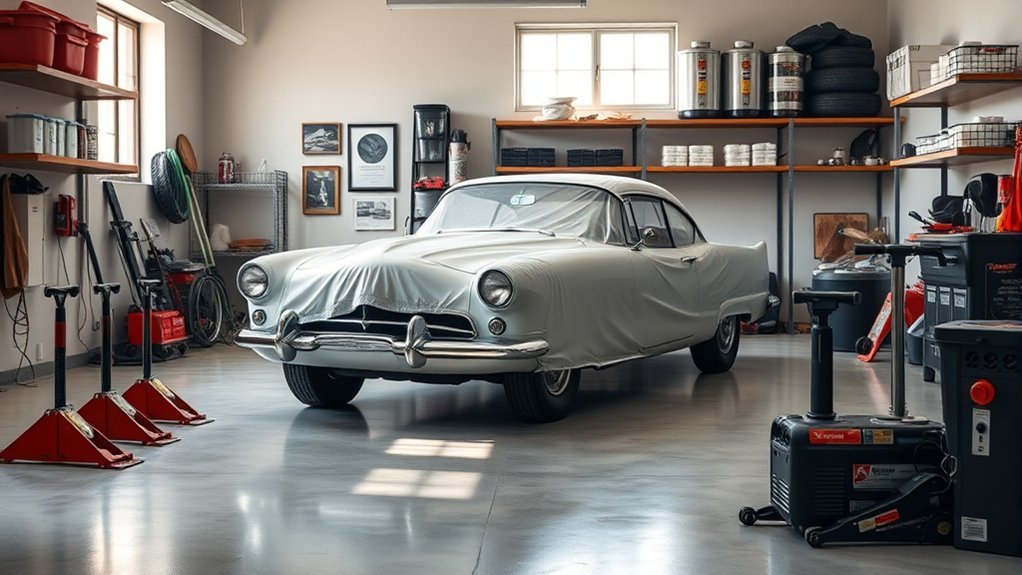
When it comes to storing your classic car safely, having the right tools at your disposal can make all the difference.
To guarantee your prized possession remains in top condition, consider these essential items:
- Quality car covers to protect against dust and moisture
- Battery master switches to maintain battery health during storage
- Positioning aids for easy maneuvering in tight spaces
- Maintenance tools like tire inflators and oil change kits
- A dehumidifier to keep the environment dry, preventing rust and mold
Top 5 Mistakes to Avoid When Storing Your Classic Car
Storing your classic car can be a rewarding experience, but it’s crucial to avoid common mistakes that could jeopardize its condition.
First, don’t skip washing and waxing your car; dirt can penetrate surfaces, leading to corrosion.
Second, always add a fuel stabilizer to the gas tank to prevent fuel degradation and costly repairs.
Third, pay attention to pest control. Seal potential entry points to keep rodents from nesting inside your vehicle.
Fourth, avoid inadequate storage environments. An unheated garage can expose your car to damaging temperature fluctuations and moisture.
Finally, don’t overlook regular inspections during storage. Ignoring flat spots on tires or battery depletion could lead to bigger issues when you’re ready to drive again.
How to Organize Your Classic Car Parts for Storage
Organizing your classic car parts effectively is essential for a smooth restoration process.
Start by categorizing components, like electrical and engine parts, and store them in labeled plastic bins to prevent damage and enhance accessibility.
Incorporating visual inventory techniques, such as digital photos of each bin’s contents, can streamline your workflow and help you avoid unnecessary duplicate purchases.
Effective Parts Categorization
To guarantee a smooth restoration process, effectively categorizing your classic car parts is essential. Proper parts selection can greatly enhance your restoration efficiency. Here are some steps to take into account:
- Group parts into categories: electrical, trim, engine, gearbox
- Use appropriately sized plastic bins to enhance organization
- Clearly label each bin for easy identification
- Capture digital photos of bin contents for a visual inventory
- Develop a tracking system with tools like Excel to prevent duplicates
Regularly review and update your organization system to make sure everything stays in its designated bin.
This structured approach not only saves time but also empowers you to focus on your passion for classic cars without the frustration of misplaced parts.
Visual Inventory Techniques
When it comes to managing your classic car parts, visual inventory techniques can markedly streamline your storage process. Start by photographing each bin’s contents for easy identification later.
Group similar parts—like electrical, trim, and engine—into labeled plastic bins to enhance organization. Assign numbers to each bin and use self-stick mailing labels for clear descriptions, making tracking and retrieval efficient.
Regularly update your visual inventory through photo documentation, capturing any new or removed parts. If you suspect something’s missing, lay out stored items and use your photos to quickly identify what’s lacking, freeing you from the chaos of disorganization.
This systematic approach helps you maintain control over your collection while enjoying the restoration journey.
Checking and Maintaining Tire Condition During Storage
Maintaining tire condition during storage is essential for preserving your classic car’s performance and safety.
To keep your tires in top shape, follow these key practices:
- Inflate tires to the recommended pressure, increasing by about one bar to prevent flat spots.
- Regularly rotate the vehicle or move it slightly every few weeks to evenly distribute weight.
- Inspect tires for cracks or bulges before storage, addressing any damage for safety.
- Use jack stands to elevate the vehicle, relieving pressure on the tires during long periods of inactivity.
- Keep tires clean and free from debris to avoid deterioration.
Why Do Regular Inspections Matter During Storage?
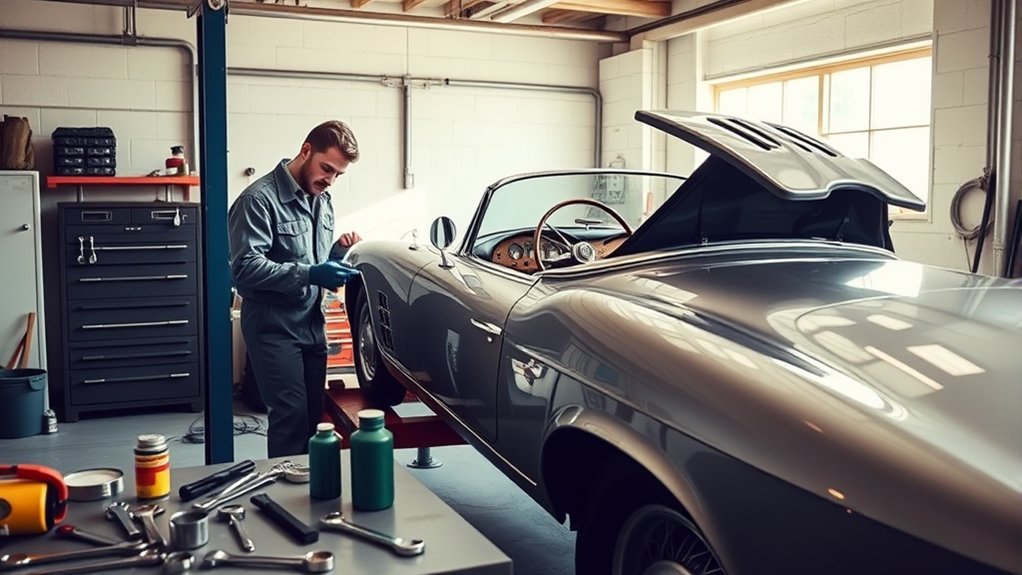
Regular inspections during storage play a significant role in ensuring your classic car remains in peak condition. By adhering to a consistent inspection frequency, you can catch early signs of wear, corrosion, or even pest infestations before they escalate into costly repairs.
Create an inspection checklist that includes checking fluid levels, as maintaining ideal levels prevents engine damage and brake failure when you finally hit the road again.
Additionally, inspecting tire pressure and condition helps avoid flat spots, ensuring your tires are in good shape for safe driving.
Regular evaluations also verify whether protective measures, like battery maintenance and pest deterrents, are effective. By committing to these inspections, you not only safeguard your investment but also extend your classic car’s lifespan and preserve its value.
Keeping it in pristine condition allows you to enjoy the liberation of driving it with confidence when you’re ready to take it out of storage.
Tips for Safely Removing Your Classic Car From Storage
Before you hit the road with your classic car, make certain to check all fluid levels—oil, coolant, and brake fluid—so everything’s in good shape.
Don’t forget to inspect the tires for proper inflation and any signs of wear; properly inflated tires are essential for safe driving.
These steps will help guarantee your classic car is ready for a smooth return to the open road.
Fluid Level Check
Checking fluid levels is essential when you’re ready to remove your classic car from storage.
A thorough fluid inspection not only guarantees smooth operation but also protects your investment.
Use this maintenance checklist to help you:
- Check oil level and quality; change it if acidic residues are present.
- Verify coolant level and confirm it contains antifreeze to prevent damage.
- Inspect brake fluid, topping it off if necessary to avoid moisture issues.
- Examine transmission fluid for proper level and contaminants.
- Assess fuel level; if not stabilized, drain and add fresh fuel.
Paying attention to fluid quality can prevent costly repairs and help your classic car perform at its best.
Enjoy the liberation of hitting the open road!
Tire Inspection Process
Ensuring your classic car’s tires are in ideal condition is essential for a safe and enjoyable driving experience.
Before hitting the road, check the tire pressure and inflate them to the manufacturer’s recommended level to prevent flat spots and enhance handling.
Inspect each tire for visible damage, like cracks, bulges, or uneven tread, which could signal the need for replacement.
If you’ve had the car stored for a while, rotating the tires periodically helps minimize flat spots on the contact surface.
Finally, if you’ve used jack stands during storage, confirm that the tires are properly seated before driving.
Don’t forget to clear away any debris or moisture, as this can greatly affect your safety on the road.
What You Need to Know About Long-Term Storage Costs
When it comes to long-term storage costs for your classic car, understanding the nuances can save you a significant amount of money over time.
Here are some key factors to evaluate:
Key factors to consider include location, storage environment, and regular maintenance to reduce long-term costs.
- Location: Urban storage space is often pricier than rural options.
- Storage Environment: A dry, heated, and pest-free area can prevent costly damage.
- Quality Solutions: Invest in climate-controlled units for better preservation.
- Poor Conditions: Damp garages can lead to rust and increased expenses.
- Regular Maintenance: Check-ups during storage can mitigate repair costs.
Frequently Asked Questions
How to Properly Store a Classic Car?
To properly store a classic car, you’ll want to guarantee proper maintenance by cleaning, filling fluids, and using a breathable cover in an ideal environment that prevents moisture and pests, preserving its condition for future enjoyment.
What Is the 30-60-90 Rule for Cars?
When it comes to car maintenance, the 30-60-90 rule’s like a well-timed clock. At 30,000 miles, you should inspect fluids; at 60,000, check major components; at 90,000, verify everything’s covered by your vehicle insurance.
What Is Dave Ramsey’s Rule on Cars?
Dave Ramsey’s rule on cars emphasizes buying used, avoiding debt, and budgeting wisely. He advises spending no more than 15% of your income on transportation, promoting financial freedom through cash purchases and reliable vehicle maintenance.
How to Store a Car for Long Periods of Time?
To store your car long term, focus on vehicle maintenance: clean it thoroughly, top off fluids, inflate tires, and disconnect the battery. A secure, dry environment will help prevent rust and deterioration during storage.
Conclusion
In the grand tapestry of classic car ownership, storing your prized possession isn’t just a necessity; it’s a labor of love. By following these steps and avoiding common pitfalls, you’re not just preserving a vehicle; you’re safeguarding a piece of history. Remember, regular checks can prevent headaches down the road. When it’s time to reveal your classic beauty, you’ll be ready to hit the road with confidence, ensuring your ride remains a timeless treasure for years to come.






Leave a Reply