
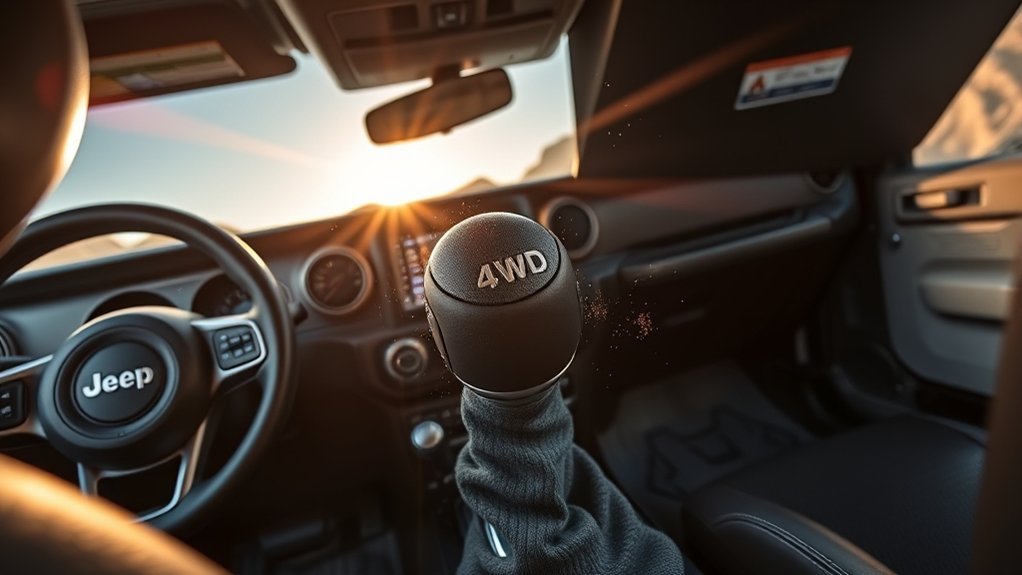
To shift your Jeep Wrangler into four-wheel drive, bring your vehicle to a complete stop first. For 4H, shift into neutral, engage the transfer case shifter, and then return to drive mode. If you need 4L, do the same but make sure you’re moving at a crawl speed under 5 km/h. Avoid shifting directly from 2H to 4L; always go through 4H first. If you want tips on maintenance and safety, keep going for more insights.
Understanding Four-Wheel Drive Modes in Your Jeep
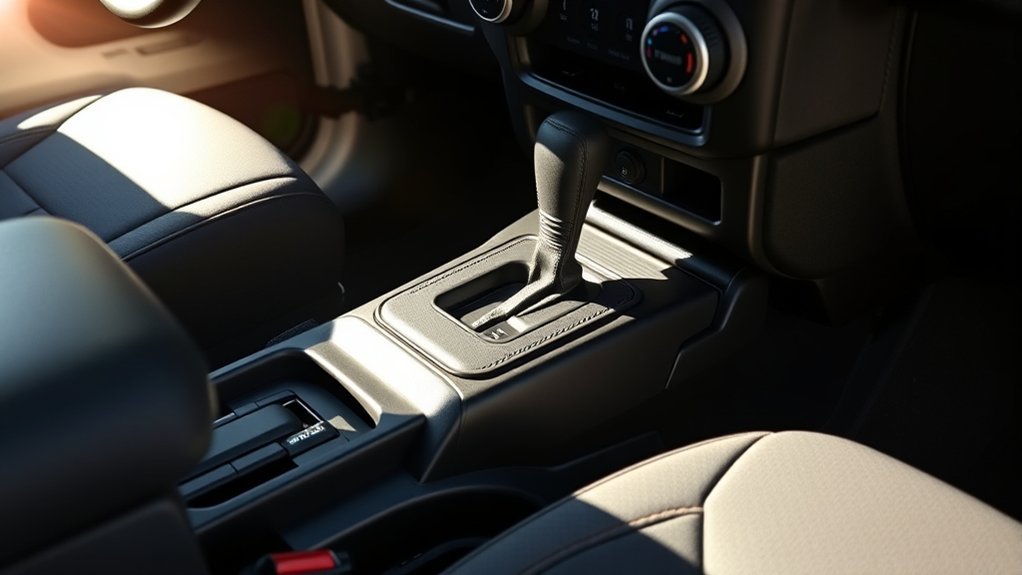
Understanding the four-wheel-drive modes in your Jeep Wrangler is essential for maximizing its performance in various driving conditions. Your Jeep features three main modes: 2 Hi (2H), 4 Hi (4H), and 4 Lo (4L).
Use 2H for standard driving on dry, paved roads. When the weather turns slippery—like in snow or on unpaved paths—switch to 4H for improved traction, allowing speeds up to 50 mph.
Use 2H for dry roads; switch to 4H in slippery conditions for enhanced traction up to 50 mph.
For challenging terrains, engage 4L by first shifting to 4H, then to neutral, before selecting 4L. This mode provides maximum torque and control, perfect for rock crawling or maneuvering through mud.
However, avoid using 4L on pavement to protect your drivetrain. Properly shifting between modes is vital to maintain your Jeep’s performance and prevent mechanical issues.
Each mode serves a specific purpose, helping you conquer any terrain with confidence and freedom.
When to Use 4WD for Best Performance
When tackling various driving conditions, knowing when to engage your Jeep’s four-wheel-drive (4WD) system can greatly enhance your performance.
Use 4-High (4H) for improved traction on slippery surfaces like snow, ice, or wet roads, ideally at speeds under 50 mph.
When you’re maneuvering through extremely loose terrains—think mud, rocks, or steep inclines—switch to 4-Low (4L) for maximum torque and traction, keeping your speed under 15 mph.
It’s essential to avoid using any 4WD mode on dry, paved roads to prevent unnecessary wear on your drivetrain.
Always assess the road conditions before engaging 4WD, and revert to 2-High (2H) when they improve.
Engage 4WD only when necessary to boost control and traction, as frequent switching can stress your drivetrain.
How to Shift Into 4WD High: a Step-By-Step Guide
Before moving into 4WD High, make certain you’re prepared by evaluating your speed and the road conditions.
To engage 4WD High, simply pull down on the transfer case shifter while cruising under 35 mph. This guarantees a smooth changeover and ideal traction for your Jeep Wrangler.
Preparation Before Shifting
How can you guarantee a smooth change into 4WD High? Preparation is key. Follow these steps to assure a seamless transition:
- Drive at a Safe Speed: Keep your speed under 35 mph for maximum performance.
- Bring the Jeep to a Complete Stop: This minimizes stress on the drivetrain.
- Shift to Neutral: While applying the brakes, move the gear into neutral (N).
- Use the Transfer Case Shifter: Located to the left of the gear shifter, select 4H.
Once you’ve completed these steps, you’re ready to shift into 4WD High.
After the shift, return your transmission to drive mode (D) to hit the road with confidence. Embrace the adventure ahead!
Engaging 4WD High Mode
Engage 4WD High by smoothly shifting your Jeep Wrangler into a more capable driving mode.
First, slow down to under 35 mph; this guarantees a smoother engagement. Once you’re at the right speed, simply pull the transfer case shifter straight down from 2H to 4H—there’s no need to go into neutral.
Before you shift, make certain the road conditions warrant extra traction, like dirt, snow, or rain.
Once in 4H, keep your speeds between 15-50 mph for peak control. Regularly exercising the shifter can also enhance its performance, making future engagements easier.
With these steps, you’ll be ready to conquer any terrain with confidence and liberation!
Safety Tips for Shifting Into 4WD Low
Shifting into 4WD Low isn’t just about getting better traction; it’s also crucial to do it safely. Follow these tips to guarantee a smooth change:
- Come to a Complete Stop: Always stop your Jeep before making the shift to prevent gear misalignment and reduce drivetrain stress.
- Shift to Neutral: Make sure your vehicle is in neutral (N) when moving from 4H to 4L for proper engagement.
- Maintain a Crawl Speed: Avoid shifting while driving, especially at speed; keep it under 5 km/h for ideal control.
- Consult Your Owner’s Manual: Each Jeep model has specific instructions; refer to it for tailored guidance.
Practicing these steps regularly will help improve the transfer case shifter’s performance, making your off-road adventures safer and more enjoyable.
Stay safe and liberated on your journeys!
Avoid These Common Mistakes When Shifting Gears

When shifting your Jeep Wrangler into 4WD, timing is essential.
You need to avoid speeding and remember to use neutral when necessary to guarantee a smooth changeover.
Let’s explore these common mistakes so you can shift gears like a pro.
Timing Your Shifts Properly
To guarantee a smooth changeover into 4-wheel drive, it’s essential to time your shifts properly and avoid common mistakes that can lead to drivetrain stress. Follow these key steps:
- Complete Stop: Always slow down to a complete stop before shifting into 4 Lo; this prevents damage.
- Speed Limit: Engage 4 Hi while moving at speeds under 35 mph for peak performance and traction.
- Proper Shift: Never shift directly from 2 Hi to 4 Lo; always move through 4 Hi first.
- Neutral Position: Maintain neutral when shifting from 4 Hi to 4 Lo for smoother gear engagement.
Avoid Speeding While Shifting
Avoiding high speeds while shifting into four-wheel drive is essential for maintaining your Jeep’s drivetrain integrity. Always slow down to under 30 mph before making the switch. This minimizes stress on the drivetrain and guarantees a smooth change.
Don’t shift directly from 2 Hi to 4 Lo; instead, engage 4 Hi, then shift to neutral before moving into 4 Lo. Remember, never attempt to switch to 4 Lo while driving—come to a complete stop to prevent gear misalignment.
While in 2 Hi, keep speeds below 55 mph to avoid unnecessary wear. Finally, reassess road conditions; engaging four-wheel drive on dry, paved roads can lead to damage.
Prioritize safety and performance for a liberating off-road experience.
Use Neutral When Necessary
Shifting into four-wheel drive can be straightforward, but using neutral at the right moments is key to avoiding common mistakes. Here’s how to do it correctly:
- Always shift to neutral (N) when switching from 4 Hi to 4 Lo to prevent drivetrain stress.
- Never shift directly from 2 Hi to 4 Lo; go through 4 Hi first for proper gear alignment.
- Ensure you’re at a complete stop before shifting into 4 Lo to avoid damaging the transfer case.
- You can switch to 4 Hi while in motion, but slow down to under 35 mph for best performance.
Following these steps will keep your Jeep’s drivetrain healthy and enhance your off-road experience. Enjoy the journey!
How to Easily Disengage From Four-Wheel Drive
Disengaging from four-wheel drive is a straightforward process that can help maintain your Jeep’s performance.
Start by slowing down to a crawl and shifting the transmission from drive to neutral. While you’re rolling forward, shift the transfer case into 4-High to change out of 4-Low. This step is essential for a smooth switch back to standard driving.
Once you’ve shifted to 4-High, put your Jeep back into gear and continue driving.
After shifting to 4-High, engage your Jeep back into gear and keep driving smoothly.
Finally, move the transfer case handle up into 2-High for normal driving conditions. This proper disengagement not only enhances your Jeep’s performance but also prevents potential mechanical issues down the road.
Maintenance Practices for Your Jeep’s 4WD System
To keep your Jeep’s 4WD system running smoothly, regular maintenance is key. Here are essential practices to guarantee peak performance:
1. Exercise the Transfer Case Shifter****: Regularly move the shifter to maintain smooth operation.
Many users notice improved functionality after several hundred miles.
2. Check and Change Transfer Case Fluid****: Follow your owner’s manual to keep fluid fresh, guaranteeing longevity and effectiveness of your 4WD system.
3. Inspect Drivetrain Components****: Regularly check driveshafts and differentials for wear and tear.
Catching issues early can save you from costly repairs.
4. Maintain Tire Pressure: Confirm tire pressure is consistent and within specs.
Uneven pressure can negatively impact your 4WD’s performance and handling.
Frequently Asked Questions About Jeep 4WD Usage
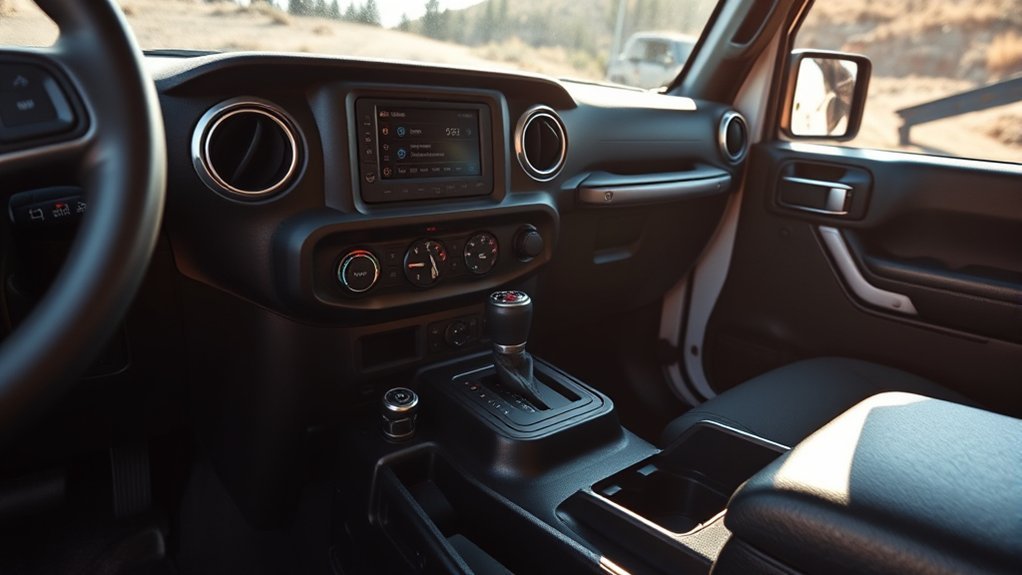
Curious about how to get the most out of your Jeep’s 4WD system? Let’s tackle some common questions.
First, you can shift from 2H to 4H while moving, but it’s best to slow down to under 35 mph for smooth engagement. If you need to shift into 4L, start by going to 4H, then neutral, and make sure you’re at a complete stop to avoid gear misalignment.
Also, remember not to shift directly from 2H to 4L; always pass through 4H to protect your drivetrain from damage.
Regularly cycling through the transfer case can enhance shifter performance, making it easier to engage the desired mode.
Finally, don’t forget to consult your owner’s manual for specific guidelines tailored to your Jeep model, ensuring safe and effective operation of your 4WD system.
Embrace the freedom your Jeep offers!
Frequently Asked Questions
Can You Switch From 2h to 4H While Driving a Jeep Wrangler?
Yes, you can switch from 2H to 4H while driving your Jeep Wrangler. Just slow down under 35 mph for the best traction. Enjoy the freedom of tackling diverse terrains with confidence and ease!
Conclusion
Shifting your Jeep Wrangler into four-wheel drive is like releasing a new gear in your adventure toolkit. By understanding the modes and following the steps, you’ll tackle any terrain with confidence. Just remember to practice safety and avoid common pitfalls to keep your ride smooth. With a little care and attention, you can guarantee your 4WD system remains in top shape, ready for whatever the road—or trail—throws your way. Happy driving!







Leave a Reply