
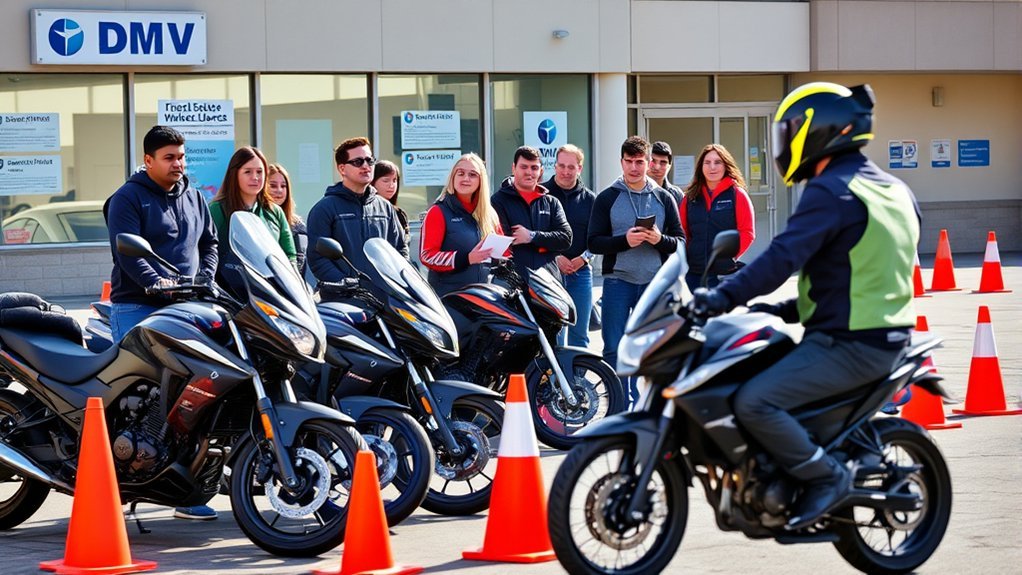
To get your motorcycle license in Iowa, start by completing a 3-5 hour online course and then enroll in the 2-day Basic Rider Course (BRC). You’ll need to pass written and practical tests and hold a valid motorcycle permit for at least six months if you’re under 21. Make certain you have the right safety gear and familiarize yourself with the state’s motorcycle handbook. Stick with your studies and practice consistently to boost your confidence. There’s more to explore about the process.
Key Requirements for Obtaining a Motorcycle License in Iowa
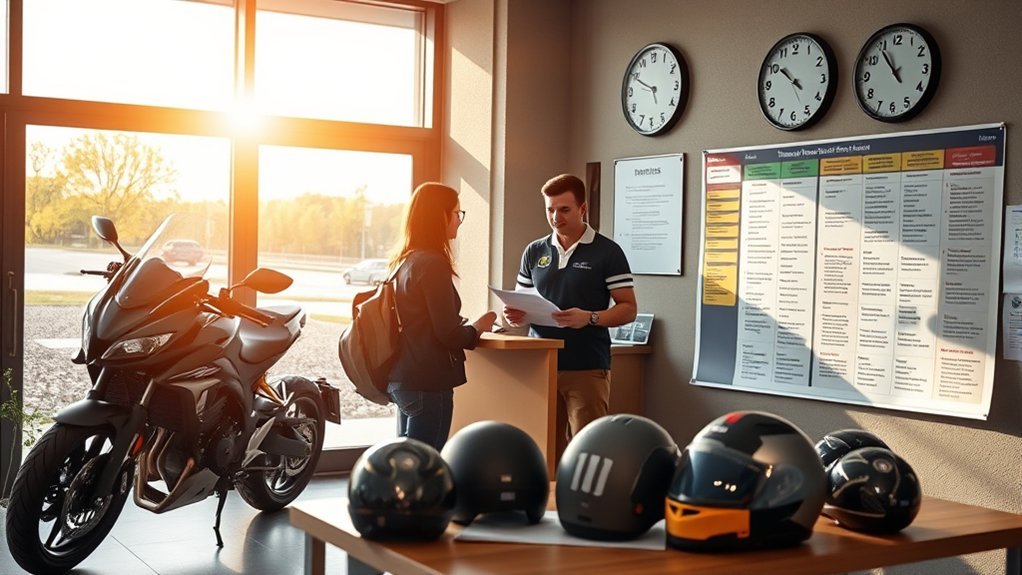
To get your motorcycle license in Iowa, you’ll need to meet several key requirements that guarantee you’re well-prepared for the road.
First, you must complete a 3-5 hour online course, followed by a 2-day Basic Rider Course (BRC), which covers essential motorcycle safety skills. The BRC includes both practical and written tests, ensuring you’re equipped to handle various riding scenarios.
Complete a 3-5 hour online course and a 2-day Basic Rider Course to master essential motorcycle safety skills.
If you’re under 21, you’ll need to hold a valid motorcycle permit for at least six months before enrolling in the BRC.
After successfully completing the BRC, you’ll take another written test at the Iowa Department of Transportation (DOT) to earn your motorcycle endorsement.
Don’t forget about the licensing fees that vary based on services rendered, so be prepared to pay.
Studying the Iowa Motorcycle Operator Manual is vital, as it helps you ace both the BRC and DOT tests, paving the way for your newfound freedom on two wheels!
Detailed Steps to Secure Your Motorcycle License in Iowa
While securing your motorcycle license in Iowa may seem intimidating, breaking it down into clear steps can make the process much easier.
Start by completing a 3-5 hour online course, which lays the groundwork for your skills. Next, enroll in the 2-day Basic Rider Course (BRC), where you’ll learn essential motorcycle safety techniques. Remember, this course includes both skills and written tests.
Don’t forget to bring your riding gear, including a helmet and protective clothing, to meet safety standards. After finishing the BRC, you’ll need to pass an additional written test at the Iowa DOT, where you must correctly answer at least 20 out of 25 questions.
Lastly, check the Iowa DOT website for the latest fee structure, as costs can vary.
Study Tips for the Written Test
To ace the written test for your motorcycle license, start by using online practice tests to get comfortable with the format and types of questions you’ll face.
Focus on memorizing key facts like speed limits and right-of-way rules, as these are essential for passing.
With consistent study and practice, you’ll boost your confidence and set yourself up for success.
Utilize Online Practice Tests
Using online practice tests can be one of the most effective ways to prepare for your motorcycle written exam. By familiarizing yourself with question formats and types, you can boost your confidence. Allocate 1-2 weeks to study consistently using online resources, which will enhance your understanding of road rules and safety practices. Most states offer free sample tests through their DMV websites, so you can practice without extra costs.
| Practice Strategy | Benefits | Resources |
|---|---|---|
| Daily Quizzes | Reinforces knowledge | DMV sample tests |
| Timed Tests | Improves speed and accuracy | Online practice platforms |
| Review Mistakes | Identifies weak areas | Study guides and forums |
| Group Study Sessions | Collaborative learning | Local riding groups |
| Flashcards | Quick recall of key facts | Digital flashcard apps |
Keep pushing forward!
Focus on Key Facts
Focusing on key facts is essential for acing your motorcycle written test, as understanding the specific rules and regulations can make all the difference.
Here are some study tips to help you succeed:
- Allocate 1-2 weeks for consistent study of your state’s motorcycle handbook.
- Familiarize yourself with motorcycle safety practices and riding techniques.
- Utilize online practice tests to boost your confidence and get comfortable with the exam format.
- Memorize vital facts like speed limits, road signs, and motorcycle regulations.
- Review common mistakes to avoid errors on test day.
What to Expect in the Basic Rider Course?
In the Basic Rider Course, you’ll experience a well-structured blend of online learning and hands-on practice over two days.
You’ll focus on essential riding skills that are vital for safe and confident riding.
With skilled instructors guiding you, you’ll gain valuable feedback to help you improve and prepare for your motorcycle journey.
Course Structure Overview
The Basic Rider Course (BRC) offers an engaging blend of online learning and hands-on riding experience over two days, ensuring you gain the essential skills needed for safe motorcycle operation.
You’ll start with an online module covering motorcycle functions and road rules before diving into practical sessions.
Expect to:
- Learn proper braking techniques
- Practice cornering skills
- Detect hazards effectively
- Perfect your balance on the bike
- Master slow-speed maneuvers
Safety gear, including a helmet, gloves, and protective clothing, is mandatory during practice to keep you safe.
Completing the course not only equips you with crucial riding skills but also provides course benefits like a DMV skills test waiver and potential insurance discounts.
Embrace your freedom on two wheels!
Essential Riding Skills
Essential riding skills are crucial for anyone looking to become a confident and safe motorcyclist.
In the Basic Rider Course (BRC), you’ll immerse yourself in essential riding techniques and safety practices over two days of engaging classroom instruction and hands-on experience. You’ll learn about motorcycle controls, road rules, and the importance of protective gear, like helmets and jackets, to keep you safe during training.
The course wraps up with a skills test that challenges your motorcycle control and hazard response through practical exercises. Completing the BRC often waives the DMV’s road skills test, making it a smart step for new riders of all ages.
Embrace this opportunity to enhance your skills and enjoy the freedom of the open road!
How to Pass the Road Test: Essential Tips
Passing the road test can feel intimidating, but with the right preparation, you can boost your confidence and skills. Focus on these essential tips to ace your test:
- Familiarize yourself with your state’s specific requirements and maneuvers.
- Practice weaving, turning, and stopping in a safe environment.
- Always wear proper safety gear, including a DOT-approved helmet and gloves.
- Review the motorcycle handbook to understand traffic laws and safe riding techniques.
- Schedule a practice test with an experienced instructor for constructive feedback.
Common Mistakes to Avoid When Getting Your Motorcycle License
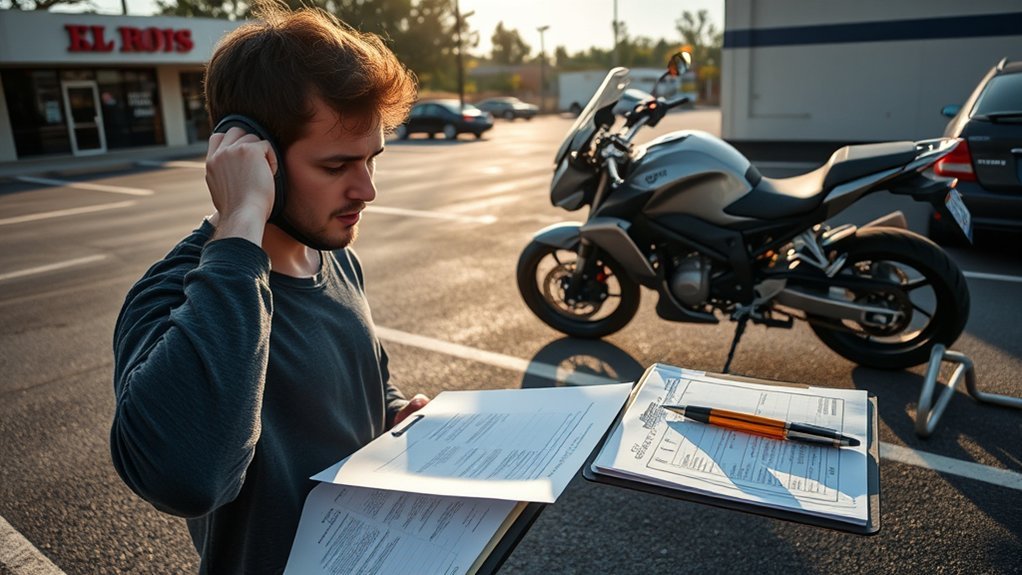
After preparing for the road test, it’s important to recognize some common pitfalls that could hinder your journey to obtaining a motorcycle license. One major mistake is failing to study your state’s specific motorcycle handbook. This can lead to poor performance on the written test, as each state has unique rules.
Another preparation pitfall isn’t practicing enough before the skills test; familiarize yourself with essential exercises to demonstrate control and safety.
Don’t underestimate the significance of proper gear, as it’s often mandated and vital for your safety.
Also, be aware of the permit holding period in your state—rushing through this can lead to missed requirements.
Finally, verify you have all necessary paperwork before scheduling the written test; lacking proof of identity, residency, or age can cause frustrating delays.
Frequently Asked Questions
What Are the Most Common Motorcycle Test Fails?
You’ll commonly fail the motorcycle test due to poor riding techniques, like losing control during maneuvers or inadequate signaling. Proper test preparation is essential to avoid these pitfalls and guarantee your success on the road.
What Is the 1% Rule in Motorcycles?
The 1% Rule in motorcycles highlights that only 1% of riders cause most accidents, emphasizing the importance of motorcycle safety and responsible riding techniques. Focus on safe practices to enjoy your freedom on the road.
What Is the 4 Second Rule for Motorcycles?
The 4 Second Rule for motorcycles is your golden ticket to motorcycle safety. Count four seconds after the vehicle in front passes a landmark to guarantee you’re safely behind, enhancing your riding techniques and freedom on the road.
Can I Take My WV Motorcycle Permit Test Online?
You can’t take your WV motorcycle permit test online. You’ll need to visit a DMV office in person to meet test requirements. Prepare well, and you’ll be one step closer to riding free on the open road!
Conclusion
Getting your motorcycle license in Iowa can be an exciting journey, and with the right preparation, you can achieve it! Remember to stay focused, practice your skills, and learn from any mistakes along the way. Isn’t the thrill of the open road worth the effort? So, gear up, follow the steps, and soon you’ll be riding with confidence. Embrace the adventure that awaits you—your motorcycle dreams are just a license away!






Leave a Reply