
To back up a trailer, start by evaluating your surroundings for obstacles. Align your vehicle straight with the route, then shift into reverse slowly. Use small steering adjustments from the bottom of the wheel to guide the trailer. Invest in towing mirrors and consider a backup camera for better visibility. Avoid common mistakes like oversteering and rushing. Practice in open areas to build your confidence. Stick around, and you’ll discover even more valuable tips and techniques!
Step-By-Step Guide to Safe Trailer Reversing
Reversing a trailer can be tricky, but with the right approach, you can master it in no time.
Start by evaluating your environment for obstacles like curbs or trees that could impede your path. Position your vehicle so that it aligns straight with the intended route, ensuring you have a clear view of reference points.
When you shift into reverse, do so slowly to gauge the trailer’s movement and maintain control. Remember, the trailer weight affects how it responds, so keep your reversing speed low for better precision.
Use the steering wheel technique: grip the wheel at the bottom, turning left to guide the trailer left and right to guide it right.
Stay calm and practice regularly in safe environments. This will build your confidence and enhance your reversing skills, allowing you to navigate tight spots with ease.
Understanding Your Trailer: Dynamics and Handling
Mastering the art of reversing a trailer sets the stage for understanding its dynamics and handling. First, get familiar with your trailer weight, as it greatly influences how the trailer behaves while backing up. A well-balanced trailer responds better to steering inputs, making your maneuvers smoother.
Next, consider the turning radius; knowing this can help you plan your path effectively. Tight spaces can be tricky, so anticipate how the trailer will pivot around corners.
Understanding the turning radius is essential for effective path planning, especially in tight spaces.
Different types of hitches also have unique handling characteristics, impacting your control. In addition, always be aware of blind spots around your trailer; these areas can hide obstacles that might lead to accidents.
Finally, practice in an open area to build your confidence. The more you understand your trailer’s dynamics, the more liberated you’ll feel while backing it up. Embrace the learning journey, and soon, reversing will feel like second nature.
Essential Tools for Backing Up a Trailer
Backing up a trailer requires the right tools to make the process smoother and safer. First, investing in towing mirrors is essential. They expand your visibility, helping you see blind spots and monitor your trailer’s position accurately.
Next, consider a backup camera system. These cameras enhance your view and often feature backup lines that indicate the trailer’s projected path, making maneuvering much easier.
Don’t forget wheel chocks! They’re vital for preventing unwanted movement when parked or during the backing process, ensuring safety.
A spotter can also make a huge difference; they provide visual cues and directions, especially in tight spaces.
Finally, if your trailer has brakes, use them wisely. They allow for smoother stops and adjustments while reversing.
With these essential tools, you’ll gain confidence in backing up your trailer, liberating you to tackle any hauling challenge that comes your way!
Common Trailer Backing Mistakes to Avoid
When backing up a trailer, avoiding common mistakes can make all the difference.
Oversteering, neglecting your surroundings, and rushing the process can lead to serious issues.
Stay aware, take your time, and make careful adjustments to guarantee a smooth backing experience.
Oversteering and Loss of Control
Oversteering can quickly lead to a loss of control when you’re trying to back up a trailer, making the task feel frustrating and intimidating.
One of the main oversteering causes is making large, abrupt turns. Instead, focus on small, deliberate steering adjustments to maintain better control of your trailer’s direction. Rushing the process can increase the chances of oversteering, so take your time and stay calm.
Practicing in open spaces helps you understand how your trailer responds to your steering inputs, reducing the risk of losing control. Additionally, regularly checking your mirrors and using a spotter can provide valuable visual cues.
Neglecting Surroundings Before Reversing
Many drivers underestimate the importance of checking their surroundings before reversing a trailer. Failing to perform a thorough surroundings evaluation can lead to collisions with obstacles or pedestrians.
To avoid dangerous blind spots, make it a point to circle your vehicle and identify potential hazards. Stay aware of other vehicles and pedestrians nearby, as they can complicate your backing maneuvers.
Use the G.O.A.L. (Get Out And Look) technique to guarantee a clear path before you start reversing. Taking this extra time not only enhances your safety but also aids in collision prevention, ultimately preventing costly damages.
Rushing the Reversing Process
Rushing the reversing process can lead to serious mistakes, such as losing control of your trailer. When you hurry, you’re more likely to oversteer, resulting in potential accidents.
Take your time to observe your surroundings and make necessary adjustments, which greatly reduces collision risks. Remember, it’s crucial to prioritize safety over speed.
Inexperienced drivers often feel pressured by traffic or curious onlookers, but ignoring safety protocols can be costly. Practice slow, deliberate movements to build muscle memory—this makes your reversing techniques smoother and more efficient.
Don’t forget the G.O.A.L. (Get Out And Look) technique before backing up; it helps you assess your environment and avoid rushed decisions that can lead to mistakes.
Stay calm and focused!
How to Use Spotters Effectively for Guidance
Using a spotter can greatly enhance your ability to back up a trailer safely and efficiently. To make the most of your spotter, focus on their positioning and communication signals. Here’s how to effectively use a spotter for guidance:
- Clear View: Position your spotter where they can see the entire trailer’s path, allowing for better guidance.
- Hand Signals: Use clear hand signals to communicate direction and adjustments, ensuring both of you’re on the same page.
- Steering Adjustments: Rely on your spotter to direct steering changes, helping to prevent jackknifing and collisions.
- Monitor Surroundings: Allow your spotter to keep an eye on obstacles, reducing stress and enhancing safety.
With effective spotter positioning and clear communication signals, you can navigate tight spaces with confidence, making the backing process smoother and more efficient.
Why Slow and Steady Wins When Reversing a Trailer
When you’re reversing a trailer, taking your time is key to achieving precision and control.
Moving slowly lets you make small adjustments, helping you avoid accidents and navigate tight spaces with ease.
Plus, it gives you the chance to communicate effectively with any spotters, ensuring everyone’s on the same page.
Precision Over Speed
Reversing a trailer requires a steady hand and a patient mindset, as moving slowly allows for precise adjustments that can prevent costly mistakes. By taking your time, you’ll enhance your control and avoid unnecessary complications.
Here’s what focusing on precision offers you:
- Slow adjustments help prevent jackknifing and collisions.
- Careful monitoring of the trailer’s path guarantees better alignment with your target.
- Maintaining an idle speed allows for prompt reactions to any unexpected shifts.
- Deliberate movements reduce oversteering, keeping you in sync with your trailer.
As you practice these techniques, you’ll build confidence and improve your skills, gaining a deeper understanding of your vehicle-trailer dynamics.
Embrace the journey and revel in the freedom that comes with mastery!
Avoiding Accidents
Mastering the art of backing up a trailer isn’t just about gaining confidence; it’s also about prioritizing safety. Slow and steady movements enhance your control and precision, minimizing accidents. By practicing safety protocols, such as the G.O.A.L. technique, you can assess your surroundings and identify hazards before reversing.
| Common Mistakes | Safety Solutions |
|---|---|
| Oversteering | Move slowly for adjustments |
| Ignoring blind spots | Use towing mirrors |
| Skipping checks | Get out and look |
| Rushing the process | Practice in open areas |
Maintaining hazard awareness allows you to navigate obstacles effectively, ensuring a safer reversing experience. Remember, confidence builds with practice, so embrace the slow approach!
Better Control Techniques
While you might feel the urge to speed up when backing up a trailer, embracing a slow and steady approach is essential for maintaining control. This method reduces the risk of jackknifing and allows for precise trailer alignment.
Here are some techniques to enhance your reverse steering:
- Make small, gradual steering adjustments instead of dramatic turns.
- Use the bottom grip technique for a more intuitive response.
- Practice in safe, open spaces to build confidence and comfort.
- Be patient; rushing leads to mistakes and poor alignment.
Mastering Tight Spots and Angles
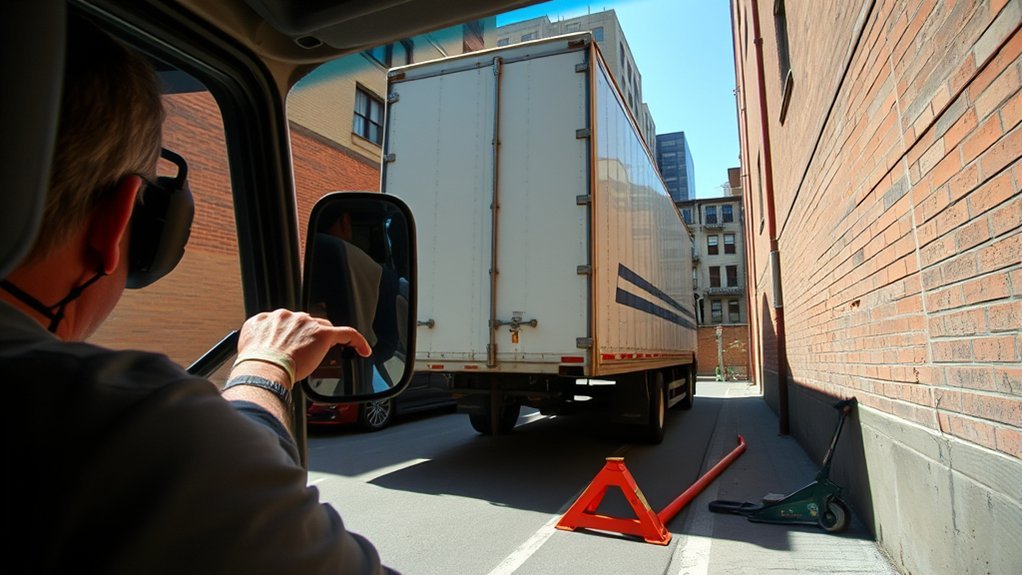
Backing up a trailer in tight spots can be challenging, but with the right techniques, you can navigate those tricky angles with confidence.
Start by holding the steering wheel at the bottom, around the 6 o’clock position. This simple grip helps you control the trailer’s direction intuitively, minimizing oversteering. When approaching tight angles, make wider initial turns to create smoother maneuvers and avoid jackknifing.
Hold the steering wheel at the 6 o’clock position for intuitive control and smoother maneuvers in tight spots.
As you reverse, focus on making small, incremental steering adjustments to maintain trailer alignment with your target. Utilize your side mirrors extensively, and don’t hesitate to roll down your windows for better visibility in confined spaces.
For even more control, practice the S-turn technique by aligning your vehicle slightly to the right before reversing. These reversing techniques will make mastering tight spots feel liberating and achievable!
The Role of Technology: Backup Cameras and Mirrors
Maneuvering tight spots becomes even easier with the right technology at your disposal. Backup cameras and towing mirrors can transform your reversing experience, providing safety and confidence. Here’s how they help:
- Backup cameras offer a clear view behind the trailer, often with camera features like guidelines to indicate your vehicle’s path.
- Towing mirrors greatly extend your field of vision, helping you monitor the trailer’s position and any obstacles.
- Many camera systems feature motion detection and night vision, enhancing safety even in low-light conditions.
- Using both backup cameras and mirrors together minimizes blind spots, reducing the risk of accidents.
Incorporating these tools into your routine allows for better mirror adjustments and improved awareness, making you a more liberated driver.
Embrace the technology—it’s here to enhance your towing experience!
Practice Makes Perfect: Building Your Trailer Reversing Skills
To master the art of reversing a trailer, regular practice is essential, especially in safe, open environments. This is where you can build confidence and refine your skills.
Start simple and gradually increase the complexity of your backing scenarios—tight spaces and varying angles are great for skill assessment.
Utilize a spotter during these sessions; they can provide valuable visual cues and enhance your communication. This teamwork helps you align better and avoid obstacles.
Consistent repetition of maneuvers strengthens your muscle memory, making it easier to react instinctively when it counts.
Be sure to monitor your progress; this will highlight areas needing improvement and lead to more effective and safer reversing skills.
Remember, every successful session boosts your confidence, paving the way for smoother experiences on the road.
With dedication and practice, you’ll feel liberated behind the wheel, ready to tackle any trailer-reversing challenge.
Frequently Asked Questions
What Is a Simple Trick for Backing up a Trailer?
A simple trick for backing up a trailer is to grip the steering wheel at the bottom. This way, you’ll intuitively steer the trailer, making backing techniques smoother and preventing jackknifing during your maneuver.
What Is the 60 40 Rule for Trailers?
The 60/40 rule for trailers means you should distribute 60% of the trailer weight toward the hitch and 40% toward the rear. This balance enhances your steering angle, improving control during towing and maneuvering.
What Not to Do When Backing up a Trailer?
When backing up a trailer, don’t oversteer, neglect your surroundings, or rush. Avoid relying solely on mirrors; instead, focus on clear communication and precise movements for better trailer positioning, minimizing common errors and ensuring safety.
What Is the Hardest Part of Backing up a Trailer?
Isn’t it ironic how backing up a trailer challenges your steering techniques? The hardest part lies in mastering the counterintuitive movements and achieving precise trailer alignment, all while managing spatial awareness and external pressures.
Conclusion
Backing up a trailer can be tricky, but with practice and the right techniques, you can master it. Remember to use your mirrors, take it slow, and communicate with spotters. For example, consider a weekend camper who struggled to park their trailer in tight campgrounds. After following this guide and practicing regularly, they became confident, turning what used to be a stressful task into a smooth experience. Keep honing your skills, and you’ll be backing up trailers like a pro!







Leave a Reply