

To avoid motorcycle crashes, gear up with DOT-compliant helmets, reflective clothing, and protective apparel to enhance visibility and safety. Master essential riding skills like cornering, hazard recognition, and effective braking techniques. Before you ride, check your tire pressure and brakes to guarantee peak performance. Be aware of common accident scenarios, maintain a safe following distance, and use defensive techniques to anticipate driver actions. Stick around to explore more vital strategies for a safer ride.
Understanding the Importance of Motorcycle Safety Gear
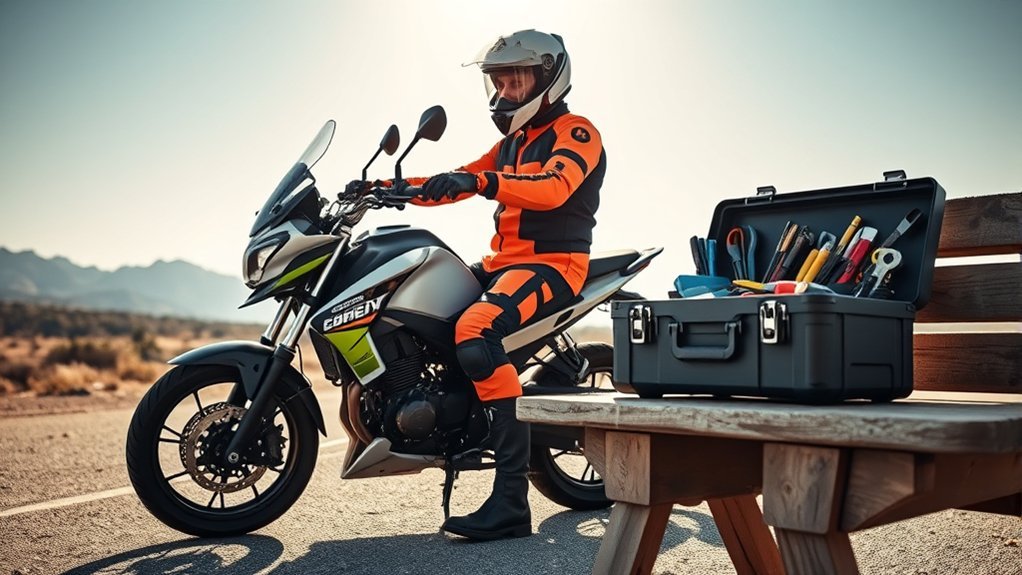
When you ride a motorcycle, the right safety gear isn’t just an option—it’s vital for protecting yourself on the road. Wearing a DOT-compliant helmet drastically lowers your risk of brain injuries, keeping your head and neck safe during a crash.
High-quality safety gear like leather jackets, gloves, and boots protects against abrasions and lacerations if you take a spill, minimizing injury severity.
Visibility enhancement is important too; bright, reflective clothing helps guarantee that other drivers see you. Many accidents happen because motorists overlook riders, so high-visibility gear like fluorescent vests can greatly reduce crash-related injuries—by up to 37%.
Not only does proper protective gear enhance your safety, but it also boosts your comfort and control, making for a more enjoyable ride.
Prioritizing safety gear isn’t just smart; it empowers you to embrace the freedom of the open road with confidence.
Essential Riding Skills for Every Level
Mastering essential riding skills is important for every motorcyclist, regardless of experience level, as it directly impacts your safety on the road.
By focusing on key techniques, you can ride with confidence and freedom. Here are three significant skills to develop:
- Cornering Techniques: Practice proper body positioning and throttle control. Lean into corners and maintain balance to navigate turns smoothly.
- Hazard Recognition: Use the SEE strategy—Search, Evaluate, Execute—to enhance your situational awareness. Anticipating potential dangers will keep you one step ahead.
- Braking Skills: Learn to brake effectively in various conditions. Smooth and controlled braking can prevent accidents and provide better stability.
Continuous training and advanced riding courses can sharpen these skills, preparing you for any challenge on the road.
Key Pre-Ride Checks for Safe Riding
Before you hit the road, make certain to check your tire pressure and brake function.
Proper tire pressure guarantees better traction and handling, while fully operational brakes are essential for your safety.
These quick checks can prevent potential hazards and keep your ride smooth.
Tire Pressure Check
Checking your tire pressure is an essential step in ensuring a safe ride. Proper tire pressure affects your motorcycle’s handling, stability, and braking performance.
Here are some maintenance tips to keep in mind:
- Inflate to Manufacturer’s Recommendations: Always check the sticker on your bike or the owner’s manual for the correct pressure.
- Check When Cold: Tire pressure readings can be inaccurate if checked after riding. Do it when your tires are cold.
- Regular Maintenance: Consistently monitor your tire pressure; it enhances safety, improves fuel efficiency, and elevates your overall riding experience.
Brake Function Inspection
Ensuring your brakes function properly is essential for safe riding, as they play an important role in your ability to stop quickly and effectively.
Start by checking the brake lever and pedal for proper engagement; there’s no room for sponginess or excessive play. Next, inspect the brake pads—if they’re less than 1/8 inch thick, it’s time to replace them for peak stopping power.
Don’t forget to test your brake lights while stationary; visibility to other drivers is vital. Also, check brake fluid levels and condition; low fluid or discolored fluid signals potential issues.
Finally, conduct a pre-ride walk-around to visually inspect all brake components for leaks and wear, reinforcing the importance of routine maintenance for your safety.
How to Spot and Steer Clear of Common Motorcycle Accidents?
As you navigate the roads, being aware of the most common motorcycle accidents can considerably enhance your safety.
Here are three key areas to focus on:
- Intersection Awareness: Left-turn collisions account for about 42% of fatal motorcycle crashes. Always make eye contact with drivers and be cautious when approaching intersections.
- Blind Spot Vigilance: Lane-change accidents result in nearly 4,000 motorcyclist deaths each year. Stay out of drivers’ blind spots and look for turn signals to gauge their intentions.
- Curves and Hills: Head-on collisions make up 56% of motorcycle fatalities on two-lane roads. Stay alert around curves and hills, as visibility can be limited.
The Role of Defensive Riding Techniques in Accident Prevention
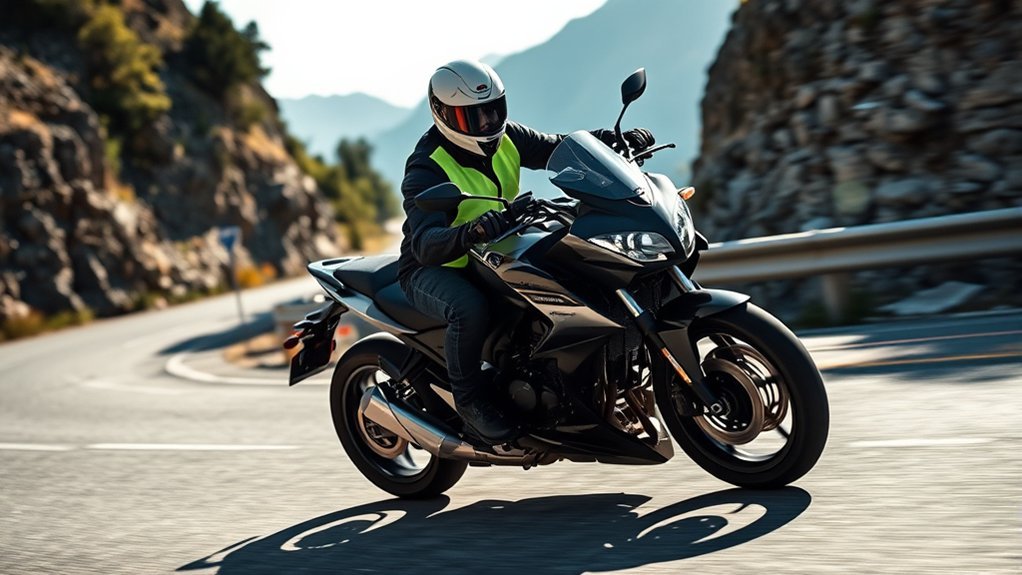
Defensive riding techniques are essential for keeping you safe on the road.
By anticipating driver actions, maintaining a safe following distance, and using escape routes, you can greatly reduce your risk of accidents.
Staying alert and prepared allows you to respond effectively to potential hazards and enhances your overall riding experience.
Anticipate Driver Actions
Anticipating driver actions is essential for your safety on the road, especially since nearly 42% of fatal motorcycle crashes involve vehicles making left turns without seeing approaching motorcycles.
By honing your intersection awareness, you can navigate these dangers effectively. Here are three key strategies to adopt:
- Use the SEE strategy: Search, Evaluate, Execute. Assess potential hazards and driver behavior quickly.
- Make eye contact: This simple act can greatly increase the chances a driver recognizes your presence.
- Cover your brakes: This guarantees quicker reaction times if a vehicle unexpectedly turns in front of you.
Maintain Safe Following Distance
Understanding driver actions is just one piece of the puzzle; maintaining a safe following distance is equally essential for your safety on the road.
To guarantee you’re protected, keep at least three to four seconds of safe spacing between you and the vehicle ahead. This distance gives you ample time to react to sudden stops or lane changes, considerably reducing the risk of rear-end collisions.
Motorcycles can lose control during abrupt stops, so a proper following distance minimizes panic braking and potential spills.
Studies highlight that many motorcycle accidents stem from riders being too close to other vehicles. By practicing defensive riding techniques and respecting safe spacing, you can navigate the road with confidence and reduce your risk of accidents.
Use Escape Routes
While you navigate the roads on your motorcycle, being aware of your surroundings and identifying potential escape routes can be a game-changer in preventing accidents.
Effective escape route planning enhances your situational awareness, allowing you to react swiftly to unexpected threats.
Consider these key tactics:
- Maintain a Safe Distance: This gives you time to react and options to evade hazards.
- Position Wisely: Use lane positioning to keep space and anticipate other drivers’ actions.
- Practice Maneuvers: Regularly rehearse emergency braking and evasive techniques to build muscle memory.
Staying Alert: Strategies for Enhanced Road Awareness
To navigate the roads safely, you need to maintain constant awareness of your surroundings. Start by practicing hazard identification through a continual 360-degree scan for potential dangers like vehicles in blind spots, pedestrians, and changing road conditions.
Use the SEE strategy—Search, Evaluate, Execute—to enhance your situational awareness and react effectively to threats.
Utilize the SEE strategy—Search, Evaluate, Execute—to boost your awareness and respond adeptly to road hazards.
At intersections, make eye contact with drivers to confirm they see you, reducing the risk of left-turn collisions. Anticipate the actions of other road users by observing their turn signals or body language, which can help you avoid lane-change accidents.
Finally, stay focused and minimize distractions by avoiding mobile device use, ensuring you remain fully engaged in your ride. By enhancing your alertness, you empower yourself to navigate the roads confidently and reduce the likelihood of crashes.
Why Continuous Learning Matters in Motorcycle Riding
Continuous learning is essential for motorcycle riders, as it not only enhances your skills but also greatly reduces the risk of accidents.
Embracing ongoing rider education and skill development can transform your riding experience. Here’s why it matters:
- Accident Reduction: Formal training can lower your crash likelihood by teaching critical skills like braking and hazard recognition.
- Adaptation to Change: Advanced riding courses help you refine techniques and adapt to new motorcycle technologies, keeping your skills sharp.
- Financial Benefits: Completing safety courses often leads to insurance discounts, making continuous learning a smart financial choice.
Frequently Asked Questions
What Is the 1% Rule in Motorcycles?
The 1% Rule in motorcycles encourages you to improve your riding techniques and motorcycle safety by focusing on small, consistent enhancements each ride. This mindset fosters growth, confidence, and ultimately reduces your risk of accidents.
What Does 2 Fingers Down Mean for Bikers?
The “2 fingers down” gesture among bikers signifies camaraderie and safety in motorcycle culture. You acknowledge fellow riders, promoting awareness and mutual support. It’s a crucial biker hand signal that fosters a strong community on the road.
How to Avoid Crashing a Motorcycle?
To avoid crashing a motorcycle, practice effective riding techniques, maintain a safe distance, and wear high-quality safety gear. Stay visible, perform regular checks, and always be aware of your surroundings to enhance your safety.
What Is the 12 Second Rule for Motorcycles?
The 12-second rule for motorcycles involves scanning the road ahead to enhance safe riding. By planning your route 12 seconds in advance, you boost motorcycle awareness, allowing for timely reactions to potential hazards. Isn’t that liberating?
Conclusion
In the world of motorcycle riding, safety isn’t just a gear you wear; it’s a mindset you adopt. By embracing essential skills, conducting thorough pre-ride checks, and honing your defensive techniques, you can navigate the roads with confidence. Remember, staying alert and committed to continuous learning are your best allies against potential crashes. So, ride smart, stay safe, and let your passion for the open road flourish without fear. Every ride is a chance to improve and protect yourself.






Leave a Reply