
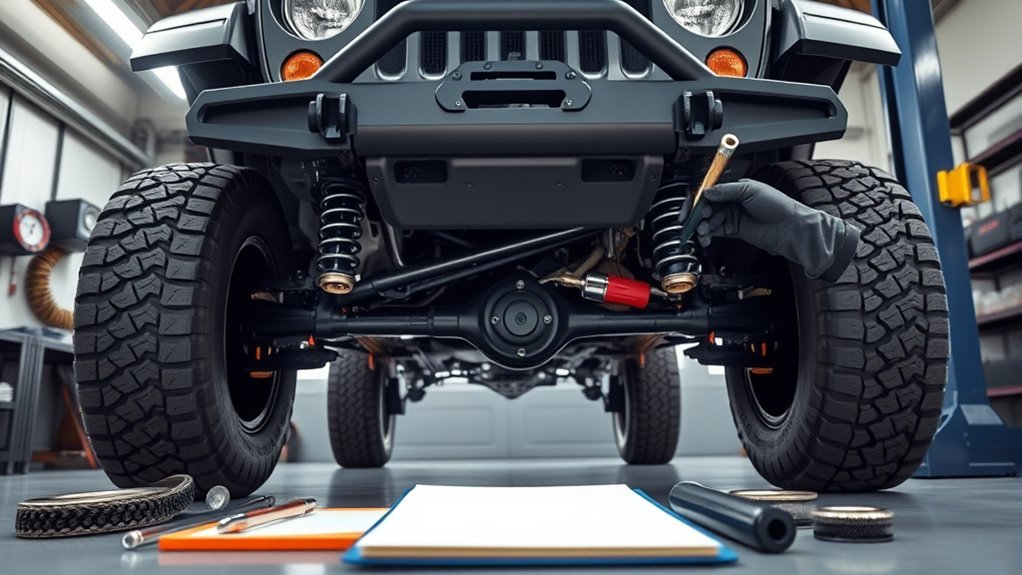
You’ll typically pay $800–$6,000 to get a Jeep lifted, with parts from $50 (leveling) to $5,000+ (premium suspension) and labor adding $400–$2,000 depending on complexity. Smaller lifts (leveling to 2.5″) are cheapest; mid-range 2.5–3.75″ and 4″+ kits cost more and often need driveshafts, adjustable links, and alignment. Expect extra costs for tires, recalibration, and upgrades. Continue for a breakdown of kit types, labor factors, and hidden expenses.
Quick Cost Takeaway: Typical Ranges to Expect
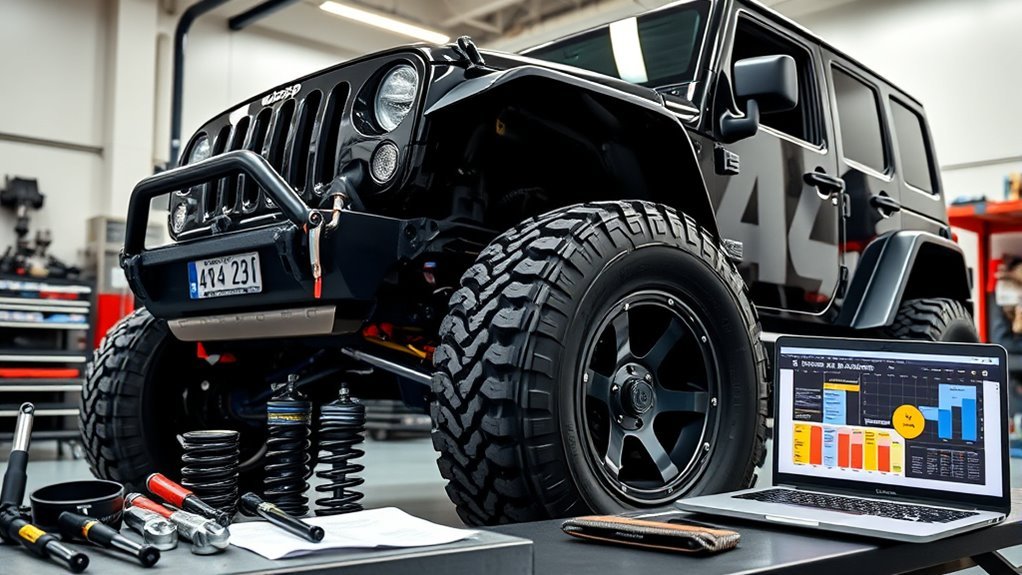
Expect to pay widely different amounts depending on the kit type and installation complexity: you’ll see cost variations from modest to substantial. Basic body lift kits begin around $200 in parts, while standard suspension kits range $600–$2,500. Premium off-road kits sit between $2,500 and $5,000 for components alone. Labor rates average $90–$150 per hour, and professional installation typically adds $400–$2,000, with total installations spanning 4–12 hours based on kit complexity. Combine parts and labor and you’re looking at overall installation costs commonly between $800 and $6,000, though specialized builds can reach the $20,000 extreme. When you plan, quantify installation factors: kit compatibility, required modifications, alignment, and potential ancillary parts. You should budget for contingencies and prioritize clear specifications so your lift meets functional and liberatory goals—greater ground clearance and capability—without surprise expenses. Precise estimates hinge on selected kit and local labor conditions.
Lift Kit Cost by Type & Height (Leveling, 1–2.5″, 2.5–3.75″, 4″+)
Lift height and kit type directly determine parts cost and compatible tire sizes, so choose based on your vehicle goals and budget. You’ll select from leveling kits (up to 2.5″), modest lifts (1–2.5″), mid-range (2.5–3.75″), and larger lifts (4″+), each defined by intended tire clearance and intended use. Leveling kits cost $50–$300 and support tires to 35″. 1–2.5″ kits run $950–$2,000, also up to 35″. 2.5–3.75″ kits are $1,000–$2,500 for tires up to 37″. 4–4.75″ kits cost $1,500–$3,000 for tires to 38″; high-end 5″+ kits can be $2,500–$5,000+.
- Choose lift kit materials based on strength-to-weight requirements and expected off-road stress.
- Match lift height to tire diameter to avoid geometry conflicts and guarantee legal compliance.
- Consider installation techniques that preserve alignment, driveline angles, and suspension travel.
What Parts and Labor Drive Jeep Lift Kit Cost
After you pick the kit type and height, the next cost drivers are the specific parts included and the labor required to fit them. You’ll see kits from $200 for basic body lifts to $5,000+ for premium suspension kits; the price rises as manufacturers add suspension components such as adjustable shocks, track bars, and heavy-duty control arms. Those parts demand precise installation techniques and often longer bench time.
Labor runs about $70–$150 per hour, with installs averaging 4–12 hours depending on complexity, so shop rates materially affect your outlay. Higher-end kits need more disassembly, alignment of geometry, and calibration, increasing hours. Choosing dealership installation can preserve warranty but may cost more; DIY saves hourly expense but risks voiding coverage. Plan for potential additional mechanical changes tied to larger lifts, and budget labor accordingly. Your decision should balance component quality, installation techniques, and the freedom you want from shop dependence.
Hidden Costs That Surprise Jeep Owners (Tires, Alignment, Driveshafts, Electronics)
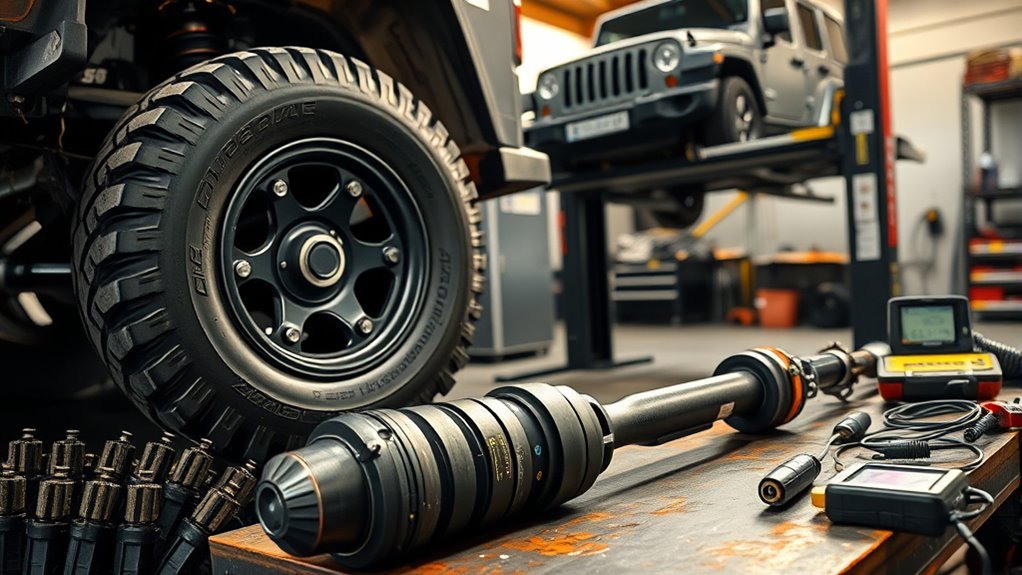
Because a lift changes more than just ride height, you’ll face several often-overlooked expenses that materially raise the project total. You’ll plan the kit, but you must budget for correlated systems that preserve performance and safety. Tire upgrades alone typically run $1,000–$3,000 depending on size and brand; larger diameter tires also alter gearing and speedometer readings, requiring electronic recalibration services. Alignment importance can’t be understated: a post-lift alignment costs $100–$200 to prevent uneven wear and degraded handling. Lifts over ~2.5 inches introduce driveshaft necessity concerns; you may need upgraded driveshafts at $300–$1,200 to avoid vibration and failure.
Budget beyond the kit—tires, recalibration, alignment, and possible driveshaft/upgrades add significant costs and safety needs.
- Tires: larger tires ($1,000–$3,000) and potential electronic recalibration.
- Alignment: mandatory post-lift service ($100–$200) for predictable dynamics.
- Driveshafts & extras: upgraded driveshafts ($300–$1,200) plus adjustable track bars/sway components ($200–$1,000).
Account for these to retain freedom to drive confidently and reliably.
Save on Lifts: DIY vs Pro Install, Warranties, and Financing Options
While you can save substantial money by doing the work yourself, choosing DIY vs. professional installation hinges on your skills, tools, and risk tolerance. You’ll weigh DIY Benefits—basic leveling kits cost $50–$75; full kits $500–$17,000—against Professional Expertise, with labor at $70–$150/hour and total install bills typically $800–$6,000. Consider Warranty Risks: dealership installs often preserve manufacturer coverage; DIY may void it. Higher-quality kits reduce failure risk and often include their own warranties.
| Factor | Typical Range |
|---|---|
| DIY Kit Cost | $50–$17,000 |
| Pro Labor Rate | $70–$150/hour |
| Pro Total Cost | $800–$6,000 |
| Warranty Impact | Dealer preserves; DIY may void |
Assess component quality to avoid problems like death wobble. Use Financing Options many suppliers offer to spread cost; prioritize plans that cover both parts and Professional Expertise if you value long-term reliability and regulatory compliance.
Frequently Asked Questions
How Much Does It Cost to Get a Jeep Lifted?
You’ll typically pay $1,800–$3,000 total, though lift kit options range $300–$8,000+ and installation costs run $70–$150/hour; higher lifts need extra mods like re-gearing and alignments for liberated, capable performance.
Does a 2-Inch Lift Make a Difference?
Yes — you’ll gain measurable performance benefits like increased clearance, improved approach/departure angles, and tire size options, though you’ll face installation challenges such as alignment, driveline adjustments, and potential professional labor requirements.
Conclusion
You’ve seen the numbers and trade-offs, so choose based on your driving needs and budget. Expect a basic leveling kit for around a few hundred, mid-range 2–3.75″ systems near a grand, and full 4″+ lifts plus labor and components to easily surpass several thousand — it’s not cheap. Factor tires, alignment, driveshaft work, and electronics recalibration. If you can wrench, DIY saves money; otherwise pro installation and warranty bring peace of mind.




Leave a Reply