
 Lysander Voss
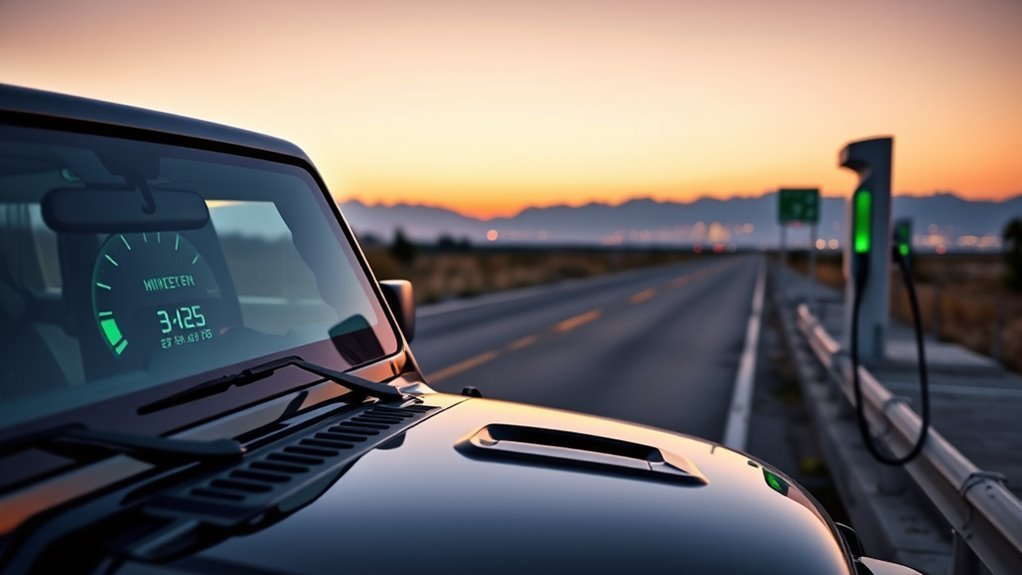
You can drive a Jeep 4xe about 22–26 miles on electric power, enough for most daily commutes and errands without using gas. The 17 kWh battery yields roughly 25 usable miles after inverter and motor losses; the Grand Cherokee rates about 26 miles and 56 MPGe, the Wrangler about 22 miles and 49 MPGe. Real-world range varies with speed, temperature, load and terrain. Keep going and you’ll get specifics on chargers, efficiency and off-road or towing effects.
Jeep 4xe Electric Range : Quick Answer
Overview: the Jeep 4xe models pair a 17 kWh battery with gasoline power to deliver short all-electric trips and long combined range. You get roughly 26 miles of electric driving in the Grand Cherokee 4xe and about 22 miles in the Wrangler 4xe, both powered by that same 17 kWh pack. That battery performance lets you complete routine commutes or targeted trails—the Wrangler can cover a 22-mile Rubicon Trail on electric alone—reducing fuel use and noise for liberated, purposeful travel. The Grand Cherokee posts a combined 56 MPGe, demonstrating efficient energy use when electric and gas systems cooperate. When you need extended reach, both models deliver about 470 miles combined range, so you won’t be confined by the battery’s modest capacity. In short, the Jeep 4xe gives you immediate electric driving benefits for short trips and sufficient hybrid range for long journeys, aligning efficiency with freedom.
How the EPA Measures Electric Range
Because the EPA uses standardized test cycles to replicate mixed driving conditions, its electric-range numbers give you a consistent, comparable baseline rather than a guaranteed trip length. EPA Testing runs cars through city and highway cycles, factoring battery capacity, motor efficiency, vehicle weight, and accessory loads to model realistic electric-only distances. You’ll see the Wrangler 4xe rated at 22 miles and the Grand Cherokee 4xe at about 25 miles; those figures reflect controlled conditions, not every commute.
Range Accuracy hinges on protocol and repeatability: identical tests yield comparable results across models, so you can liberate your purchasing choice from marketing spin. The EPA also bundles efficiency metrics—like the Grand Cherokee’s combined 56 MPGe—so you grasp electric and hybrid performance together. Use EPA numbers as a planning tool: they’re the best standardized estimate for how far you can go on battery power, while real-world range will vary with driving style, terrain, and climate.
How a 17 kWh Battery Becomes ~25 Miles
You’ll see that a nominal 17 kWh pack translates to roughly 25 miles because usable capacity, inverter losses, and motor efficiency all shave the theoretical range. Real-world factors — temperature, terrain, speed, and accessory loads — further change the miles you actually get per kWh. Below we’ll quantify how watt-hours per mile and these efficiency penalties combine to match Jeep’s ~25-mile estimate.
Battery Capacity vs Range
While a 17 kWh battery might sound small, Jeep engineers tune the 4xe’s powertrain and software so that you get roughly 25 miles of electric-only driving under typical conditions. You benefit from a compact pack that balances battery longevity with usable range; limiting usable capacity and managing charge cycles protects cells while delivering predictable mileage. The EPA’s 26-mile rating aligns with that engineering approach, so you can plan short commutes without gas. The hybrid system then blends gasoline and electric power to eliminate range anxiety, yielding a 56 MPGe combined efficiency that stretches fuel and battery utility. Compared to the Wrangler 4xe’s ~22 miles, the Grand Cherokee’s tuning emphasizes slightly higher electric distance. Charging infrastructure complements this setup for liberated daily use.
Real-World Efficiency Factors
Having covered how Jeep balances pack size and longevity, let’s look at why a 17 kWh battery yields roughly 25 miles in real-world driving. You’ll see that system design, MPGe, and conditions translate capacity into usable range. The 56 MPGe combined rating reflects efficient energy management between motor and engine. Driving style, terrain, and temperature shrink or stretch that 17 kWh into ~25–26 miles; EPA testing shows Grand Cherokee 4xe at 26 miles under standardized conditions. Your access to charging infrastructure affects how often you deplete the pack versus relying on gasoline, which in turn influences perceived battery lifespan. The hybrid architecture preserves utility while keeping electric miles honest and liberating for practical use.
| Factor | Impact |
|---|---|
| Driving habits | High |
| Temperature | Medium |
| Terrain | Medium |
Grand Cherokee 4xe Vs Wrangler 4xe: Electric-Range Comparison
Now compare the Grand Cherokee 4xe and Wrangler 4xe head-to-head: the Cherokee gives you about 25 miles of electric range and 56 MPGe, while the Wrangler offers roughly 22 miles and 49 MPGe despite both using the same 17 kWh battery. You’ll also note the Cherokee’s larger combined range (~470 miles) versus the Wrangler’s (~370 miles), which affects long-trip planning and fuel use. Evaluate how those efficiency and performance differences translate to your typical mix of city driving, trails, and towing.
Electric Range Comparison
How much electric driving can you expect from Jeep’s two plug‑in SUVs? You get distinct electric range numbers tied to the same 17 kWh battery and modern hybrid technology: the Grand Cherokee 4xe delivers about 25 miles electrically, while the Wrangler 4xe manages roughly 21 miles. That battery size sets the ceiling for EV-only travel, but packaging and aerodynamics shift the outcomes. The Grand Cherokee pairs that range with a stronger combined efficiency (56 MPGe versus the Wrangler’s 49 MPGe), so you’ll squeeze more electric-equivalent miles per gallon. Both retain competitive total range—around 470 miles in the Grand Cherokee—so you can roam freely off-road with quieter, eco-friendly propulsion where it matters most.
Performance And Efficiency
Those electric-range figures feed directly into real-world performance and efficiency differences between the Grand Cherokee 4xe and Wrangler 4xe. You get slightly more electric driving freedom with the Grand Cherokee’s 25 miles versus the Wrangler’s 22, and that extra scope boosts everyday efficiency.
- Both use a 2.0L turbo with an electric motor, yielding 375 hp and 470 lb-ft—strong hybrid performance for off-road and road.
- Grand Cherokee posts 56 MPGe versus Wrangler’s 49 MPGe, reflecting tighter energy management for electric-first trips.
- In hybrid mode, expect 23 mpg in the Grand Cherokee and 20 mpg in the Wrangler—translating to fewer fuel stops.
- Combined range approximates 470 miles, letting you roam liberatedly without constant charging or refueling.
Miles per kWh and Real-World Efficiency
Because the Grand Cherokee 4xe and Wrangler 4xe pair roughly 26 and 22 electric miles with 17–17.3 kWh batteries respectively, you can estimate real-world efficiency at about 1.3–1.6 miles per kWh depending on conditions; the Grand Cherokee’s 56 MPGe rating and the Wrangler’s 20 mpg in hybrid mode further show how their EV range offsets gasoline use for short commutes while actual kWh/mile will shift with speed, terrain, and climate control. You’ll typically see the Grand Cherokee nearer 1.5–1.6 mi/kWh on flat urban runs and the Wrangler around 1.3–1.4 mi/kWh under mixed use. To maximize liberated, gas-free travel, plan routes around charging infrastructure and practice basic battery maintenance—keep the pack cool, avoid deep discharges, and use scheduled charging. These measures preserve usable range and guarantee the plug-in system reliably replaces short petrol trips, letting you reclaim daily mobility without relying on gasoline.
Factors That Shorten or Extend Jeep 4xe Electric Range
You’ll see the biggest swings in 4xe electric range from how you drive and the conditions you drive in. Aggressive acceleration, sustained high speeds, or climbing steep terrain push energy use up and cut the 22–25 mile EV range noticeably. Likewise, extreme temperatures and heavy HVAC use strain the battery, while gentle driving on flat roads in moderate weather will stretch each charge.
Driving Style Impact
When you drive the Jeep 4xe aggressively—hard accelerations, sustained high speeds, or frequent off‑road bursts—the usable electric range drops well below the EPA’s 26‑mile estimate because those behaviors demand more power from the battery; conversely, steady, moderate speeds, exclusive Electric mode use, regen braking, and strategic eSave engagement help stretch each charge by reducing instantaneous and overall energy draw.
- Embrace smooth acceleration effects: gradual throttle cuts peak power draw and conserves charge.
- Prioritize Electric mode: pure EV operation delays hybrid gas assist and preserves electric miles.
- Use eSave selectively: lock in battery reserve for zones where quiet, electric travel frees you.
- Maximize regen braking: capture deceleration energy to replenish the pack and extend range.
Environmental Conditions
Though cold snaps and heavy loads won’t stop the 4xe from running in EV mode, they do cut usable electric miles: lower temperatures reduce battery chemistry efficiency and increase heater use, steep grades and off‑road terrain demand more power, and extra cargo or passengers raise rolling resistance and energy draw—while aggressive driving and running climate or seat heaters further accelerate depletion. You’ll notice temperature effects immediately; cold reduces battery efficiency so available kilowatt‑hours fall and range estimates drop. Uphill or rugged routes force the electric motor to deliver sustained high power, hastening depletion. Carrying weight or towing compounds losses. To reclaim freedom, plan routes with milder climates, moderate speeds, gentle accelerations, and minimal accessory use. Small behavioral changes extend your electric reach reliably.
Typical Daily Uses: Commuting, Errands, and Off-Road on Electric
Two common Jeep 4xe scenarios—your daily commute and quick errands—fit well within the plug‑in electric range, letting you drive on electricity only for most local trips. You’ll get commuting efficiency from the Grand Cherokee’s ~26 miles and the Wrangler’s ~21 miles, so urban errands stay emission‑free and cheap. When you want liberation from fuel stops, the 4xe lets you use electric advantages for short trips and local trailheads.
- Use electric mode for weekday commutes; battery range covers typical round trips without gasoline.
- Run urban errands back‑to‑back; quick recharges keep you rolling and reduce operating cost.
- Switch to hybrid when distances grow; system blends gasoline and electric power seamlessly.
- Explore local off road driving on electric power to enjoy quiet, zero‑emission trails and conserve battery for technical sections.
You’ll manage range proactively, exploit hybrid fallback for flexibility, and experience a freer, cleaner approach to daily mobility.
Charging Times and Options for the Jeep 4xe
If you want quick turnarounds, the 4xe supports a range of charging options that match different routines and locations. You can use Level I chargers for overnight top-ups—expect about 12 hours for a full charge—so your vehicle wakes ready for the day. Install a Level II charger at home or use one nearby to cut that to roughly 2 hours, freeing you to seize opportunities without long waits.
Public charging infrastructure expands where you can recharge in urban settings, letting you plan longer trips or fill in between errands. Engage Max Regeneration to recapture energy during deceleration and extend electric miles without stopping. Use the Jeep app to monitor charging status and battery levels, schedule charging windows, and optimize battery management around electricity rates and your itinerary.
These options give you control: choose slow overnight fills, rapid daytime charges, or regenerative recovery to maximize electric freedom.
How the Hybrid System Affects Combined Range and MPGe
Charging and regenerative strategies set the stage for how far you’ll actually go on a mix of electric and gas power. You get hybrid advantages that extend range without locking you into gas: the Grand Cherokee 4xe’s ~26-mile electric range combines with the gasoline engine for about 470 miles total, and a 56 MPGe combined rating that prioritizes fuel savings. The hybrid system shifts seamlessly, delivering 375 hp and 470 lb-ft while the engine averages 23 mpg in hybrid mode.
- Electric-first: short trips use battery power, maximizing fuel savings and urban efficiency.
- Blended mode: regen braking and motor assist maintain battery charge and smooth shifts.
- Gas-sustain: on long routes the 23 mpg engine preserves range and autonomy.
- Model contrast: Wrangler’s 22-mile EV range and 49 MPGe show similar hybrid advantages in tougher-duty use.
You’ll control efficiency through driving style, charging habits, and route choice.
Towing, Off-Roading, and Performance Impacts on Range and Battery
When you tow or tackle rough trails in a 4xe, expect the battery to work harder and the electric range to shrink: hauling near the Grand Cherokee’s 6,000‑lb limit or powering technical off‑road sections increases drivetrain load, cuts electric‑only miles, and raises fuel use once the gasoline engine assists. You’ll see the Grand Cherokee’s ~26‑mile electric range and the Wrangler’s ~22‑mile capability decline under load; towing considerations mean heavy trailers or steep grades will accelerate battery depletion and reduce MPGe from the combined 56 rating. Off road challenges like low speeds, frequent torque demands, and regenerative braking limits change efficiency, though the hybrid system preserves core off‑road capability. The Wrangler can even complete the 22‑mile Rubicon Trail on electric alone in ideal conditions, proving zero‑emission potential. Plan trips with conservative range estimates, monitor state of charge, and accept that performance choices—towing, aggressive trail driving—increase fuel backup reliance and shorten electric excursions.
Frequently Asked Questions
How Many Miles Can the Jeep 4xe Go on Electric?
You get about 21–26 miles of electric range; the 17 kWh battery delivers solid battery efficiency for short trips. You’ll rely on plug-in power for daily freedom, then switch to gas for extended journeys.
What Is the Best Mode to Drive a Jeep 4xe?
Hybrid mode—balanced freedom versus restraint: you’ll get off road capability and sustained range while using charging options smartly, so you’ll tackle trails confidently, preserve battery for town, and extend adventurous, liberated driving without compromise.
Conclusion
You’ll typically get about 25 miles of all-electric driving from the Jeep 4xe’s 17 kWh battery — enough for most commutes and errands. The EPA-rated electric range is conservative, reflecting mixed driving, but real-world efficiency often yields 3–4 miles/kWh, so you can see 20–28 miles depending on conditions. Remember the hybrid system preserves combined range; using electric for daily trips can cut fuel use considerably — one 25-mile EV day can save roughly a gallon of gas.