
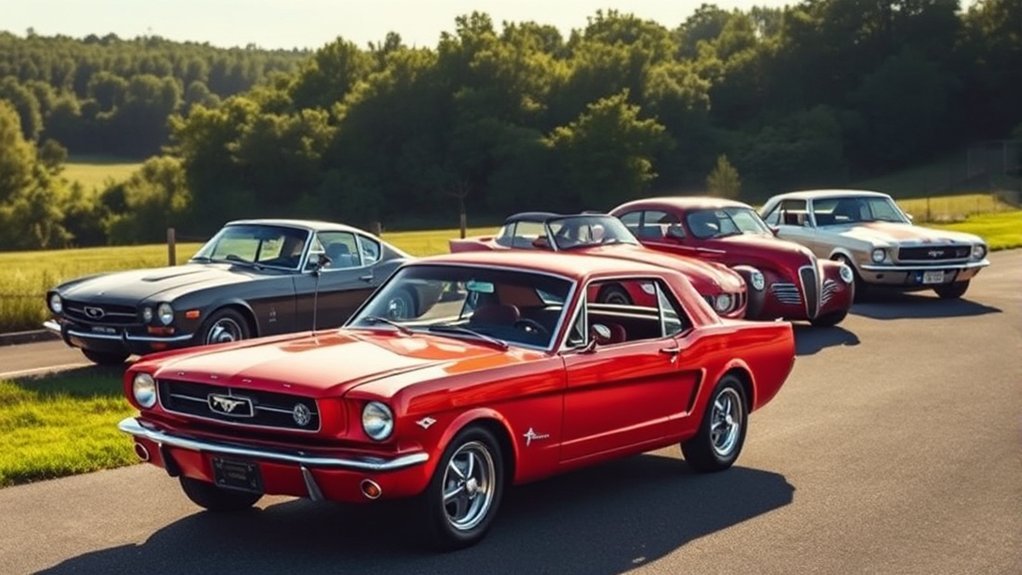
The Ford Mustang has been an American icon since its launch in 1964, blending sporty design with affordability. Initially capturing the youth market, it became a cultural phenomenon, selling over 400,000 units in its first year. The first generation (1964-1973) featured diverse engine options and established a legacy of performance, seen in films and racing. As technology evolved, so did the Mustang, integrating innovations like advanced driver-assistance systems. Discover how this legendary car continues to adapt and inspire.
How the Mustang Became an American Icon
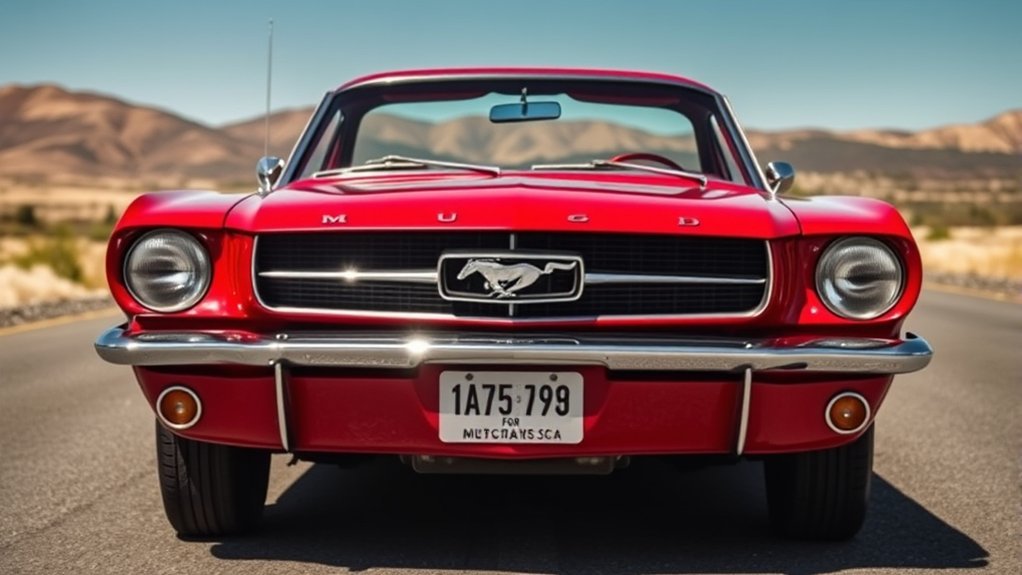
The Ford Mustang emerged as a symbol of freedom and rebellion when it was introduced on April 17, 1964, at the New York World’s Fair. Instantly enchanting young drivers, it sold over 400,000 units in its first year, establishing itself as a cultural phenomenon.
As a “pony car,” the Mustang combined sporty styling with affordability, making it a compelling alternative to European sports cars of the era. Its iconic status was further solidified through thrilling appearances in films like Steve McQueen’s “Bullitt,” showcasing its performance and audacious spirit.
The Mustang’s legacy thrives today, with a passionate community around Mustang memorabilia and Mustang racing, reflecting a shared desire for liberation and adventure. The Mustang Club of America, founded in 1976, embodies this fervor, with over 11,000 members celebrating nearly 60 years of automotive evolution.
This relentless spirit continues to inspire generations, cementing the Mustang as America’s quintessential muscle car.
The Birth of the Ford Mustang: Origins and Development
You’ll see that the Ford Mustang’s birth was driven by Lee Iacocca’s vision for an affordable sports car that resonates with young drivers.
Its design, merging long hoods with short rear decks, not only set it apart from European competitors but also established a new American automotive identity.
The Mustang’s immediate success, with over 400,000 units sold in its first year, underscores how well it captured the market’s desire for performance and style.
Conceptualization and Design Process
While many automotive legends have emerged over the decades, few can rival the remarkable journey of the Ford Mustang from its conceptualization to its iconic status. Under Lee Iacocca’s direction, the Mustang aimed to attract younger drivers with speed, style, and affordability. Key design influences included Gale Halderman’s vision, featuring an elongated hood and short rear deck, which became its signature look. The marketing strategies employed were equally innovative, positioning the Mustang as a “pony car,” appealing to those seeking sporty vehicles at accessible prices.
| Key Element | Description |
|---|---|
| Design Influences | Gale Halderman’s vision for aesthetic appeal |
| Target Audience | Younger drivers looking for speed and style |
| Marketing Strategies | Positioned as an affordable sporty option |
| Initial Success | Over 400,000 units sold in the first year |
Early Production Successes
Introduced on April 17, 1964, the Ford Mustang quickly transformed the automotive landscape, enchanting consumers with its blend of style, performance, and affordability.
Under Lee Iacocca’s leadership, the Mustang was crafted to attract young drivers, marking significant production milestones.
Key factors behind its early success include:
- Innovative Market Strategies: A bold marketing campaign targeted a youthful demographic, debuting at the New York World’s Fair.
- Diverse Engine Options: From an economical inline-6 to thrilling V8s, there was something for every driver.
- Fast Sales: Over 400,000 units sold in the first year, a record-breaking debut.
- Cultural Impact: By 1973, the Mustang became a symbol of freedom, solidifying its legendary status.
Iconic First Generation: 1964-1973 Mustang Models
As you explore the first generation of the Ford Mustang, you’ll notice how its design evolved dramatically from 1964 to 1973, perfectly balancing style and performance.
With engine options ranging from economical six-cylinders to powerful V8s, the Mustang catered to a diverse audience, enhancing its status as a cultural icon.
This period not only solidified the Mustang’s legacy in the automotive world but also reflected the changing dynamics of American car culture during a time of significant social transformation.
Design Evolution Over Years
The design evolution of the Ford Mustang during its first generation from 1964 ½ to 1973 highlights a blend of innovation and iconic styling that defined the pony car segment.
You can see this transformation through key design trends and styling features that emerged:
- Long Hood and Short Rear Deck: This classic silhouette became the hallmark of Mustang aesthetics.
- Galloping Horse Emblem: A symbol of power and freedom that still resonates today.
- Three-Bar Tail Lights: These distinctive lights contributed to the Mustang’s unique rear profile.
- GT Model Enhancements: Features like dual exhausts reflected a commitment to performance and sporty flair.
These elements not only captured the spirit of the era but also laid the foundation for future Mustang designs, ensuring its lasting legacy.
Engine Options And Performance
Building on the iconic design features that made the Ford Mustang a symbol of American automotive culture, the engine options and performance characteristics of the first generation (1964-1973) further solidified its reputation as a powerhouse on the road. With various engine specifications, you had choices that catered to different driving styles and preferences.
| Engine Type | Displacement | Horsepower |
|---|---|---|
| Inline-six | 170 cubic inch | 105 |
| V8 (289) | 289 cubic inch | 271 |
| V8 (390) | 390 cubic inch | 320 |
Performance comparisons reveal that the 428 Cobra Jet and Boss models represented the pinnacle of Mustang engineering, blending raw power with engineering finesse, appealing to both casual drivers and racing enthusiasts alike.
Cultural Impact And Legacy
Few vehicles have left as indelible a mark on American culture as the first-generation Ford Mustang, which not only captured the spirit of the 1960s and 1970s but also transformed the automotive landscape.
Its cultural significance is undeniable, manifesting in various ways:
- Sales Success: Over 400,000 units sold in the first year established it as America’s best-selling sports car.
- Film Iconography: Featured in classics like “Bullitt,” it symbolized rebellion and performance.
- Performance Variants: Models like the Shelby GT350 and GT500 solidified its motorsport legacy.
- Community Building: The Mustang Club of America, formed in 1976, preserves this automotive heritage, fostering passionate connections among owners.
The Mustang’s legacy endures, embodying freedom and the youthful spirit that defined its era.
Mustang Evolution Through the Years
As Ford introduced the Mustang in 1964, it not only created a new segment in the automotive market but also set a standard for performance and style that would evolve considerably over the decades. Each generation reflected changing Mustang trends and the desires of Mustang enthusiasts.
| Generation | Years | Key Features |
|---|---|---|
| First | 1964 ½ – 1973 | Introduced pony car concept, 400,000+ sales in debut |
| Second | 1974 – 1978 | Downsized for fuel efficiency, Mustang II |
| Third | 1979 – 1993 | Modern design, turbocharged options like SVO |
| Fourth | 1994 – 2004 | Classic styling return, SVT Cobra variant introduced |
From the iconic designs of the 60s to the tech-savvy models of the 2000s, the Mustang’s evolution showcases its adaptability, ensuring it remains a symbol of automotive liberation and passion for generations to come.
Exploring Notable Mustang Models and Special Editions
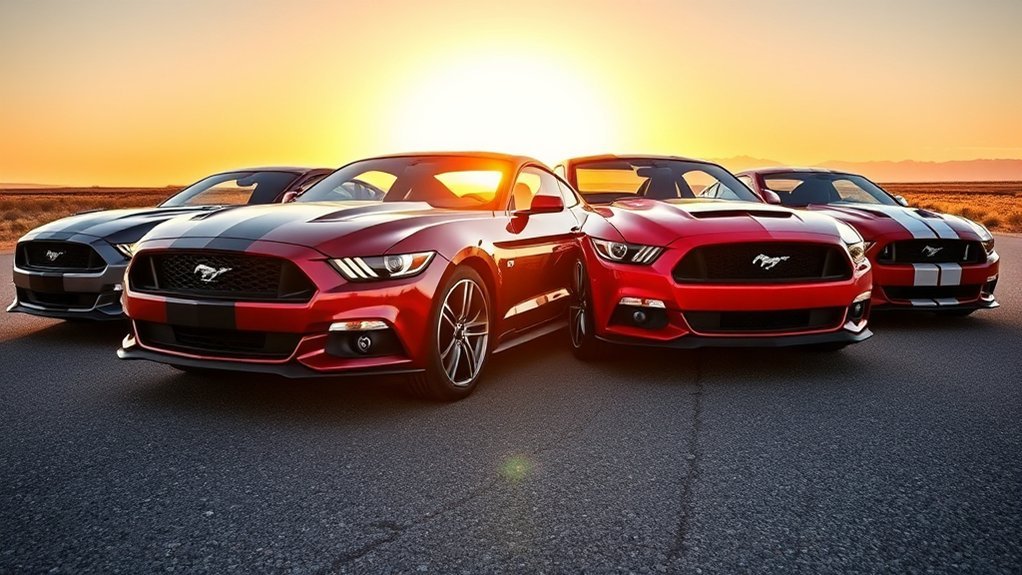
The evolution of the Mustang isn’t just about changing styles and technologies; it’s also marked by a series of remarkable models and special editions that have defined the brand. Each model reflects a commitment to performance enhancements and a spirit of liberation.
Here are some notable examples:
- 1965 Mustang GT: One of the first performance-oriented models, featuring a 271-horsepower 289 V8 engine.
- 1969-1970 Mustang Boss 429: A limited production model designed for NASCAR, equipped with a powerful 429 cubic inch V8 engine.
- 1970 Mustang Mach 1: Introduced a sportier design and functional fiberglass hood scoops, making it a favorite among enthusiasts.
- 1984 Mustang SVO: Showcased a turbocharged 2.3-liter four-cylinder engine, emphasizing fuel efficiency without sacrificing performance.
These models not only highlight the Mustang’s racing legacy but also its continuous evolution in the automotive landscape.
What’s New in Mustang Technology
While the Mustang has always been synonymous with performance and style, recent advancements in technology have transformed it into a cutting-edge vehicle that enhances both driving experience and safety.
The integration of Ford’s SYNC infotainment system allows for seamless smartphone connectivity and voice-activated controls, making your drive more intuitive than ever. The sixth generation introduced an independent rear suspension, markedly improving handling and ride quality.
Performance is taken to new heights with the introduction of powerful engines like the supercharged 5.2L Predator V8 in the GT500, delivering over 760 horsepower.
The GT500’s supercharged 5.2L Predator V8 engine elevates performance, unleashing over 760 horsepower for an exhilarating driving experience.
Additionally, modern Mustangs now feature advanced driver-assistance technologies, including adaptive cruise control and pre-collision assist, pushing safety standards forward.
As electric Mustang advancements emerge, the brand is also exploring autonomous driving features, blending tradition with innovation, ensuring you enjoy both liberation and cutting-edge performance on the road.
Future Innovations and Trends for the Ford Mustang
With the automotive landscape rapidly evolving, the future of the Ford Mustang promises to blend its legendary performance with groundbreaking innovations. As you look ahead, consider the following trends that may redefine your driving experience:
- Hybrid Technology: The seventh-generation Mustang is set to combine traditional V8 power with electric assistance, enhancing both performance and fuel efficiency.
- Sustainable Materials: Ford aims to incorporate eco-friendly materials in production, reflecting a commitment to environmental responsibility.
- All-Wheel Drive: High-performance variants might feature all-wheel drive systems, improving handling and traction.
- Digital Integration: Expect advanced infotainment systems with improved connectivity, including voice recognition and over-the-air updates, along with AI-driven features to personalize your driving dynamics.
These innovations illustrate Ford’s dedication to creating a Mustang that not only honors tradition but also embraces a sustainable and technologically advanced future.
Frequently Asked Questions
What Are the Most Common Maintenance Issues for Ford Mustangs?
You’ll often encounter engine troubles and brake issues with Ford Mustangs. Regularly check for oil leaks, listen for unusual noises, and guarantee your brakes respond well. Staying proactive can help you avoid serious maintenance headaches.
How Do Mustang Insurance Rates Compare to Other Cars?
Mustang insurance rates can be higher than average due to factors like performance, repair costs, and theft risk. However, your driving record, location, and coverage choices can greatly influence your premium, offering potential savings.
What Are the Best Aftermarket Upgrades for Mustangs?
Think of your Mustang as a wild stallion; exhaust systems release its roar, while suspension upgrades harness its power. Together, they transform your ride, enhancing performance and delivering a thrilling driving experience that beckons freedom.
How Do Mustangs Perform in Different Weather Conditions?
Mustangs excel in various weather handling scenarios. In rain, their traction control enhances grip, while performance metrics shine in dry conditions, showcasing agility. Cold weather may affect performance slightly, but proper tires can mitigate this.
What Is the Resale Value Trend for Used Mustangs?
As you plunge into the used Mustang market, you’ll notice that Mustang depreciation trends reveal surprisingly stable pricing. Enthusiasts often find used Mustang pricing remains robust, reflecting the car’s enduring appeal and desirability.
Conclusion
To sum up, the Ford Mustang’s journey is like a thrilling ride on a winding road, showcasing its evolution from a bold vision to an enduring symbol of American automotive culture. As you reflect on its rich history, consider how each generation has embraced innovation while honoring its roots. With cutting-edge technology and a commitment to performance, the Mustang is poised to continue enchanting enthusiasts and shaping the future of muscle cars for years to come.







Leave a Reply