
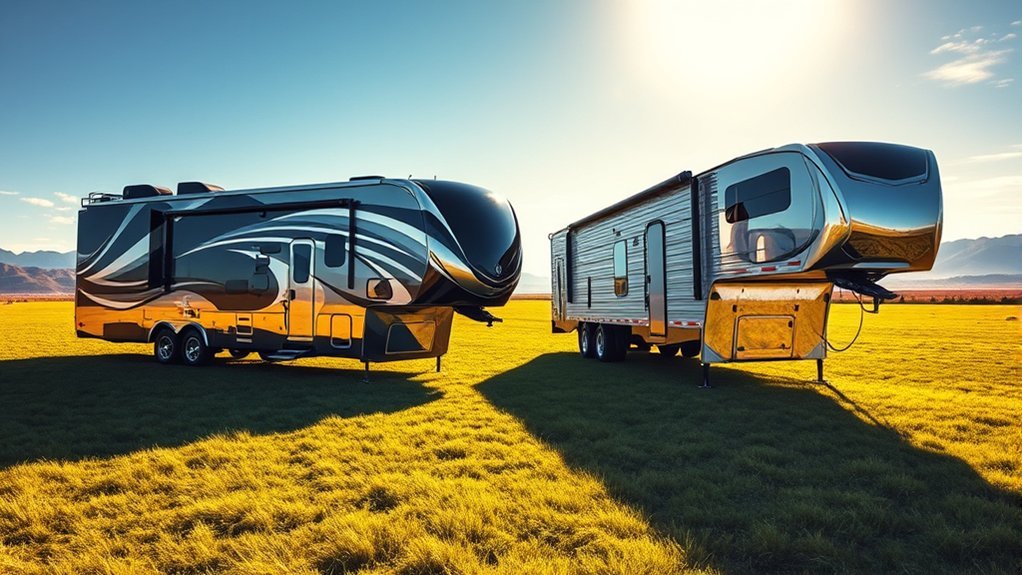
When deciding between a fifth wheel and a gooseneck hitch in 2026, consider towing capacity, price, and pros and cons. Fifth wheels offer stable towing for larger RVs but can be complex to install and cost more. Goosenecks handle heavier loads and have a compact design, making installation easier and often cheaper. Ultimately, your choice should match your towing needs and budget. Stick around to explore more insights that can help you make the best decision.
Understanding Fifth Wheel and Gooseneck Hitches
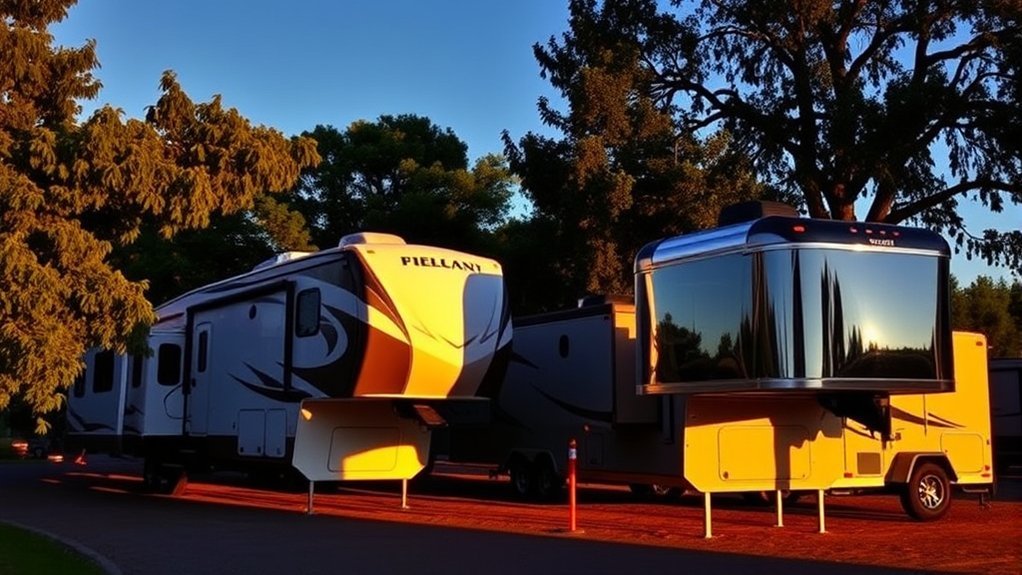
When you’re deciding between fifth wheel and gooseneck hitches, it’s essential to understand how each type works and what they offer.
Fifth wheel hitches utilize a kingpin and locking jaw mechanism, ensuring hitch safety by providing a secure connection for RVs and campers. This design offers a smooth, stable towing experience, especially at high speeds, making it ideal for long-distance travel.
On the other hand, gooseneck hitches connect via a ball mount system, maximizing bed space and allowing for higher towing capacities—perfect for heavy-duty applications like agriculture.
While fifth wheel hitches typically handle 16,000 to 30,000 lbs, gooseneck hitches can manage loads up to 38,000 lbs.
Installation varies; fifth wheels may require base rails, while goosenecks are simpler. Understanding these differences can help you comply with towing regulations and choose the right hitch for your needs.
Key Differences Between Fifth Wheel and Gooseneck Hitches
When choosing between fifth wheel and gooseneck hitches, understanding their key differences is essential.
The connection mechanism varies greatly, with fifth wheels using a kingpin and locking jaws, while goosenecks rely on a ball-and-coupler system.
Additionally, gooseneck hitches generally provide higher towing capacities, making them a strong contender if you’re hauling heavy loads.
Connection Mechanism Differences
While both fifth wheel and gooseneck hitches serve the essential function of towing trailers, their connection mechanisms differ markedly, impacting both performance and usability. Fifth wheel hitches utilize a kingpin and locking jaw system, enhancing connection stability and security during towing. In contrast, gooseneck hitches employ a ball-and-coupler design, allowing for a more compact setup in your truck bed.
| Feature | Fifth Wheel | Gooseneck |
|---|---|---|
| Connection Type | Kingpin and locking jaw | Ball and coupler |
| Stability | High connection stability | Moderate stability |
| Installation Complexity | More complex (base rails) | Less complex (under-bed) |
Ultimately, your choice may hinge on these connection differences and your specific towing needs.
Towing Capacity Comparison
Towing capacity is a crucial factor to evaluate when choosing between fifth wheel and gooseneck hitches. Gooseneck hitches typically offer a higher towing capacity, ranging from 25,000 to 38,000 lbs, making them ideal for tackling heavy-duty towing challenges, like hauling livestock and equipment.
In contrast, fifth wheel hitches generally handle between 16,000 and 30,000 lbs, sufficient for most RVs and large campers. While fifth wheels provide better weight distribution for enhanced stability, goosenecks excel in maneuverability, especially in tight turns.
Pros and Cons of Fifth Wheel Hitches
Fifth wheel hitches offer a unique combination of benefits and drawbacks that can greatly impact your towing experience. Understanding both the fifth wheel advantages and disadvantages is essential for making an informed choice.
- Smooth Rides: Their kingpin design provides enhanced stability and weight distribution, leading to smoother towing.
- Easy Setup: You’ll find them generally easier to hook up and disconnect, without the hassle of safety chains.
- High Towing Capacity: They can tow between 16,000 to 30,000 lbs, making them ideal for larger RVs.
- Space Consumption: However, they take up significant truck bed space, which can limit your cargo capacity.
While fifth wheel hitches excel in stability and capacity, their complex installation and space limitations are notable fifth wheel disadvantages.
Fifth wheel hitches offer stability and capacity, but their installation complexity and space constraints are important drawbacks.
Weighing these factors will help you make the best decision for your towing needs.
Pros and Cons of Gooseneck Hitches
When considering gooseneck hitches, you’ll find several advantages that make them appealing for heavy-duty towing.
They offer impressive towing capacities and a compact design that frees up space in your truck bed.
However, keep in mind that they can lead to a rougher ride, especially with lighter trailers, which might affect your overall towing experience.
Advantages Of Gooseneck Hitches
If you’re considering a gooseneck hitch, you’ll appreciate its unique advantages tailored for heavy-duty hauling.
Here’s why gooseneck versatility stands out:
- Higher Towing Capacity: Capable of pulling between 25,000 and 38,000 lbs, making it perfect for heavy loads.
- Space Efficiency: Its compact design frees up more usable space in your truck bed compared to bulky fifth wheel hitches.
- Cost-Effective: Generally, gooseneck hitches come with lower installation costs due to their simpler mechanisms.
- Maneuverability: Excellent in tight spaces, enhancing towing efficiency without sacrificing control.
These benefits make gooseneck hitches a compelling choice for those who prioritize performance and practicality in their towing needs.
Disadvantages Of Gooseneck Hitches
While gooseneck hitches offer impressive towing capabilities, they also come with a set of disadvantages that potential users should carefully consider.
One major concern is gooseneck stability, especially when towing taller trailers, which can increase the risk of swaying or tipping.
Additionally, gooseneck hitches tend to transmit more road shock and vibrations, leading to a rougher ride, particularly with lighter trailers.
The installation often requires drilling into your truck bed, making it less appealing for those who prefer a non-invasive option.
Furthermore, the coupling mechanism can be cumbersome, complicating hitching and unhitching.
Finally, although they may seem more affordable initially, gooseneck maintenance challenges can lead to more frequent adjustments, potentially offsetting your savings.
How Do Fifth Wheel and Gooseneck Hitches Compare in Towing Capacity?
Choosing between fifth wheel and gooseneck hitches often comes down to towing capacity, which plays a crucial role in how effectively you can haul heavy loads. Here’s a breakdown of their differences:
- Gooseneck Hitches:
- Typically tow between 25,000 lbs and 38,000 lbs.
- Ideal for heavy-duty loads like equipment or livestock trailers.
- Better weight distribution over the truck’s rear axle, enhancing stability and control.
- Fifth Wheel Hitches:
- Generally tow between 16,000 lbs and 30,000 lbs.
- Sufficient for most RVs and large campers.
- Offer a smoother ride, reducing road shock and sway.
When considering towing safety, verify you assess both the hitch and truck weight ratings to meet your specific needs.
Each hitch type has its strengths, so choose based on your towing requirements and the loads you’ll be hauling.
What’s the Cost Difference Between Fifth Wheel and Gooseneck Hitches?
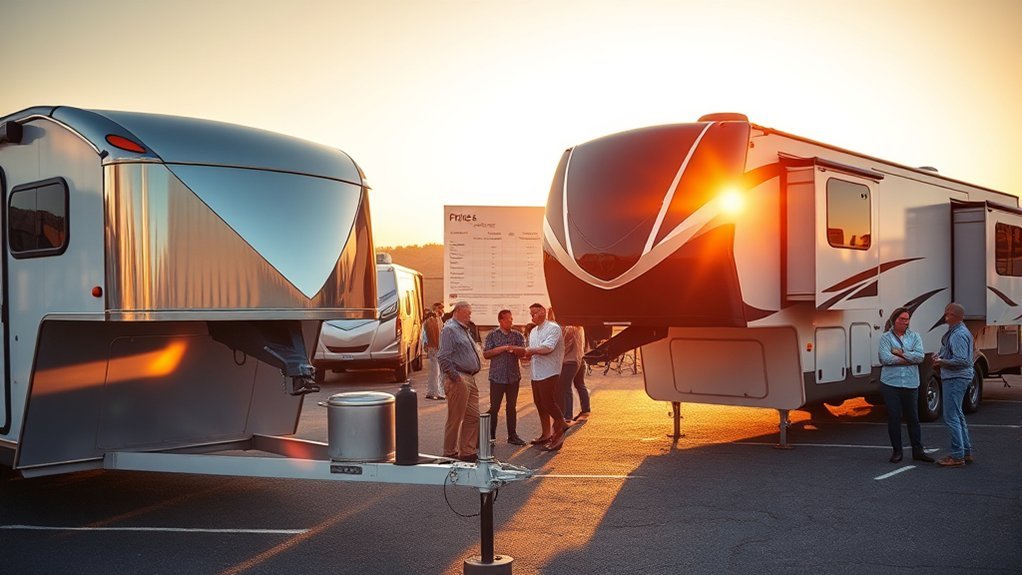
When it comes to selecting between fifth wheel and gooseneck hitches, the cost can greatly impact your decision. Fifth wheel hitches typically range from $300 to $2,500, influenced by brand, weight capacity, and features. In contrast, gooseneck hitches are more budget-friendly, costing between $200 and $1,500.
Here’s a breakdown of the cost differences:
| Hitch Type | Price Range |
|---|---|
| Fifth Wheel | $300 – $2,500 |
| Gooseneck | $200 – $1,500 |
| Installation Cost | Higher (Professional) |
| Components Needed | More complex (Base rails) |
| Total Ownership Cost | Generally lower for Gooseneck |
While fifth wheel features may offer advanced capabilities, gooseneck versatility shines through in affordability and simpler installations. Ultimately, consider your budget and needs before making your choice.
Installation and Maintenance: Essential Tips
To guarantee a smooth towing experience, understanding the installation and maintenance of your hitch is crucial. Each type presents unique installation challenges, so follow these essential tips:
- Follow Manufacturer Guidelines: Securely mount the hitch according to the provided instructions to guarantee compatibility with your truck and trailer.
- Inspect for Rust and Wear: Regularly check both fifth wheel and gooseneck hitches for signs of deterioration that could compromise safety.
- Lubricate Moving Parts: Keep all moving components well-lubricated to maintain smooth operation and reduce wear.
- Test Before Towing: Before your first trip each season, inspect all connections and test hitch functionality to confirm everything is secure.
Choosing the Right Hitch for Towing in 2026
Selecting the right hitch for your towing needs in 2026 hinges on understanding the specific requirements of your vehicle and trailer.
Consider what you’ll be towing. If you’re hauling heavy loads like livestock or equipment, a gooseneck hitch is your best bet with its higher weight capacity of 25,000 to 38,000 lbs. Conversely, for RVs and campers, fifth wheel hitches provide superior weight distribution, enhancing stability and ride comfort.
When towing heavy loads like livestock, opt for a gooseneck hitch; for RVs, choose a fifth wheel for better stability.
Don’t forget to check hitch compatibility with your truck and review towing regulations in your area. Installation complexity also matters; gooseneck hitches typically require fewer drill points, making them easier to install.
If you’re budget-conscious, gooseneck options are generally more affordable than fifth wheel hitches. Ultimately, understanding your specific towing needs will empower you to make the best hitch choice for your adventures in 2026.
How to Finance Your Hitch Purchase?

Financing your hitch purchase can be straightforward if you approach it with a clear plan.
Start by evaluating your budget to confirm you’re comfortable with the monthly payments. Here are some steps to contemplate:
- Research Financing Options: Look into personal loans, retail credit financing, and offers from manufacturers.
- Evaluate Your Budget: Determine a reasonable monthly payment that fits your financial situation.
- Contemplate Additional Costs: Factor in installation fees and accessories to avoid unexpected expenses.
- Explore Deferred Payment Plans: Many dealers offer options to spread payments over time, easing the immediate financial burden.
Frequently Asked Questions
Why Is a Gooseneck Better Than a Fifth Wheel?
A gooseneck’s higher towing capacity and maneuverability advantages make it a superior choice. You’ll easily navigate tight spaces and benefit from more truck bed space, enhancing your ability to transport additional cargo without hassle.
What Are the Disadvantages of a Gooseneck Trailer?
Gooseneck limitations include a rougher ride, complex hitching, and stability issues with taller loads. Towing challenges arise from restricted turning clearance and installation difficulties, making it less appealing for those valuing convenience and integrity in their truck.
Is It Better to Live in an RV or a Fifth Wheel?
If you crave more space and comfort, a fifth wheel’s advantages enhance your RV lifestyle. Its spacious layout allows for longer stays, making it an ideal choice for those seeking liberation in their travels.
Why Convert 5th Wheel to Gooseneck?
You’d think sticking with a 5th wheel’s fine, but converting to a gooseneck boosts towing efficiency and offers conversion benefits. You’ll enjoy enhanced capacity, maneuverability, and more space in your truck bed for other gear.
Conclusion
In 2026, choosing between a fifth wheel and a gooseneck hitch boils down to your specific needs and preferences. While some believe gooseneck hitches are always superior due to their versatility, it’s essential to evaluate towing capacity, installation ease, and maintenance. Both options have their merits, so weigh the pros and cons carefully. Ultimately, the right hitch can enhance your towing experience, making your adventures more enjoyable and efficient. Don’t rush; take your time to decide what works best for you.






Leave a Reply