
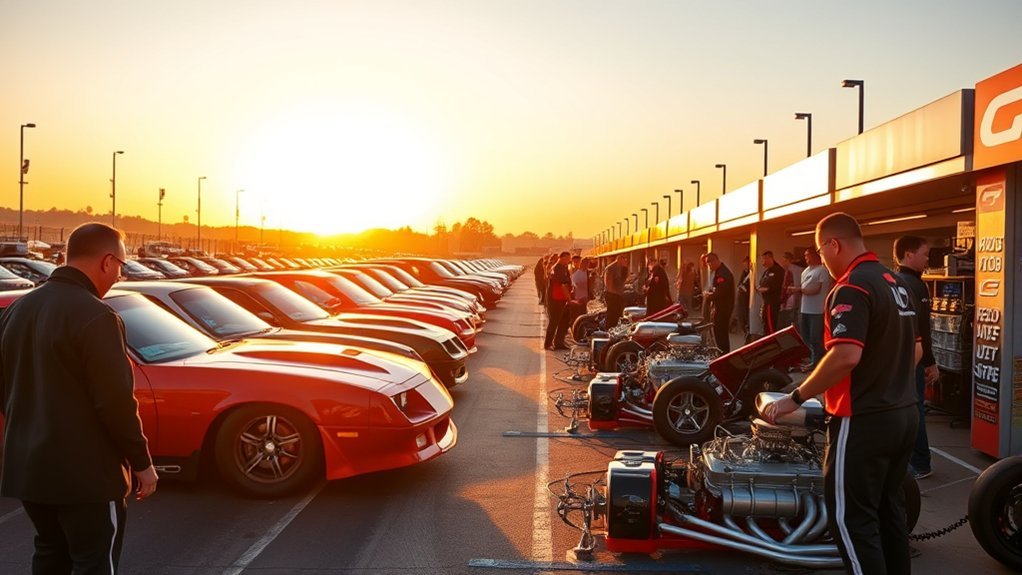
Choosing the right drag strip is crucial for your racing experience. Look for smooth track surfaces, good safety features, and accessibility. Consider the facility’s weather patterns and community support to enhance your time there. Typical costs range from $20 to $300 for entry fees and fuel can hit around $200. Don’t forget to budget for food and travel expenses. With some careful planning, you can make the most of your drag racing adventure and discover upcoming events nearby.
Why Choosing the Right Drag Strip Matters
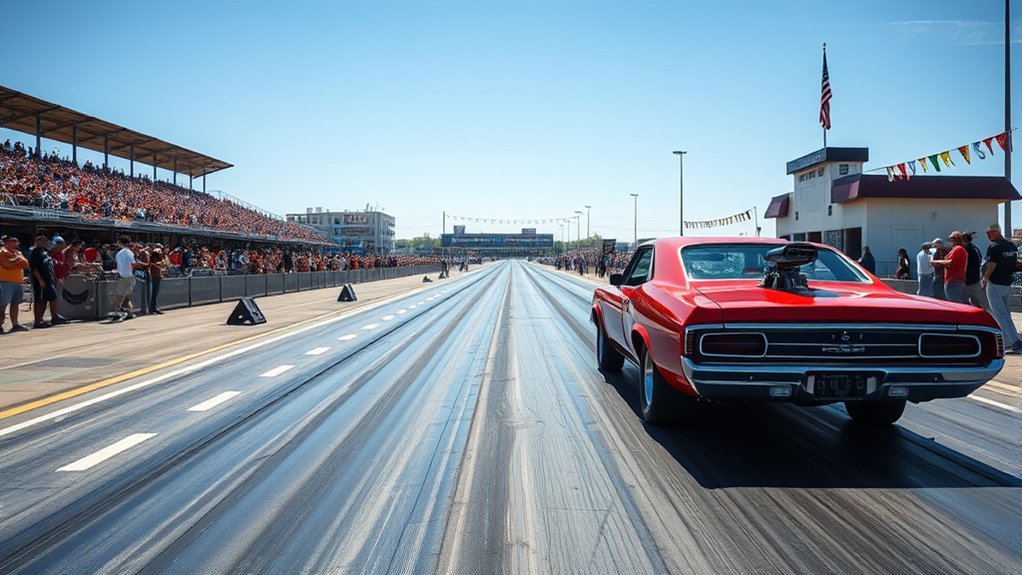
When you’re gearing up for a race, choosing the right drag strip can make all the difference in your performance. The drag strip history shows how various tracks have shaped the racing community, influencing everything from vehicle setup to race strategies.
Choosing the right drag strip is crucial; it influences performance, strategies, and the entire racing experience.
Different surfaces, elevation changes, and weather conditions can dramatically impact your race times, so picking a well-maintained strip is essential. Safety measures, like adequate shutdown areas and barriers, not only protect you but also enhance the experience for spectators.
Location plays an important role, too; tracks near populated areas attract more racers and fans, creating a vibrant atmosphere. Additionally, facilities that host diverse events, like test-and-tune nights, provide invaluable practice opportunities.
Access to amenities such as concessions and restrooms can elevate your overall experience, ensuring you’re focused on racing while enjoying the community around you. The right drag strip isn’t just about speed; it’s about connection and liberation in the racing world.
Essential Features to Evaluate in Your Local Drag Strip
When evaluating your local drag strip, you should first assess the track surface condition, as it directly affects grip and safety during your runs.
Next, consider the safety features offered, like barriers and emergency protocols, to guarantee a secure environment for everyone involved.
Finally, take a look at the accessibility and location to determine how convenient it’s for you and your fellow racers to get there.
Track Surface Condition
The condition of the track surface plays a vital role in your racing experience, considerably affecting both traction and safety. A well-prepared drag strip features smooth, even surface materials that are free of debris, helping prevent tire slip and promoting faster times.
Look for tracks that utilize specialized traction compounds; these enhance grip, allowing for better acceleration and reduced tire spin. Regular track preparation, including resurfacing and cleaning, is essential to maintain peak performance standards.
Additionally, evaluate the track’s history of weather-related impacts and repairs. This insight can reveal its reliability and consistency during racing events, ensuring you get the liberating thrill you seek without compromising safety.
Choose wisely to maximize your racing potential!
Safety Features Offered
While you’re gearing up for an exhilarating day at the drag strip, evaluating the safety features offered can make all the difference in your racing experience.
Look for tracks with well-designed barrier designs and safety fences that shield both drivers and spectators. Mandatory safety inspections guarantee your vehicle meets essential standards before hitting the strip, which adds an extra layer of security.
On-site emergency response teams, equipped with fire extinguishers and medical personnel, are vital for handling potential accidents swiftly.
Additionally, make certain the track surface is properly maintained, providing necessary traction.
Finally, familiarize yourself with safety gear requirements—helmets and fire suits are strictly enforced to protect you from hazards while you embrace the thrill of racing.
Accessibility and Location
How accessible is your local drag strip? When you’re enthusiastic to plunge into local racing, accessibility is key. Many drag strips cater to various skill levels, ensuring beginner accessibility without breaking the bank.
Look for tracks situated near metropolitan areas, which can boost convenience but may also raise operational costs. Some tracks even thrive on Indian Reservations, sidestepping financial hurdles.
Evaluate the infrastructure to guarantee safety and maintenance, as these factors are vital for a secure racing experience. Also, consider weather patterns; some locations offer over 50 weeks of racing, while others are limited.
Community engagement and local sponsorships enhance the strip’s allure, providing diverse events that can energize your racing passion.
How to Evaluate Facility Quality and Safety Standards
When you’re evaluating a drag strip, track maintenance procedures are essential for ensuring a smooth and safe racing experience.
Check if the facility follows strict safety inspection protocols to identify any potential hazards before events.
A well-maintained track not only boosts performance but also prioritizes the safety of everyone involved.
Track Maintenance Procedures
To guarantee you choose a drag strip that prioritizes safety and quality, it’s essential to evaluate the track maintenance procedures in place.
Start by examining the track surface condition; a well-maintained asphalt or concrete surface greatly enhances grip and safety for racers.
Inspect important safety features like guardrails and runoff areas, which help minimize risks during accidents.
Make sure the facility follows regular maintenance schedules, including resurfacing and debris removal, to keep the track in ideal condition.
Additionally, check for the availability of emergency services, as prompt assistance is critical during racing events.
Finally, notice the overall cleanliness and organization of the facility; a well-kept environment reflects the management’s commitment to track upkeep and safety.
Safety Inspection Protocols
While evaluating the quality and safety standards of a drag strip, it’s important to thoroughly understand the safety inspection protocols in place.
Start by checking the inspection checklist for track surface conditions, guardrails, and signage; these elements are essential for a secure racing environment. Confirm the facility has qualified safety staff on hand to respond quickly to emergencies and enforce safety protocols.
Regular maintenance of the racing surface is critical, utilizing specialized equipment to maximize traction and minimize hazards. Also, verify that safety equipment requirements, like helmets and fire suits, are strictly enforced.
Finally, confirm that emergency medical services are available on-site with clear routes for ambulances, guaranteeing swift responses in case of incidents. Your safety matters!
Typical Costs for Drag Racing Services
Drag racing can be an exhilarating experience, but it’s essential to understand the typical costs associated with participating in these events.
Race entry costs can vary widely, ranging from $20 to $200, with test-and-tune options being the most budget-friendly at around $20 to $50.
However, don’t overlook additional expenses like fuel, which can easily reach $200, especially if you’re pushing your car to its limits.
If you’re using nitrous, expect to fork out another $150 for multiple runs.
Tips for Finding the Best Local Drag Strip
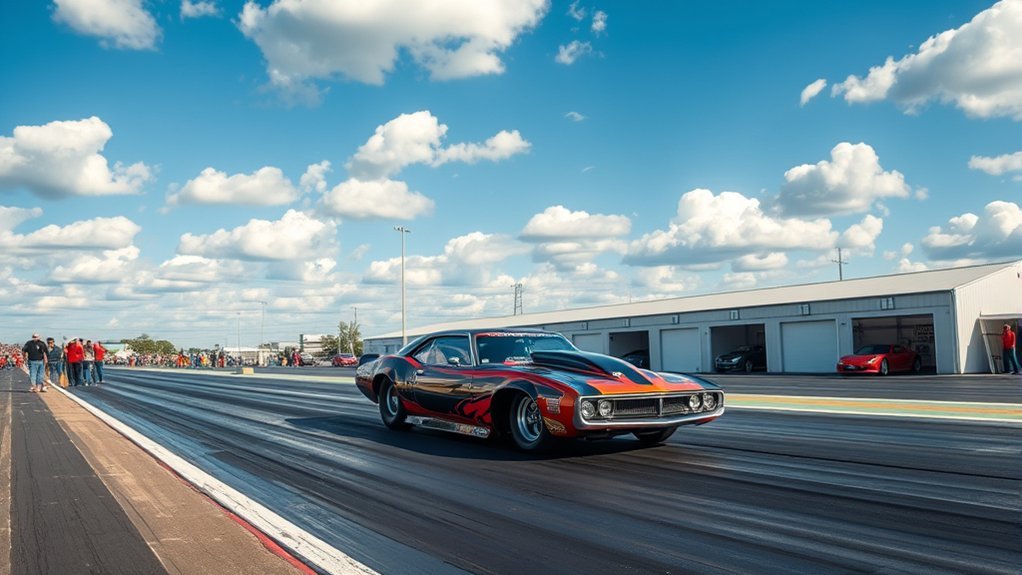
How do you find the best local drag strip to suit your racing needs? Start by diving into research and connecting with the community. Here are some tips to help you find the right track:
- Use online directories: Check out MotorsportReg.com for searchable event calendars by ZIP code to find nearby drag racing events.
- Join community forums: Engage with other racers on social media groups to gather reviews and recommendations for local tracks.
- Evaluate amenities: Look for drag strips that offer essential features like pit areas, concessions, and safety measures to enhance your racing experience.
- Check event variety: Seek out tracks that host diverse local events, including test and tune nights, providing you with valuable practice opportunities at lower costs.
Race Day Expectations at the Drag Strip
Race day at the drag strip is an exhilarating experience, packed with excitement and anticipation as you prepare to see your vehicle in action. Expect a day full of thrilling events, from test-and-tune sessions to bracket racing, allowing you to showcase your skills and connect with fellow enthusiasts.
Embrace the race day excitement of competing while appreciating the strong competitor camaraderie that thrives among participants.
Embrace the thrill of competition and the camaraderie that unites passionate racers on race day.
Before hitting the track, you’ll need to pass a basic technical inspection, ensuring your safety gear and vehicle are race-ready. Keep an eye on the weather, as conditions can affect schedules, causing unexpected delays.
While entry fees range from $20 to $200, don’t forget to budget for food and drinks, which can add another $50 to $200 to your day.
With the right mindset and preparation, race day can be a liberating and unforgettable experience, filled with speed and community.
Planning Your Budget for a Day at the Drag Strip Experience
When planning your budget for a day at the drag strip, it’s essential to take into account various costs that can quickly add up, ensuring you don’t get caught off guard.
Effective budgeting strategies and expense tracking will help keep your finances in check. Here’s what to keep in mind:
- Gate and Race Entry Fees: Expect to pay around $100 for entry, plus $200 to $300 for racing.
- Food and Drinks: Allocate about $200 for meals and refreshments throughout the day.
- Travel Costs: If you’re traveling with an RV, budget around $200 for fuel.
- Miscellaneous Expenses: Don’t forget to account for unexpected costs, like nitrous or supplies, which can add up quickly.
What to Know About Upcoming Events at Local Drag Strips?

Curious about what’s happening at your local drag strip? Staying updated on event scheduling is essential for racing enthusiasts.
Local strips often host weekly test and tune events, allowing you to hone your skills while supporting the track. Monthly races not only engage the community but also create a buzz, drawing in spectators who share your passion.
Special events, like national competitions, can transform the atmosphere and greatly boost attendance, but they require careful planning and high-quality facilities. Keep in mind that entry fees can range from $20 to $200, depending on the competition level.
Weather can also play a role in your racing season, with many areas offering only 25-35 weeks of racing opportunities.
Frequently Asked Questions
What Is the 30 60 90 Rule for Car Maintenance?
The 30 60 90 rule for car maintenance outlines a preventive maintenance service schedule. At 30,000 miles, change oil and check filters; at 60,000, replace the timing belt; and at 90,000, inspect major systems.
How Much Do Most Mechanic Shops Charge per Hour?
Finding mechanic rates is like shopping for shoes; prices vary widely. Most shops charge between $75 to $150 per hour for labor costs, but specialty services might push rates over $200. Always ask for estimates!
How Much Does It Cost to Go Drag Racing?
Going drag racing typically costs between $1,000 and $4,700. This includes entry fees, fuel, food, and additional supplies. Make certain you understand the cost breakdown to enjoy your racing experience without financial surprises.
Is Drag Racing Covered by Insurance?
Drag racing typically isn’t covered by standard insurance policies. You should disclose your racing activities to your provider, and consider specialized insurance coverage to protect yourself against potential claims and liabilities during events.
Conclusion
Choosing the right drag strip can greatly enhance your racing experience. For instance, imagine you head to a local strip that offers excellent safety measures and well-maintained facilities. You’ll not only feel secure but also enjoy a smoother race day. Remember to weigh the features and costs carefully, and stay updated on upcoming events. With a little research, you’ll find the perfect spot to rev up your passion for drag racing!






Leave a Reply