
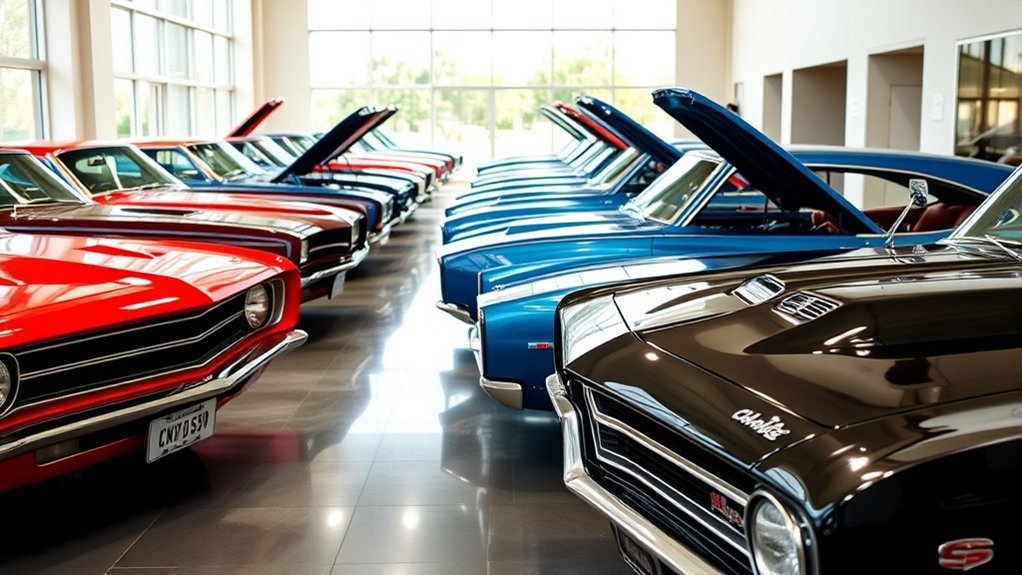
Classic muscle cars, like the Ford Mustang, Chevrolet Camaro, and Dodge Charger, are American icons that symbolize freedom and performance. These powerful vehicles emerged in the late 1940s, peaked in the 1960s and 70s, and have maintained their allure through revival phases. They’re known for raw horsepower and unique styling. If you want to uncover more iconic models, key performance metrics, and collecting tips, there’s a lot more to explore in the world of muscle cars.
The Evolution of Classic Muscle Cars: A Historical Overview
The evolution of classic muscle cars is a fascinating journey that begins in the late 1940s, when the Oldsmobile Rocket V8 emerged, laying the groundwork for what would become a cultural phenomenon.
As you explore this era, you’ll notice how muscle car innovations flourished, particularly in the mid-1960s. Manufacturers like Ford and Chevrolet introduced iconic models such as the Mustang and Camaro, showcasing aggressive styling paired with powerful V8 engines.
This golden age of muscle cars in the 1960s and 1970s saw vehicles like the Dodge Charger and Pontiac GTO thrive, capturing the spirit of freedom and performance enhancements that defined the time.
However, the oil crisis of the 1970s shifted priorities, leading to a decline in production.
Yet, the revival in the 1980s and 1990s reignited interest, blending nostalgia with modern performance technology, proving that the muscle car legacy continues to evolve.
Iconic Models That Defined the Muscle Car Era
As the muscle car era unfolded, a handful of iconic models emerged, each leaving an indelible mark on automotive history.
The Ford Mustang, introduced in 1964, ignited the movement with its perfect blend of style, performance, and affordability, birthing the “pony car” segment.
Then came the Chevrolet Camaro in 1966, a fierce contender offering powerful V8 options and eye-catching design that captivated a generation.
The Dodge Charger, particularly its R/T and SE models, showcased bold designs and thrilling performance, gaining fame in films like “Bullitt.”
The Pontiac GTO, recognized as a pioneer, featured a 389-cubic-inch engine that set the benchmark for muscle car performance.
Finally, the 1970 Chevrolet Chevelle SS stood out with a 454-cubic-inch V8 delivering over 450 horsepower.
Together, these muscle car legends exemplify the engine innovations that defined an era, driving passion and excitement for automotive enthusiasts everywhere.
Key Performance Metrics of Classic Muscle Cars
When it comes to classic muscle cars, performance metrics reveal the raw power and engineering prowess that defined this thrilling era. The excitement lies in performance comparisons, showcasing how these beasts accelerated and dominated the streets.
Here are some key highlights:
- 1970 Dodge Charger Daytona: Top speed over 200 mph, a true speed demon.
- 1969 Ford Mustang Mach 1: 428 V8 engine cranking 335 horsepower, hitting a quarter-mile in about 14 seconds.
- Pontiac GTO: The original muscle car, 0-60 mph in roughly 6.6 seconds thanks to its 389 V8.
These acceleration tests not only exemplify the capabilities of each model but also highlight the passion of muscle car enthusiasts.
Whether you’re drawn to raw power or sleek designs, understanding these metrics helps you appreciate the legacy of these iconic vehicles.
Classic Muscle Cars: Buying and Collecting Tips
Investing in a classic muscle car can be an exhilarating journey, especially if you know what to look for. Focus on models with documented history and originality; they appreciate in value. Utilize resources like Kelley Blue Book or NADA Guides to research fair market prices. Joining local muscle car clubs or online communities can provide valuable insights and support.
Here’s a quick guide to help you:
| Tip | Description | Resources |
|---|---|---|
| Document History | Look for well-maintained vehicles with original parts. | Classic car auctions |
| Research Market | Use price guides to assess vehicle value. | Kelley Blue Book, NADA Guides |
| Network | Attend car shows for insights and connections. | Muscle Car Nationals |
| Join Communities | Engage with enthusiasts for tips on collecting. | Online forums and clubs |
| Explore Options | Check reputable platforms for listings. | Hemmings, ClassicCars.com |
With these investment strategies and restoration techniques, you’ll be well on your way to a rewarding collection.
The Cultural Impact of Muscle Cars in Society and Media
Muscle cars have carved out a significant place in American culture, embodying ideals of freedom, rebellion, and individuality. Their impact resonates through various media, especially muscle car movies like “Bullitt” and the “Fast & Furious” series, which showcase their cultural symbolism.
You can almost feel the adrenaline rush when you envision:
- The roar of a powerful engine echoing down a sun-soaked highway.
- The sleek, aggressive lines of a classic muscle car cutting through the wind.
- Enthusiasts gathering at local meetups, sharing stories of speed and adventure.
The muscle car craze of the 60s and 70s wasn’t just about the cars; it was a movement that celebrated youthful spirit and individuality.
Today, events like Muscle Car Nationals keep the passion alive, ensuring that these iconic vehicles continue to inspire new generations. They’re not just cars; they’re a lifestyle, a symbol of liberation that transcends time.
Frequently Asked Questions
What Are the Most Popular Muscle Car Restoration Shops?
You’ll find popular muscle car restoration shops like Classic Industries and YearOne excel in muscle car modifications and restoration techniques. They’re dedicated to reviving that vintage power, ensuring your ride stands out on the road.
How Do I Determine the Value of a Classic Muscle Car?
To determine a classic muscle car’s value, analyze market trends and consider appraisal services. Research recent sales, inspect condition, and evaluate rarity. Combining these factors gives you a clearer understanding of your car’s worth.
What Common Issues Should I Look for in Muscle Cars?
When inspecting muscle cars, check for rust problems on the body and undercarriage, and listen for engine issues like knocks or overheating. These factors can greatly affect performance and future restoration costs.
Are There Muscle Car Clubs for Enthusiasts?
Yes, there are numerous muscle car clubs for enthusiasts. Joining one connects you with fellow fans, sharing muscle car history and participating in club events that celebrate your passion for these iconic vehicles and their powerful legacies.
What Insurance Options Are Available for Classic Muscle Cars?
When insuring your classic muscle car, think of it as safeguarding a cherished treasure. You’ve got options like classic car insurance and collector car policies, each tailored to protect your pride and joy effectively.
Conclusion
In the roaring world of classic muscle cars, every rev of the engine sends shivers down your spine, igniting a fire in your soul. These magnificent machines aren’t just cars; they’re time machines that transport you to a golden era of speed and power. Whether you’re cruising down the highway or showcasing your prized possession, owning a muscle car is like holding a piece of history in your hands. So, buckle up and embrace the thrill of the ride!







Leave a Reply