
Classic car restoration is an exciting journey that requires careful planning and attention to detail. Start by setting a realistic budget and timeline, focusing on essential repairs first. Choose a classic car that fits your skill level and budget, paying attention to the availability of parts. Equip yourself with the right tools and familiarize yourself with restoration techniques. You’ll face challenges, but with dedication, you can transform that classic beauty into a gem. Discover more tips and strategies to guarantee success.
Essential Considerations for Classic Car Restoration
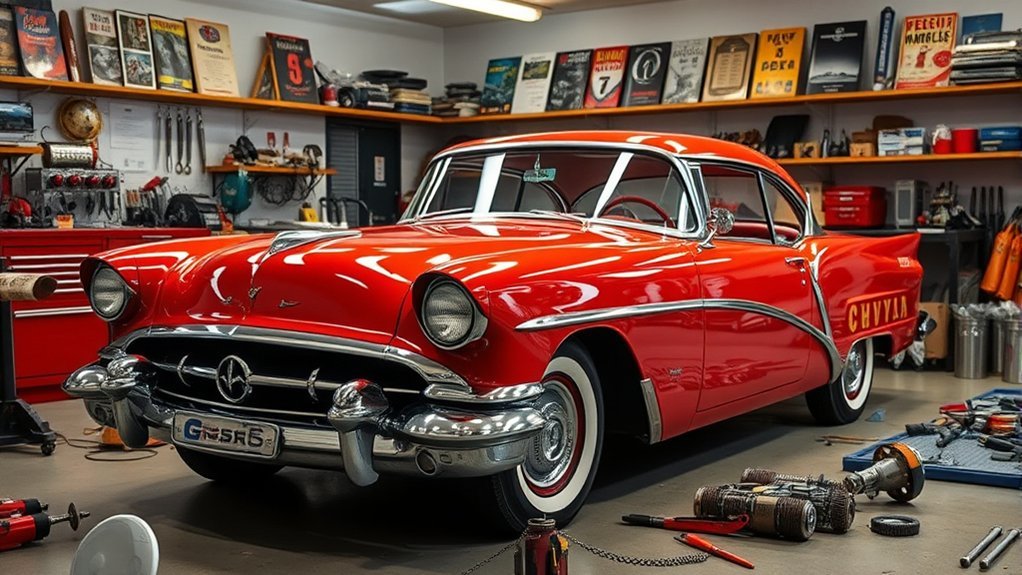
When you commence a classic car restoration, it’s essential to start with a clear plan to navigate the complexities ahead.
Begin by establishing a detailed budget that covers parts, tools, and any professional help you might need. This guarantees you allocate funds wisely throughout the project.
Next, set a realistic timeline since restorations can take months or years, depending on the work required.
Selecting the right workspace is equally important; a well-equipped garage provides room for disassembly and safe repairs.
Familiarize yourself with restoration techniques that involve mechanical repairs, bodywork, and interior restoration to assess feasibility.
Gathering a rough estimate of the overall project scope helps you prepare for challenges like sourcing parts or unexpected repairs.
How to Set Your Budget and Timeline for Restoration
Setting a budget and timeline for your classic car restoration is essential for guaranteeing a smooth and successful project. Here’s how to get started:
- Create a Thorough Budget: Include costs for parts, tools, labor, and unexpected expenses. This guarantees your financial plan covers the entire restoration process.
- Set a Realistic Timeline: Consider the scope of work, availability of parts, and your personal schedule. Your timeline may range from months to years.
- Prioritize Essential Repairs: Focus first on mechanical reliability before diving into aesthetics and bodywork. This keeps your car running smoothly.
- Document and Adjust: Keep track of expenses and timelines, allowing for budget adjustments and timeline flexibility as issues arise.
Regular reassessment helps you stay organized and prepared for future projects.
Choosing the Right Classic Car for Restoration
After you’ve established your budget and timeline for restoration, the next step is selecting the right classic car to bring back to life. Take into account the various classic car types, as they can dictate the restoration techniques you’ll need to employ.
| Classic Car Type | Key Factors to Take into Account |
|---|---|
| Muscle Cars | Popularity, parts availability |
| Vintage European | Cost of parts, complexity of restoration |
| Classic Trucks | Structural integrity, rust levels |
| Sports Cars | Performance potential, market value |
| American Classics | Ownership history, documentation |
Research car values through reputable sources to secure a fair deal. Thoroughly inspect potential candidates for rust and structural integrity. Explore platforms like eBay and local classifieds to find a range of project cars that inspire you, and always prioritize models with accessible parts. Your dream project awaits!
Essential Tools and Parts for Classic Car Restoration
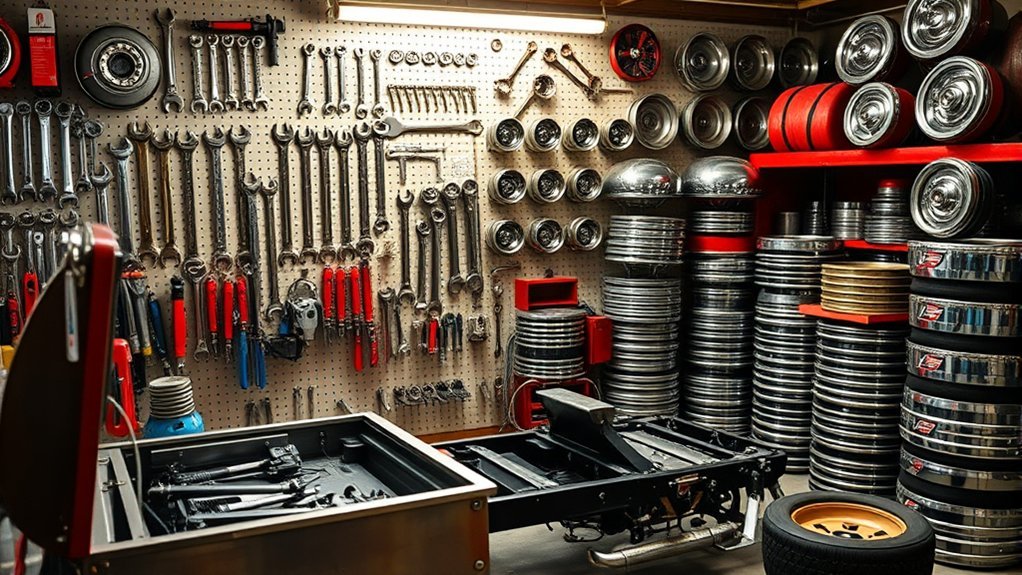
When you’re tackling a classic car restoration, having the right tools is essential to your success.
From a thorough wrench set to a reliable welding machine, each tool plays an important role in bringing your vision to life.
Plus, knowing where to find quality parts, whether at junkyards or online, can save you time and money on your project.
Must-Have Tools List
To successfully tackle a classic car restoration project, you’ll need a solid arsenal of essential tools that will make the process smoother and more efficient.
Proper tool maintenance and storage are key to keeping these tools in top shape.
Here’s a must-have list to get you started:
- High-Quality Socket Set – For tackling various mechanical tasks effectively.
- Reliable Floor Jack & Jack Stands – Vital for safely lifting and supporting the vehicle.
- Comprehensive Screwdriver Set – Includes Phillips and flathead to disassemble and reassemble components.
- Good Quality Welding Machine – Necessary for repairing metal components and fabricating new parts.
Investing in these tools will empower you to restore your classic car with confidence and precision.
Essential Parts Sources
Finding the right parts for your classic car restoration can be as essential as having the right tools, since quality components can greatly impact your project’s success.
Local junkyards often hold hidden treasures, offering cost-effective options for reusable parts that can breathe new life into your vehicle.
Don’t overlook online marketplaces like eBay and Facebook Marketplace, where you’ll find a vast selection of used parts and tools for your specific needs.
Connecting with fellow enthusiasts at classic car events can lead to valuable resources and spare parts.
Additionally, visiting brick-and-mortar stores allows you to inspect tools and supplies before buying.
Always refer to restoration guides tailored to your model, ensuring you have everything necessary for a successful restoration journey.
Step-by-Step Guide to Restoring Your Classic Car
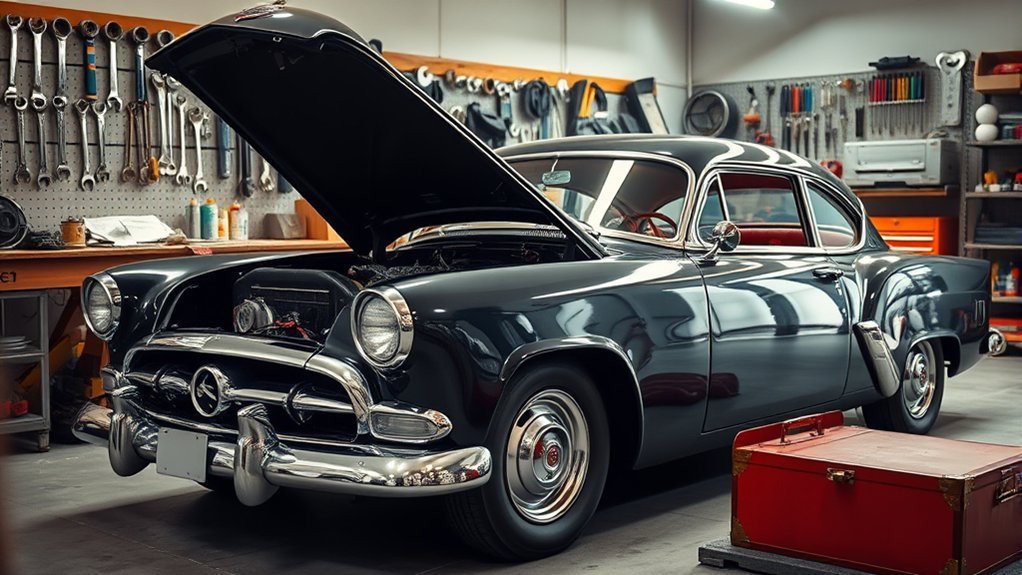
Restoring a classic car can be an incredibly rewarding journey, and following a structured approach can make the process smoother and more enjoyable. Here’s a step-by-step guide to set you on the right path:
- Strip the car: Start by removing the interior, wiring, engine, and external panels. Label and photograph each part for easy reassembly.
- Mechanical upgrades: Assess and enhance the braking system for reliability. Prioritize mechanical integrity before proceeding to bodywork.
- Body preparation: Eliminate rust and old paint. Apply a suitable sealant and primer before repainting to safeguard the car’s exterior.
- Reassembly: Carefully reassemble the vehicle, ensuring all safety features and wiring are installed correctly.
Throughout this process, keep a checklist and document your restoration journey. This not only keeps you organized but also adds value should you decide to sell in the future.
Tips for Overcoming Common Restoration Challenges
Completing a classic car restoration can present various challenges that might catch even seasoned enthusiasts off guard. To navigate these hurdles, start by establishing a detailed budget and timeline. This keeps financial strain and project delays at bay.
Document every disassembly step with photos and labels to guarantee smooth reassembly later. Prioritize mechanical repairs before tackling bodywork; this guarantees your vehicle is roadworthy and helps you uncover hidden issues early on.
Expect the unexpected—rust repair or missing parts can arise, so maintain flexibility in your plans. Tap into your network of classic car enthusiasts and restoration forums for valuable advice and shared experiences.
These connections can also assist in part sourcing, especially for hard-to-find components. By staying organized, adaptable, and connected, you’ll overcome challenges and enjoy the rewarding journey of restoring your classic car.
How to Keep Your Classic Car in Top Shape During Restoration
While you’re deep into the restoration of your classic car, keeping it in top shape requires consistent maintenance and care. Here are some key steps to follow:
- Fluid Maintenance: Regularly check and maintain fluid levels, including oil, coolant, and brake fluid, to keep your engine and braking system functional.
- Climate Control: Store your vehicle in a climate-controlled environment to prevent rust and deterioration of components during the restoration process.
- Battery Care: Keep the battery charged and periodically start the engine to prevent seals from drying out and guarantee fuel system integrity.
- Routine Inspections: Perform routine inspections of tires and suspension components to maintain safety and stability when moving the vehicle around your workspace.
Frequently Asked Questions
What Are the Best Classic Cars for First-Time Restorers?
For first-time restorers, affordable classics like the Volkswagen Beetle or Ford Mustang are perfect. They’re easy to work on, have plenty of parts available, and you’ll find beginner tips online to guide you through the process.
How Do I Find Replacement Parts for My Classic Car?
Did you know over 70% of classic car parts are found online? You can search popular online marketplaces or visit local junkyards to discover hidden gems, ensuring your restoration project gets the parts it needs to thrive.
Can I Restore a Classic Car Without Prior Experience?
Yes, you can restore a classic car without prior experience! Start with basic restoration techniques and gather beginner tools. Research, practice, and don’t hesitate to ask for help; you’ll learn and gain confidence along the way!
What Is the Average Cost of a Full Restoration?
A full restoration typically costs between $30,000 and $100,000, depending on your restoration budget and labor costs. It’s essential to plan wisely and prioritize your expenses to achieve the best results without breaking the bank.
How Do I Ensure My Classic Car Maintains Its Value Post-Restoration?
To maintain your classic car’s value post-restoration, focus on regular maintenance and quality parts. Implement investment strategies like proper storage and documentation, ensuring you preserve its history and appeal to future buyers.
Conclusion
So, you thought restoring a classic car would be a breeze? Spoiler alert: it’s a labor of love that’ll test your patience and skills! But as you immerse yourself in this rewarding journey, you’ll discover the joy of breathing new life into vintage metal. Embrace the challenges, and you might just find that the road to restoration is as thrilling as the final drive. Who knew hard work could lead to such timeless beauty? Buckle up and enjoy the ride!






Leave a Reply