

Understanding classic car production numbers is key for collectors. These numbers reveal rarity and desirability, directly impacting a vehicle’s value. Limited production models often appreciate over time, making them more desirable. Analyzing production figures by make and model can provide insights into market demand. Utilize resources like classic car databases and forums to enhance your knowledge. As you uncover the implications of production statistics, you’ll discover how they shape your approach to the classic car market.
Why Classic Car Production Numbers Matter

Understanding why classic car production numbers matter can greatly enhance your appreciation for these vehicles. Production figures serve as vital rarity indicators, revealing how many units were made and helping you assess the impact on desirability among collectors. By identifying limited edition models, you can pinpoint those with potential for appreciation over time.
Moreover, examining production numbers allows you to observe trends in automotive manufacturing, uncovering shifts in consumer preferences and technological advancements. This knowledge empowers you to make informed decisions about purchases and restorations.
Additionally, accurate production data is essential for verifying a vehicle’s authenticity; discrepancies may signal potential forgeries or modifications. Through this impact assessment, you not only deepen your understanding of classic cars but also position yourself as a more discerning collector, capable of steering through the marketplace with confidence and insight.
How Classic Car Production Numbers Affect Value
While many factors contribute to a classic car’s value, production numbers play a pivotal role in determining its market worth. Lower production figures often signal production rarity, making those vehicles more desirable among collectors.
Production numbers significantly influence a classic car’s value, with lower figures often indicating increased desirability among collectors.
For instance, the 1967 Ford Mustang Shelby GT500, with just 2,048 units produced, commands a considerably higher price compared to more widely produced models. This scarcity drives demand, resulting in greater appreciation over time.
Moreover, specific features tied to limited production runs can enhance a car’s valuation. The right combination of rarity and desirability can create a perfect storm for collectors.
Well-documented production numbers further enhance provenance, adding to a classic car’s allure. Ultimately, understanding how production numbers impact car valuation is essential for anyone looking to navigate the classic car market effectively.
Recognizing the significance of rarity allows you to appreciate the nuances that influence value.
Analyzing Production Numbers by Make and Model
When you analyze production numbers by make and model, you uncover essential insights about rarity and desirability.
For instance, the stark contrast in production figures between models like the 1967 Chevrolet Camaro and the limited 1970 Pontiac GTO Judge highlights interesting trends in automotive history.
How do these production trends influence your understanding of a vehicle’s market value?
Importance Of Production Numbers
Production numbers play a crucial role in evaluating a classic car’s value and appeal, as they offer insights into a model’s rarity and desirability. By examining these figures, you can reveal production trends and gain valuable collector insights. Limited production runs, like the 1967 Chevrolet Corvette L88 with only 20 units, often lead to higher market prices due to scarcity. Additionally, understanding production numbers aids in verifying authenticity and determining historical significance within automotive history.
| Make & Model | Production Numbers |
|---|---|
| 1967 Chevrolet Corvette L88 | 20 |
| 1970 Dodge Challenger R/T | 14,000 |
| 1965 Ford Mustang | 559,451 |
| 1969 Pontiac GTO | 72,287 |
| 1971 BMW 3.0 CSL | 1,265 |
Trends Across Different Models
Analyzing production numbers across various classic car models reveals fascinating trends in consumer preferences and market dynamics.
For instance, the Ford Mustang‘s staggering 400,000 units in 1964 exemplifies the surge in vintage vehicle popularity, while the Chevrolet Camaro‘s 220,000 units in 1967 reflects immediate acceptance in the muscle car market.
The Pontiac GTO, credited with initiating muscle car trends, had production numbers fluctuating between 32,000 and 80,000 during its peak, indicating a dedicated fanbase.
In contrast, AMC’s Javelin struggled with approximately 30,000 units, illustrating challenges in competing against giants.
The 1957 Chevrolet Bel Air‘s 763,000 units further underscores the era’s demand for stylish designs, showcasing how consumer tastes shaped production trends across different models.
Understanding Rarity and Demand Through Real-World Examples
Understanding the intricate relationship between rarity and demand in classic cars reveals fascinating insights into collector behavior and market dynamics.
Take the 1967 Chevrolet Corvette, for example; with only 22,940 units produced, its rarity impact fuels a strong collector interest.
In stark contrast, the 1970 Plymouth Hemi Cuda, with just 652 units, showcases extreme demand fluctuations, driving auction prices to dizzying heights.
Similarly, the Ford 1969 Mustang Boss 429, at only 1,359 units, illustrates how limited production can drastically enhance desirability.
The 1957 Ferrari 335 S, with only four units ever made, stands as a pinnacle of rarity, commanding over $30 million at auction.
Finally, the 1971 Dodge Challenger R/T Hemi’s mere 1,100 units produced further exemplifies how scarcity can elevate market value.
These examples highlight how understanding rarity and demand can guide your investment decisions in the classic car sector.
Best Tools for Finding Production Stats

When you’re on the hunt for classic car production stats, several tools can greatly simplify your search.
Online databases and resources, manufacturer archives, and classic car clubs often hold invaluable information that can clarify the rarity of specific models.
Have you explored these avenues, or are there other resources you’ve found helpful in uncovering production numbers?
Online Databases and Resources
While diving into the world of classic cars, you’ll quickly discover that online databases and resources are indispensable for uncovering production statistics.
Platforms like the Classic Car Database and Hemmings provide extensive production numbers for American automobiles from 1910 to 1975, helping you research specific models and assess their rarity.
The National Automobile Dealers Association (NADA) enriches your understanding with historical data and production statistics.
For VIN verification, the International Motor Vehicle Registry (IMVR) aggregates important information.
The Automotive History Preservation Society (AHPS) offers a detailed database, including engine types crucial for restorations.
Additionally, classic car forums foster community-driven insights, enhancing database accuracy and offering a collaborative approach to understanding your classic car’s historical significance.
Manufacturer Archives Access
Accessing manufacturer archives can greatly enhance your quest for production statistics on classic cars. These archives often contain invaluable manufacturer records, detailing every vehicle produced, complete with VIN numbers and production totals.
Many automakers, like Ford and General Motors, offer online resources or direct contacts for enthusiasts seeking specific production information. Dive deeper into the archives, and you might uncover build sheets that showcase options, features, and production numbers, illuminating a vehicle’s rarity and authenticity.
Additionally, automotive museums and historical societies may house these crucial records, serving as essential research hubs. Don’t overlook classic car databases and online forums; they can connect you with others, sharing resources that reveal extensive production statistics for your favorite models.
Classic Car Clubs
Classic car clubs serve as invaluable resources for enthusiasts seeking production statistics, offering a wealth of information that goes beyond mere numbers.
By joining, you gain access to club membership benefits, including access to extensive databases containing production figures for various makes and models. Many clubs provide exclusive publications and newsletters filled with detailed production data, from annual totals to rare model insights.
Connecting with seasoned members enriches your understanding of historical resources and trends within the classic car community. Events and gatherings foster collaboration, allowing you to share and verify statistics.
Additionally, online forums and social media groups keep the conversation vibrant, enabling you to exchange information and confirm authenticity, empowering your passion for classic cars.
Debunking Myths About Classic Car Production Statistics
When it comes to classic car production statistics, many enthusiasts often fall prey to misconceptions that can skew their understanding of value and rarity. One of the famous misconceptions is that higher production numbers mean lower rarity; however, factors like desirability and condition often outweigh sheer numbers.
Take the 1967 Ford Mustang, for instance—over 472,000 units were produced, yet the GT500 remains highly sought after due to its unique appeal. Conversely, the 1970 Plymouth Superbird had only 1,920 units made, but its market value can vary dramatically based on provenance.
High production models, such as the Chevrolet Corvette, maintain collector interest not for scarcity but for their iconic status and performance.
To truly grasp a classic car’s significance, you must explore beyond mere production figures and consider context, market conditions, and desirability—essential rarity factors that shape a vehicle’s legacy.
Using Production Numbers in Negotiations
Understanding the nuances of classic car production numbers can greatly enhance your negotiation strategy. By analyzing these figures, you can determine a vehicle’s rarity and its potential market value. High production numbers often signify a more common car, which can weaken your negotiation leverage. In contrast, rare models with lower production figures can bolster your position, emphasizing their desirability.
Utilizing production numbers in your negotiation tactics allows you to justify pricing strategies effectively. When discussing a vehicle’s value, referencing historical data helps illustrate market demand and trends, making your case more compelling.
This market analysis not only guides your purchasing decisions but also strengthens your selling arguments. Ultimately, by arming yourself with insights into production numbers, you can navigate negotiations with confidence and clarity, ensuring you make informed choices in the classic car market.
Embrace this knowledge to liberate yourself from uncertainty and enhance your bargaining power.
The Future of Tracking Classic Car Production Numbers
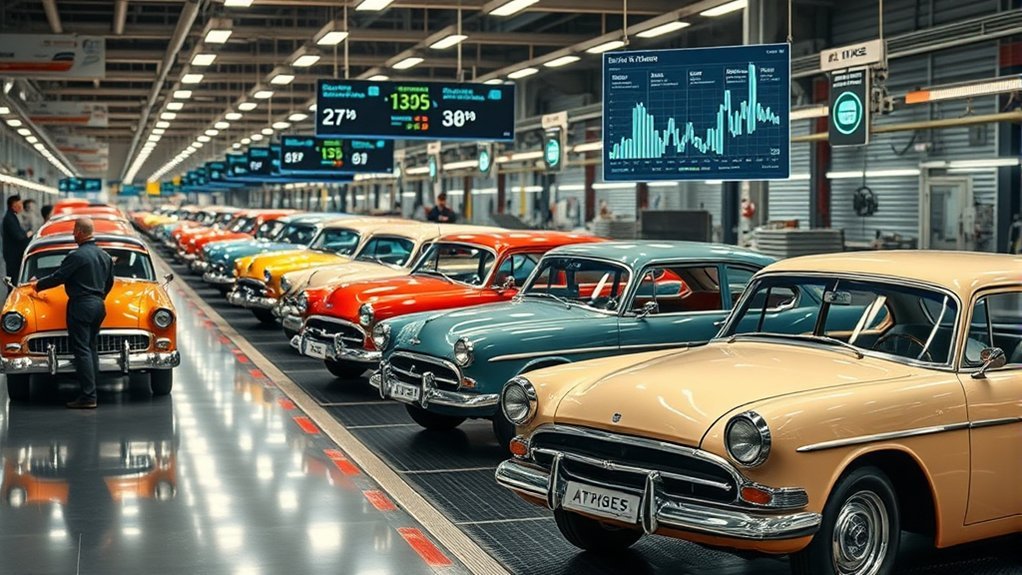
As advancements in technology reshape the landscape of classic car collecting, the future of tracking production numbers looks increasingly promising. Digital innovations, such as enhanced VIN databases, are providing you with detailed statistics and historical data on classic vehicles.
With the rise of online platforms and mobile apps, accessing production numbers and specifications for thousands of models has never been easier.
Blockchain applications are revolutionizing the security and accuracy of these records, ensuring that the provenance of each classic car is verifiable. Collaborative efforts among car clubs, museums, and restoration experts are further enriching the documentation of production numbers, preserving the stories behind vintage automobiles.
Looking ahead, AI-driven analytics could provide invaluable insights, predicting market trends based on historical production data. This means you’ll be empowered to make informed investment decisions, liberating you from uncertainty and enhancing your classic car ownership experience.
Conclusion: Navigating the Classic Car Market With Confidence
While many collectors might overlook the significance of production numbers, grasping their implications can profoundly influence your approach to the classic car market. Understanding these figures allows you to gauge rarity and desirability, shaping your market strategies. Here’s a quick look at how production numbers impact value:
| Production Number | Collector Interest |
|---|---|
| Low | High |
| Medium | Moderate |
| High | Low |
| Rare | Very High |
Frequently Asked Questions
What Is the 30-60-90 Rule for Cars?
The 30-60-90 rule outlines car depreciation: 30% loss in the first year, 60% by year two, stabilizing around 90%. Classic car appreciation can defy this, influenced by rarity and market demand.
How to Find Production Numbers of Cars?
Finding production numbers of cars is like unearthing buried treasure. Immerse yourself in production databases, explore vintage statistics, or connect with car clubs. These resources can illuminate the fascinating history behind your favorite vehicles.
How to Look up Classic Car VIN Numbers for Free?
To look up classic car VIN numbers for free, use online resources like VIN decoder websites and forums. They’ll help you decode VINs, uncover specifications, and learn valuable history about your classic vehicle.
How Old Does a Car Need to Be to Count as a Classic?
A car typically counts as a classic when it’s at least 20 years old, though vintage vehicle criteria vary. Understanding classic car definitions can help you navigate registration and insurance nuances effectively.
Conclusion
In traversing the classic car market, understanding production numbers empowers you to make informed decisions, assess value accurately, and negotiate effectively. Knowing how many units were made enhances your appreciation of rarity, while recognizing demand helps you spot opportunities. As you dive deeper into these statistics, you’ll gain confidence in your purchases, clarity in your investments, and insight into the market’s trends. Ultimately, mastering production numbers equips you to traverse the classic car landscape with assurance and precision.







Leave a Reply