
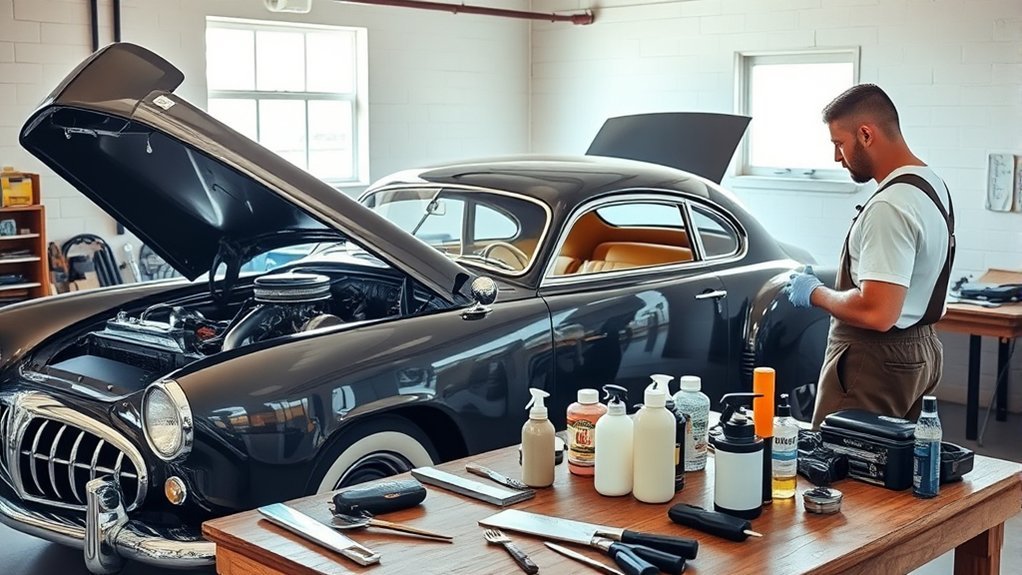
Proper classic car maintenance before storage is essential to preserve your vehicle’s condition. Start by thoroughly cleaning it and applying wax for protection. Check fluids and change the oil and filter to remove contaminants. Use a fuel stabilizer and elevate the car to prevent flat spots. Choose a climate-controlled storage location and a breathable cover to protect against moisture. Regular inspections during storage can help catch potential issues early, ensuring you’re ready for the road when the time comes.
Why Classic Car Maintenance Is Essential Before Storage
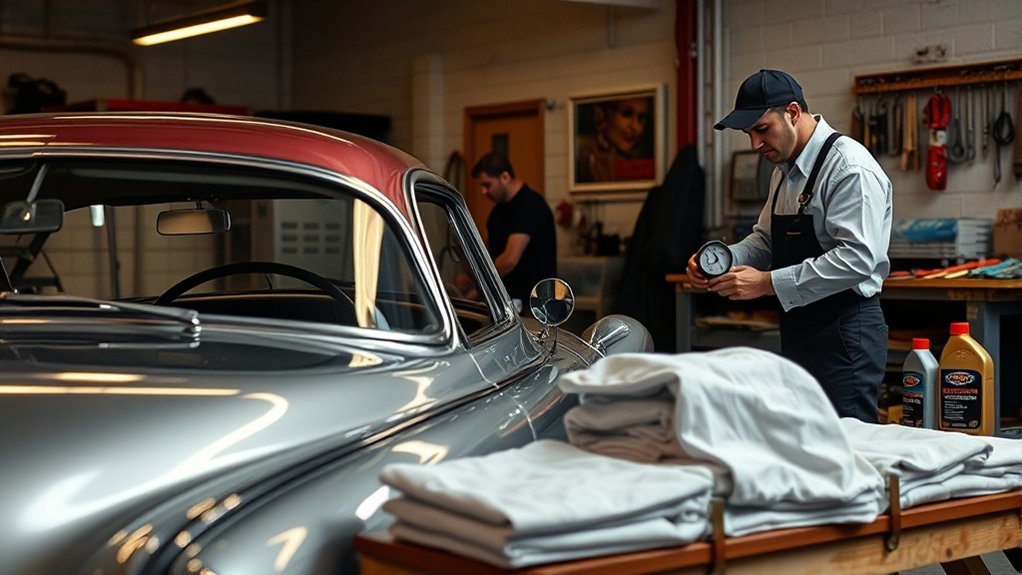
When you’re preparing to store your classic car, proper maintenance is essential to avoid future headaches. Implementing preventive measures like thorough cleaning, including washing and waxing, creates a protective barrier against contaminants that can harm the paint.
Regular servicing is key; check oil levels and fluids to guarantee all components function properly, preventing long-term damage.
Regular maintenance is crucial; ensure oil levels and fluids are optimal to protect your classic car from long-term damage.
Additionally, disconnecting the battery or using a trickle charger keeps the battery charged, avoiding irreversible damage during long storage periods.
Don’t forget to apply fuel stabilizers to the gas tank—this protects your fuel system from degradation and varnish buildup, guaranteeing your engine performs reliably when you bring your beauty back to life.
Step-By-Step Process for Cleaning Your Classic Car
After ensuring your classic car is properly maintained before storage, it’s time to focus on the cleaning process that keeps it looking its best.
Start with a thorough wash, using gentle soap and warm water. Employ effective cleaning techniques—work from top to bottom, ensuring every surface is clean, including the undercarriage and wheel wells. Use microfiber cloths and brushes to avoid scratching the paint.
Once it’s washed, apply a high-quality deep wax to protect the exterior. Reapply this every five weeks to maintain a solid barrier against contaminants.
Don’t forget the interior; vacuum thoroughly to eliminate dust and debris that can cause odors and mold. If your car has leather surfaces, use a leather conditioner for added care.
Finally, allow your vehicle to dry completely before covering it, preventing moisture buildup that can lead to rust and corrosion.
With the right detailing products, your classic will shine for seasons to come!
Key Fluid Checks and Maintenance Tips Before Storing
Before storing your classic car, it’s vital to check essential fluid levels and change the oil to prevent engine damage.
Don’t forget to maintain your battery’s health by disconnecting it or using a trickle charger.
Taking these steps guarantees your car stays in top shape and ready for its next adventure.
Essential Fluid Levels Check
Ensuring all essential fluid levels are checked and topped off is crucial for maintaining your classic car during storage. Neglecting this step can lead to fluid contamination and moisture buildup, risking your vehicle’s health.
Here’s what you need to do:
- Oil & Filter: Change the engine oil and filter to remove contaminants and protect internal components.
- Coolant: Verify that the coolant/antifreeze mixture is balanced for your storage conditions to avoid freezing or overheating.
- Fuel Stabilizer: Fill the gas tank with a fuel stabilizer to prevent degradation and varnish buildup.
Oil Change Importance
While you’re preparing your classic car for storage, prioritizing an oil change is crucial for protecting your engine. Fresh oil helps eliminate contaminants that can accumulate over time, safeguarding essential components.
When you change the oil, don’t forget to replace the oil filter too; it plays a critical role in maintaining oil quality. For older engines, opt for zinc-enriched (ZDDP) oil to combat engine blow-by and guarantee ideal oil viscosity.
Regularly checking all fluids, including oil, coolant, and transmission fluid, ensures everything’s at proper levels and contamination-free.
Battery Maintenance Tips
After taking care of your oil change, it’s time to focus on your battery’s health.
Proper battery maintenance can extend its lifespan and keep your classic car ready for action.
Follow these essential tips:
1. Disconnect the battery before storage to prevent discharge and potential damage.
Consider a trickle charger to keep it healthy.
2. Check water levels regularly (if applicable) and top off with distilled water to avoid corrosion.
3. Clean terminals and connections with a wire brush to guarantee a strong electrical connection when you’re ready to hit the road again.
Preparing Your Classic Car for Long-Term Storage
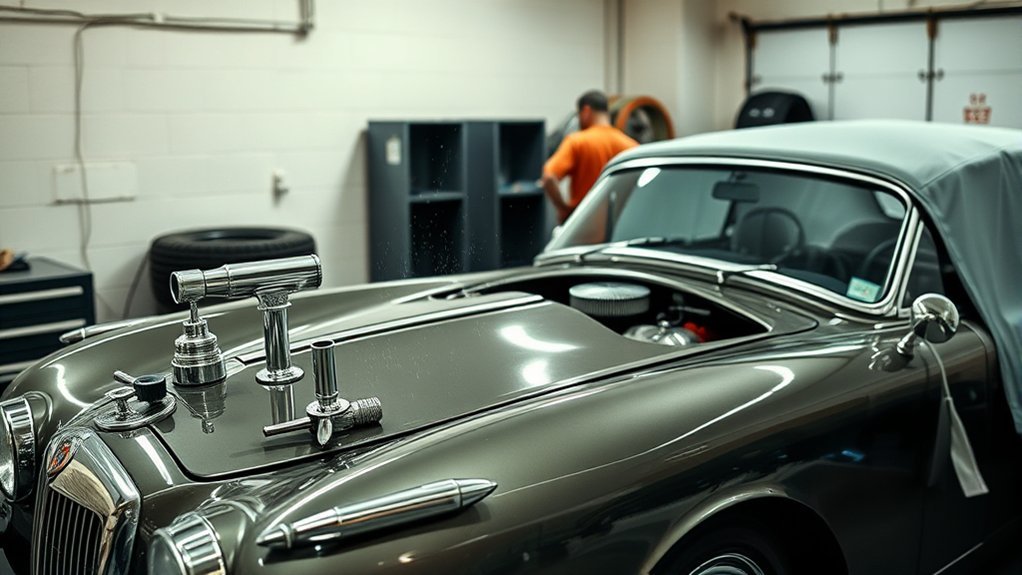
When you’re getting ready to store your classic car for an extended period, it’s crucial to take a few key steps to guarantee it stays in top condition.
Start with a thorough cleaning of both the exterior and interior—remove contaminants, apply wax for protection, and vacuum to prevent odors and mold growth in the storage environment.
Change the oil and filter to eliminate contaminants, and consider using zinc-enriched oil if your classic car has an older engine.
Fill the fuel tank and add a stabilizer, running the engine briefly to circulate it.
Disconnect the battery or connect a trickle charger to maintain its charge.
For tire maintenance, elevate the car on tire cushions or ramps to avoid flat spots, and slightly over-inflate the tires before storage.
These steps will help guarantee your classic car emerges ready to hit the road when you’re ready!
How to Pick the Best Storage Spot for Your Classic Car?
Storing your classic car properly goes beyond just preparing it for downtime; selecting the right storage spot is equally important.
Consider these key factors when choosing your storage facility options:
- Climate Control: Look for a facility that maintains temperatures between 50-70°F and humidity levels at 40-50%. This prevents moisture-related damage and rust.
- Security Features: Confirm the location has surveillance cameras, gated access, and adequate lighting to protect your prized possession from theft and vandalism.
- Accessibility: Select a spot that’s easy to reach for regular checks and maintenance. You’ll want to keep an eye on your vehicle’s condition.
Best Practices for Covering and Protecting Your Vehicle
When it comes to protecting your classic car, choosing the right cover is crucial.
A breathable, custom-fitted cover keeps dust and debris at bay while allowing air circulation to prevent moisture buildup.
Regularly maintaining your cover guarantees it stays in good shape and continues to safeguard your vehicle from the elements.
Choosing The Right Cover
Choosing the right cover for your classic car is essential for ensuring its protection and longevity. You want to keep your pride and joy safe, and the right cover can make all the difference. Here are some best practices to follow:
- Select breathable cover materials like cotton or high-quality synthetics to prevent moisture buildup, which can lead to mold and corrosion.
- Avoid plastic covers that trap moisture, damaging your car’s paint and finish over time.
- Opt for a custom fit to reduce wind flapping, minimizing the risk of chafing and scratches.
Regular Cover Maintenance Tips
Once you’ve selected the right cover for your classic car, maintaining it becomes essential for continued protection and longevity. Use a breathable cover to prevent moisture buildup, and regularly clean it to maintain its effectiveness. Aim to clean your cover every few months, depending on your environment. Inspect for critter activity and verify it’s grit-free before placing it on your vehicle.
Here’s a quick guide:
| Cleaning Task | Frequency |
|---|---|
| Inspect for critters | Monthly |
| Clean cover material | Every 2-3 months |
| Check for grit | Before covering car |
| Store in cool, dry place | Always |
Avoid plastic covers; they can trap moisture. Follow these tips for maximum protection!
Why Regular Inspections Matter During Storage
Regular inspections during storage are essential for maintaining the health of your classic car, as they help you catch potential issues before they escalate.
By establishing a consistent inspection frequency, you can protect your investment and guarantee it’s ready to hit the road when you are.
Here’s a quick inspection checklist to guide you:
- Fluid Levels: Check oil and coolant to prevent deterioration during storage.
- Tires: Inspect for proper inflation and condition to avoid flat spots.
- Rust and Corrosion: Look for any signs that could compromise your vehicle’s integrity.
Documenting your findings is key, as it creates a maintenance history that adds value if you ever decide to sell.
Regular inspections not only preserve your classic car’s beauty and function but also provide peace of mind, knowing you’ve taken proactive steps to keep it in top shape.
Common Issues to Look For Before Seeking Professional Help for Classic Car Maintenance
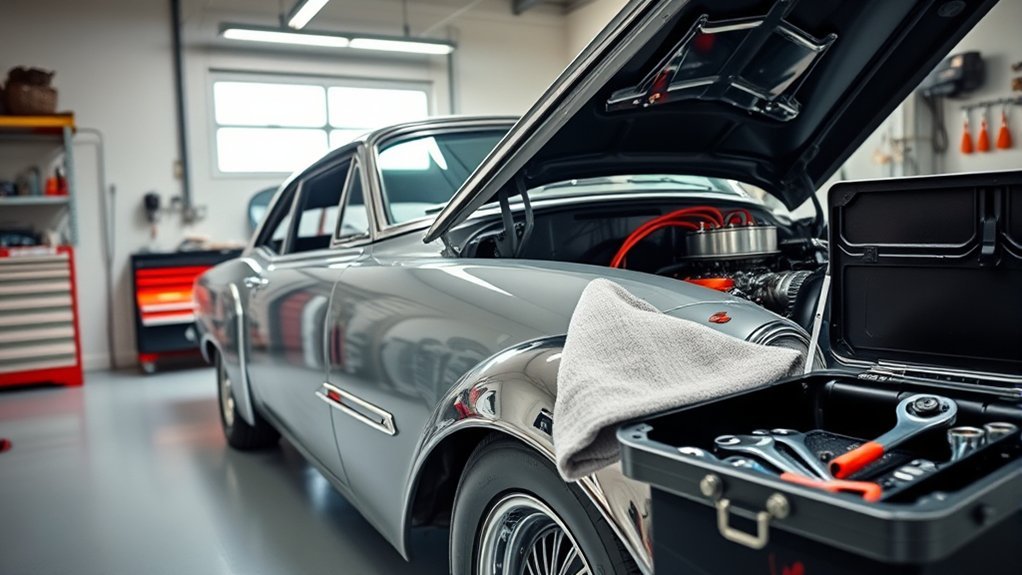
Before diving into professional maintenance, it’s important to know the common issues that might arise with your classic car. Start with a thorough rust inspection, focusing on the undercarriage and wheel wells, as these areas often suffer from moisture and road debris exposure.
Next, check all fluid levels—oil, coolant, and brake fluid—to make sure they’re functioning at their best and free from contamination, which could cause major failures.
Don’t overlook your tires; examine their condition for proper inflation and signs of dry rot. Flat spots can develop from prolonged storage, affecting performance.
Additionally, look for any signs of critters inside the vehicle, like droppings or chewed materials, indicating a pest problem.
Finally, verify that all electrical components, such as lights and indicators, function properly. Addressing these issues early can save you from costly repairs and get you back on the road with confidence.
Preparing Your Classic Car for a Safe Return to the Road
After identifying potential issues with your classic car, it’s time to prepare it for a safe return to the road. Embrace the thrill of driving again by following these essential steps:
- Conduct a thorough inspection: Check the brakes, electrical system, and tires to guarantee everything’s functioning properly.
- Check and top off all fluid levels: Fresh oil, coolant, and brake fluid are critical for performance and safety.
- Start with short, low-speed drives: This allows you to gradually reintroduce the car to movement, honing your driving techniques while identifying any lingering issues.
Don’t forget to clean both the interior and exterior of your car; it enhances visibility and preserves aesthetics.
Frequently Asked Questions
How Often Should I Check on My Car During Storage?
You should check your car in storage every month. Use these inspection tips: look for leaks, check tire pressure, and guarantee the battery’s charged. Regular storage frequency helps maintain your vehicle’s condition and prevents future problems.
Can I Store My Classic Car in a Garage With Other Vehicles?
Storing your classic car in a garage with other vehicles can be like hosting a grand ball. Just guarantee proper garage organization for vehicle protection, keeping your prized possession safe and easily accessible among its companions.
Should I Use a Fuel Stabilizer Before Storage?
Yes, using a fuel stabilizer before storage is essential. It helps prevent fuel degradation, ensuring your engine starts smoothly later. This simple step enhances your storage preparation, keeping your classic car in top shape for future drives.
Is It Necessary to Disconnect the Battery Every Time?
You don’t have to disconnect the battery every time, but for ideal battery maintenance and storage safety, it’s wise to do so if your car will sit idle for extended periods. Your ride deserves care!
What Are the Best Practices for Maintaining Tires While Stored?
To maintain your tires while stored, guarantee proper tire pressure and consider rotating them occasionally. This prevents flat spots, keeps the rubber flexible, and helps you enjoy a smooth ride when you’re ready to hit the road.
Conclusion
In the dance between preservation and neglect, your classic car deserves the spotlight. Proper maintenance before storage guarantees it remains a gem, not a forgotten relic. As you prepare for its eventual return to the road, remember that a little effort today can yield big rewards tomorrow. Regular checks and thoughtful care can transform a dusty garage find into a stunning ride, ready to turn heads once again. Your classic’s journey isn’t over; it’s just paused, waiting for you.






Leave a Reply