

When choosing between gross and net horsepower ratings for classic cars in 2026, focus on net ratings. They provide a realistic view of performance under real-world conditions, unlike the inflated gross ratings of the past. While gross horsepower can be nostalgic, net horsepower offers better practicality and efficiency. Understanding these differences can impact your buying decision, overall value, and driving experience. Discover the key factors to take into account to make an informed choice.
The Evolution of Horsepower Ratings: Understanding the Basics
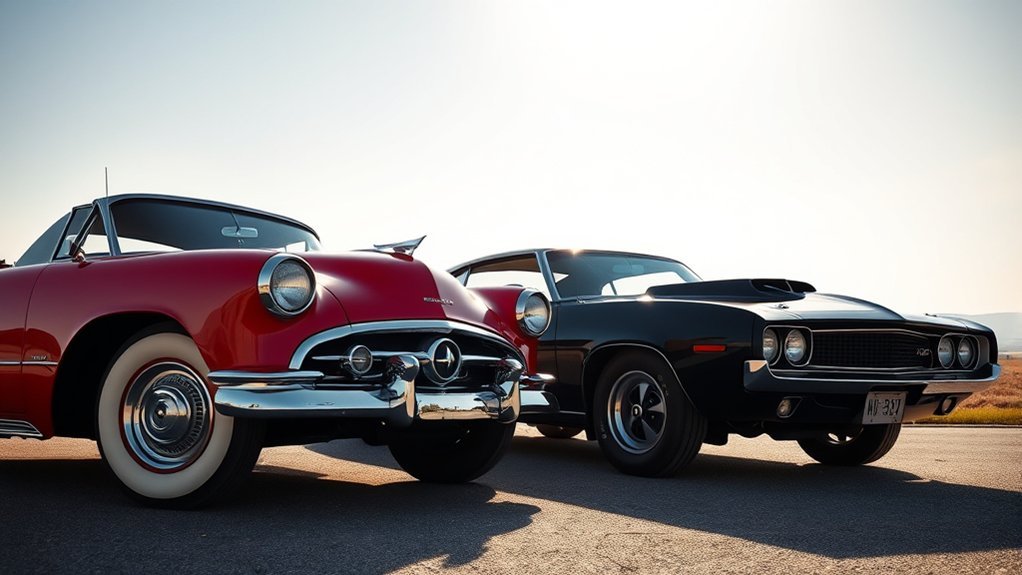
As you explore the world of classic cars, understanding horsepower ratings is crucial, especially given their evolution over the decades.
Initially, horsepower was measured as gross ratings, reflecting maximum output under ideal conditions. However, since 1971, the Society of Automotive Engineers (SAE) has shifted the focus to net horsepower, which factors in real-world conditions, including accessories and atmospheric influences. This change aimed to provide a more accurate representation of engine performance.
For instance, the 1970 Corvette LT-1 showcased this shift, dropping from 370 gross hp to 255 net hp by 1972 due to revised testing methods. The difference can be striking, like the 455 engine in the Pontiac Grand Prix, rated at 325 gross hp but only 260 net hp.
The transition from gross to net horsepower reveals significant declines, exemplified by the 1970 Corvette LT-1 and Pontiac Grand Prix engines.
With modern rating standards established in 2005, tighter protocols guarantee that horsepower evolution reflects true performance, liberating enthusiasts from misleading figures.
Misleading Aspects of Gross Horsepower Ratings
While gross horsepower ratings might seem impressive on paper, they often paint a misleading picture of an engine’s true capabilities. These ratings, typically higher than net figures, represent a theoretical maximum output measured without considering real-world conditions or accessories.
For instance, consider the Pontiac Grand Prix‘s 455 engine: it boasted 325 gross hp but only delivered 260 net hp, showcasing significant consumer confusion. This discrepancy arises from misleading marketing practices in the 1960s and early 1970s, where manufacturers exploited ideal conditions to inflate figures.
Many pre-1971 American cars likely had lower actual power than advertised, as non-standard ignition curves contributed to these exaggerated claims. Additionally, the absence of a reliable conversion formula between gross and net horsepower complicates comparisons, with discrepancies sometimes exceeding 25%.
Understanding these misleading aspects is vital for discerning classic car enthusiasts seeking genuine performance.
The Importance of Net Horsepower Ratings Explained
Understanding net horsepower ratings is essential for anyone looking to grasp a vehicle’s real-world performance. The significance of net horsepower lies in its ability to account for engine accessories and reflect realistic driving conditions.
This rating, established by the Society of Automotive Engineers in 1972, offers a more accurate depiction of what you can expect from your vehicle daily. Unlike gross horsepower, which presents a theoretical maximum, net horsepower gives you the actual power that reaches the wheels, enhancing consumer awareness and informed decision-making.
Consider the 1970 Chevrolet Corvette LT-1; its gross rating of 370 horsepower plummeted to 255 net horsepower by 1972, illustrating how testing standards impact perceived performance.
Key Differences Between Gross and Net Horsepower Ratings

Knowing the difference between gross and net horsepower ratings can greatly impact your understanding of a classic car’s performance. Gross horsepower often misleads enthusiasts with inflated numbers, as it measures output under ideal conditions without accessories.
In contrast, net horsepower provides a more realistic figure, factoring in all engine components and actual operating conditions. This shift to net ratings, initiated in 1971 with SAE standards, highlights net horsepower accuracy, ensuring consumers know what to expect.
A common misconception is that net horsepower is simply gross horsepower multiplied by 0.8, which can oversimplify the complexity of performance. For instance, the Pontiac Grand Prix’s 455 engine dropped from 325 gross to 260 net horsepower, illustrating how real-world conditions affect power.
How to Pick a Classic Car Based on Horsepower
When it comes to choosing a classic car, horsepower ratings play a significant role in your decision-making process.
Don’t fall for horsepower myths; understanding the difference between gross and net figures is essential. For instance, a 1971 Pontiac Grand Prix may boast 325 gross horsepower but only delivers 260 net horsepower, considerably affecting performance.
Focus on net ratings, especially for cars manufactured post-1972, as they provide a more realistic view of engine capabilities.
Consider how engine modifications can boost or alter horsepower—small tweaks can lead to substantial performance changes.
Also, keep an eye on emissions regulations; many 1970s classics saw horsepower declines due to smog controls, impacting their appeal.
Pros and Cons of Choosing Gross vs. Net Horsepower Cars
When you’re choosing between gross and net horsepower cars, understanding the accuracy of power ratings is vital for real-world performance.
Gross figures might look enticing, but they often misrepresent what you’ll actually experience on the road, especially in classic cars.
Plus, considering how these ratings affect value and resale can help you make a smarter investment in your automotive future.
Accuracy of Power Ratings
While enthusiasts often gravitate toward the allure of gross horsepower ratings, understanding the distinctions between gross and net horsepower is essential for making informed choices about classic cars.
Here’s why accuracy in power measurement matters:
- Real-World Relevance: Net horsepower provides a clearer picture of performance under standard operating conditions, incorporating necessary components.
- Enhanced Reliability: Net ratings consider factors like ignition timing and exhaust systems, making them more applicable for everyday driving experiences.
- Comparative Analysis: The difference in ratings, like the 1970 Pontiac Grand Prix’s 325 gross hp versus 260 net hp, highlights the importance of accuracy standards in evaluating true vehicle power.
Real-World Performance Considerations
Choosing between gross and net horsepower cars can greatly impact your driving experience and satisfaction.
Gross horsepower ratings often paint an inflated picture of performance, measured under ideal conditions without accounting for real-world factors like accessories. This can lead to unrealistic performance expectations.
For instance, the 1970 Pontiac Grand Prix’s 325 gross hp starkly contrasts with its 260 net hp.
Net horsepower ratings, introduced in the early ’70s, reflect actual engine output, capturing elements like ignition timing and exhaust systems, providing a more reliable gauge of real-world performance.
Stricter SAE standards since 2005 further enhance the precision of these ratings, empowering you to make informed choices that align with your desire for true automotive liberation.
Value and Resale Implications
The difference in horsepower ratings can greatly influence a classic car’s market value and resale potential.
Choosing between gross and net horsepower vehicles involves understanding collector preferences and developing effective resale strategies. Here are three key points to reflect upon:
- Nostalgia vs. Practicality: Gross-rated cars often evoke nostalgia, appealing to collectors, while net-rated models attract buyers valuing efficiency.
- Restoration Value: Vintage vehicles with gross ratings can enhance their market value when restored, making them sought-after projects.
- Long-term Trends: As consumer preferences shift, net horsepower cars may hold better long-term resale prospects, appealing to a broader audience seeking reliability.
Ultimately, your choice will depend on what you value in a classic car—heritage or modern practicality.
Future Trends in Horsepower Ratings: What Buyers Should Know

As the automotive landscape evolves, understanding future trends in horsepower ratings becomes essential for buyers steering through both classic and modern vehicles. By 2026, stricter SAE standards will enhance transparency in horsepower figures, focusing on net ratings, which reflect real-world performance. With the rise of electric vehicle performance, torque delivery importance can’t be overlooked; this shift influences how you compare power across different vehicle types.
Here’s a quick overview of key trends:
| Trend | Implication |
|---|---|
| Stricter SAE Standards | More accurate net horsepower figures |
| Electric & Hybrid Focus | Emphasis on torque and efficiency |
| Third-Party Testing | Reliable performance metrics |
| Gross vs Net Ratings | Better understanding of performance |
As you navigate your choices, prioritize net horsepower ratings to align with contemporary efficiency and emissions standards, ensuring your classic car experience remains liberating and fulfilling.
Frequently Asked Questions
What Is the Difference Between Net and Gross Horsepower Ratings?
Gross horsepower measures an engine’s theoretical peak output without accessories, while net horsepower reflects real-world performance with all components. Understanding this difference helps you gauge true engine performance and make informed decisions when choosing vehicles.
What Is More Important, HP or Torque?
Torque’s often more important than horsepower for real-world driving. It enhances acceleration and responsiveness, especially in lower RPMs. Understanding these performance metrics helps you appreciate engine characteristics that truly elevate your driving experience.
When Did They Switch From Gross to Net HP?
You’ll find the horsepower evolution shifted from gross to net ratings in 1972. This change aimed to enhance engine testing accuracy, ensuring you get genuine performance figures that reflect real-world driving conditions.
Which Engine Is Better Between 22 Bhp at 4000 Rpm and 17 Bhp at 7000 Rpm?
You’ll likely prefer the 22 bhp at 4000 rpm for everyday driving. Its engine performance at lower RPMs offers better acceleration and responsiveness, while the 17 bhp at 7000 rpm suits high-revving performance enthusiasts.
Conclusion
So, as you plunge into the classic car market in 2026, remember: gross horsepower is like a tall tale from your grandpa—impressive but probably exaggerated. Net horsepower, on the other hand, is the sober friend keeping it real. Choosing between the two is like picking between a flashy sports car and a reliable sedan; one dazzles, while the other gets you there without drama. Ultimately, it’s your ride—just make sure it’s got the muscle to match your dreams, not just your ego!







Leave a Reply