
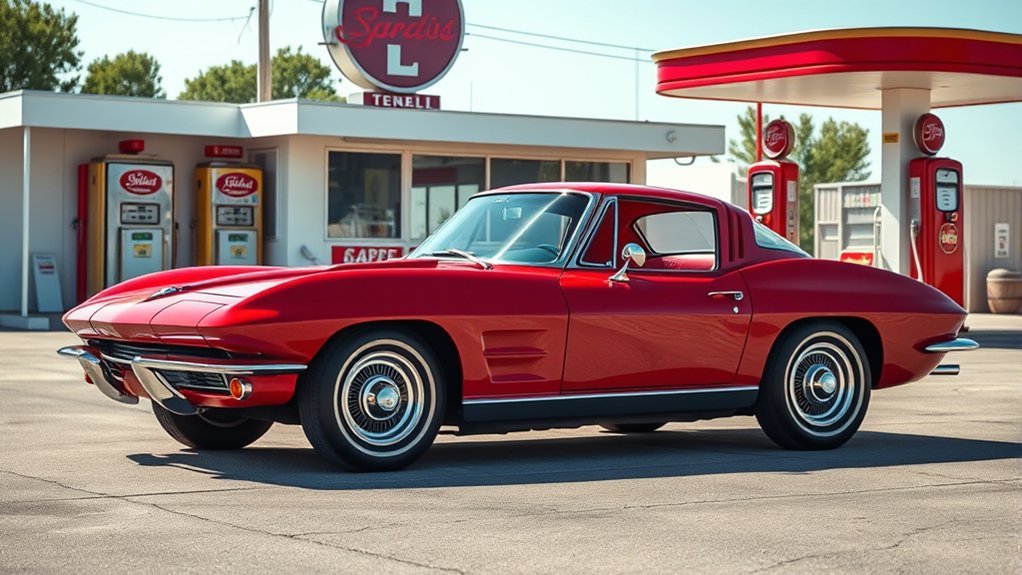
The 1960s revolutionized car design with a focus on aesthetics, innovation, and performance. Automakers embraced longer, lower profiles, creating iconic models like the Ford Mustang and Chevy Corvette that symbolized freedom. Safety features like seat belts became standard, while muscle cars boasted impressive horsepower. Japanese manufacturers emerged, introducing compact, fuel-efficient models that reshaped consumer perceptions. Gender and racial representation lagged behind in design roles, revealing a need for inclusivity. Discover how these elements intertwined into a dynamic automotive culture.
The Evolution of Car Design in the 1960s
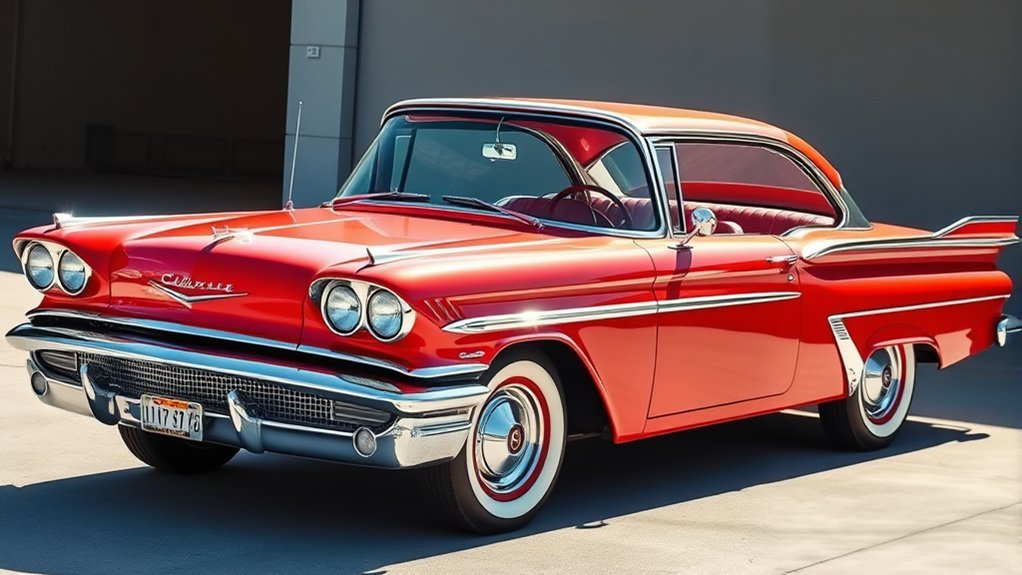
As the 1960s unfolded, car design underwent a remarkable transformation, driven by changing consumer preferences and technological advancements. You’ll notice design trends shifted dramatically towards longer, lower, and wider vehicles, prioritizing aesthetics over engineering. Iconic models like the Ford Mustang and Chevy Corvette emerged, capturing the spirit of the era.
Simultaneously, a growing awareness of safety led to the standardization of features like seat belts by 1964, reflecting a new consumer demand for protection alongside style.
Amid increasing competition from European and Japanese automakers, American manufacturers began to rethink their production methods and strategies, further shaping design trends.
The rise of compact cars, such as the Ford Falcon and Chevrolet Corvair, illustrated shifting consumer preferences towards smaller, more efficient vehicles. Innovations like front-wheel drive systems, seen in the Oldsmobile Toronado, marked significant advancements, blending technology and style in an evolving automotive landscape.
Innovative Features That Defined 1960s Cars
In the 1960s, you’ll notice a profound shift in car design centered around safety and performance, as manufacturers began incorporating mandatory seat belts and padded dashboards to enhance passenger protection.
This era also marked the introduction of powerful engines, like the 360 HP Chrysler 300 K, reflecting a growing demand for speed and efficiency.
Together, these innovations not only transformed the driving experience but also set new standards for what consumers expected from their vehicles.
Safety Innovations in Cars
While the 1960s ushered in a wave of design innovations in the automotive industry, it was the emphasis on safety that truly transformed cars during this decade. You’d notice features like dual brake systems and collapsible steering columns, essential in reducing injuries during crashes.
By 1964, seat belts became standard, reflecting a growing awareness of traffic fatalities. New safety regulations also mandated improvements in windshield washers and backup lights, enhancing visibility and driver awareness.
The introduction of the Volvo 144 in 1966 showcased advanced innovations like crumple zones and disc brakes, setting new benchmarks. Padded dashboards and multiple windshield wipers further illustrated the decade’s commitment to passenger safety, ensuring that comfort and protection flourished, not just aesthetics.
Performance Enhancements and Engines
The 1960s not only revolutionized safety features in cars but also marked a period of remarkable performance enhancements and engine innovations.
During this decade, horsepower trends soared, with outputs ranging from 95 HP in the Chevrolet Corvair 500 to an impressive 360 HP in the Chrysler 300 K.
You witnessed the birth of the Oldsmobile Toronado, the first front-wheel-drive car since 1937, optimizing handling and space.
Engine advancements also included lighter sodium-sulfur batteries, paving the way for efficient electric vehicles.
High-performance muscle cars like the 1967 Chevy Corvette Sting Ray and 1968 Ford Mustang epitomized speed and style, embodying a spirit of liberation.
The combination of power and innovation defined this electrifying era in automotive history.
Top Iconic Muscle Cars of the 1960s
When you think about the muscle cars of the 1960s, iconic models like the Chevy Corvette Sting Ray and Ford Mustang immediately come to mind, each representing a thrilling blend of performance and style.
These vehicles not only delivered impressive horsepower but also shaped automotive culture, leaving a lasting legacy that continues to influence car enthusiasts today.
As we explore their legendary features and cultural impact, it becomes clear how these muscle cars defined an era and transformed the automotive landscape.
Legendary Muscle Car Models
As the 1960s unfolded, a revolution in automotive design and performance captured the hearts of car enthusiasts, leading to the birth of legendary muscle cars that defined a generation.
These iconic models showcased innovative muscle car technology and stunning automotive aesthetics, offering a blend of power and style that was irresistible.
- 1967 Chevy Corvette Sting Ray: Sleek design, over 140 mph top speed.
- 1968 Ford Mustang: Cultural icon, over 400,000 units sold in debut year.
- 1966 Dodge Charger: Distinctive fastback design, high-performance options.
- Pontiac GTO (1964): Lightweight body paired with a robust V8 engine.
- 1968 Plymouth Road Runner: Affordable performance, exhilarating 426 Hemi engine.
These cars not only represented speed but also embodied the spirit of freedom and rebellion that defined the era.
Performance and Power Features
While muscle cars of the 1960s are often celebrated for their striking designs, it’s their performance and power features that truly define their legacy. Each model brought fierce engine performance, igniting a horsepower competition among manufacturers.
Take the 1967 Chevy Corvette Sting Ray, boasting a 427 cubic inch V8 engine with up to 435 horsepower. The 1968 Ford Mustang GT followed suit, offering a powerful 390 cubic inch V8.
Meanwhile, the Plymouth Road Runner made performance accessible with its 383 cubic inch V8 engine, delivering 335 horsepower. The Dodge Charger, equipped with the fearsome 426 Hemi, achieved a sub-6-second 0-60 mph time.
Don’t forget the Pontiac GTO, which laid the groundwork with its 389 cubic inch V8, generating 335 horsepower.
Cultural Impact and Legacy
Muscle cars of the 1960s not only revolutionized automotive design but also became cultural icons that embodied the spirit of an era marked by rebellion and individualism.
These vehicles fueled a muscle car culture that celebrated freedom and performance, leaving a lasting legacy.
- The 1967 Chevy Corvette Sting Ray defined sleekness and power.
- The 1968 Ford Mustang emerged as a symbol of youthful rebellion.
- The Plymouth Road Runner showcased impressive horsepower that attracted enthusiasts.
- The Chevrolet Camaro, introduced in 1966, challenged the Mustang’s dominance.
- Innovations like seat belts reflected a shifting awareness of road safety amidst the automotive rebellion.
Together, these cars shaped not just transportation but also personal identity during a transformative decade in American history.
How British Luxury Cars Redefined Performance in the 1960s
The 1960s marked a transformative era for British luxury cars, as manufacturers like Jaguar and Aston Martin not only elevated performance standards but also redefined what luxury meant in the automotive world.
The Jaguar E-Type, with its stunning design aesthetics, reached a top speed of 150 mph in 1961, merging beauty and luxury performance seamlessly.
Meanwhile, the Aston Martin DB5, famously linked to James Bond, boasted a powerful 4.0-liter engine delivering 282 horsepower, embodying the era’s drive for high-performance luxury.
Rolls Royce reinforced this trend with the Silver Shadow, introduced in 1965, showcasing unparalleled craftsmanship and smooth rides that appealed to the affluent.
Even the compact Mini revolutionized small car design with its innovative front-wheel-drive layout, influencing future vehicles.
Japanese Car Design Innovations in the 1960s: Breaking Into the U.S. Market
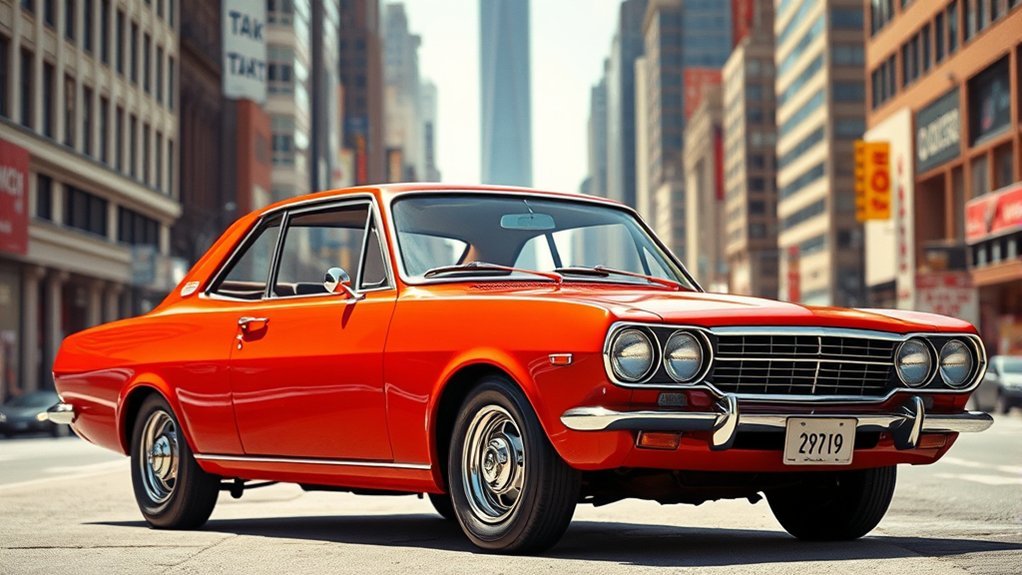
As British luxury cars dominated the performance landscape in the 1960s, Japanese automakers began carving out their niche in the U.S. market with innovative designs that emphasized efficiency and reliability.
Their unique market strategies and adherence to Japanese aesthetics allowed them to overcome initial challenges and make significant inroads.
- Toyota’s production rose to over 300,000 vehicles per year by 1971.
- The Datsun 240Z launched in 1969, selling over 30,000 units in its first year.
- Honda’s T360 pickup truck debuted in 1963, paving the way for future innovations.
- Compact models like the Toyota Corolla gained popularity for their fuel efficiency.
- Perceptions of low quality shifted as consumers recognized the reliability of Japanese cars.
These advancements not only challenged the status quo but also resonated with budget-conscious buyers, marking a pivotal shift in the automotive landscape.
How Design Shaped Automotive Culture in the 1960s?
Automotive design in the 1960s revolutionized car culture, transforming vehicles into symbols of personal identity and freedom. The shift toward longer, lower, and wider cars, embodied by the Ford Mustang and Chevy Corvette Sting Ray, reflected a new focus on design aesthetics that prioritized style and personal expression.
The 1960s redefined automotive design, turning cars into icons of freedom and personal expression, led by the Ford Mustang and Chevy Corvette Sting Ray.
These muscle cars, with their aggressive styling and powerful engines, became cultural symbols of rebellion, resonating with a generation seeking liberation from societal norms.
Safety innovations, like seat belts and padded dashboards, began to emerge, indicating a growing awareness of driver and passenger safety that influenced design choices.
Meanwhile, British luxury brands catered to affluent consumers, while Japanese automakers introduced compact, economical vehicles, diversifying the market landscape.
Despite the male-dominated design narrative, the decade highlighted the importance of inclusivity, pointing towards a future where diverse perspectives could shape automotive culture and redefine cultural symbolism in car design.
Gender and Racial Representation in 1960s Car Design
Amid the vibrant transformation of car culture in the 1960s, significant gaps in gender and racial representation within the design industry became apparent.
Despite women making up 62% of new car purchases, female designers were virtually absent. The industry’s racial diversity was equally lacking, illustrated by:
- The presence of only one African-American designer in a prominent film.
- The portrayal of this designer as the “exotic other,” reducing contributions from designers of color.
- Media narratives that showcased affluent designers, disconnecting from less affluent consumers.
- Dated, homophobic sentiments in industry discussions, mirroring the era’s social norms.
- A pressing need for broader inclusion, reflecting the practical needs of diverse consumers.
Such disparities highlight the urgent call for change, emphasizing that the future of automotive design must embrace gender and racial diversity to truly resonate with all drivers.
Safety Innovations and Their Impact on 1960s Automotive Design
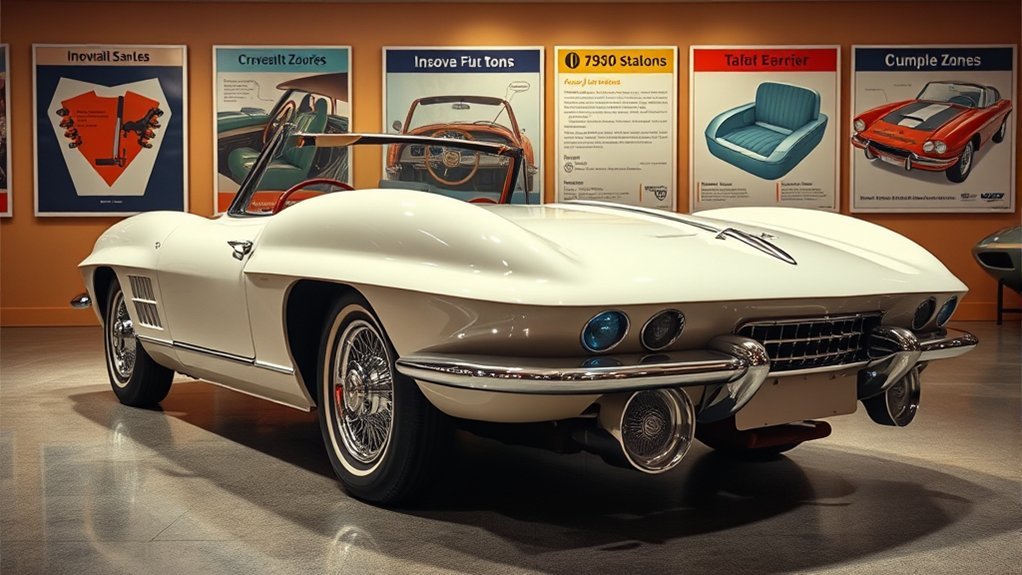
While the 1960s ushered in a new era of design aesthetics, it was the urgent demand for safety innovations that fundamentally reshaped the automotive landscape. The staggering weekly traffic fatalities prompted the government to impose strict safety regulations, compelling manufacturers to rethink their design principles. By 1964, seat belts became standard, signaling a shift toward prioritizing occupant safety.
Features like backup lights, multiple windshield wipers, and padded dashboards emerged, enhancing overall vehicle protection. Moreover, the introduction of crumple zones and energy-absorbing materials laid the groundwork for future automotive designs. Dual-cylinder brake systems and collapsible steering columns further illustrated the industry’s commitment to improving safety.
These advancements not only transformed how cars were designed but also reflected a growing societal awareness of the need for safer travel. Ultimately, the 1960s set a precedent for integrating safety into automotive design, fostering liberation through enhanced protection on the road.
Collecting and Preserving Classic 1960s Cars
As the 1960s marked a significant turning point in automotive safety, it also laid the groundwork for a burgeoning interest in collecting and preserving classic cars from the era.
The classic car market for these vehicles is thriving, with models like the Ford Ranchero fetching $15,000 to $30,000.
To enhance your collecting experience, consider these tips:
- Utilize online platforms like Hemmings and enthusiast forums for listings and connections.
- Embrace restoration techniques; simpler mechanics make repairs accessible.
- Join collector communities to exchange knowledge and resources.
- Attend local classic car auctions for unique finds and rare vehicles.
- Understand that iconic models, like the Chevy Impala and Ford Thunderbird, often appreciate in value.
Frequently Asked Questions
What Were the Major Influences on 1960S Car Design Aesthetics?
In the 1960s, you’d notice streamlined forms and vibrant colors dominating car design. These elements reflected a desire for freedom and innovation, resonating with the cultural shifts of the era and influencing your aesthetic preferences.
How Did Consumer Preferences Shape Car Designs in the 1960S?
Consumer preferences in the 1960s drove designers to prioritize safety features and fuel efficiency. You wanted cars that felt secure and economical, pushing manufacturers to innovate and cater to your desires for both style and practicality.
What Role Did Advertising Play in 1960S Car Marketing?
In the 1960s, advertising campaigns revolutionized car marketing, promising freedom and adventure. You’d find slick marketing strategies appealing to your desires, cleverly masking the reality that you were just buying a shiny metal box on wheels.
Which Automotive Shows Were Significant in the 1960S?
The Detroit Auto Show and major European shows greatly shaped automotive trends in the 1960s. You’d see innovation showcased, influencing designs and consumer desires, ultimately liberating the industry from traditional constraints and sparking creative freedom.
How Did Global Events Impact Car Design Trends in the 1960S?
Global events inspired cultural shifts and technological advancements, pushing you to embrace innovative materials and designs. The era’s social movements influenced aesthetics, prompting automakers to reflect freedom and individuality in their vehicles, ultimately reshaping car design.
Conclusion
To sum up, the 1960s were a transformative era for car design, blending innovation with cultural shifts. From the roar of muscle cars to the sleek lines of British luxury, each vehicle reflected society’s aspirations and anxieties. As you cruise through this decade’s history, you’ll appreciate how these designs not only shaped the automotive landscape but also echoed the dynamic spirit of the times. Embracing these classic cars today feels like tapping into a nostalgic highway of progress and creativity.







Leave a Reply