
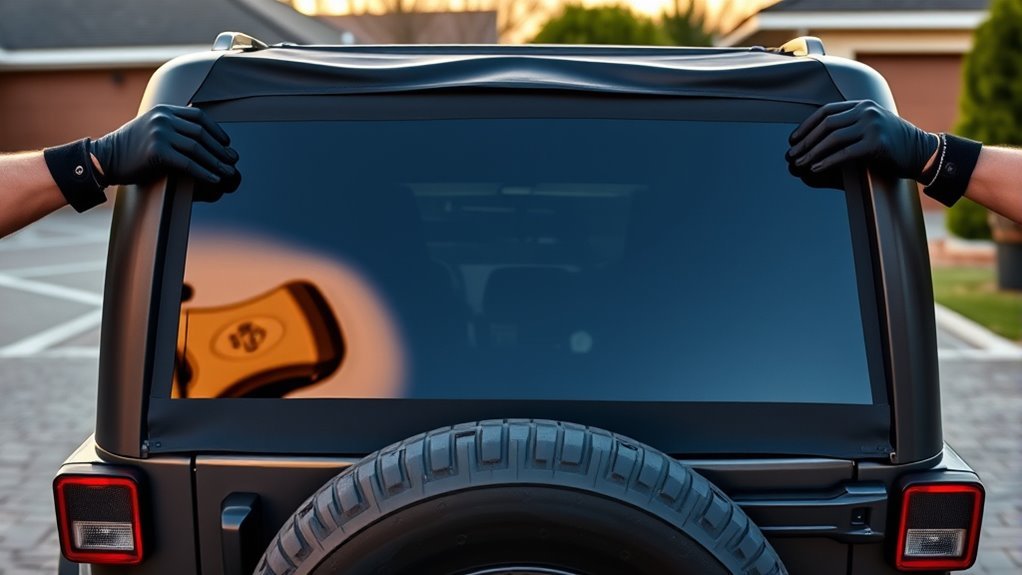
You can install a hardtop on a soft-top Jeep, but you’ll need the correct hardtop mounting hardware, wiring harnesses, and possibly TIPM reprogramming to enable wipers, defroster, and heated mirrors. Confirm factory hardtop provisions for your model year, remove the soft top completely, and follow the bolt sequence and torque specs for proper sealing. Expect extra parts, potential professional help, and storage considerations—keep going to see the compatibility checks, parts list, and step-by-step tips.
Hardtop on a Soft-Top Jeep: Short Answer & When It Makes Sense
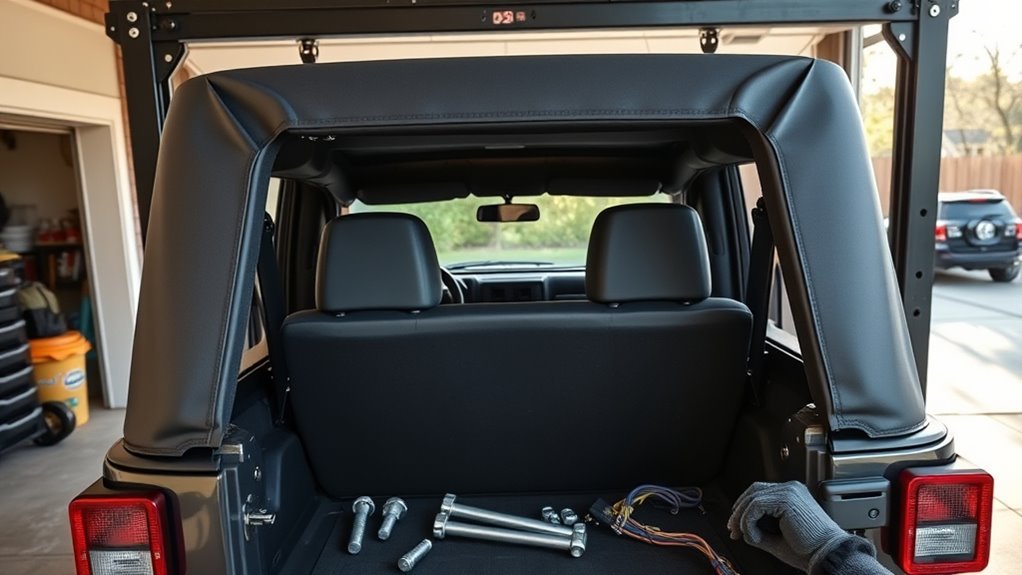
While you can fit a hardtop onto a Jeep that came with a soft top, it’s not a simple bolt-on swap—you’ll need additional hardware (wiring harness, washer pump, controls) and likely TIPM reprogramming to enable functions like the rear defroster. The short answer: yes, but plan for parts and programming. You’ll confront missing hardtop connectors on soft-top models, so factor labor and electrical integration into your decision.
Choose a hardtop when you prioritize hardtop benefits—thermal insulation, reduced cabin noise, and secure weatherproofing—especially if you want a liberated, year-round vehicle that won’t surrender comfort to cold or highway roar. Retain a soft top if you value rapid removal and open-air freedom despite soft top drawbacks like poorer insulation and higher noise. Installation complexity depends on original factory configuration; rigs with hardtop options are easier. Make your move when the performance gains and durability justify the added installation and TIPM work.
Checking Compatibility: Required Factory Options and Gotchas
Because soft-top Jeeps often lack factory hardtop wiring and mounting provisions, you’ll need to verify specific options before you buy or start the swap. Check whether your Jeep has the factory options that provision hardtop connectors: roof mounting points, rear wiper wiring, and washer pump/controls. If those aren’t present you’ll face added installation challenges — harnesses, pumps, and control modules must be sourced and fitted.
Confirming factory options cuts complexity. Also note you can’t install a hardtop over an existing soft top; full removal is required. Assess whether the vehicle was originally built for a hardtop — those units generally accept the hardtop with fewer modifications.
| Factory Mounts | Wiring Present | Expected Effort |
|---|---|---|
| Yes | Yes | Low |
| Yes | No | Medium |
| No | No | High |
Plan for parts and labor accordingly. Stay deliberate and free: choose a configuration that minimizes retrofit work and preserves your ability to revert or upgrade.
Parts & Wiring: Harnesses, Wiper/Defroster, TIPM Reprogramming
If your Jeep started life as a soft-top, expect to source a dedicated hardtop wiring harness, stalk switch, washer hose and pump, and related connectors before you bolt the top on. You’re not just adding metal — you’re restoring circuits and functions that the soft-top omitted. Track down correct wiring harnesses for your model; JK kits are scarce so verify part numbers for heated mirrors, rear wiper and defroster. Plan for connectors that mate to body and hardtop bulkhead points. After hardware is fitted, schedule TIPM reprogramming to enable the rear wiper, defroster and any new accessory feeds; without it those circuits may remain inert. You’ll also want a test plan: continuity, power with key on, and function validation.
- Dedicated hardtop wiring harness with correct pinout
- Stalk switch and rear wiper motor/connectors
- Washer hose, pump and reservoir tie-in
- Heated-mirror wiring and specific JK part numbers
- TIPM reprogramming to enable circuits and scan for faults
Installation Steps: Removal, Fitment, Bolting, DIY vs Pro
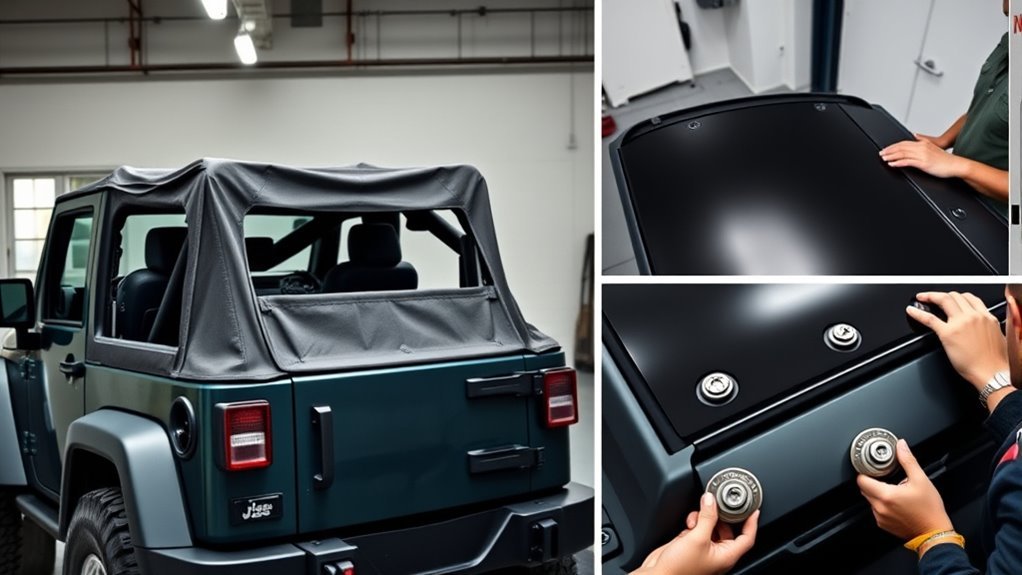
Start by stripping the soft top, door surrounds and corner pieces so the hardtop can seat correctly; keep fasteners organized and note any missing freedom panel latch brackets or bolts you’ll need to source. Use proven removal techniques: unclip, stow, label. Confirm factory hardtop connectors and routing for the wiring harness before you lift.
Fitment demands disciplined alignment tips: center the top, engage rear mounts, then lower front slowly. Have helpers or a lift—hardtops are heavy and unforgiving. Bolt sequence matters: snug rear, then front, torque to spec. Connect the stalk switch, washer hose and defroster wiring last, testing circuits before sealing.
Decide DIY vs pro based on your confidence, tools, and access to hoists. Professionals mitigate risk and guarantee precise fitment; DIY gives freedom but requires meticulous prep.
| Choice | Emotion |
|---|---|
| DIY | Empowerment |
| Pro install | Relief |
| Careful prep | Confidence |
| Proper tools | Control |
| Correct bolts | Liberation |
Costs, Time, and Storage: OEM vs Aftermarket and Hoists
When planning a hardtop swap you’ll weigh upfront cost, time investment, and storage logistics—OEM Mopar three-piece tops run about $2,885 (plus possible shipping delays) while aftermarket panels vary widely in price and build quality, so compare materials, fitment tolerances, and included hardware before buying. You’ll make a clear cost comparison between OEM reliability and aftermarket savings; factor in potential modification time and replacement parts. Seasonal swaps take 30 minutes to 2 hours depending on helpers and hoist use. Hoists like GarageSmart and Harken speed removal and reduce back injury risk, letting you swap tops more often and stay free to choose your setup. Choose storage solutions that protect paint and seals: rolling carts, padded stands, or ceiling hoists preserve the top and simplify reinstallation. Plan for safe handling, minimal downtime, and predictable costs so you can switch configurations on your schedule without sacrificing freedom or finish.
- OEM vs aftermarket: warranty, fit, price
- Hoist types: manual, block-and-tackle, electric
- Time: solo vs two-person swap
- Storage solutions: carts, ceiling hoists
- Ancillaries: padding, covers, fastener kits
Common Problems & Troubleshooting: Leaks, Noise, Scarce Parts
When you fit a hardtop to a soft-top Jeep, start by verifying seal alignment and bracket/hardware completeness to stop leaks before they worsen. Check seams, body-to-top interfaces, and drain paths with a controlled water test, then replace or re-seat weatherstripping and torque fasteners to spec for fixes. For noise, isolate vibration sources—loose panels, wiper motor housing, or deficient trim—and apply targeted dampening, correct mounting, or OEM wiring solutions to restore functionality.
Leak Detection & Fixes
Although hardtops add rigidity and weather protection, they frequently introduce leaks and noise if seals, mounts, or fasteners aren’t correctly installed or have degraded; you’ll want to inspect window seals, body-to-top joints, and all mounting bolts as your first diagnostic steps. Focus on leak prevention and weatherstripping maintenance: pressure-test seams with a garden hose, probe suspected gaps with a moisture meter or tissue, and trace drip paths from roof to interior panels. Replace compressed or cracked seals and use automotive-grade seam sealer on fastener holes. Keep wiring harness access in mind to avoid cutting seals.
- Pressure-test seams with directed water flow
- Inspect and replace compressed weatherstripping
- Torque and thread-lock mounting bolts
- Reseal bolt holes and body joints
- Verify panel drainage paths
Noise Sources & Remedies
Because hardtops change the way your Jeep handles airflow, you’ll still encounter noise issues you must diagnose differently than with a soft top. Hardtops cut fabric flutter and wind noise, giving superior sound insulation and clearer paths to noise reduction. Diagnose sources: gasket gaps, loose panels, and wiring kit openings. Seal gaps with automotive-grade rubber seals, torque fasteners to spec, and use foam tape where panels meet. If scarce wiring kits force aftermarket routing, protect and clip harnesses to eliminate vibration channels.
| Source | Remedy |
|---|---|
| Gasket gaps | Replace seals; use sealant |
| Panel vibration | Tighten bolts; add foam dampers |
| Wiring/holes | Use grommets; secure clips |
You’ll gain quieter freedom with methodical fixes.
Frequently Asked Questions
How Much Does It Cost to Change a Soft Top to a Hardtop Jeep?
Expect roughly $3,500–$5,500 total to switch, depending on hardtop benefits, OEM vs aftermarket parts, painting, wiring, and labor; you’ll reduce soft top maintenance but pay upfront for durability, security, and insulation improvements.
Conclusion
You can, but think like a mechanic: measure, check wiring, and confirm factory prep before you lift a hardtop onto your soft‑top Jeep. Picture a precise puzzle—bolts, harnesses, and seals must align or water, noise, and electrical headaches arrive. If the TIPM needs programming or the wiper/defroster harness is missing, get the parts or a pro. Do the prep, secure fasteners, test systems, and you’ll turn a floppy canvas into a solid, weatherproof shell.




Leave a Reply