
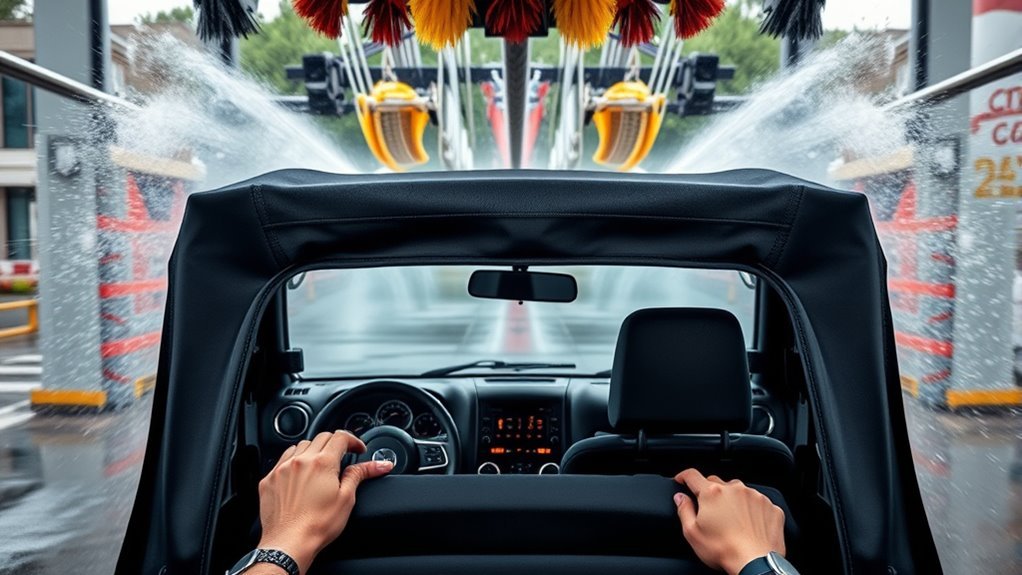
You can take a soft‑top Jeep through some car washes, but choose carefully and prep the top to avoid damage or leaks. Touchless and hand washes are safest; avoid brush-based systems and high‑velocity dryers that can abrade fabric, scratch plastic windows, and strain seals. Check zippers, seams, window edges, and top tension before washing, and use soft‑top cleaners and protectants afterward. If your top shows wear, skip automated washes — keep going for tips on prep, home washing, and maintenance.
Can a Soft‑Top Jeep Go Through a Car Wash? Quick Verdict and Decision Checklist
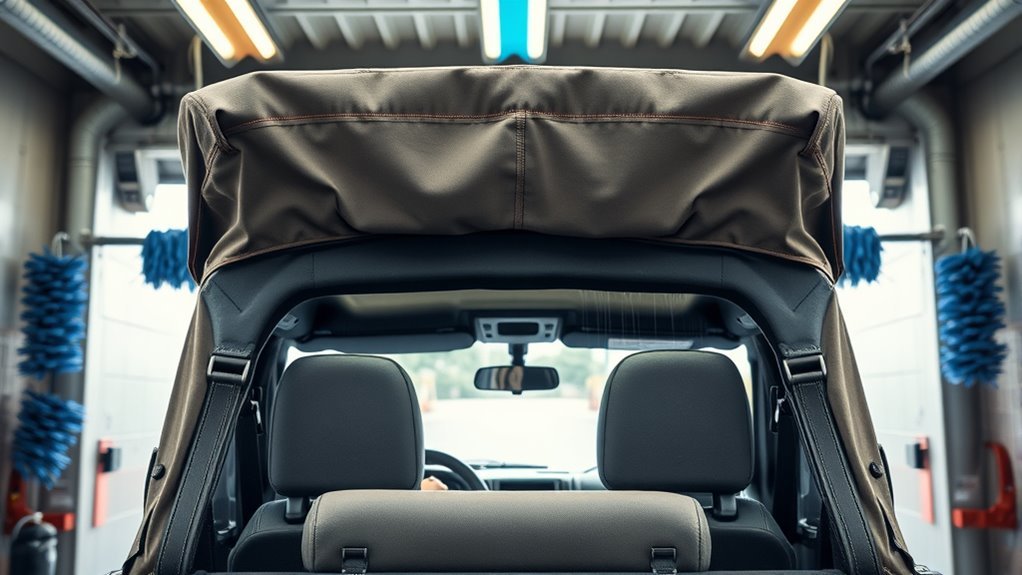
Although manufacturers generally advise against automatic brushes, you can still take a soft‑top Jeep through a car wash if you choose carefully: opt for a touchless wash or hand wash, avoid harsh chemicals and high-pressure settings, and inspect the top and windows afterward for scratches, wax buildup, or leaks. You decide by weighing risk versus convenience. Follow a quick verdict checklist: confirm your top’s material and any manufacturer exclusions; prefer wash alternatives that eliminate brushes; choose gentle, fabric-safe cleaners; decline high-pressure nozzle options that can strain seams or force water past seals. After washing, immediately inspect seams, zippers, and windows for damage or residue; address wax buildup with a mild, approved remover to prevent clouding. If you value longevity and freedom from constant repairs, prioritize hand washing or touchless systems and regular soft top care routines. That approach keeps your Jeep ready for open-air driving without surrendering control to risky, automated processes.
Which Car‑Wash Types Are Safest for Soft Tops (Touchless, Self‑Serve, Brush)
When protecting a soft top, choose touchless or controlled self‑serve washes over brush systems: touchless washes avoid physical contact that can scratch fabric and cloud plastic windows, while self‑serve bays let you control pressure and detergents to prevent seam strain and leaks. Touchless advantages are clear: high‑pressure water and chemistry clean without abrasive brushes, and many Jeep owners report excellent results with in‑bay systems that never touch the top. Use touchless if you want minimal risk and fast, hands‑off maintenance.
If you prefer hands‑on care, self‑serve control empowers you to set lower pressure, select mild detergents, and rinse thoroughly to avoid soap residue that attracts grime. Avoid automatic washes with friction brushes unless the operator guarantees clean, well‑maintained equipment; foreign debris on brushes can accelerate wear. Choose the method that preserves freedom — protect your soft top, minimize contact, and you’ll keep fabric and plastic windows clearer and longer.
How Brushes and High‑Velocity Dryers Damage Fabric Tops and Plastic Windows
If you run a soft‑top Jeep through an automatic wash with brushes or powerful blowers, you risk accelerating wear on both the fabric and plastic windows. Brushes create abrasion effects on the weave, loosening fibers and eroding protective coatings; over time that increases leakage and weakens seams. Plastic windows take scratches and micro‑abrasions that fog and reduce visibility. High‑velocity dryers add dryer pressure that can flex seals, pull at attachment points, and stress the material where it meets frames.
- Brushes, especially older bristle systems, abrade fabric and scratch windows.
- High dryer pressure can deform seals and accelerate edge wear.
- Touchless washes reduce contact but still can stress seals via water force.
- Inspect your top after every automatic wash for early signs of damage.
You want freedom, not constant repairs—choose washes and routines that minimize contact and monitor for early wear to keep your soft top reliable and ready.
When to Skip the Car Wash: Age, Fit, Seams, and Window‑Warning Signs
Because a soft top’s condition directly affects how it handles wash cycles, you should skip automated car washes when the top shows age-related wear, poor fit, weakened seams, or damaged plastic windows. If your top is older, seams can lose strength and become leak points under spray and agitation; opt for hand washing to protect integrity. Check fit: gaps, pulled fabric, or misalignment invite water intrusion and defeat leak prevention efforts. Inspect seams for fraying or visible separation—those are clear signs to avoid brushes and high-pressure jets that can worsen damage. Examine plastic windows; scratches, clouding, or softening raise the risk of further abrasion or cracking in automated systems. Regular soft top care and prompt repairs preserve freedom to use more wash options, but when any of these warning signs appear, skip the automated wash and address the issues first to prevent leaks and extend the life of your top.
Prep Checklist Before Any Car Wash (Zippers, Seals, Windows, Tension)
Before you roll into the wash, walk around your Jeep and close every zipper and check each seal so you won’t invite water where it shouldn’t go. You want control — not surprises. Do a quick zippers inspection to confirm sliders move freely and teeth engage. Test seals for cracks or gaps. Scan plastic windows for scratches or delamination; damage can worsen under brushes and pressure. Perform a tension evaluation: the top should be snug to prevent flapping or stress from high‑velocity dryers.
- Close and secure all zippers and fasteners.
- Inspect seals and window edges for gaps or wear.
- Verify soft-top tension and adjust if needed.
- Remove loose items from interior and exterior.
If a brief water‑resistance test shows leaks, skip the automated wash. These checks protect your freedom to drive without compromise and keep your soft top functional. Be decisive: prep now, avoid costly repairs later.
Home Washing: Foam Cannons, Cleaners, and Step‑by‑Step Method
When you wash a soft top at home, use a foam cannon with a pH‑balanced, soft-top cleaner to cover the fabric evenly without scrubbing aggressively. The foam cannon benefits include uniform coverage and reduced contact, so you’re less likely to abrade fibers or fog plastic windows. Choose gentle cleaners free of harsh chemicals; they clean stains and grime while protecting seams and coatings.
Rinse first with low-pressure water to remove loose dirt. Apply foam, let it dwell a few minutes, then lightly agitate stubborn spots with a soft brush or microfiber—never abrasive pads. Rinse thoroughly with low pressure to avoid forcing water past seals. Dry with clean microfiber towels or allow to air dry in shade.
Finish by applying a protective treatment like 303 Marine Fabric Guard to restore water repellency and UV resistance. Regular, careful home washing preserves freedom on the road and extends the life of your soft top.
Winter & Salt‑Season Care for Soft‑Top Jeeps After Washing
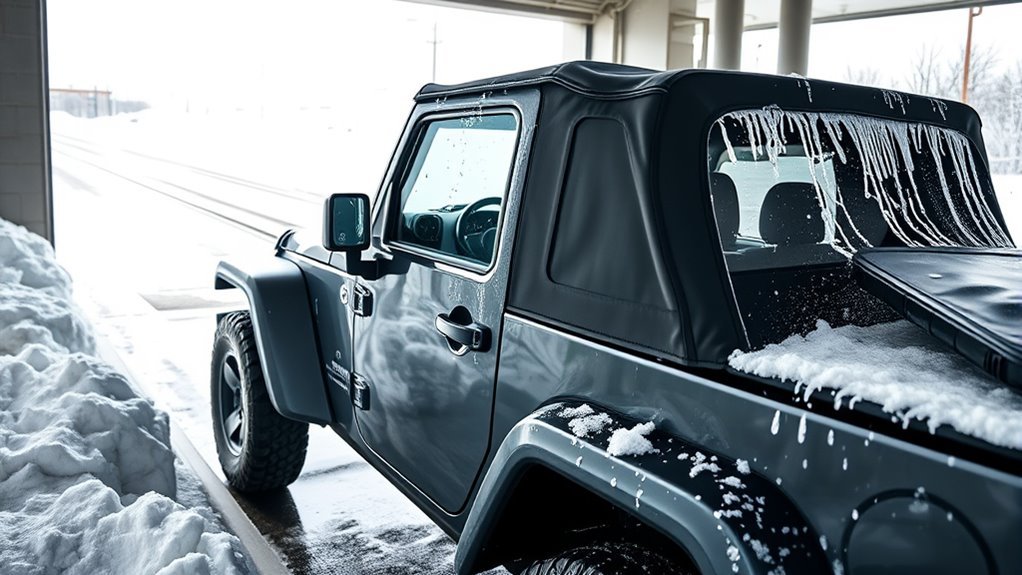
If you park or drive through salted roads, wash and dry your soft top promptly after each exposure to prevent salt-driven corrosion and fabric breakdown. You’re protecting freedom on the road by preventing rust on metal fittings and abrasive salt damage to the canvas or vinyl. After washing, dry seams and zippers thoroughly to stop water intrusion and freezing that can lock components or create tears.
- Use gentle rinses; avoid high-pressure washers that can harm seams and zippers.
- Apply a marine-grade soft top protectant (e.g., 303 Marine Fabric Guard) for fabric protection and water repellency.
- Inspect seals, stitching, and hardware after each winter wash for accelerated wear or leaks.
- Dry slowly in a warm, ventilated spot; don’t force heat that can warp plastics.
Prioritize winter maintenance to keep your soft top reliable and ready. You’ll extend service life, preserve weatherproofing, and maintain the open-road freedom you value.
Maintenance Tips to Prevent Buildup and Extend Your Soft Top’s Life
Because regular care prevents small problems from becoming costly repairs, make inspection and gentle cleaning part of your routine: check seams, zippers, and seals after every wash and after rough weather to spot wear or leaks early. Use fabric-safe cleaners made for soft tops and keep your cleaning frequency consistent—monthly in normal conditions, more often in coastal or salt-heavy areas. Rinse salt and grime thoroughly with low-pressure water to avoid driving contaminants into seams or stressing adhesives. After cleaning, apply a proven fabric protection product like 303 Marine Fabric Guard to restore water repellency and UV defense; follow manufacturer timing for reapplication. Avoid high-pressure washers and harsh detergents that strip coatings. Lubricate moving parts and treat vinyl windows with a dedicated conditioner to prevent cracking. Store your Jeep covered or in shade when possible to reduce sun exposure. By staying disciplined with inspections, proper cleaners, and timely protection, you’ll prevent buildup and extend your soft top’s life while keeping your freedom to roam.
Frequently Asked Questions
How to Wash a Jeep With a Soft Top?
You hand-wash your Jeep soft top using soft top care: rinse, apply gentle cleaner, scrub with a soft brush, rinse again, and air-dry. Follow cleaning tips, inspect seals, avoid harsh brushes, and firm up your freedom to roam.
Can You Do a Drive Through Car Wash With a Soft Top?
Yes — you can, but choose touchless washes, inspect seams, avoid high-velocity dryers; prioritize soft top maintenance, follow car wash tips, trust cautious routine, demand freedom from damage, and protect your Jeep’s convertible life.
Can You Go Through a Carwash With a Soft Top Car?
Yes — you can, but choose touchless or manual options and avoid brushes. You’ll protect fabric and zippers by following soft top maintenance and car wash tips, inspecting seams after washes to preserve freedom on the road.
Conclusion
You can take your soft‑top Jeep through a car wash—if you pick the right type and prep it like a pro. Think of it as escorting a convertible through a rainstorm: touchless or gentle self‑serve is your umbrella, brushes and high‑velocity dryers are the thunder. Check seals, zippers, and plastic windows first, skip it if the top’s aged or loose, and stick to regular, careful maintenance to keep leaks and clouding at bay.






Leave a Reply