
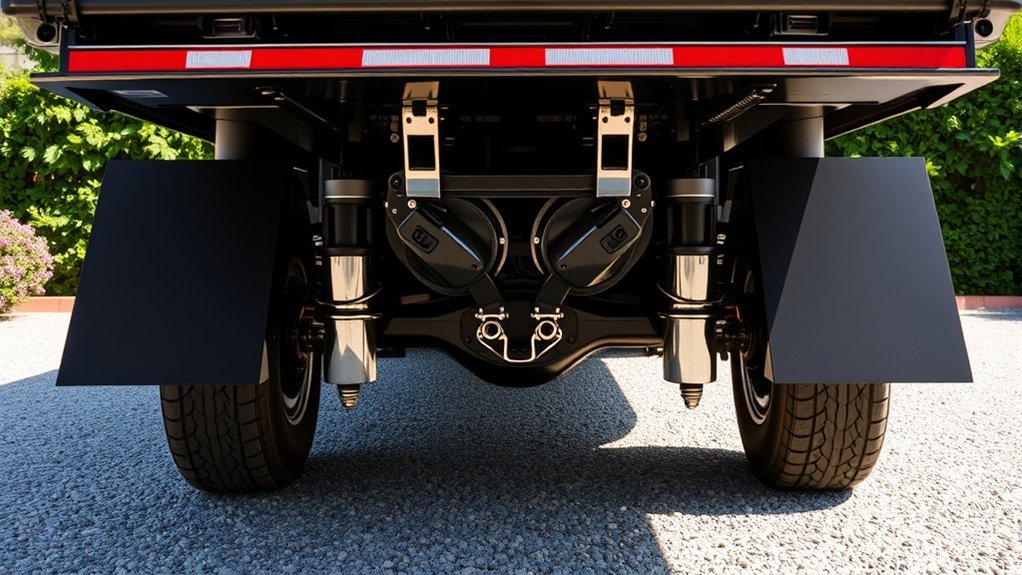
Airbags for towing are essential for enhancing your vehicle’s stability and safety when hauling heavy loads. They help maintain proper ride height, improve handling, and reduce wear on your suspension system. When choosing airbags, consider your towing frequency and weight, ensuring compatibility with your vehicle. Proper installation and air pressure adjustments are key to maximizing their benefits. Understanding their limitations is also crucial. Discover how to select the right system and maintain peak performance for your towing needs.
Understanding the Importance of Airbags for Towing

When you tow a heavy load, guaranteeing your vehicle maintains stability is essential, and that’s where airbags come into play. Airbags for towing come in various types, each designed to enhance stability and optimize performance under different conditions.
By maintaining proper ride height, they minimize wear on your suspension system, preventing issues like bottoming out. This not only improves handling but also boosts steering and braking control, making your towing experience safer and more enjoyable.
One of the significant towing benefits is the adjustable air pressure, allowing you to customize the system based on the weight being towed. This adaptability guarantees that your vehicle performs efficiently no matter the load, enhancing comfort and stability.
Properly installed and maintained airbags can extend the lifespan of your suspension, reducing stress on overload springs and leaf packs, ultimately liberating you from the worry of excessive wear and tear.
How Airbags Enhance Vehicle Stability and Safety
When you’re towing, maintaining stability and control is essential for safety.
Airbags play a key role in enhancing your vehicle’s handling by adjusting the suspension to match the load, which minimizes swaying and improves braking response.
With the right air pressure, you can navigate tough terrains confidently, knowing your setup is optimized for both comfort and stability.
Improved Towing Stability
Airbags play an essential role in enhancing towing stability, as they maintain your vehicle’s proper ride height under heavy loads. By effectively managing load distribution, airbags prevent sagging and bottoming out of the suspension system. You can adjust air pressure based on the weight you’re towing, improving towing dynamics and making handling easier around turns and uneven terrain. This adjustment reduces wear and tear on your suspension, prolonging its lifespan while enhancing overall performance.
| Benefit | Description |
|---|---|
| Improved Stability | Reduces rear-end squat when towing heavy loads. |
| Enhanced Control | Improves steering response during maneuvers. |
| Extended Suspension Life | Less wear on the suspension system. |
| Safer Towing Experience | Minimizes risk of swaying and instability. |
Enhanced Vehicle Control
While towing heavy loads, maintaining ideal vehicle control is essential for safety and performance. Airbag technology plays a pivotal role in enhancing towing dynamics by allowing you to adjust air pressure, keeping the vehicle at a proper ride height. This prevents rear sagging, which can compromise stability.
By improving the suspension system, airbags minimize the risk of bottoming out while enhancing steering and braking control—critical elements for safe towing. As you inflate or deflate airbags based on your load, you achieve best handling and comfort.
Additionally, airbags help distribute weight evenly, reducing stress on the chassis and prolonging suspension life. Overall, airbags increase vehicle stability, minimize sway, and enhance traction for a safer, more liberating towing experience.
Essential Considerations for Selecting Towing Airbags
When selecting towing airbags, you’ll want to take into account how often you tow and the weight of your loads to choose the right capacity.
It’s equally important to guarantee your vehicle is compatible with the airbag system, considering any limitations of its factory suspension.
Finally, think about the installation process; some setups are simple enough for a DIY project, while others might need a professional touch.
Towing Frequency and Weight
Choosing the right towing airbags hinges on how often you tow and the weight of your loads.
If you tow regularly, opt for adjustable airbag systems that let you modify air pressure for different scenarios, enhancing stability and comfort.
For occasional towing, simpler kits may suffice, but if you’re hauling heavy loads, consider robust options like the Air Lift 57275 LoadLifter 5000, which guarantees your towing capacity is met without exceeding your vehicle’s Gross Vehicle Weight Rating (GVWR).
Always factor in the weight of your trailer and cargo, as well as the conditions you face—steep hills or rough terrain call for stronger systems.
This thoughtful selection empowers you to tow confidently and safely.
Vehicle Compatibility and Limitations
Ensuring your towing airbags are compatible with your vehicle is crucial for safe and effective towing. Start by checking your vehicle specifications, particularly the Gross Vehicle Weight Rating (GVWR).
Remember, towing airbags won’t increase your payload or towing capacity; they primarily enhance stability and control during heavy loads. Each vehicle comes with different factory-installed systems, so it’s essential to verify compatibility with your existing suspension components.
Additionally, consider that installation complexity varies—some airbags allow for a straightforward DIY setup, while others may require professional help.
Finally, stay mindful of maximum pressure ratings and perform regular maintenance to prevent premature wear, ensuring peak performance and load distribution throughout your towing adventures.
Installation Process and Maintenance
Installing towing airbags properly is key to maximizing their benefits and guaranteeing your safety on the road. Start by following the manufacturer’s installation tips, securing the airbags between your vehicle’s frame and axle for effective load support.
Keep in mind that some kits feature straightforward bolt-on designs, while others might need professional installation. Once installed, maintain a regular maintenance checklist: inspect air lines for leaks, check the airbags’ shape, and verify inflation valves work correctly.
Adjust air pressure based on the weight you’re towing to maintain stability and comfort. By paying attention to these details, you’ll enhance your towing experience, allowing you to liberate your adventures without compromising safety or performance.
Comparing the Best Airbags for Towing: Key Options
When you’re towing heavy loads, having the right airbag system can make all the difference in your vehicle’s performance and comfort. Among the top towing accessories, the Firestone Ride-Rite Air Helper Springs stand out for their adjustable air pressure support, enhancing both ride comfort and stability.
If you need serious lifting capacity, check out the Air Lift 57275 LoadLifter 5000, which supports up to 5,000 pounds—perfect for heavy-duty needs.
For better handling, the Hellwig Big Wig Air Suspension Kit improves driving dynamics in various applications. Meanwhile, the SumoSprings Solo Series offers consistent shock absorption with its closed-cell foam technology, ensuring you tackle rough terrains with ease.
Finally, the Roadmaster Active Suspension System combines spring enhancement with active suspension control, boosting load handling capabilities. Each of these airbag brands provides unique benefits, so consider your specific towing requirements before making a choice.
Should You Install Your Airbags Yourself or Get Help?
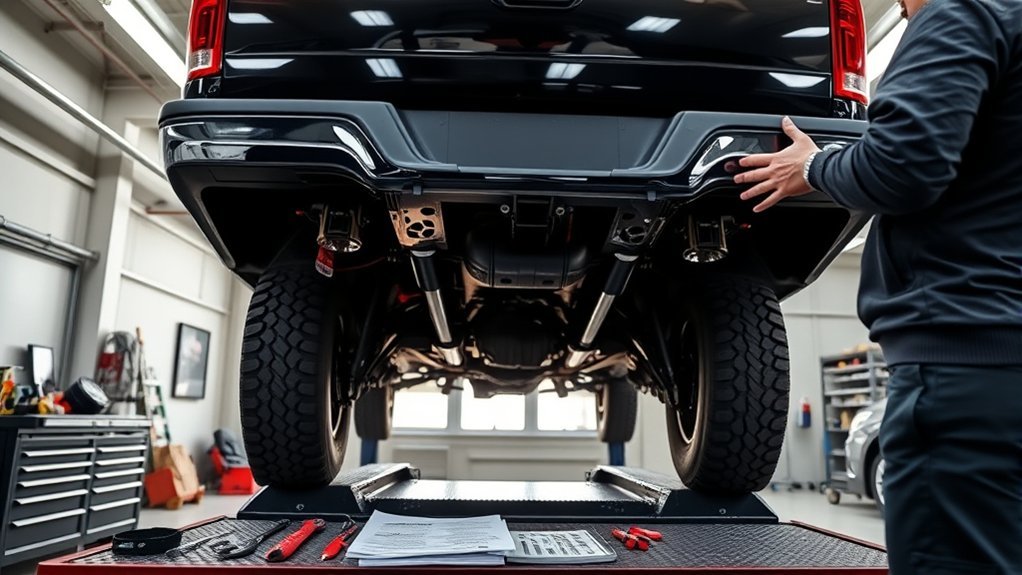
When considering whether to install your airbags yourself or hire a professional, weigh the complexity of the installation against your skill level and tools.
While DIY installation can save you money, it requires a solid understanding of your vehicle’s suspension system to avoid costly mistakes.
On the other hand, professional help can guarantee precision and safety, offering peace of mind and potentially better long-term reliability.
Installation Complexity Considerations
Deciding whether to tackle the installation of airbags for towing yourself or seek professional help hinges on the complexity of the system you’ve chosen.
Some systems are designed for DIY enthusiasts, complete with detailed instructions that guide you through installation.
However, if the system involves advanced components or onboard air systems, professional expertise may be necessary. These setups often require specialized installation tools and a solid understanding of vehicle suspension.
If you’re not comfortable with wiring and integration into your vehicle’s electrical system, hiring a pro can save you from potential safety issues down the line.
Ultimately, weigh your skills against the system’s demands to make the best choice for your towing needs.
Cost-Benefit Analysis
Choosing whether to install your airbags yourself or enlist professional help requires careful consideration of both costs and benefits.
A cost analysis reveals that DIY installation can save you $100 to $300 in labor fees, but it demands a solid grasp of your vehicle’s suspension. While many aftermarket kits provide clear instructions, installation risks lurk. Errors can lead to leaks or improper functionality, incurring costly repairs that may outweigh your initial savings.
If you’re confident in your mechanical abilities, self-installation is feasible; however, if you’re uncertain, hiring a professional guarantees proper fitting and calibration, safeguarding your investment.
Ultimately, weigh the potential repair costs against DIY savings to determine the best option for your situation.
Best Practices for Airbag Maintenance

Maintaining your airbag system is essential for guaranteeing safe and effective towing. To enhance airbag durability, start by regularly checking the air pressure, adhering to the manufacturer’s recommendations. Over or underinflation can lead to premature wear and reduced effectiveness.
Next, inspect air lines and fittings for leaks or damage; even small leaks can drastically compromise performance, so address them immediately. Additionally, clean your airbags periodically to remove dirt and debris that could damage the rubber material.
Confirm the airbags maintain proper positioning, avoiding contact with surrounding components, which can lead to unnecessary wear. When servicing your vehicle on lifts, inflate the airbags to their designated pressure to prevent collapsing, which could cause lasting damage or misalignment.
Adjusting Air Pressure: Why It Matters for Towing
When towing heavy loads, adjusting the air pressure in your airbags is imperative for ensuring ideal vehicle performance and safety. Proper air pressure maintains the right ride height, preventing rear sagging and enhancing stability on the road.
By increasing air pressure, you provide essential support to your vehicle’s suspension, which improves handling and reduces the risk of bottoming out during towing.
Utilizing an onboard air system allows for real-time air pressure adjustments based on load changes, ensuring peak performance for varying towing conditions. Typically, the ideal air pressure range for airbags falls between 5 to 100 PSI, so it’s important to consult manufacturer guidelines for your specific setup.
Regularly monitoring and adjusting air pressure not only enhances your towing experience but also extends the lifespan of your airbags, preventing issues related to over or under-inflation.
Embrace these load adjustments to liberate your towing potential and drive with confidence.
Limitations of Airbags: Understanding Their Role
Although airbags greatly improve stability and control while towing, they come with limitations that every driver should understand.
One common airbag misconception is that they can increase your vehicle’s maximum payload or towing capacity; they can’t. Their primary role is to enhance load management and prevent rear suspension from bottoming out. If you exceed your vehicle’s Gross Vehicle Weight Rating (GVWR), even with airbags, you’re risking safety and mechanical issues.
Airbags enhance load management but do not increase payload or towing capacity; exceeding GVWR poses safety risks.
Proper installation and maintenance are essential—over or underinflation can diminish their effectiveness.
Keep in mind that airbags can’t compensate for deficiencies in braking or cooling systems, so maintaining those is important too. While they enhance towing performance, remember they’re supplementary systems.
To truly liberate your towing experience, combine airbags with adherence to vehicle specifications and safety practices. Understanding these limitations guarantees you tow safely and effectively, maximizing your vehicle’s potential without stretching its limits.
Are Supplemental Air Suspension Systems Worth It?
Are supplemental air suspension systems truly worth the investment for your towing needs? Absolutely! These systems provide adjustable support that maintains proper ride height, enhancing stability and control in various towing scenarios.
With the ability to reduce rear sag, they not only improve ride comfort but also make towing easier, especially over uneven terrain.
Different airbag types cater to specific vehicles and demands, allowing you to tailor your setup for peak performance. Many kits feature straightforward installation, making them versatile for both single and dual-rear-wheel applications.
Investing in supplemental air suspension can also extend the lifespan of your vehicle’s suspension components by distributing loads evenly and preventing bottoming out, ultimately reducing wear and tear.
In essence, if you’re serious about towing safely and effectively, supplemental air suspension systems are a smart investment that can elevate your towing experience to new heights.
The Future of Air Suspension Technology in Towing
As advancements in air suspension technology continue to evolve, the future of towing looks increasingly promising. You can expect enhanced automation, with advanced onboard air management systems that make real-time adjustments based on your load conditions.
Innovations in lightweight composites and improved rubber compounds will boost the durability of airbags, providing better resistance to wear and environmental factors.
Moreover, the integration of smart technology, like smartphone apps and sensors, will empower you with greater control and monitoring capabilities over your air suspension system while towing.
Research into adaptive systems means your setup could automatically adjust height and stiffness, optimizing ride quality and stability no matter the load.
The emerging potential for regenerative air suspension technology may even harness energy from your vehicle’s movement to power onboard compressors, paving the way for more efficient, sustainable towing solutions.
Embrace this exciting evolution and elevate your towing experience!
Frequently Asked Questions
What Is the 5 10 20 Rule for Airbags?
The 5 10 20 rule for airbags means you adjust air pressure to 5 psi with no load, 10 psi for light loads, and 20 psi for heavy loads, enhancing towing safety and maximizing airbag benefits.
What Is the 80/20 Rule for Towing?
Think of towing like a balancing act; the 80/20 rule states you’ll often only need 20% of your towing capacity for 80% of situations, ensuring proper weight distribution and safer, easier towing experiences.
Are Airbags Worth It for Towing?
Yes, airbags are worth it for towing. They enhance towing stability and improve load management, ensuring a smoother ride. You’ll gain better control, prolong your vehicle’s lifespan, and enjoy the freedom of confident towing.
What PSI Should Air Bags Be for Towing?
For towing safety, you should maintain your airbag pressure between 30 and 80 PSI, adjusting based on your load. Regularly check pressure to guarantee ideal stability and performance while you’re on the road.
Conclusion
To summarize, using airbags for towing can greatly boost your vehicle’s stability and safety. Did you know that trucks equipped with airbag systems can experience up to a 30% reduction in sway while towing? This enhancement not only protects your cargo but also improves overall driving comfort. Whether you opt for DIY installation or professional help, investing in quality towing airbags is a smart move that pays off in both performance and peace of mind on the road.






Leave a Reply