
 Lysander Voss
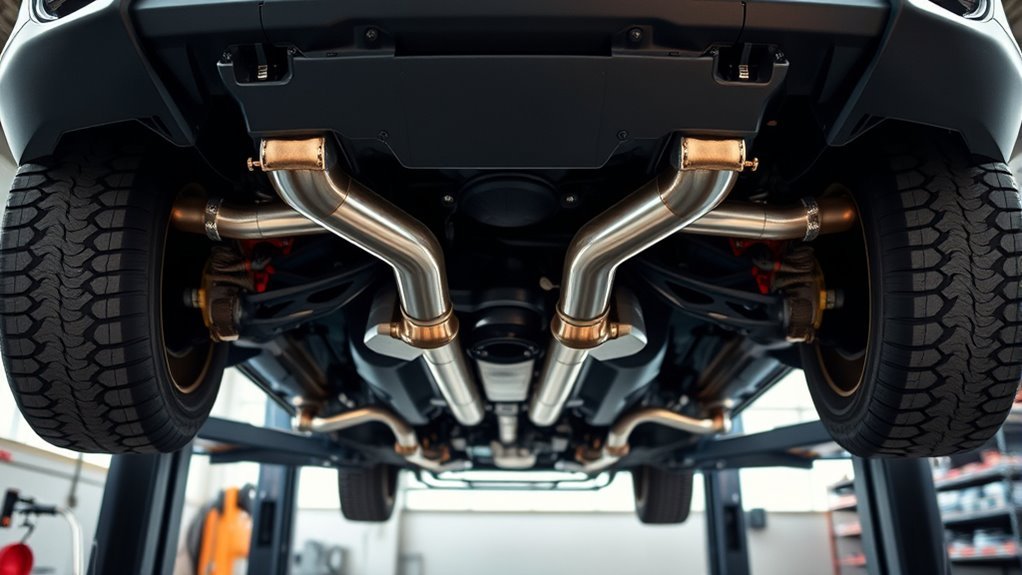
You’ll typically find two to three catalytic converters on a Jeep Grand Cherokee, depending on year and engine: most V6 models use two, while many V8s and some older models use three (two mini‑cats near the manifolds plus a main cat). Converters sit along the exhaust run and will trigger codes like P0420/P0430 if failing, causing power loss, sulfur smell, or rattling. Continue for model‑specific locations, replacement options, costs, and legal notes.
How Many Catalytic Converters Does a Grand Cherokee Have? (Short Answer)
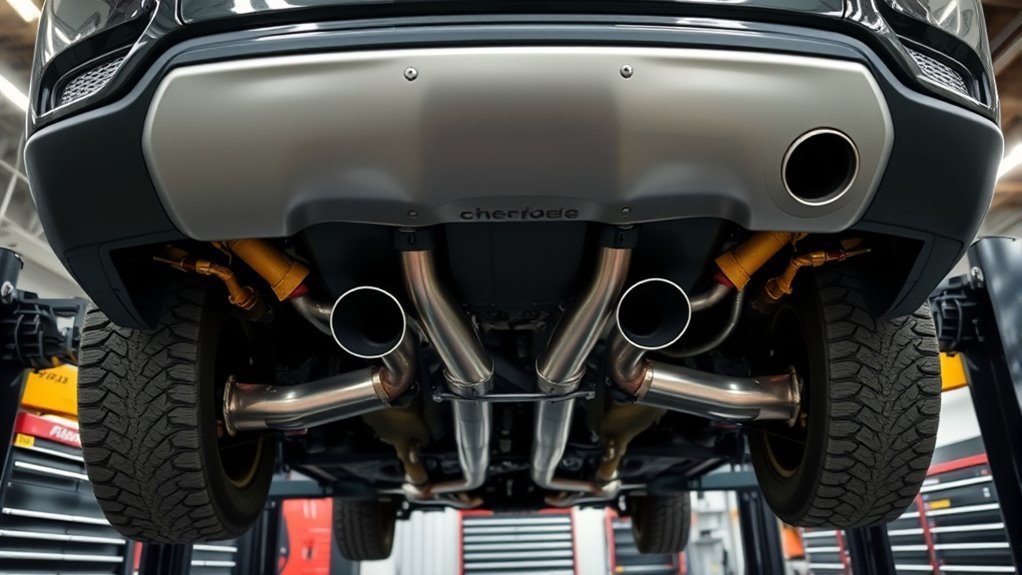
Most Grand Cherokees have two to three catalytic converters, depending on engine and model year. You’ll generally find older models with three units—two mini-cats near the exhaust manifolds and a larger one before the muffler—while newer designs often consolidate functions into two converters thanks to improved materials and flow engineering. Inspect the underside along the exhaust run to confirm count; converters are obvious by their bulged housings. Knowing the number matters because catalytic converter maintenance affects performance, fuel economy, and compliance with emissions testing requirements. You should schedule visual checks and address rattles, heat discoloration, or check-engine codes promptly to avoid test failures or limp modes. If you value autonomy, learning this lets you negotiate repairs, prioritize parts, and decide between OEM and high-flow replacements without overpaying. Keep records of inspections and repairs so you can demonstrate compliance during emissions inspections and preserve the vehicle’s resale or operational freedom.
How Model Year and Engine Type Change the Number of Converters
Having covered typical counts and where converters sit, let’s look at how model year and engine choice change that number. You’ll find the Grand Cherokee typically carries two to three catalytic converters, and that range ties directly to engine specifications and evolving emissions technology. Older models, like the 2005 Grand Cherokee, use three units — two mini-cats and one main cat — because earlier exhaust layouts and standards required additional stages of conversion. As emissions technology improved, manufacturers often reduced the physical converter count by integrating functionality into fewer, more efficient units. Your choice of engine also matters: V6 variants commonly run two converters, while V8s frequently retain three to meet stricter output limits and complex exhaust routing. Regulatory shifts and exhaust design variations across model years produce different configurations, so check the specific vehicle’s engine specifications and compliance data if you need exact converter counts for a given year and trim.
Where the Grand Cherokee Catalytic Converters Are Located
On a Grand Cherokee you’ll find the catalytic converters mounted along the exhaust run under the vehicle, with two or three cans depending on year and engine: when three are present two mini‑cats sit close to the exhaust manifolds while a larger main converter sits upstream of the muffler. You’ll locate oval or cylindrical metal canisters bolted or welded to the pipes; their relative positions are consistent across chassis layouts. Use the owner’s manual diagrams to confirm exact converter positioning for your model year and engine. For hands‑on checks, lift the vehicle safely and secure it on stands to access the underside. Visual inspection techniques include tracing the exhaust from manifold to muffler, checking for heat shields, flanges, and sensor ports. Lay eyes on welds, mounts and external damage; note that converters are obvious by shape and placement rather than by markings. These inspection techniques let you assert control over maintenance and make informed decisions about servicing or replacement.
Failing Converter: Symptoms & OBD‑II Codes
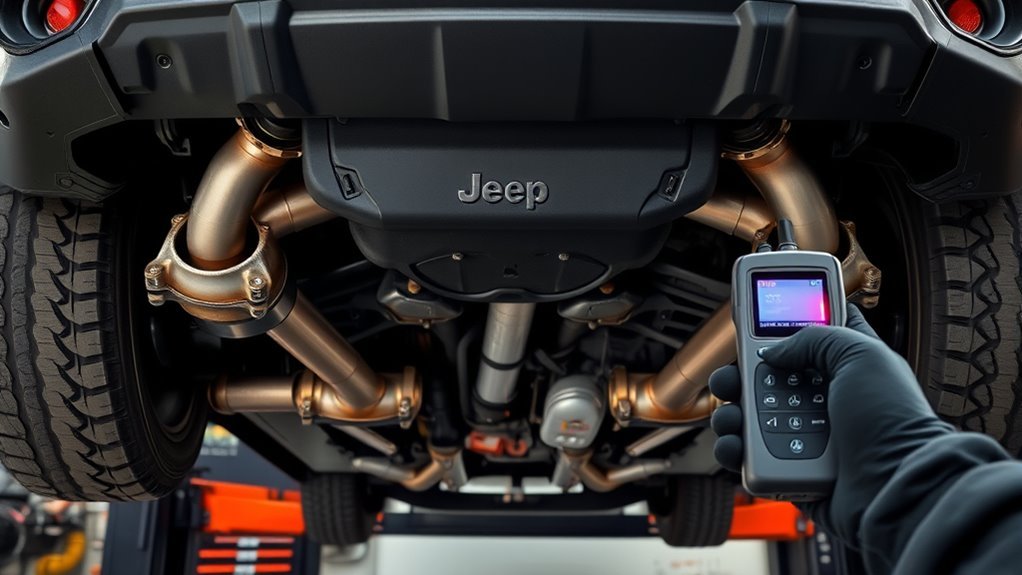
Once you’ve located the catalytic converters under your Grand Cherokee, the next step is recognizing when one’s failing so you can act before damage spreads. You’ll see catalytic converter failures first as the check engine light; OBD-II codes like P0420 or P0430 point to catalytic efficiency problems. Use a scanner to confirm codes and track upstream/downstream oxygen sensor readings.
Typical symptoms include a drop in engine power, poor acceleration, and a rotten-egg exhaust smell from sulfur build-up. Overheating or a glowing converter suggests internal blockage or breakdown and requires immediate inspection to avoid collateral engine damage. Rattling noises from the exhaust often mean the internal substrate is deteriorating.
Addressing these signs quickly liberates you from escalating repairs and keeps your Jeep responsive. Regular monitoring with an OBD-II scanner and prompt diagnostics let you isolate catalytic converter failures before they produce broader engine performance issues.
Replacement Options and Typical Costs for Grand Cherokee Cats
When replacing Grand Cherokee catalytic converters, you’ll choose between OEM units, branded aftermarket cats (Eastern, Magnaflow), or options like the Davico Y‑pipe for upper converters. Expect parts and dealer replacements to total $600–$1,200+ and labor to run $70–$150/hour for one to three hours depending on system complexity. If you’re cost‑conscious, consider reputable aftermarket parts with proper fitment or warranty-backed assemblies to balance price and long‑term reliability.
Replacement Part Types
You’ll typically choose between standard-grade, CARB-compliant, direct-fit, and universal catalytic converters for a Grand Cherokee, with unit prices running roughly $200 to over $1,000 depending on model year, engine and emissions requirements. You’ll evaluate replacement converter types by compliance, fit, and cell structure: standard-grade is economical; CARB-compliant meets strict state emissions; direct-fit mirrors OE flanges and sensors for bolt-in replacement; universal requires modification. Brands like Davico, Eastern Catalytic, and Magnaflow dominate the market; Davico’s lifetime warranty showcases robust warranty options you can leverage. Choose direct-fit for guaranteed mating to your specific Grand Cherokee engine and model year when fidelity matters. Prioritize emissions legality and catalyst substrate quality to secure freedom from repeat replacements.
Labor And Installation
After picking the right converter type and part—direct-fit or universal—you’ll need to plan for labor and installation costs. You should expect total replacement costs between $600 and $1,200; labor costs commonly run $70–$150 per hour, and installation typically takes one to three hours depending on model year complexity. Newer Grand Cherokees often need more time due to intricate exhaust layouts, raising both time and expense. Common parts like the Davico y-pipe offer a lifetime warranty and can lower parts expense versus dealer options. If you tackle the job, gather installation tools: socket wrench set, penetrating oil, jack and jack stands, and an oxygen sensor socket. Work methodically, prioritize safety, and document torque specs and sensor connections for reliable results.
Cost-Saving Alternatives
Although higher-end dealer cats can top $1,000, you can cut costs by choosing proven aftermarket direct-fit converters—brands like Davico, Eastern Catalytic, and Magnaflow often deliver reliable fit and emissions compliance at lower prices than OEM units. You’ll typically see replacement costs from $600 to $1,200 depending on model year and exhaust complexity. Direct-fit options simplify installation, reduce labor hours, and help you control budget considerations while staying legal. Consider these replacement strategies:
- Davico y-pipe: cost-effective direct-fit, quicker install, lower parts cost.
- Eastern Catalytic: balance of quality and price, may approach higher end.
- Magnaflow: premium fit and durability, sometimes higher upfront cost.
Plan for $70–$150/hour labor; expect 1–3 hours to install.
Aftermarket Exhaust for Grand Cherokee: Performance and Sound Changes
When you pick an aftermarket exhaust, pay attention to muffler and pipe sizing because diameter and length directly affect flow, back pressure, and where powerband gains occur. Decide whether a cat-back (cats retained, piping/mufflers replaced) or a full system (including cats) fits your goals, since cat-back boosts sound and mid/high RPM power while a full system can free more flow but may impact emissions compliance. Match mandrel-bent tubing and high-flow mufflers to your desired sound and torque curve, and verify local legality before installing.
Muffler And Pipe Sizing
One clear rule for muffler and pipe sizing is that diameter and muffler choice directly shape flow, backpressure, and sound, so you should match components to your driving goals. You’ll use muffler selection to tune tone and restriction: performance mufflers deepen sound while reducing backpressure, but material choice also alters timbre and durability. Pipe diameter affects torque and horsepower—bigger pipes favor top-end power, smaller or stepped designs preserve low-end grunt. Pick combinations that free you without sacrificing everyday response.
- Choose pipe diameter to balance low-end torque and high-rpm power.
- Match muffler selection to desired aggression and legal constraints.
- Prefer stainless or higher-grade metals for longevity and sharper tone.
Plan sizing based on driving intent, not trend.
Cat-Back Versus Full
After sizing your pipes and choosing a muffler to hit the balance between torque, top-end power, and tone, you’ll next decide how far back in the system to modify: a cat-back or a full aftermarket exhaust. You’ll pick a cat-back when you want straightforward gains: improved flow from the catalytic converter rearward, easier installation, lower cost, and pronounced cat back benefits like sharper throttle response and a more aggressive note. Choose a full system when you chase maximum optimization — headers and cats tuned for back pressure and exhaust velocity deliver deeper resonance and measurable full system performance gains. Both can improve fuel efficiency and responsiveness, but the magnitude depends on design, materials, and installation quality.
Legal and Emissions Implications of Removing or Modifying Converters
Although it might seem tempting to remove or alter catalytic converters for cost or performance reasons, doing so violates federal emissions law and can make your Jeep Grand Cherokee illegal to operate. You need emissions compliance to keep the vehicle road-legal; tampering invites legal consequences, failed inspections, and compromised air quality. Multiple converters in a Grand Cherokee exist to meet model-year and engine-specific standards, so removing one still risks noncompliance.
- Removing or modifying converters can trigger a check engine light and increased emissions, undermining performance and legality.
- Federal law prohibits disabling or removing emissions control devices even if local inspections (like Texas OBDII) only check a single converter.
- Noncompliance can lead to fines, failed inspections, and being barred from registering or operating your vehicle.
If you want more power or freedom, pursue legal tuning and verified aftermarket parts that preserve catalytic function and maintain compliance.
Inspection and Replacement Checklist: Step‑by‑Step for Owners
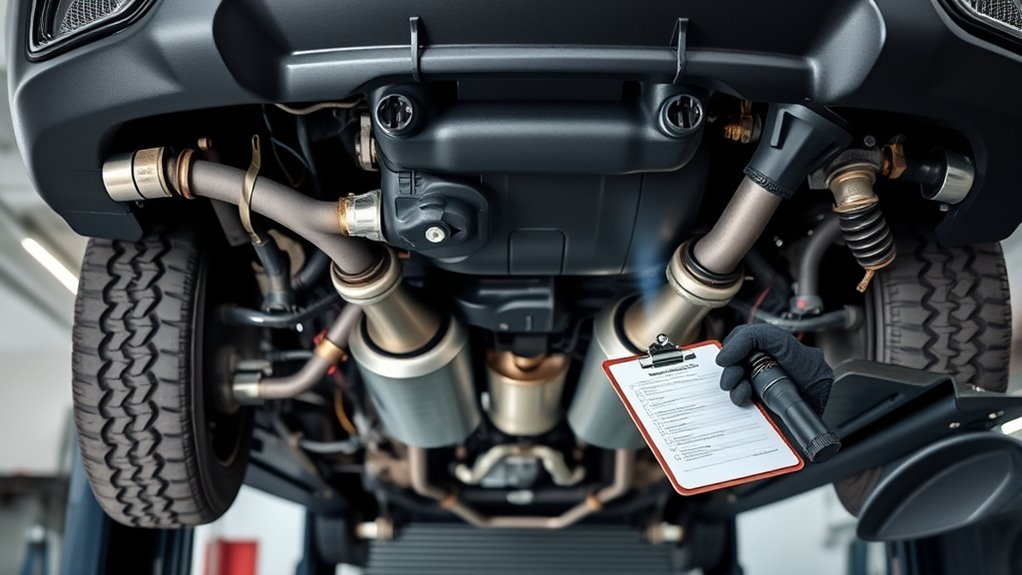
Now that you know the legal and emissions risks of removing or altering catalytic converters, let’s focus on how to inspect and, if necessary, replace them correctly. Lift the Jeep safely, secure jack stands, and perform a visual sweep along the exhaust: count oval or cylindrical canisters—most Grand Cherokees have two mini‑cats and one larger cat, though some models use two. Use an OBDII scanner to read catalytic-related codes and confirm faults before disassembly. Look for rattling, perforation, or sulfur odors; a persistent check engine light often signals failure.
If replacement’s required, source OEM or compliant aftermarket parts; expect $600–$1,200 for a 2015 model including labor. During replacement, match upstream/downstream sensor locations, torque fittings to spec, and seal joints to prevent leaks. After reassembly, clear codes and run emissions testing. Keep records of catalytic converter maintenance to protect your rights and stay street‑legal.
Frequently Asked Questions
How Much Does It Cost to Replace a Catalytic Converter on a Jeep Grand Cherokee?
You’ll pay about $1,000–$2,500 to replace a catalytic converter on a Jeep Grand Cherokee; consider replacement options, repair tips, and labor (1–3 hours), choosing OEM or aftermarket parts to regain freedom and reliability.
Conclusion
In short, your Grand Cherokee usually has two to four catalytic converters depending on year and engine, and you’ll want to know their locations, failure signs, and OBD‑II codes before swapping anything. Keep legal and emissions rules in mind, and choose OEM or high‑quality aftermarket units to avoid problems. Think like a mechanic, not a tinkerer: use the inspection checklist, replace failing cats promptly, and don’t pull a DeLorean stunt by removing emissions gear.