
The gasoline your Jeep Wagoneer needs depends on its model year and engine. A 2025 Wagoneer with the 3.0-liter Standard Output engine can use 87-octane unleaded, although Jeep recommends 91 or higher for optimum performance. Older V8 models and Grand Wagoneer versions have different requirements, so the engine-specific chart below matters more than a one-size-fits-all answer.
Quick Answer
A 3.0L Standard Output Wagoneer can use 87 octane, but Jeep recommends 91 or higher for optimum performance. The 5.7L V8 prefers 89, with 87 acceptable. The 3.0L High Output and 6.4L engines require 91 or higher. Confirm the engine and model year before filling up.
Key Takeaways
- The correct octane depends on the engine, not simply whether the badge says Wagoneer or Grand Wagoneer.
- The 3.0L Standard Output engine accepts 87 octane, but 91 or higher is recommended for optimum performance.
- The 5.7L V8 recommends 89 octane and permits 87; the 3.0L High Output and 6.4L engines call for 91 or higher.
- Jeep specifies unleaded gasoline containing no more than 15% ethanol for these gasoline engines and says not to use E85.
- As of the 2026 model year, the Wagoneer is no longer produced as a separate gasoline model; the current Grand Wagoneer lists premium unleaded fuel.
What Gas Should You Use for Your Jeep Wagoneer?
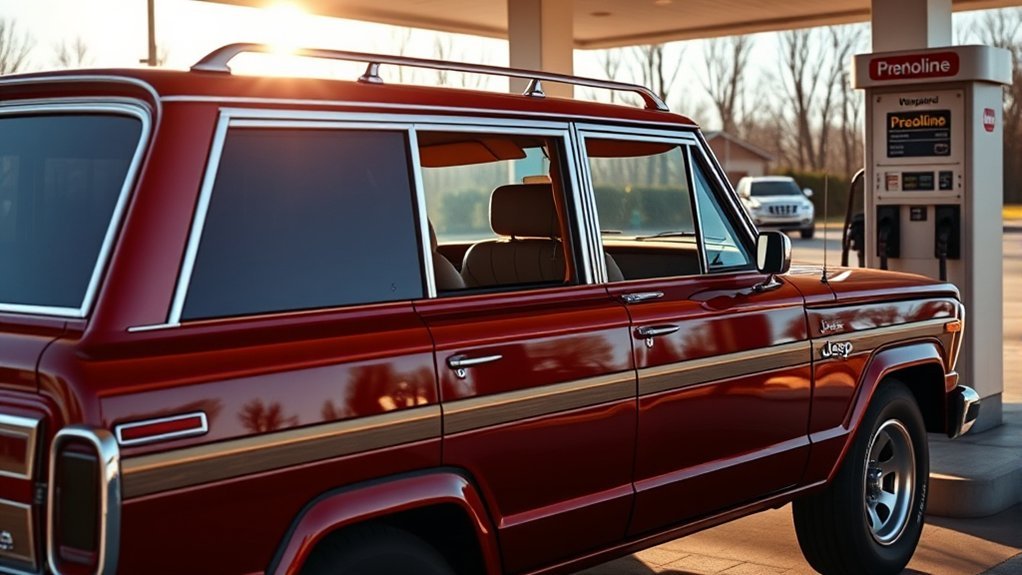
Use the octane grade listed for your exact engine. Jeep’s specifications differ across the 3.0L Hurricane engines and the earlier V8 options. The following chart combines the manufacturer guidance most Wagoneer and Grand Wagoneer owners need.
| Engine | Manufacturer Guidance | Practical Choice |
|---|---|---|
| 3.0L Standard Output | 87 octane is permitted; 91 or higher is recommended for optimum performance. | Use 87 for normal driving when cost matters. Choose 91 or higher when you want full rated performance, especially under heavier demand. |
| 5.7L V8 | 89 octane is recommended; 87 is acceptable. | Use 89 when available. Using 87 is allowed, but it may not deliver the same performance under demanding conditions. |
| 3.0L High Output | 91 octane or higher is required. | Fill with premium every time. Do not treat 87 or 89 as a routine substitute. |
| 6.4L V8 | 91 octane or higher is required. | Use premium unleaded with a posted AKI of 91 or above. |
The 2025 Jeep Wagoneer owner handbook lists 87 octane for the 3.0L Standard Output engine while recommending 91 or higher for optimum performance. It lists 91 or higher for the 3.0L High Output engine. The 2022 Wagoneer technical guide specifies 89 recommended and 87 acceptable for the 5.7L V8, and 91 or higher for the 6.4L V8 and 3.0L High Output engine.
Warning: Do not use E85 in these gasoline engines. Jeep limits the approved ethanol content to 15% and specifies 91 or higher for the High Output 3.0L and 6.4L engines.
How to Confirm Your Wagoneer Engine and Fuel Requirement
Before choosing a grade, confirm which engine is in the vehicle. Trim names alone can be misleading because powertrains changed across model years.
- Check the owner’s manual or handbook: Look under “Fuel Requirements,” “Fuel Selection,” or “Technical Specifications.”
- Read the fuel-door or fuel-cap label: A premium-required model may show the minimum octane near the filler opening.
- Use the Mopar owner portal: Enter the VIN to access vehicle-specific information and the correct manual.
- Check the underhood emissions label or dealer build sheet: These can help identify the installed engine when paperwork is missing.
Note: Jeep states that the gasoline Wagoneer is no longer in production for 2026. The current 2026 Grand Wagoneer lists premium unleaded fuel. The Wagoneer S is a separate all-electric vehicle and does not use gasoline.
What’s the Difference Between Premium and Regular Gas?
Regular, midgrade, and premium gasoline are mainly separated by octane rating. In the United States, the number on the pump is the Anti-Knock Index, shown as the average of Research Octane Number and Motor Octane Number: (R+M)/2.
Octane Ratings Explained
Octane measures gasoline’s resistance to uncontrolled auto-ignition, often called spark knock or detonation. A higher number does not automatically mean the fuel contains more energy or will improve every vehicle. It means the fuel can tolerate greater pressure and heat before igniting on its own.
The U.S. Energy Information Administration explains that higher-octane fuel is more stable under compression. That matters most when an engine is designed or calibrated to take advantage of the added knock resistance.
Engine Performance Impact
The Wagoneer’s engine controls can adjust operation within their programmed limits. On the 3.0L Standard Output engine, 87 octane is approved, but 91 or higher gives the engine more room to deliver optimum performance. On an engine that requires 91, using the specified premium grade is part of normal operation, not an optional upgrade.
The difference may be easiest to notice during towing, hard acceleration, hot weather, mountain driving, or when the vehicle is heavily loaded. Under light, steady driving, the benefit of a higher grade may be less obvious in an engine that already permits regular fuel.
Cost Considerations
Premium costs more per gallon, so it only makes sense when the engine requires it or when the manufacturer recommends it for a performance benefit you value. Paying for 93 instead of 91 usually offers no meaningful advantage when the manual only calls for 91 or higher, although 93 is safe to use.
For the 3.0L Standard Output engine, compare the extra cost of premium with your driving needs. For the High Output 3.0L and 6.4L engines, the premium price is part of the expected operating cost.
The Impact of Octane Ratings on Engine Performance
The correct fuel grade lets the engine operate within the calibration Jeep intended. The wrong grade can change how the powertrain responds, especially when cylinder pressure and temperature rise.
| Situation | Likely Result | What to Do |
|---|---|---|
| 87 in a 3.0L Standard Output engine | Approved for use, with possible performance reduction compared with 91 or higher. | Continue driving normally or switch to 91 or higher at the next fill-up for optimum performance. |
| 87 in a 5.7L V8 | Acceptable, but 89 is the recommended grade. | Use 89 at future fill-ups when available. |
| Below 91 in a 3.0L High Output or 6.4L engine | The fuel does not meet the manufacturer’s specification and may reduce performance or increase knock risk. | Avoid heavy throttle and towing, then add the correct premium fuel as soon as practical. Seek service if knocking or a warning light continues. |
| 93 in an engine that calls for 91 or higher | Meets the octane requirement. | Use it safely, but do not expect a large gain over good-quality 91 unless conditions or calibration make use of it. |
Pro Tip: Keep a photo of the fuel-requirement page from your owner’s manual on your phone. It prevents confusion when another driver fills the vehicle or when local stations use unfamiliar grade labels.
Fuel Efficiency: Premium vs. Regular Gas in the Wagoneer
Premium gasoline does not guarantee better mileage by itself. Any improvement depends on whether the engine changes timing or other settings when higher-octane fuel is present.
In the 3.0L Standard Output engine, 91 or higher may help the engine reach optimum performance, but the cost per mile can still be higher if the mileage gain is small. In the 5.7L V8, 89 is the recommended balance. In the 3.0L High Output and 6.4L engines, use premium because it is the specified fuel, not because it promises a certain fuel-economy increase.
For a fair comparison, track several full tanks of each approved grade under similar routes, weather, load, tire pressure, and driving style. A single tank is too easily affected by traffic, idling, towing, and temperature.
The best fuel is not automatically the highest number at the pump; it is the grade that meets your engine’s published requirement.
Jeep Wagoneer Fuel Availability by Region
Fuel labels vary by country. U.S. and Canadian pumps normally display AKI using the (R+M)/2 method, while many other markets display Research Octane Number, or RON. The numbers are not directly interchangeable, so follow the manual written for the vehicle’s market rather than matching the number alone.
Do not rely on alternating tanks of 89 and 93 as a routine way to “average” 91. The amount of fuel left in the tank changes the final blend, and that practice is not Jeep’s published recommendation. When 91 is required, buy a posted grade of 91 or higher.
If the specified grade is temporarily unavailable, use the highest suitable unleaded grade available, drive gently, avoid towing or sustained heavy load, and refill with the correct fuel as soon as practical. For an imported vehicle, confirm whether its manual states AKI or RON.
Owner Experiences: Fuel Choices and Performance Insights
Owner reports can be useful for describing how a vehicle feels, but they should not override the fuel specification. Perceived changes in power or mileage can also come from weather, load, driving style, station quality, tire pressure, or route differences.
Fuel Type Preferences
Owners of the 3.0L Standard Output engine may choose 87 for routine commuting and 91 or higher when they want optimum response. Owners of the 5.7L V8 have a clear manufacturer-backed middle ground: 89 recommended, 87 acceptable. High Output 3.0L and 6.4L owners should use 91 or higher consistently.
Performance Under Load
Higher cylinder pressure during towing, steep climbs, hot weather, and hard acceleration makes knock resistance more important. That is why the recommended or required grade matters most under load. Fuel cannot raise the vehicle’s tow rating, and premium gasoline does not replace proper cooling-system maintenance, correct tire pressure, or adherence to payload limits.
Regional Fuel Variations
Some stations offer 87, 89, and 93 but no 91. In that case, 93 satisfies a 91-or-higher requirement. Do not choose a lower local grade simply because it is sold as regular; follow the octane number and measurement method stated in the vehicle’s manual.
Can You Mix Regular and Premium Gas in a Wagoneer?
Regular and premium unleaded gasoline are compatible, so accidentally combining them does not require draining the tank. The resulting octane will fall between the grades, depending on how much of each fuel is present.
That does not mean mixing is the best routine. If your engine permits 87, you may continue driving normally. If your engine requires 91 or higher and you added a lower grade, top off with the correct premium fuel as soon as practical, avoid demanding operation, and watch for persistent knocking or a warning light. There is no manufacturer instruction requiring you to wait until the tank is half empty before switching grades.
Ethanol and Other Fuels to Avoid
Jeep’s Wagoneer fuel tables allow unleaded gasoline with up to 15% ethanol for the gasoline engines covered here. That includes common E10 and, where legally sold and suitable for the vehicle, E15. It does not include E85 flex fuel.
- Do not use E85: The Wagoneer gasoline engines discussed here are not approved for 51% to 83% ethanol flex fuel.
- Do not use diesel: Gasoline and diesel fuel systems are not interchangeable.
- Avoid contaminated or mislabeled fuel: If the engine runs poorly immediately after refueling, save the receipt, stop driving if severe symptoms occur, and have the vehicle inspected.
- Ethanol-free fuel is optional, not required: It may be used when it meets the required octane, but Jeep does not require it for normal operation.
Frequently Asked Questions
Does a Jeep Wagoneer require premium gas?
Some do. The 3.0L High Output and 6.4L engines require 91 octane or higher. The 3.0L Standard Output engine allows 87 but recommends 91 or higher for optimum performance. The 5.7L V8 recommends 89 and accepts 87.
Can I put 87 gas in a Jeep Wagoneer?
Yes, when the vehicle has the 3.0L Standard Output engine or the 5.7L V8. It is not the specified fuel for the 3.0L High Output or 6.4L engines, which call for 91 or higher.
What happens if I accidentally use 87 in a premium-required Wagoneer?
Avoid hard acceleration, towing, and sustained heavy load. Add 91-or-higher premium as soon as practical. If you hear persistent knocking, see a warning light, or notice severe running problems, stop driving and arrange service.
Is 93 octane safe in a Jeep Wagoneer?
Yes. A posted 93-octane premium fuel meets any Wagoneer requirement that calls for 91 or higher. It is also safe in engines that allow 87 or recommend 89, although the extra cost may not produce a noticeable benefit.
Can a Jeep Wagoneer use E15 or E85?
The manufacturer permits gasoline containing up to 15% ethanol in the engines covered here, so E15 is within that limit when it also meets the required octane. Do not use E85.
Does the Jeep Wagoneer S take gasoline?
No. The Wagoneer S is an all-electric vehicle. It charges a battery and has no gasoline octane requirement.
Conclusion
Do not assume every Jeep Wagoneer takes 87 octane. Match the fuel to the engine: 87 is allowed and 91-plus is recommended for the 3.0L Standard Output; 89 is recommended and 87 acceptable for the 5.7L V8; and 91 or higher is required for the 3.0L High Output and 6.4L engines. Check the vehicle-specific manual whenever the model year, engine, or market is uncertain.
Sources
- 2025 Jeep Wagoneer Owner Handbook — 3.0L Standard Output and High Output octane and ethanol specifications.
- 2022 Wagoneer Technical Guide: Engine Fluids and Lubricants — 5.7L, 6.4L, and 3.0L High Output fuel requirements.
- Jeep Wagoneer Model Page — current production-status information and owner resources.
- 2026 Jeep Grand Wagoneer Specifications — current recommended fuel listing.
- Jeep Wagoneer S — confirmation that the Wagoneer S is all-electric.
- U.S. Energy Information Administration: Octane in Depth — how octane rating and the (R+M)/2 method work.







Leave a Reply