
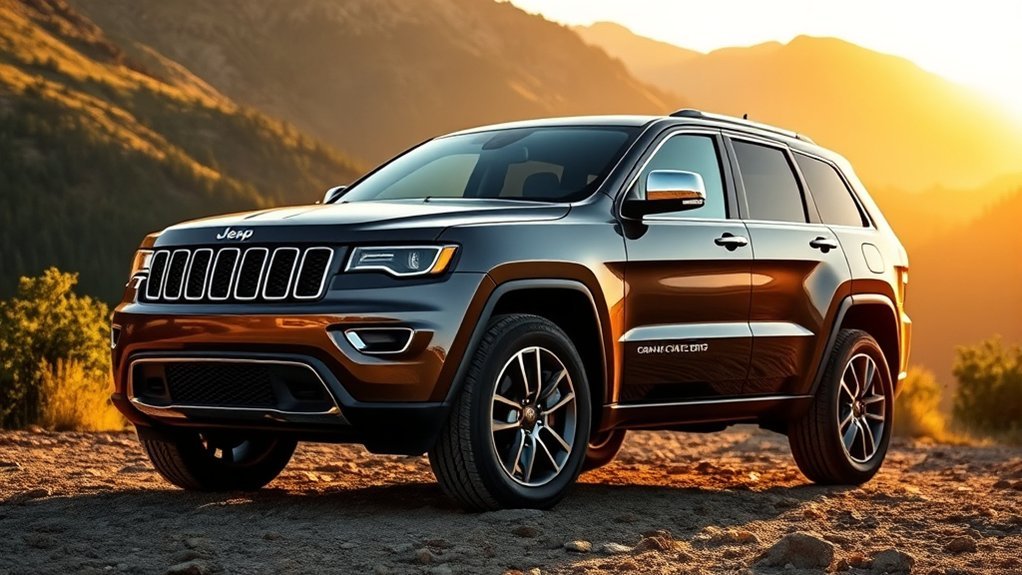
Shopping for a used Jeep Grand Cherokee is less about finding one “magic” model year and more about choosing the right generation, engine, equipment, and maintenance history. Late-production WK2 models usually offer the best balance of value and familiarity, while the redesigned WL provides newer technology but requires a closer recall and build-history check.
Quick Answer
For most used buyers, the 2018–2020 Jeep Grand Cherokee is the strongest all-around target because it combines a mature WK2 platform with modern infotainment and broad engine choices. The 2021 and 2022 WK are also good late-generation options. Treat the redesigned 2022 WL, especially the 4xe, as a technology pick requiring a careful VIN recall check.
Key Takeaways
- Best all-around used years: 2018–2020 provide a good blend of mature WK2 engineering, useful technology, engine choice, and used-market availability.
- Best late-WK2 choices: The 2021 and separately sold 2022 Grand Cherokee WK are worth considering when service records and recall repairs are complete.
- Best budget choice: A well-maintained 2010 can still be appealing, but age, rust, leaks, and deferred maintenance matter more than its model-year reputation.
- Best for newer design and technology: The redesigned 2022 WL adds a more modern cabin, Uconnect 5, and an available 4xe plug-in-hybrid powertrain.
- Most important buying step: Check the exact VIN for open recalls and obtain an independent pre-purchase inspection before making an offer.
Best Jeep Grand Cherokee Years at a Glance
| Model Year or Range | Best For | Why It Stands Out | What to Check |
|---|---|---|---|
| 2018–2020 WK2 | Most used buyers | Mature generation, modern connectivity, broad trim selection, and strong parts familiarity | Service history, electronics, air suspension, cooling system, four-wheel-drive operation, and recalls |
| 2021 and 2022 WK | A late-production WK2 | Familiar drivetrains and equipment near the end of the generation | Confirm that a 2022 listing is the WK rather than the redesigned WL |
| 2010 WK | Lower purchase price and traditional SUV feel | Final year of its generation, available V8 power, and useful towing capability | Rust, fluid leaks, cooling system, suspension wear, drivetrain condition, and maintenance records |
| 2022 WL | Newer interior, safety structure, and technology | Redesigned platform, Uconnect 5, available passenger display, and available 4xe | First-year build issues, software operation, recall status, and 4xe battery campaigns |
No model year is automatically dependable. A neglected “best year” can be a worse purchase than a carefully maintained vehicle from a less celebrated year. Mileage, climate, modifications, accident history, engine, suspension, and four-wheel-drive equipment can all change the risk.
For a used Grand Cherokee, documented maintenance and a clean inspection usually matter more than a one-year difference in the badge on the liftgate.
Why the 2019 Jeep Grand Cherokee Is a Strong All-Around Choice
The 2019 Grand Cherokee sits in the mature portion of the WK2 generation. It offers a wide selection of trims, familiar powertrains, modern smartphone integration, and a large used-market supply. That combination makes it easier to compare condition and pricing than with a rare configuration.
According to the official 2019 Grand Cherokee brochure, commonly available engines included the 3.6-liter Pentastar V6 and 5.7-liter HEMI V8. Performance trims added substantially more power, while certain markets and configurations also offered a diesel.
| 2019 Feature | Buyer Benefit | Important Limitation |
|---|---|---|
| 3.6-liter V6 and available V8 power | Choice between everyday use and additional towing or performance | Fuel use, maintenance, and towing ratings differ by engine and drivetrain |
| Apple CarPlay and Android Auto | Modern navigation, audio, and messaging integration | Screen size and navigation equipment vary by trim |
| Available adaptive cruise and forward-collision warning | Useful highway and collision-avoidance assistance | These systems were not fitted to every vehicle; verify the exact equipment |
| Large trim selection | Choices ranging from basic transportation to luxury and high performance | Higher trims can add air suspension and other costly components |
The 2019 model should not be described as a class-leading crash-test performer. The IIHS 2019 evaluation shows Good results in several tests but Marginal driver-side and Poor passenger-side small-overlap results. Buyers should separate the availability of driver-assistance features from the vehicle’s structural crash-test ratings.
Why the 2021 Jeep Grand Cherokee Appeals to Late-WK2 Buyers
The 2021 Grand Cherokee offers the familiar design and drivetrains of the long-running WK2 generation with contemporary connectivity and a broad range of trims. It is a sensible target for shoppers who prefer a late-production WK2 but do not need the redesigned WL cabin.
However, 2021 was not the only final-year WK2 choice. Jeep also sold a vehicle identified as the 2022 Grand Cherokee WK. The redesigned version is commonly identified as the 2022 Grand Cherokee WL. This distinction is important when comparing listings, parts, safety ratings, equipment, and resale values.
Infotainment and Connectivity
The official 2021 buyer’s guide lists Uconnect systems with 7-inch or available 8.4-inch displays. Apple CarPlay and Android Auto make the system easier to live with than older factory navigation units.
Available equipment included built-in navigation, premium audio, and a Wi-Fi hotspot. Buyers should test every USB port, pair a phone, operate the touchscreen for several minutes, and confirm that the display does not freeze, reboot, delaminate, or lose audio.
Safety Features and Crash-Test Context
Blind-spot monitoring and rear cross-path detection were widely fitted, while adaptive cruise control and forward-collision warning depended on trim and package. A listing that says “fully loaded” is not proof that every driver-assistance system is present.
The IIHS 2021 results remained mixed, including Marginal and Poor small-overlap ratings. The 2021 model can still be a good used choice, but its technology should not be confused with uniformly top-tier crash-test performance.
Note: A 2022 Grand Cherokee listing may refer to either the outgoing WK or the redesigned WL. Review the VIN, photographs, owner’s manual, build information, and equipment list before comparing it with another 2022 vehicle.
Advantages and Risks of the Redesigned 2022 Grand Cherokee WL
The redesigned 2022 WL is the best choice among the highlighted years for buyers who prioritize a newer cabin, improved displays, updated driver-assistance technology, and an available plug-in-hybrid powertrain. It should not automatically be ranked as the most reliable year because it was the first model year of a new design and has been involved in multiple recall campaigns.
2022 WK Versus 2022 WL
The outgoing 2022 Grand Cherokee WK continued the older WK2 design. The 2022 WL used the new architecture, exterior, cabin, electronics, and available 4xe system described in the official Stellantis introduction.
Do not rely only on “2022” when ordering parts, comparing safety ratings, or evaluating a listing. Confirm whether the vehicle is a WK or WL first.
Enhanced Infotainment Features
Uconnect 5 is a major improvement over earlier systems. Depending on configuration, the WL can include a 10.1-inch center display, wireless Apple CarPlay and Android Auto, built-in navigation, connected services, Amazon Alexa integration, multiple USB ports, and an available front-passenger display.
These features make the WL more appealing to technology-focused buyers, but they also create more systems to test. Check wireless phone pairing, cameras, audio, climate controls, instrument displays, charging ports, driver profiles, and over-the-air software status.
Fuel Economy and the 4xe Plug-In Hybrid
Fuel economy varies by engine, drivetrain, wheelbase, wheels, and test configuration. Compare the exact vehicle with its EPA listing instead of assuming that one city/highway figure applies to every 2022 Grand Cherokee.
The 4xe is a plug-in hybrid rather than a conventional non-plug-in hybrid. The 2022 version received an EPA-rated electric range of about 25 miles in its listed configuration. Actual electric range can fall with cold weather, highway driving, cabin heating, aggressive acceleration, hills, or battery aging.
A 4xe is most useful when the owner can charge regularly and completes many trips within its electric range. A buyer who cannot charge at home or work may receive less benefit while still accepting the added complexity of a turbocharged engine, high-voltage battery, power electronics, cooling circuits, and charging hardware.
Safety Improvements and Recall Considerations
The IIHS 2022 evaluation shows improved driver- and passenger-side small-overlap performance compared with the older WK2. Other evaluations and build-specific findings still require attention, so the result should not be reduced to a single “safe” or “unsafe” label.
Warning: Before buying any Grand Cherokee, enter its VIN at the NHTSA recall lookup. Some 2022–2026 Grand Cherokee 4xe vehicles have been subject to battery-fire campaigns with instructions to park outside and avoid charging until the required remedy is completed. Follow the current VIN-specific instructions. A sales listing, old recall receipt, or verbal assurance is not a substitute for a live lookup.
Why the 2010 Jeep Grand Cherokee Can Still Be a Budget Choice
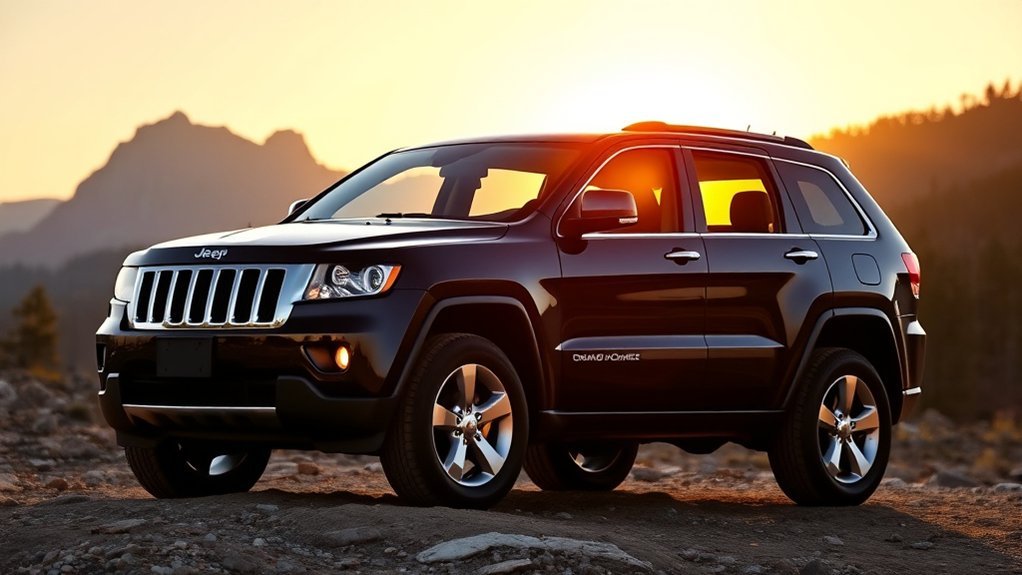
The 2010 Grand Cherokee was the final model year of the earlier WK generation. It can appeal to shoppers who want a lower purchase price, traditional SUV styling, available V8 power, and useful four-wheel-drive capability.
Certain properly equipped configurations were rated to tow as much as 7,400 pounds. The actual limit depends on the engine, drivetrain, axle, cooling equipment, hitch, payload, and trailer setup, so verify the specific rating in the official 2010 Mopar guide.
Available systems such as Quadra-Drive II can provide strong low-traction performance. That capability does not eliminate the effects of age. By 2026, every 2010 example is old enough for rubber parts, hoses, seals, bushings, sensors, wiring, cooling components, and suspension parts to require close inspection.
A clean 2010 with extensive service records may be a better purchase than a cheaper example with rust, warning lights, overheating history, mismatched tires, fluid leaks, or neglected four-wheel-drive service.
Jeep Grand Cherokee Years That Need Extra Scrutiny
Early WK2 vehicles from 2011 through 2015 are not automatic rejects, but they deserve a more cautious inspection because early-generation electronics, powertrain calibration, recalls, and deferred maintenance can overlap.
- 2011–2013: Check every electrical function, scan all control modules, test the transmission from cold and hot, inspect for cooling-system leaks, and confirm that recall work is complete.
- 2014–2015: Verify completion of the electronic-shifter campaign on affected vehicles. The underlying recall addressed a risk that a driver could believe the vehicle was in Park when it was not fully secured.
- Air-suspension models: Confirm that the vehicle raises and lowers normally, stays level after sitting, and does not repeatedly run its compressor.
- High-performance or modified models: Look for evidence of hard use, non-original tuning, drivetrain abuse, overheated brakes, uneven tires, and undocumented modifications.
- Diesel models: Review emissions-system repairs, oil specifications, fuel-system history, and the condition of emissions-related hardware.
The redesigned 2022 WL also needs extra scrutiny because it was a first-year model. Later software updates or recall repairs may improve an individual vehicle, but the VIN and repair documentation must confirm what was actually completed.
Recent model years should not automatically be labeled the most reliable. A vehicle that is only one or two years old may not yet have accumulated enough mileage and time to reveal long-term patterns.
How to Evaluate Grand Cherokee Reliability by Model Year
Owner reports can help identify patterns, but they should not be the only evidence used. Complaints often lack a known denominator, and two vehicles from the same year can have very different engines, suspension systems, use histories, and maintenance quality.
Use this process to compare candidates:
- Identify the exact generation and configuration. Record the VIN, engine, drivetrain, trim, suspension, wheel size, and whether the vehicle is a WK, WL, diesel, V8, or 4xe.
- Check open recalls. Use the NHTSA VIN lookup and save the result with the purchase records.
- Request maintenance documentation. Look for regular oil changes, cooling-system service, transfer-case and differential service where required, brake work, battery replacement, and recall invoices.
- Review the vehicle history. Check title status, ownership changes, reported accidents, mileage consistency, commercial use, and geographic history.
- Inspect the vehicle cold. A seller who warms the engine before arrival may hide a cold-start rattle, smoke, misfire, weak battery, slow air-suspension operation, or transmission behavior.
- Scan all modules. A basic engine-code reader may miss faults stored in body, airbag, four-wheel-drive, suspension, battery, charging, and driver-assistance modules.
- Arrange an independent inspection. Use a technician who is familiar with the exact Grand Cherokee generation and powertrain.
Pro Tip: Ask the seller not to start the vehicle before the inspection. Check the engine temperature when you arrive, then observe the first start, warning-light self-test, exhaust, idle quality, battery voltage, transmission engagement, and suspension operation.
Engine Options, Towing, and Fuel Economy
Engine choice can affect ownership costs as much as model year. A V6, V8, diesel, high-performance model, and 4xe should not be evaluated as though they have the same service needs.
| Powertrain Type | Why Buyers Choose It | Ownership Considerations |
|---|---|---|
| 3.6-liter Pentastar V6 | Common availability, adequate everyday power, and lower fuel use than most V8 versions | Check for leaks, cooling-system condition, misfires, maintenance records, and correct oil service |
| 5.7-liter HEMI V8 | Stronger acceleration, traditional V8 character, and higher towing capability in qualifying configurations | Higher fuel use and potentially greater costs for engine, cooling, exhaust, and drivetrain work |
| Diesel | Low-speed torque, highway range, and up to 7,400 pounds of towing in certain 2019 configurations | Emissions-system, fuel-system, oil-specification, and repair-complexity considerations |
| SRT or Trackhawk | Exceptional on-road performance | Premium fuel, expensive tires and brakes, hard-use risk, and higher drivetrain repair exposure |
| 4xe plug-in hybrid | Electric commuting capability, strong combined torque, and a newer WL cabin | Charging access, battery condition, software, high-voltage recalls, and specialized repair requirements |
The 2019 factory brochure lists maximum trailer ratings of 6,200 pounds for the 3.6-liter V6, 7,200 pounds for the 5.7-liter V8, and 7,400 pounds for the diesel when properly equipped. Those numbers should not be applied to another year or configuration without checking its manual and equipment.
Towing capacity is not the only limit. Subtract passengers, cargo, accessories, and trailer tongue weight from the payload rating shown on the vehicle’s certification labels. Also verify hitch class, brake-controller requirements, cooling equipment, tire condition, and local trailer-brake rules.
Price Expectations for Used Jeep Grand Cherokee Models
A single national price range is not reliable enough for every Grand Cherokee. Values vary with mileage, trim, engine, two- or four-wheel drive, condition, service history, accident history, modifications, location, season, and open recalls.
- 2010 and other older examples: Purchase prices may be lower, but the repair reserve should be larger because age-related work can quickly exceed the difference between two listings.
- 2018–2020 WK2 models: These often provide the most balanced used-market comparison because buyers can choose among many trims and powertrains.
- 2021 and 2022 WK models: Late-production status and lower mileage can raise the asking price, but condition and equipment still determine value.
- 2022 and newer WL models: Newer technology, remaining warranty coverage, and lower mileage may increase prices. Recall history and first-year complexity should still affect the offer.
- 4xe, SRT, Trackhawk, diesel, and highly optioned trims: These vehicles should be compared with similar configurations rather than with a basic V6 model.
Compare several local vehicles with similar mileage and equipment. Then adjust for tires, brakes, upcoming maintenance, warning lights, body repairs, missing service records, open recalls, and the results of the inspection.
Used Jeep Grand Cherokee Inspection Checklist
A thorough inspection can reveal problems that a short online listing will not show.
- Cold start: Listen for abnormal rattles, knocking, belt noise, exhaust leaks, or extended cranking.
- Warning-light test: Confirm that the airbag, ABS, engine, four-wheel-drive, and other warning lamps illuminate during startup and then switch off normally.
- Fluid condition: Inspect for engine-oil, coolant, transmission, transfer-case, differential, power-steering, and brake-fluid leaks where applicable.
- Cooling system: Check the coolant level only when the engine is cold. Look for dried residue, odor, damaged hoses, overheating history, or an inoperative fan.
- Electronics: Operate windows, locks, seats, mirrors, liftgate, cameras, parking sensors, climate controls, USB ports, audio, navigation, and steering-wheel controls.
- Air suspension: Cycle every height setting and check whether the vehicle remains level after sitting.
- Four-wheel drive: Verify the selector, low range where equipped, drive modes, and absence of transfer-case warnings.
- Tires: Mismatched tire sizes or large differences in tread depth can strain four-wheel-drive components.
- Underbody: Look for rust, impact damage, damaged skid plates, fluid leaks, and evidence of hard off-road use.
- Body and structure: Check panel gaps, paint variation, overspray, glass dates, water intrusion, and signs of prior repair.
- Diagnostic scan: Scan more than the engine computer. Review body, airbag, suspension, transmission, battery, and four-wheel-drive modules.
- Recall status: Run the VIN immediately before purchase, even if the seller previously checked it.
Tips for Test Driving a Jeep Grand Cherokee
Drive the vehicle long enough to evaluate it cold, fully warmed, at low speed, on rough pavement, and at highway speed. A five-minute trip around the dealership may not expose a heat-related fault, driveline vibration, weak battery, or suspension problem.
- Check transmission engagement. Shifts into Drive and Reverse should occur without an excessive delay, hard impact, or warning message.
- Test light and moderate acceleration. Watch for hesitation, misfires, smoke, abnormal noise, harsh shifting, or reduced-power warnings.
- Evaluate steering and braking. The vehicle should track straight, stop without pulling, and avoid steering-wheel vibration.
- Listen over rough roads. Clunks, rattles, knocking, or repeated compressor operation may point to suspension or body issues.
- Test the infotainment system. Pair a phone, use the cameras, adjust climate controls, play audio, and leave the display running long enough to reveal resets or freezing.
- Operate the four-wheel-drive system. Use appropriate modes only where conditions permit and follow the owner’s manual for low-range engagement.
- Watch temperatures and voltage. Check for overheating, battery warnings, fluctuating gauges, or cooling-fan problems.
- Reinspect after the drive. Look underneath for fresh leaks and smell for coolant, fuel, overheated brakes, oil, or electrical insulation.
For a 4xe, confirm that charging begins normally, the charge door and cable operate correctly, electric mode is available when conditions allow, and no high-voltage or hybrid-system warnings appear. Do not touch orange high-voltage wiring or attempt battery inspection yourself.
Frequently Asked Questions
What is the best year for a used Jeep Grand Cherokee?
For most shoppers, a well-maintained 2018–2020 WK2 is the best all-around target. These years combine a mature generation with modern smartphone integration and broad trim availability. A 2021 or 2022 WK can also be a good late-generation choice. Maintenance history, configuration, condition, and recall status still matter more than the year alone.
Which Jeep Grand Cherokee years should receive extra scrutiny?
Early WK2 models from 2011–2015 deserve careful inspection for recall completion, electronics, transmission behavior, cooling-system condition, and deferred maintenance. The redesigned 2022 WL also needs a thorough software and recall review because it was the first model year of a new generation. This does not mean every vehicle from those years is a bad purchase.
What is the difference between a 2022 Grand Cherokee WK and WL?
The 2022 WK is the outgoing WK2-generation vehicle with the older body, interior, and electronics. The 2022 WL is the redesigned model with a newer platform, Uconnect 5, updated cabin, and available 4xe plug-in-hybrid powertrain. Confirm which version a listing represents before comparing equipment, parts, safety ratings, or prices.
What engine options are available for different Grand Cherokee years?
Options vary by generation and trim. Common choices include the 3.6-liter Pentastar V6 and 5.7-liter HEMI V8. Some WK2 years offered diesel, SRT, or supercharged Trackhawk engines. The WL added the 4xe plug-in hybrid. Confirm the exact engine by VIN because fuel economy, towing, maintenance, and repair costs vary substantially.
How does the Jeep Grand Cherokee compare with competitors?
The Grand Cherokee is attractive for buyers who value available low-range four-wheel drive, towing capability, powerful engine choices, and an upscale cabin. Competing crossovers may offer better fuel economy, more third-row room, simpler drivetrains, or lower ownership risk. Compare the exact Grand Cherokee configuration with vehicles serving the same towing, seating, and off-road needs.
What is the average maintenance cost for a Jeep Grand Cherokee?
There is no dependable single annual figure for every Grand Cherokee. A basic V6 with conventional suspension can cost much less to own than an older V8, diesel, SRT, Trackhawk, air-suspension model, or 4xe needing specialized work. Build a repair reserve based on age, mileage, inspection results, local labor rates, and the specific powertrain.
Are there notable recalls for specific Grand Cherokee years?
Yes. Campaigns have addressed issues including electronic shifters, suspension components, airbags, software, and high-voltage batteries. Applicability is VIN-specific, and recall status can change after an article is published. Check the VIN at NHTSA immediately before purchase and follow all current manufacturer instructions.
How does towing capacity vary across Grand Cherokee models?
Historical ratings range from modest capacities to as much as 7,400 pounds in certain properly equipped configurations. The engine, drivetrain, axle, cooling equipment, hitch, payload, and trailer setup all affect the limit. Use the owner’s manual and vehicle labels for the exact model rather than applying a generic maximum.
Is a used Grand Cherokee 4xe a good purchase?
It can be a good fit for a buyer who can charge regularly, values electric commuting, and has access to qualified service. Before buying, verify the high-voltage battery warranty, charging operation, software updates, service records, and current recall status. Follow any active park-outside or do-not-charge instruction until the approved remedy is completed.
Conclusion
The best Jeep Grand Cherokee year depends on what you value. A clean 2018–2020 WK2 is the strongest all-around choice for many used buyers. The 2021 and 2022 WK are appealing late-generation alternatives, while a carefully maintained 2010 can work for a lower-budget buyer prepared for age-related repairs.
The redesigned 2022 WL offers the newest design and technology in this comparison, but it should be purchased only after a close review of software operation, service records, build history, and recall status. The same caution is especially important for a 4xe.
Do not let a model-year recommendation replace due diligence. Confirm the exact configuration, check the VIN, review maintenance records, test every major system, and pay for an independent inspection. Those steps provide more protection than choosing a vehicle solely because it appears on a “best years” list.
Sources
- National Highway Traffic Safety Administration Recall Lookup — VIN-specific safety recall status and campaign information.
- 2019 Jeep Grand Cherokee Official Brochure — engines, towing ratings, connectivity, and available safety equipment.
- 2021 Jeep Grand Cherokee Official Buyer’s Guide — powertrains, towing, Uconnect equipment, and driver-assistance availability.
- 2022 Jeep Grand Cherokee WK Owner’s Manual — verifies the separate 2022 WK model and provides operating guidance.
- Stellantis 2022 Grand Cherokee WL Introduction — redesigned WL platform, Uconnect 5, powertrains, and 4xe information.
- IIHS Jeep Grand Cherokee Safety Ratings — crash-test and safety-system performance for the redesigned generation.







Leave a Reply