
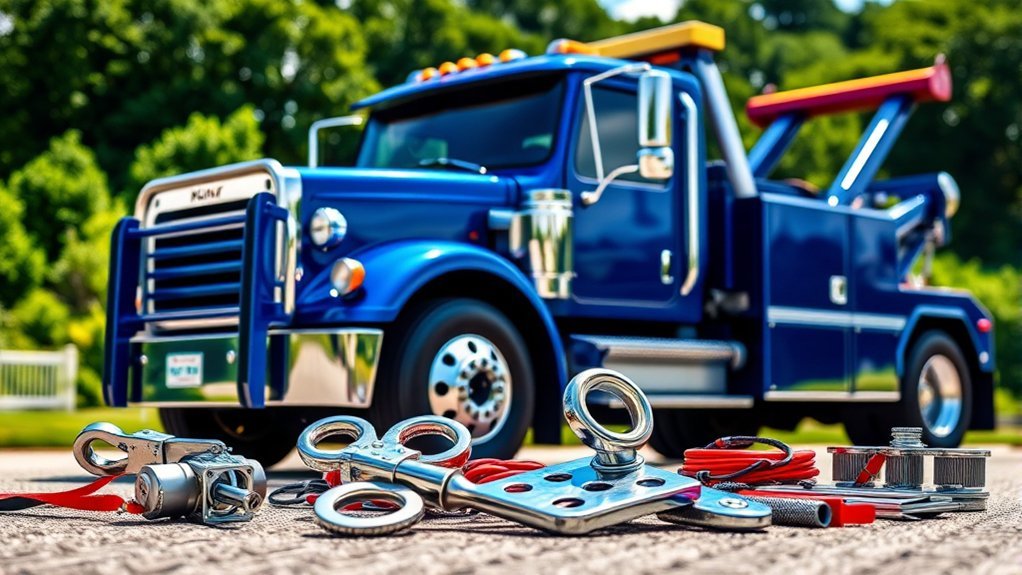
Tuning a vehicle for towing can improve throttle response, shift behavior, temperature awareness, and drivability under load. It cannot increase the weight ratings assigned by the vehicle, hitch, axle, wheel, tire, or trailer manufacturers. The safest approach is to verify every rating, weigh the loaded combination, correct mechanical weaknesses, and use only a vehicle-specific, emissions-compliant calibration.
Quick Answer
A towing tune may improve shift scheduling, throttle response, and power delivery, but it does not raise your vehicle’s certified towing capacity. Verify the VIN-specific ratings, weigh the fully loaded vehicle and trailer, inspect the brakes and hitch, and use only a conservative calibration that retains all emissions and safety systems.
Key Takeaways
- A tune cannot change GVWR, GAWR, GCWR, payload, hitch, tire, wheel, or trailer ratings.
- The safe trailer limit is the lowest applicable rating after passengers, cargo, hitch equipment, and tongue weight are included.
- Weigh the loaded combination instead of relying only on brochure maximums or estimated trailer weight.
- Use a tow-specific calibration made for the exact engine, transmission, model year, fuel, and emissions configuration.
- Monitor the temperatures and warnings specified by the vehicle and calibration providers; there is no universal safe EGT number.
- Brakes, cooling, tires, suspension, and hitch equipment improve support and control but do not recertify the vehicle for more weight.
At a Glance
| Time Required | 30–90 minutes for rating checks, inspection, and baseline setup; longer when weighing or installing equipment |
| Difficulty | Moderate; professional help is recommended for powertrain, brake, cooling, hybrid, or high-voltage modifications |
| Tools Needed | Owner’s manual, towing guide, tire-pressure gauge, torque wrench, scale access, inspection light, and an approved scan or monitoring tool if required |
| Cost | Basic inspection may cost little or nothing; weighing, maintenance, brake equipment, cooling parts, and compliant calibration work vary by vehicle |
Understand the Towing Limits Before Tuning
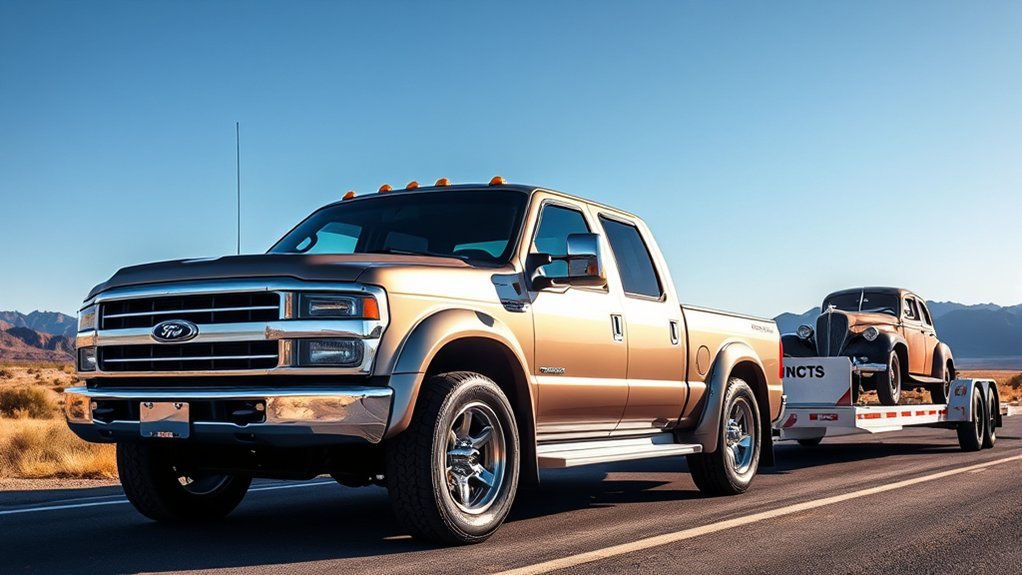
Power is only one part of towing performance. Stability, braking, cooling, tire capacity, axle load, hitch strength, gearing, trailer aerodynamics, and the vehicle’s structural limits can become the controlling factors long before the engine runs out of power.
The SAE J2807 tow-rating standard establishes performance criteria used to determine trailer weight ratings for applicable vehicles. Installing a tune afterward does not repeat that certification process or change the ratings assigned to the vehicle.
Warning: Never use added horsepower as permission to exceed GVWR, GAWR, GCWR, payload, hitch, tire, wheel, trailer, or tongue-weight limits. The lowest applicable rating controls the setup.
Towing Ratings You Must Check
| Rating | What It Limits | Where to Find It |
|---|---|---|
| GVWR | Maximum loaded weight of the tow vehicle | Certification label and owner’s manual |
| GAWR | Maximum load allowed on each axle | Certification label and towing guide |
| GCWR | Maximum loaded weight of the vehicle and trailer combined | Vehicle-specific towing guide or owner portal |
| Payload | Passengers, cargo, accessories, hitch hardware, and tongue or pin weight carried by the vehicle | Tire-and-loading label, certification label, and actual scale weight |
| Trailer GVWR | Maximum permitted loaded trailer weight | Trailer certification label |
| Hitch and tongue rating | Maximum trailer and vertical load permitted by the receiver, ball mount, ball, and coupler | Labels or markings on each component |
| Tire and wheel ratings | Maximum load each tire and wheel can support at the specified conditions | Tire sidewall, wheel specifications, vehicle placard, and trailer placard |
The Chevrolet towing glossary, for example, defines GCWR as the maximum loaded weight of the vehicle and trailer together. It also notes that passengers, equipment, and cargo reduce the trailer weight available to a specific vehicle.
Find the Real-World Towing Limit
Your practical limit is the lowest result produced by all applicable ratings. A useful starting calculation is:
Available combined-weight allowance = GCWR minus the actual loaded weight of the tow vehicle.
That calculation is not enough by itself. You must also remain below the maximum trailer rating, vehicle GVWR, each GAWR, available payload, trailer GVWR, hitch rating, tongue or pin-weight rating, and every tire and wheel limit.
Use a manufacturer’s model-year towing guide or VIN-specific tool whenever one is available. For example, the Ford VIN-based towing calculator can provide configuration-specific information for supported Ford trucks. Other manufacturers offer similar towing guides, owner portals, or vehicle labels.
Pro Tip: Do not use curb weight to represent the vehicle as it will travel. Fill the fuel tank as planned, load the passengers, pets, cargo, tools, hitch equipment, and accessories, and then obtain actual axle and combined weights.
What a Towing Tune Can and Cannot Do
A well-designed towing calibration may alter throttle mapping, torque delivery, shift timing, torque-converter lockup, cooling-fan requests, or engine-braking behavior. The exact functions depend on the vehicle and powertrain.
If your vehicle already has a factory Tow/Haul mode, use it as directed in the owner’s manual before assuming an aftermarket tune is necessary. Chevrolet explains that its Tow/Haul mode keeps the vehicle in lower gears for more usable torque when pulling a trailer or heavy load. Other manufacturers use comparable strategies, although operation varies by model.
Tuning May Improve
- Throttle response under load
- Shift timing and reduced gear hunting
- Torque-converter lockup strategy
- Engine braking or exhaust-brake coordination where supported
- Cooling-fan behavior where the calibration and vehicle permit it
- Visibility of coolant, oil, transmission, boost, intake-air, and exhaust-temperature data
Tuning Does Not Change
- The certification-label GVWR or GAWR
- The manufacturer’s GCWR or trailer weight rating
- The payload shown for the vehicle’s configuration
- The receiver, ball mount, hitch ball, coupler, or trailer rating
- The load capacity of the tires, wheels, springs, frame, brakes, or axles
- The legal requirements for trailer brakes, licensing, equipment, or speed
Note: More power can make an overloaded combination feel easier to accelerate. It does not make the combination safer, more stable, or legally compliant.
How to Set Up a Vehicle for Towing
1. Verify the Exact Vehicle Specifications
Record the VIN, model year, engine, transmission, axle ratio, cab, wheelbase, drive type, wheel and tire package, factory towing package, and installed options. Towing figures can change between two vehicles that appear nearly identical.
Review the towing section of the owner’s manual and the current model-year towing guide. Confirm whether the manufacturer requires a weight-distributing hitch, sway control, trailer brakes, a particular hitch class, reduced frontal area, special break-in mileage, or a different maintenance schedule.
2. Weigh the Loaded Combination
Load the vehicle and trailer as they will be used. Include water, fuel, batteries, propane, food, tools, passengers, cargo, accessories, and hitch equipment.
- Weigh the loaded tow vehicle without the trailer attached when practical.
- Weigh the tow vehicle and trailer together, recording steer-axle, drive-axle, and trailer-axle weights.
- Calculate the loaded trailer weight from the combined and tow-vehicle measurements.
- Calculate tongue or pin weight from the change in tow-vehicle load or use a properly rated tongue-weight scale.
- Compare every result with GVWR, front and rear GAWR, GCWR, payload, trailer GVWR, hitch, tire, and wheel ratings.
Conventional trailers commonly need enough tongue weight to remain stable, often near 10–15% of loaded trailer weight, but the correct range must come from the tow-vehicle, hitch, and trailer manufacturers. Fifth-wheel and gooseneck trailers generally place a higher percentage of their weight on the truck.
3. Establish a Mechanical Baseline
Do not tune around an existing defect. Resolve warning lights, stored trouble codes, fluid leaks, overheating, misfires, abnormal smoke, detonation, slipping shifts, worn brakes, steering play, and damaged tires first.
Inspect or service:
- Engine oil and filter
- Coolant level and condition
- Transmission fluid according to the manufacturer’s procedure
- Air and fuel filters
- Belts, hoses, charge-air plumbing, and clamps
- Battery and charging system
- Brake pads, rotors, fluid, hoses, and parking brake
- Wheel bearings, steering, shocks, springs, and bushings
- Vehicle and trailer tires, including age, tread, pressure, and load range
The NHTSA TireWise guidance recommends checking cold tire pressure against the vehicle’s tire-and-loading label or owner’s manual. The maximum pressure molded into a tire sidewall is not automatically the correct operating pressure for the vehicle.
4. Inspect the Hitch, Brakes, and Electrical Equipment
- Verify that the receiver, ball mount, hitch ball, coupler, and fasteners are correctly rated.
- Confirm that the hitch ball size matches the coupler.
- Cross safety chains beneath a conventional trailer tongue when instructed by the trailer or hitch manufacturer.
- Attach the breakaway cable to a separate secure point rather than looping it around a safety chain.
- Test running lights, turn signals, brake lights, reverse lights, and trailer brakes.
- Confirm that the breakaway battery is charged and the switch operates correctly.
- Set the trailer-brake controller using the controller and trailer manufacturer’s procedure.
- Confirm adequate clearance for turns, suspension movement, tailgates, jacks, and weight-distribution components.
5. Select a Conservative Calibration
Choose a calibration designed for the exact vehicle, engine, transmission, fuel, model year, and emissions configuration. A towing calibration should prioritize predictable torque, controlled shifting, temperature management, and diagnostic integrity rather than maximum dyno output.
Before installation, confirm:
- The calibration retains all factory emissions equipment and onboard diagnostics.
- It does not disable catalyst, oxygen-sensor, EGR, DPF, SCR, DEF, evaporative-emissions, or misfire monitoring.
- The provider documents the required fuel octane or diesel specifications.
- The provider states whether transmission tuning is included.
- The calibration supports the current vehicle software version.
- A stock file can be restored.
- Operating limits and monitored parameters are documented.
- The provider offers support for warning lights, drivability problems, and software updates.
Warning: The U.S. Environmental Protection Agency prohibits emissions tampering and aftermarket defeat devices. Do not install a calibration that disables required emissions controls, suppresses related fault codes, or prevents readiness monitors from operating.
6. Test Before a Long Trip
Begin with an unloaded or lightly loaded road test. Confirm normal starting, idle, throttle response, shifting, braking, cruise-control behavior, and warning-light operation. Recheck for leaks and diagnostic codes.
Next, perform a short loaded test on a familiar route with safe places to stop. Include low-speed maneuvering, moderate acceleration, braking, a controlled grade, and a complete cooldown inspection. Do not begin with the heaviest trailer on a remote mountain route.
Supporting Upgrades for Better Towing Control
Upgrades can improve durability, control, or comfort when correctly matched to the vehicle. They do not raise the certified weight ratings unless the original manufacturer or another legally recognized final-stage manufacturer formally recertifies the vehicle.
Hitch and Weight Distribution
Use the hitch type required by the vehicle and trailer manufacturers. A weight-distributing hitch may restore some front-axle load and improve steering response on compatible conventional trailers, but it must be adjusted correctly. Too much or too little distribution can create poor handling or overload a component.
Place cargo to achieve the required measured tongue or pin weight while keeping the load low, centered, and secured. Do not move heavy cargo behind the trailer axles merely to reduce tongue weight; that can increase sway.
Trailer Brakes
Trailer brakes are a major safety component, not a substitute for staying within the tow vehicle’s limits. Use the brake type and controller specified for the trailer. Adjust gain so the trailer contributes smooth braking without locking its wheels or pushing the tow vehicle.
Requirements for trailer brakes and breakaway systems vary by trailer weight and jurisdiction. Verify the laws for every state or province on the route.
Cooling System
A manufacturer-approved transmission cooler, engine-oil cooler, radiator, fan strategy, or towing package may improve heat management on supported vehicles. Do not assume that the largest cooler is automatically best. Modern thermostatic, electronically controlled, hybrid, and EV thermal systems may require specific flow rates, software logic, and installation procedures.
Warning: Never remove a cooling-system cap while the system is hot. Pressurized coolant can cause severe burns. Hybrid and electric vehicles contain high-voltage wiring and dedicated battery, inverter, motor, and cabin-refrigerant circuits. Do not modify or open these systems unless you are trained and equipped for the specific vehicle.
Suspension, Tires, and Wheels
Worn shocks, springs, bushings, or steering parts should be repaired. Load-support devices may reduce visible sag, but they do not increase payload or axle ratings. A level-looking truck can still be overloaded.
Replacement tires and wheels must meet the vehicle manufacturer’s size, load, speed, clearance, and pressure requirements. Include the trailer tires in every inspection, and do not exceed the trailer-tire speed rating.
How to Choose an Aftermarket Tuning Product
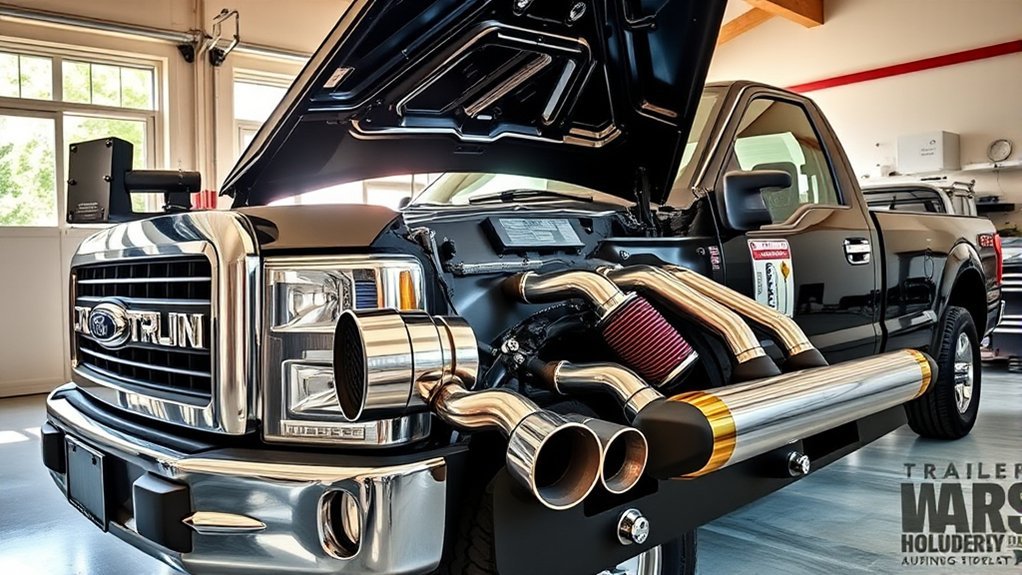
Product names and advertised power gains are less important than compatibility, documentation, compliance, and support. Output can vary by engine, fuel, vehicle software, altitude, temperature, and test method.
| Option | Best Use | Key Checks |
|---|---|---|
| Factory Tow/Haul mode | First choice for many stock vehicles | Use instructions, grade-braking behavior, trailer-brake integration |
| Monitor-only display | Viewing temperatures, load, and diagnostic data without changing calibration | Supported parameters, alert functions, data accuracy, safe mounting |
| OEM-approved calibration | Vehicles with an official accessory or performance program | Exact part eligibility, installation requirements, emissions status, warranty terms |
| Aftermarket tow calibration | Improving drivability when factory behavior is unsuitable | Vehicle match, emissions compliance, fuel requirement, transmission logic, monitoring limits, technical support |
Do not rely on phrases such as “warranty safe” or “emissions compliant” without documentation that applies to your exact vehicle and location. Keep the purchase record, installation record, stock calibration, maintenance history, and all written instructions.
Under current FTC warranty guidance, using an aftermarket part does not automatically cancel the entire vehicle warranty. However, coverage may be denied for damage that the manufacturer or dealer can show was caused by a defective part or improper installation. Service contracts may have separate terms.
Monitor Temperatures and Performance
Watch the parameters supplied by the vehicle and calibration manufacturers. Depending on the powertrain, useful data may include:
- Engine coolant temperature
- Engine oil temperature and pressure
- Transmission-fluid temperature
- Intake-air or charge-air temperature
- Fuel pressure
- Boost pressure
- Exhaust-gas temperature
- Battery, inverter, and motor temperature on electrified vehicles
- Trailer-brake status and trailer-tire pressure where equipped
There is no universal EGT limit that applies to every engine. The safe range depends on sensor location, engine design, calibration, fuel delivery, turbocharger, piston and valve materials, and how long the temperature is sustained. Use the documented limit for the exact engine and sensor position.
Stop and investigate when you see a temperature warning, repeated derating, coolant loss, fluid odor, smoke, knock, misfire, slipping shifts, unusual exhaust behavior, or a steady temperature rise that does not respond to reduced load.
Pro Tip: Record baseline readings on the same route before changing the calibration. Comparing similar load, speed, grade, and weather conditions is more useful than comparing isolated peak numbers.
Safe Driving With a Tuned Tow Vehicle
Manage Speed and Following Distance
There is no universal instruction to reduce speed by exactly 10% or 15%. Drive below the applicable posted or towing-specific limit and slow further for traffic, wind, rain, snow, curves, construction, visibility, trailer behavior, and tire ratings.
Leave substantially more stopping distance than you would without a trailer. Added engine power does not shorten the combination’s stopping distance.
Climbing Grades
Select Tow/Haul mode or the manufacturer-recommended gear strategy before the transmission begins repeatedly shifting. Use a speed that allows the powertrain to operate without sustained excessive temperature, detonation, lugging, or warning messages.
On long climbs, turning off unnecessary electrical or climate loads may help some vehicles, but never disable systems needed for defogging, battery cooling, passenger safety, or high-voltage thermal management.
Descending Grades
Reduce speed before the descent. Use Tow/Haul, a lower gear, grade braking, or an exhaust brake when the vehicle manufacturer permits it. Do not ride the service brakes continuously. Apply controlled braking as needed and stop safely if braking performance fades or an odor develops.
Driver-assistance systems may operate differently or have restrictions when towing. Review the owner’s manual before using adaptive cruise control, lane-centering, automatic emergency braking, or stability features with a trailer.
Prevent and Respond to Trailer Sway
Sway can result from insufficient tongue weight, excessive speed, wind, abrupt steering, unsuitable tires, poor hitch setup, or loading behind the trailer axles.
If sway begins:
- Hold the steering wheel steady and look where you want to travel.
- Ease off the accelerator gradually.
- Avoid abrupt steering or hard tow-vehicle braking.
- Use the manual trailer-brake control only if the controller and trailer manufacturers recommend that response.
- Stop in a safe location and correct the loading, tire, hitch, or speed problem before continuing.
Regular Maintenance Checks
Towing is severe service for many vehicles. Follow the towing or severe-service schedule in the owner’s manual rather than a generic mileage interval.
Before Every Trip
- Confirm the coupler, latch, pin, and safety-chain connections.
- Test all trailer lights and brakes.
- Check vehicle and trailer tire pressures when cold.
- Inspect tires for cuts, cracking, bulges, abnormal wear, and adequate tread.
- Confirm wheel-lug torque according to the wheel or trailer manufacturer.
- Check mirrors, cameras, brake-controller settings, and breakaway equipment.
- Secure doors, ramps, jacks, cargo, batteries, propane cylinders, and loose items.
During the Trip
- Recheck the hitch, tires, wheel hubs, and cargo after the first stop.
- Watch for unusual heat, odor, vibration, sway, smoke, or fluid leaks.
- Recheck tie-downs and weight-distribution hardware.
- Stop promptly for warning lights or changing brake, steering, or transmission behavior.
Common Towing-Tuning Mistakes
- Using the advertised maximum tow rating: The maximum often applies only to a specific configuration with required equipment.
- Ignoring payload: Tongue weight, passengers, cargo, and hitch equipment can use all available payload before the advertised trailer maximum is reached.
- Choosing the highest-power file: Maximum output is not the same as sustained towing durability.
- Tuning a vehicle with existing problems: Added cylinder pressure, heat, or firmer shifting can expose weak components quickly.
- Using airbags to “increase payload”: Air springs may level the vehicle but do not change the certification label.
- Assuming a temperature number is universal: Sensor placement and engine design matter.
- Disabling emissions or diagnostic systems: This can create legal, inspection, drivability, resale, and repair problems.
- Skipping loaded testing: An unloaded road test cannot verify behavior at real combined weight.
- Ignoring trailer tires and brakes: Tow-vehicle upgrades cannot correct an unsafe trailer.
Towing Capacity and Optimal Tuning Practices
Towing Capacity Explained
Towing capacity is not simply the engine’s ability to pull a trailer. It is a manufacturer-assigned limit based on the complete vehicle and, for applicable vehicles, testing criteria that address acceleration, gradeability, cooling, handling, braking, hitch structure, and other performance requirements.
The safe loaded trailer weight is the lowest value allowed by:
- The vehicle’s maximum trailer weight rating
- GCWR minus the actual loaded tow-vehicle weight
- Available payload after passengers, cargo, accessories, hitch hardware, and tongue or pin weight are included
- Front and rear GAWR
- Hitch, ball mount, ball, coupler, and weight-distribution ratings
- Tire and wheel ratings
- The trailer’s GVWR and axle ratings
Optimal Tuning Practices
The best towing calibration is not defined by a fixed horsepower increase. It should provide predictable response, appropriate shift control, documented temperature limits, compatible fuel requirements, functioning diagnostics, and full emissions-system operation.
Use factory Tow/Haul mode when available, avoid lugging the engine, and select gears early on long grades. Watch the parameters specified by the manufacturer rather than chasing a generic EGT, boost, or transmission-temperature number.
After any calibration change, inspect for codes, leaks, abnormal fuel trims, knock, smoke, harsh shifts, or thermal problems. Restore the stock calibration and seek qualified diagnosis if the vehicle behaves abnormally.
Frequently Asked Questions
What is the 60/40 rule for towing?
There is no universal rule requiring you to tow at only 60% of the vehicle’s rating. The phrase is sometimes used informally to describe placing about 60% of trailer cargo weight ahead of the axle and 40% behind it, but that is only a rough loading starting point. Measure the actual tongue weight and follow the vehicle and trailer manufacturers’ instructions.
What is the 80/20 rule for towing?
There is no recognized SAE or universal manufacturer rule stating that a towing tune should use midrange torque 80% of the time. Select a calibration from documented vehicle requirements, fuel specifications, operating limits, and loaded testing rather than an 80/20 formula.
What is the 85% rule for towing?
The 85% rule is an informal guideline sometimes used by caravan owners to leave a margin below a vehicle’s stated maximum. It is not a universal U.S. engineering or legal standard. A percentage of the tow rating also cannot show whether payload, axle, hitch, tire, or GCWR limits have already been exceeded.
Will a tuner help with towing?
A suitable tuner may improve throttle response, shift scheduling, torque-converter behavior, monitoring, or engine braking. The benefit depends on the exact vehicle and calibration. It will not increase the vehicle’s certified towing, payload, axle, hitch, tire, or combined-weight ratings.
Can a tune increase legal towing capacity?
No. Added engine output does not change the manufacturer’s GVWR, GAWR, GCWR, payload, or trailer weight rating. It also does not change the ratings of the receiver, ball mount, tires, wheels, axles, brakes, or trailer.
Does installing a tuner void the entire vehicle warranty?
Not automatically. Under FTC guidance, using an aftermarket part does not by itself cancel the entire warranty. A manufacturer or dealer may deny coverage for a damaged component when it can show that the aftermarket part or improper installation caused the damage. Separate service contracts may impose additional conditions.
What temperature should I watch while towing?
Watch the temperatures identified in your owner’s manual and calibration documentation, which may include coolant, oil, transmission fluid, intake air, exhaust gas, battery, inverter, or motor temperature. There is no single safe number for every vehicle. Exhaust-temperature limits are especially dependent on engine design and sensor placement.
Should I use Tow/Haul mode with an aftermarket tune?
Use Tow/Haul mode when the vehicle and calibration providers instruct you to do so. It may change shift timing, grade braking, torque-converter operation, cooling requests, or exhaust-brake behavior. Do not assume that an aftermarket calibration replaces the factory mode unless its documentation says so.
Conclusion
Safe vehicle tuning for towing begins with ratings and measurements, not advertised horsepower. Verify the exact vehicle configuration, weigh the loaded combination, correct mechanical problems, inspect the trailer and hitch, and choose a conservative calibration that preserves emissions controls and diagnostics.
Use factory towing features where appropriate, monitor the parameters specified for the powertrain, and reduce load or speed when temperatures or handling begin to deteriorate. Supporting upgrades can improve control and durability, but none of them replaces the limits printed by the vehicle, tire, hitch, and trailer manufacturers.
Sources
- SAE International — J2807 Tow-Vehicle Rating Requirements — performance criteria used to determine applicable trailer weight and combined-weight ratings
- Chevrolet Trailering and Towing Guide — towing terminology, current model-year resources, and rating definitions
- Chevrolet Advanced Trailering System and Tow/Haul Mode — factory Tow/Haul operation and trailer-check features
- NHTSA TireWise — tire pressure, placard, tread, maintenance, and tire-safety guidance
- U.S. EPA — Aftermarket Defeat Devices and Tampering — federal emissions-tampering and enforcement guidance
- Federal Trade Commission — Auto Warranties and Service Contracts — aftermarket-part and warranty-coverage guidance







Leave a Reply