
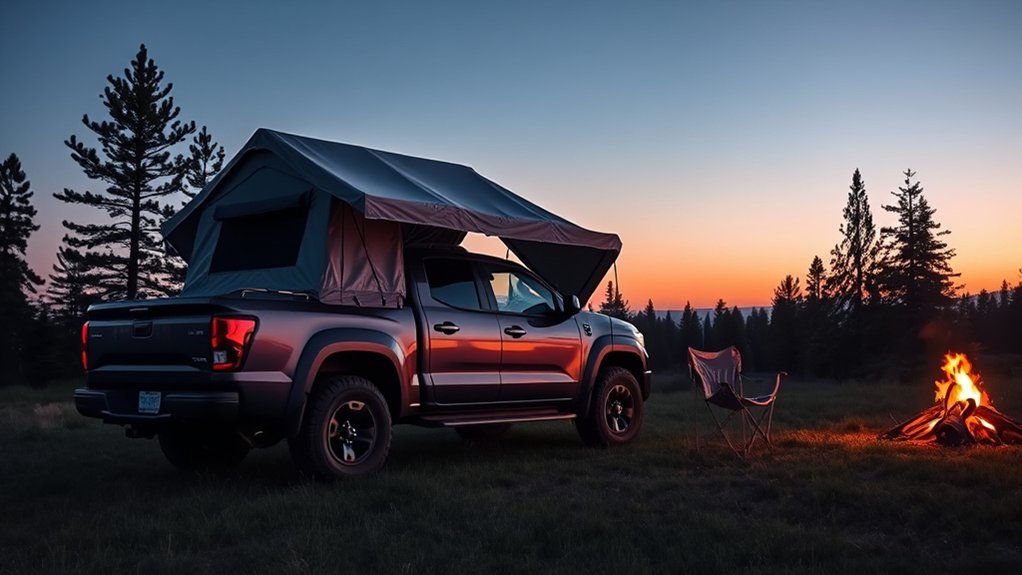
Truck tent camping turns a pickup, SUV, or properly equipped roof rack into a compact basecamp. It can keep your sleeping area above wet or uneven ground, shorten setup time, and make roadside or campground travel more flexible. A safe trip still depends on choosing a compatible shelter, following the manufacturer’s instructions, checking local camping rules, and preparing for weather, wildlife, fire, and vehicle-related hazards.
Quick Answer
Truck tent camping means sleeping in a tent fitted to a pickup bed, SUV hatch, or approved rooftop rack. Confirm vehicle fit and load limits, practice at home, park on a legal level site, keep the engine and cooking gear off, secure the shelter, and follow weather, food-storage, fire, and campground rules.
Key Takeaways
- Measure your truck bed or check the exact vehicle-and-tent fit guide before buying.
- A truck tent may keep you above mud and some crawling insects, but it does not make you safe from wildlife or severe weather.
- Never drive with a truck tent deployed, and do not idle the engine while anyone is sleeping in or near the tent.
- Use stoves, grills, lanterns, and fuel-burning heaters only as directed and never inside the tent, truck bed, vehicle, or another enclosed space.
- Verify overnight parking, vehicle-tent, food-storage, fire, road, permit, and stay-limit rules for the exact campsite.
At a Glance
| Time Required | About 10–30 minutes after practice; allow longer for the first setup |
| Difficulty | Easy to moderate, depending on tent size, weather, and whether one or two people are setting it up |
| Tools Needed | Measuring tape, broom, included poles and straps, stakes and guylines where permitted, and an optional rubber mallet |
| Cost | Varies by shelter type; include the tent, sleeping system, weather protection, cooking equipment, and campsite or permit fees in your budget |
Understanding Truck Tent Camping
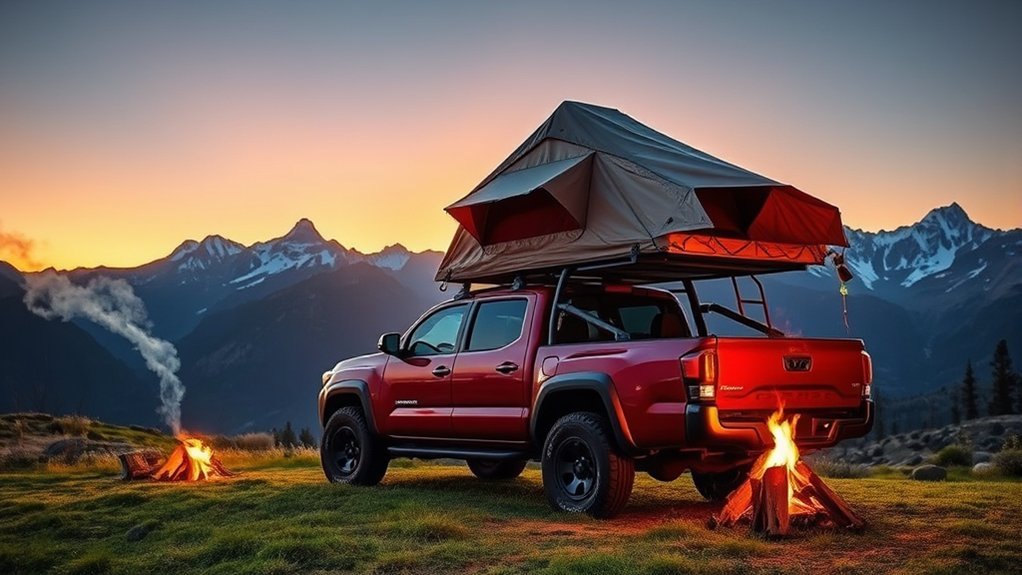
Truck tent camping combines vehicle travel with tent camping. Instead of pitching a shelter directly on the ground, you sleep in the pickup bed, beside an open SUV hatch, inside a camper shell, or in a rooftop tent secured to an approved rack.
A truck-bed tent can provide a flatter sleeping footprint, reduce contact with mud and standing water, and keep bedding close to the vehicle. Many models use color-coded or shock-corded poles and adjustable straps, so setup becomes faster after a few practice runs.
Those benefits have limits. A fabric shelter is not a substitute for a hard-sided building during severe weather, and elevation does not make food or campers inaccessible to wildlife. Water resistance also depends on correct fit, a properly installed rainfly, sound seams, drainage, and suitable conditions.
A truck bed may lift you above mud, but it does not lift you above weather, wildlife, or campsite rules.
Types of Truck Camping Shelters
The best shelter depends on your vehicle, budget, storage space, weather, and whether you need to drive after camp is set up.
| Shelter Type | Advantages | Important Limitations |
|---|---|---|
| Truck-bed tent | Uses the pickup bed, packs smaller than most rooftop systems, and is often tool-free | Must match the bed; the tailgate may need to remain open; the tent must be removed before driving |
| SUV or hatch tent | Creates more changing and living space and may allow access to the vehicle interior | The sleeve must fit the vehicle opening; exhaust and engine-idling risks require special care |
| Rooftop tent | Includes an elevated platform and often a built-in mattress; keeps the truck bed available for gear | Costs and weighs more; requires compatible crossbars or a bed rack and verified load ratings |
| Camper shell or cap | Offers hard-sided weather protection and faster departure once bedding is secured | Needs ventilation, condensation control, safe entry and exit, and protection from vehicle exhaust |
A pop-up ground tent is a separate product category. Some vehicle-attached shelters unfold quickly, but “pop-up” does not automatically mean that the shelter is designed to connect to an SUV or pickup.
Check Compatibility Before Buying
Do not select a truck tent by vehicle category alone. Confirm the exact model, bed configuration, and accessory requirements using the tent manufacturer’s fit guide.
- Measure the bed correctly: For many truck tents, measure the inside bed length with the tailgate closed. Follow the selected manufacturer’s method rather than assuming every brand measures the same way.
- Check bed width and shape: Wheel wells, bed steps, cargo-management rails, and unusual bed shapes can affect usable floor space.
- Review the tailgate requirement: Many truck-bed tents are used with the tailgate open. Confirm that the campsite can accommodate the truck’s full deployed length.
- Inspect bed accessories: Folding tonneau covers, toolboxes, headache racks, roll bars, sports bars, and camper shells may need to be removed or may make the tent incompatible.
- Protect the vehicle: Clean grit from painted contact points and use the manufacturer’s strap protectors or approved padding where needed.
- Verify rooftop loads: A rooftop tent requires compatible crossbars or a bed rack. Check the tent’s static capacity and the vehicle, rack, mounting-foot, and crossbar dynamic capacities. Use the lowest applicable rating.
Napier’s truck-tent guidance explains that bed length determines compatibility for its models and that the shelter is for parked use only. For rooftop systems, Thule’s rack guidance explains the difference between carrying the tent while driving and supporting occupants while parked.
Pro Tip: Complete one full setup at home before the trip. Photograph the pole routing, strap locations, rainfly orientation, and packed arrangement so you can repeat the process after dark or in poor weather.
Essential Gear for Truck Tent Camping
The right equipment should address sleep, weather, water, cooking, lighting, repairs, hygiene, and emergencies. Pack gear in labeled, weather-resistant bins so you do not have to unload the entire truck to find one item.
| Gear Item | Purpose |
|---|---|
| Inflatable or closed-cell sleeping pad | Adds cushioning and insulation between you and the metal truck bed |
| Weather-appropriate sleeping bag or quilt | Provides insulation for the expected overnight low |
| Pillow and dry sleep clothes | Improves sleep and keeps damp daytime clothing out of the bedding |
| Portable camp kitchen | Organizes outdoor meal preparation away from the tent and vehicle |
| Cooler and approved food storage | Keeps food secure and supports local wildlife-storage requirements |
| Storage boxes or bins | Keeps gear dry, organized, and easy to move between the bed and cab |
| Tarp and adjustable poles | Creates a separate shade or rain area when local rules and wind permit |
| Headlamp, lantern, and spare batteries | Provides hands-free lighting without using a fuel-burning lantern inside |
| Water and treatment backup | Covers drinking, cooking, cleanup, and unexpected delays |
| Repair kit | Includes compatible patches, tape, spare cord, seam sealer, and pole repair supplies |
| First aid and emergency equipment | Supports minor injury care, signaling, navigation, and roadside problems |
| Trash and hygiene supplies | Keeps the campsite clean and prevents scented waste from being left behind |
Sleeping Comfort and Condensation Control
A thick mattress is not the only factor that determines comfort. The metal bed can conduct heat away from your body, so choose a sleeping pad with enough insulation for the expected temperature. Add a sleeping bag or quilt rated for conditions colder than the forecast low, plus dry base layers, a warm hat, and a regular or compact camping pillow.
Before laying out bedding, sweep the bed and cover sharp corners, bolt heads, or rough accessories that could puncture the tent floor or sleeping pad. Keep boots and wet clothing near the entrance in a tray or waterproof bag rather than placing them against dry bedding.
Ventilation helps control condensation. Open the tent’s vents and protected windows when conditions permit, avoid breathing into your sleeping bag, and do not press bedding against wet tent walls. In the morning, air out the shelter and bedding before packing.
Note: Condensation inside a tent does not always mean the fabric is leaking. Moisture from breathing, wet gear, humidity, and temperature differences can collect on the inner surface even when the rainfly is working correctly.
Handle Weather Challenges Before They Become Emergencies
Check the forecast before leaving and again while you still have service. Conditions can differ sharply between your home, the highway, and an elevated or exposed campsite.
- Rain: Use the full rainfly, close storm flaps, keep fabric properly tensioned, and position openings away from wind-driven rain. Do not camp in a wash, drainage channel, depression, or area where water may pool.
- Wind: Stake and guy out the shelter exactly as instructed where staking is allowed. Remove awnings during gusty weather. If strong winds or severe storms are expected, take the tent down and move to safer shelter.
- Lightning: A tent, tarp, pavilion, or open truck bed is not safe lightning shelter. Move into a substantial building or the hard-topped cab with the doors and windows closed.
- Flash flooding: Leave low ground immediately if water rises, runoff begins, or an alert is issued. Do not delay your escape to retrieve equipment.
- Heat: Seek shade, maintain airflow, drink water regularly, and avoid sleeping in a sealed vehicle. Never leave a child or pet in a closed vehicle.
- Cold and snow: Use the tent only within its stated season and weather rating. Clear accumulating snow before it overloads fabric or poles, and do not rely on an unapproved fuel-burning heater.
The National Weather Service states that tents are not safe during lightning. The National Park Service campsite guide also recommends checking for flash-flood routes, wind exposure, lightning, and dead branches before settling in.
Tips for Staying Comfortable While Truck Camping
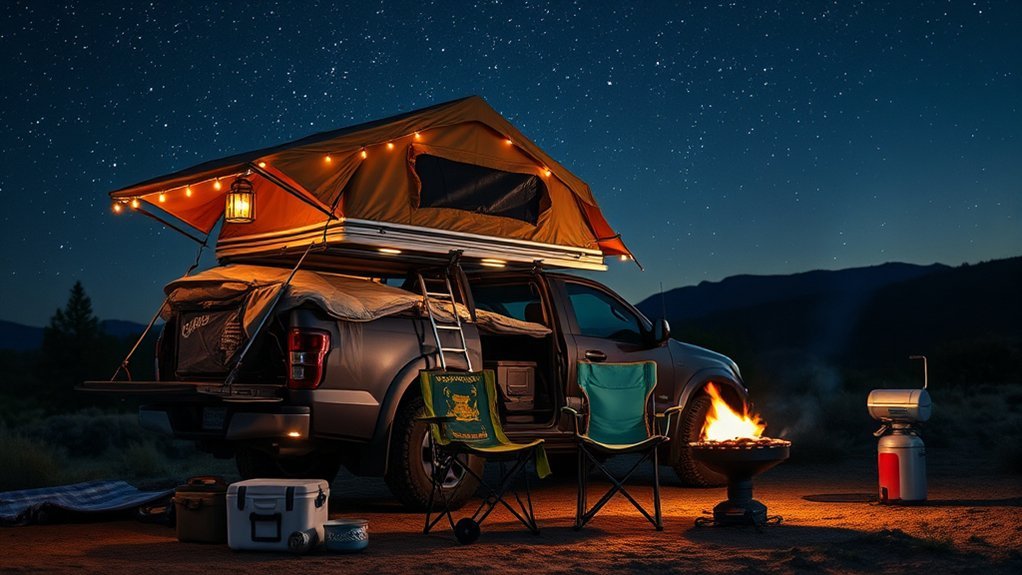
- Park with the sleeping surface as level as possible so you do not slide toward the tailgate during the night.
- Use a sleeping pad that provides both cushioning and temperature insulation.
- Keep a dedicated set of dry sleeping clothes sealed in a waterproof bag.
- Bring extra layers so you can adjust without overheating inside the sleeping bag.
- Use battery-powered lighting and keep a headlamp within reach of each sleeper.
- Place frequently used items in bedside pockets so you do not step over another sleeper at night.
- Create a separate outdoor kitchen and seating area rather than cooking or relaxing with open flame beside the tent fabric.
- Carry a small step stool if climbing into the tailgate is difficult, and place it on firm, level ground.
How to Set Up a Truck Tent Safely
- Confirm that camping is allowed. Verify the reserved site, parking pad, vehicle length, tent restrictions, and quiet-hour rules before unloading.
- Inspect the campsite. Look for drainage channels, flood risk, unstable ground, dead branches, falling-rock exposure, fire hazards, and enough space for the open tailgate.
- Park and secure the truck. Use a level position, shift into Park or the appropriate gear, set the parking brake, turn off the engine, and keep the keys accessible.
- Prepare the bed. Remove loose cargo, sweep away dirt and sharp debris, and cover exposed edges that could damage the floor.
- Lay out and identify the parts. Separate the tent body, rainfly, poles, straps, stakes, and guylines. Compare them with the manual before inserting poles.
- Attach the tent loosely. Center the body in the bed and connect straps in the manufacturer’s sequence without fully tightening them.
- Install poles and rainfly. Use the correct sleeves and clips, avoid forcing poles, and position the rainfly with vents and doors aligned.
- Tension and secure the shelter. Tighten straps evenly, protect painted contact points, stake and guy out the tent where allowed, and confirm that fabric is not sagging where rain can collect.
- Build the sleep system. Add the sleeping pad, bedding, and dry personal gear only after the shelter is stable and weather-tight.
- Complete a final safety check. Confirm that the engine is off, exhaust is unobstructed, fuel is stored safely, cooking equipment is outside, food is secured, and the exit is clear.
Warning: Never drive with a truck tent deployed. Take down and pack the complete shelter before moving the vehicle, even for a short repositioning trip.
Cooking, Carbon Monoxide, and Fire Safety
Set up the camp kitchen outdoors and away from the tent, truck bed, open hatch, dry grass, and flammable fabric. Follow the stove or grill manufacturer’s clearance instructions and place the appliance on a stable, noncombustible surface.
Never use a charcoal grill, camp stove, fuel-burning lantern, generator, or unapproved heater inside a tent, camper shell, vehicle, or partly enclosed sleeping area. Opening a window or tent flap does not guarantee that carbon monoxide will remain at a safe level. The U.S. Consumer Product Safety Commission warns that camping heaters, lanterns, and stoves can cause fatal carbon-monoxide poisoning in tents, campers, and vehicles.
Check current fire restrictions before using any flame. Some areas prohibit campfires, charcoal, or certain stoves during high fire danger. Use an existing fire ring where required, keep water and a shovel nearby, supervise the flame continuously, and extinguish it until the fuel and ashes are cool to the touch.
Warning: Keep the engine off while the tent is attached or occupied. Exhaust can collect around an open tailgate, camper shell, SUV sleeve, or nearby tent and create a serious carbon-monoxide hazard.
Food Storage and Wildlife Safety
A raised sleeping area does not prevent bears, rodents, raccoons, or other animals from investigating food and scented items. Keep food, trash, coolers, cookware, pet food, toiletries, and other attractants out of the sleeping area.
Follow the exact storage method required by the campground or land agency. Depending on the location, that may mean using a provided food locker, an approved bear-resistant container, or a locked hard-sided vehicle. A soft truck-bed cover, open pickup bed, tent, or exterior cargo bag may not qualify.
Clean spills immediately, do not leave food unattended, never feed wildlife, and pack out all trash. The National Park Service food-storage guidance notes that some parks prohibit storing food in pickup beds and require more secure methods.
Safety, Security, and Emergency Planning
- Share your route, campsite, vehicle description, and expected return time with a trusted person.
- Download maps, permits, and reservation details before entering areas with limited service.
- Carry a first aid kit, drinking water, warm layers, a flashlight, basic tools, a tire-repair method, and a charged power bank.
- Consider a satellite communicator or personal locator beacon for remote areas where cellular service is unreliable.
- Lock valuables in the cab and keep them out of sight rather than leaving them in the open truck bed.
- Keep the truck keys, shoes, headlamp, and emergency layers where they can be reached quickly at night.
- Know the nearest exit route, ranger station, medical facility, fuel stop, and safe weather shelter.
- Leave if the campsite feels unsafe, road conditions worsen, or weather exceeds the shelter’s limits.
How to Choose a Truck Tent Campsite
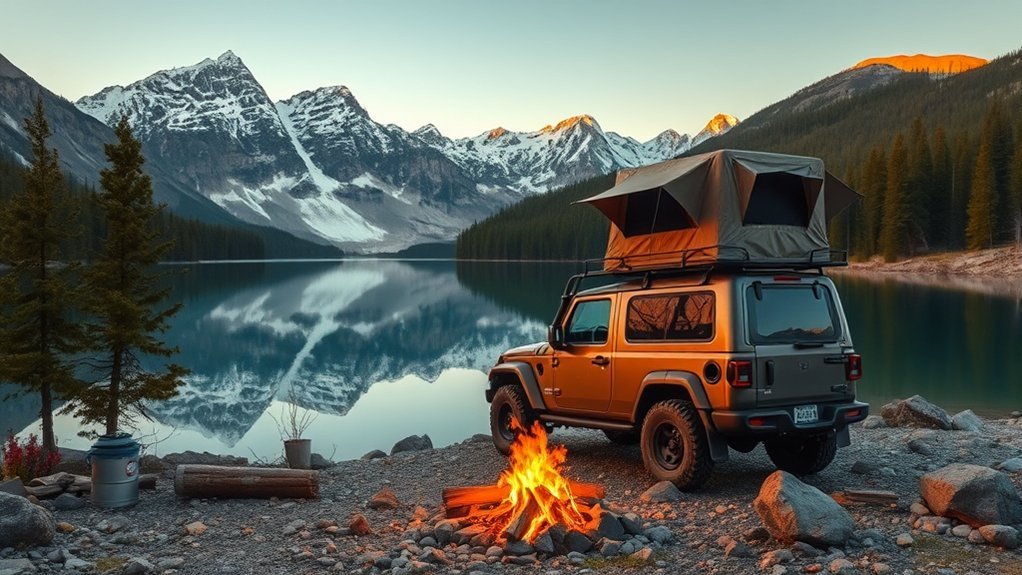
For a first trip, a developed campground with a defined parking pad, toilets, potable water, and a host is often easier than an undeveloped site. Confirm that the parking space is long enough for the truck and open tailgate and that vehicle-mounted tents are permitted in the selected loop.
Dispersed camping may be available on some Bureau of Land Management or National Forest lands, but it does not mean that every road shoulder or clearing is legal. Stay on routes open to your vehicle, use an existing durable site where directed, and check the managing office’s current rules.
The Bureau of Land Management explains that stay limits, fire rules, permits, and road restrictions vary by location. A 14-day limit within a 28-day period is common on BLM land, but the local field office’s rule controls.
Use Recreation.gov to research many federal campgrounds, reservations, permits, and facility details. Also check the managing park, forest, district, or field-office page for alerts, closures, food-storage requirements, and current fire orders.
Evaluate each site for:
- A legal overnight parking designation
- A firm and reasonably level parking surface
- Enough space for the open tailgate, ladder, guylines, and safe entry
- No flash-flood channel, wash, unstable bank, or low drainage point
- No dead trees, hanging limbs, rockfall exposure, or unstable slope
- Protection from severe prevailing wind without parking beneath hazardous branches
- Required distance from water, trails, roads, and cultural or sensitive sites
- A safe departure route if rain, snow, wildfire, or road conditions worsen
Leave No Trace With a Truck Tent
Vehicle access makes it easy to carry more equipment, but it also increases the potential for soil damage, litter, noise, and illegal off-road travel. Keep tires on authorized roads and parking surfaces, use an existing campsite where required, and avoid widening pullouts or crushing vegetation.
Pack out trash, food scraps, foil, cord, damaged stakes, and wastewater as local rules require. Do not cut live vegetation, trench around the tent, move large rocks, or attach lines to trees where prohibited. Keep music and lighting low, respect quiet hours, and leave the site ready for the next camper.
Cleaning and Maintaining Your Truck Tent
- Shake or sweep out loose dirt before taking the tent down.
- Spot-clean fabric with cool water, a soft cloth, and a cleaner approved by the manufacturer.
- Avoid household bleach, harsh detergent, pressure washing, and machine washing unless the manual specifically permits them.
- Rinse away soap residue and allow the tent, rainfly, straps, floor, and storage bag to dry completely.
- Inspect seams, zippers, pole sections, shock cord, clips, buckles, straps, and guylines after each trip.
- Repair small damage promptly with compatible materials and apply seam treatment only where recommended.
- Store the tent loosely in a cool, dry location away from fuel, pests, direct sunlight, and sharp tools.
Sources
- Napier Outdoors: Truck Tents — vehicle fit, tailgate use, parked-only operation, setup, and severe-weather guidance
- Thule: Rooftop Tent Roof-Rack Requirements — dynamic rack capacity and rooftop-tent compatibility
- U.S. Consumer Product Safety Commission: Portable Heaters and Camping Equipment — carbon-monoxide hazards from stoves, lanterns, and heaters
- National Weather Service: Outdoor Lightning Safety — safe shelter and the limits of tents and open structures
- National Park Service: Finding and Setting Up a Campsite — campsite hazards, drainage, wind, lightning, and overhead branches
- Bureau of Land Management: Camping — dispersed-camping limits, permits, road use, and fire restrictions
Frequently Asked Questions
How do I choose the right truck tent for my vehicle?
Measure the truck bed using the tent manufacturer’s method, then confirm the exact bed length, width, tailgate position, and model-year fit. Check whether a tonneau cover, toolbox, rack, sports bar, bed step, or camper shell must be removed. Do not rely only on labels such as “full-size” or “short bed.”
Can I use a truck tent in winter conditions?
Use it only within the manufacturer’s season, wind, and weather guidance. Choose an insulated sleeping pad and cold-rated bedding, ventilate to limit condensation, and monitor snow accumulation. Take the shelter down if wind, snowfall, ice, or temperature exceeds its design or your equipment and experience.
What is the weight limit for a truck-bed tent?
There is no universal truck-tent weight limit. A standard truck-bed tent usually rests on the pickup bed and does not act as a suspended platform. Check the truck’s payload limit and any separate sleeping-platform rating. Rooftop tents require the tent, rack, crossbars, mounting system, and vehicle roof to remain within their stated dynamic and static capacities.
Are truck tents compatible with all truck models?
No. Compatibility depends on the exact bed dimensions, body design, tailgate, and installed accessories. Even trucks with the same name may have different bed lengths or generation-specific dimensions, so verify the model year and configuration in the manufacturer’s current fit guide.
Can I run or idle the truck while the tent is attached?
Do not idle the engine while people occupy a truck-bed, SUV, hatch, or camper-shell sleeping area. Exhaust can collect near the shelter and expose occupants to carbon monoxide. Turn the vehicle off, keep the exhaust outlet clear, and follow the vehicle and tent manufacturers’ instructions.
Can I cook inside a truck tent when it is raining?
No. Do not use a stove, grill, charcoal, fuel-burning lantern, or similar appliance inside the tent, truck bed, cab, camper shell, or another enclosed or partly enclosed sleeping area. Use a separate outdoor cooking location with the appliance’s required clearance, and obey current fire restrictions.
How do I clean and maintain my truck tent?
Remove dirt, spot-clean with products approved by the manufacturer, and let every component dry fully before storage. Inspect poles, straps, seams, zippers, clips, and the floor after each trip. Repair small tears and seam problems early, and store the tent in a cool, dry place.
Conclusion
Truck tent camping can provide a comfortable and flexible basecamp when the shelter fits the vehicle and the campsite fits the conditions. Measure before buying, practice the setup at home, keep the vehicle parked with the engine off, cook outside, secure wildlife attractants, and treat storms seriously. With those steps complete, you can spend less time correcting preventable problems and more time enjoying the trip.







Leave a Reply