
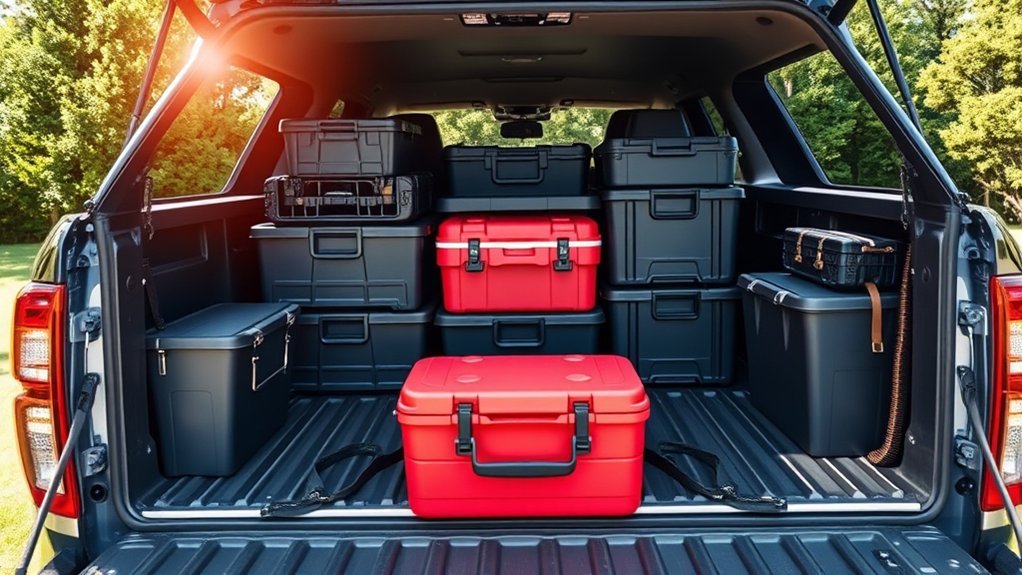
A well-planned truck bed storage setup keeps tools, camping gear, sports equipment, and everyday cargo easier to reach and safer to carry. The best system is not always the largest or most expensive. It is the one that fits your exact truck, stays within its payload limit, protects the gear you carry, and still leaves room for future needs.
Quick Answer
Start by measuring the bed, listing the gear you carry, and checking the truck’s payload label. Use bins or dividers for flexible storage, a toolbox for secure daily access, drawers or a bed slide for heavier equipment, and a properly fitted cover for weather resistance. Secure every item before driving.
Key Takeaways
- Confirm the truck’s year, make, model, cab style, bed length, liner, and rail accessories before ordering a fitted system.
- Count the weight of drawers, slides, toolboxes, caps, passengers, and cargo against the truck’s available payload.
- Use rated straps, nets, dividers, and factory-approved anchor points so cargo cannot shift, fall, or blow out.
- Treat most tonneau covers and caps as weather-resistant, not completely waterproof.
- Choose modular storage when your cargo changes often and fixed storage when fast, repeatable access matters most.
At a Glance
| Time Required | 30–60 minutes to plan; about 15 minutes to several hours to install, depending on the system |
| Difficulty | Easy for bins and nets; moderate for toolboxes, covers, drawers, racks, and slides |
| Tools Needed | Tape measure, notepad, scale or published product weights, basic hand tools, and the manufacturer’s installation guide |
| Cost | From low-cost bins and cargo nets to $2,000 or more for premium drawers, slides, caps, or custom systems |
How to Assess Your Truck and Gear Needs
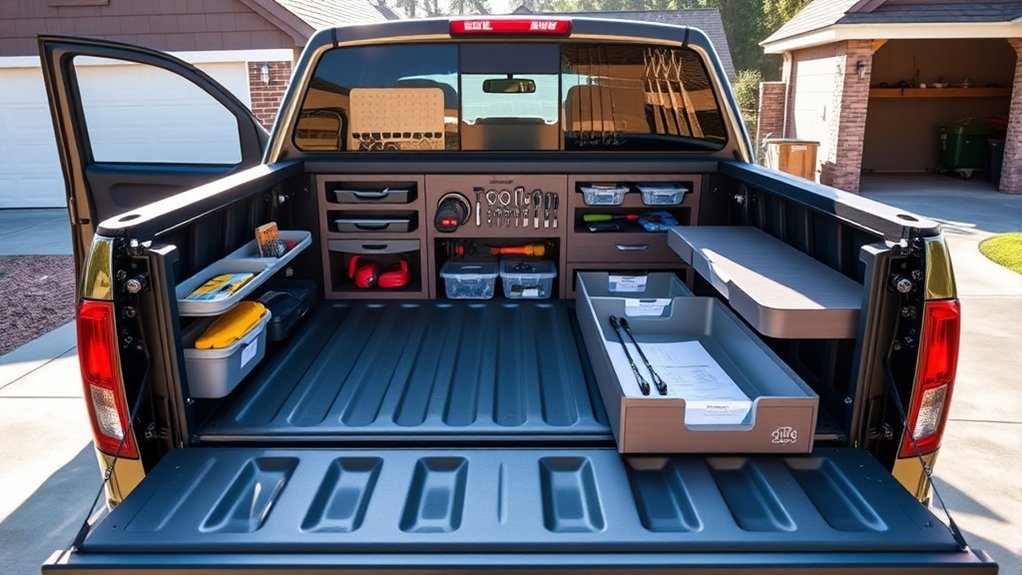
1. Measure the Usable Truck Bed Space
Measure the bed length with the tailgate closed, the width between the bed walls, the narrower width between the wheel wells, and the height from the bed floor to the rails. If you use a tonneau cover or cap, measure the clearance below it as well.
Also note anything that reduces usable space, including a drop-in liner, spray-in liner thickness, factory storage boxes, a gooseneck or fifth-wheel hitch, a bed extender, rail caps, lighting, outlets, and existing tie-down cleats. Do not rely only on a listing that says “short bed” or “full-size truck.” Bed dimensions can vary by generation and configuration.
2. List the Gear You Carry
Group your cargo by size, weight, value, and how often you need it. Daily-use tools should be close to the tailgate. Heavy items should stay low and should not be free to slide. Wet, muddy, sharp, or fuel-related items need separate containers that are suitable for that material.
- Work gear: hand tools, power tools, fasteners, recovery equipment, and personal protective equipment
- Outdoor gear: camp stoves, tents, coolers, fishing rods, chairs, and water containers
- Sports gear: bikes, boards, helmets, balls, and protective pads
- Emergency gear: first-aid kit, flashlight, warning devices, tire tools, and seasonal supplies
Think about future needs too. A modular setup with removable bins, adjustable dividers, or track-mounted accessories is easier to change than a permanent platform.
3. Check Payload Before Adding Storage
Find the Tire and Loading Information label on the driver-side door or door pillar and read the line stating the maximum combined weight of occupants and cargo. The weight of a drawer system, toolbox, cap, slide, rack, passengers, trailer tongue weight, and everything placed in the bed all reduce the remaining payload.
A heavy system can use a large part of that allowance before you add gear. For example, the manufacturer lists the TruckVault Base Camp 3 at about 275–300 pounds, depending on configuration. Always use the specific product weight and your truck’s own label rather than a generic maximum-payload advertisement.
Warning: Storage does not secure itself. Tie down bins, coolers, tools, lumber, and other cargo with equipment suited to the load. Use approved anchor points, keep the tailgate and cover fully latched, and stop after a short drive to check for movement. Never exceed the truck’s payload, axle ratings, anchor ratings, or the storage system’s stated capacity.
NHTSA reports that about 850 people are killed and nearly 19,000 are injured each year in crashes involving objects in the road. Proper cargo securement protects you and everyone traveling behind you.
4. Verify Fitment by Year, Make, Model, and Bed
Before ordering, confirm the exact model year, make, model, cab style, bed length, and any factory bed package. A vehicle identification number, or VIN, can help a dealer or manufacturer confirm the correct configuration, but you should still compare the product’s published measurements with your own bed measurements.
Check compatibility with the tailgate, tonneau cover, cap, bed liner, factory rails, power outlets, tie-downs, spare-tire access, fifth-wheel or gooseneck hardware, and any future rack. Ask whether installation requires drilling and whether removal leaves permanent holes.
Pro Tip: Make a cardboard footprint of a toolbox, drawer, or slide before buying it. Place the template in the bed, close the tailgate and cover, and test how you would reach your most-used gear.
Benefits of Optimizing Truck Bed Storage
Organized storage can make a pickup more useful without increasing its size. A clear layout reduces the time spent searching for tools, keeps dirty gear away from clean gear, and makes it easier to see when something is missing.
Good organization also supports safer loading. Heavy items can stay low and forward, smaller items can be contained, and long cargo can be secured to the correct rack or anchor points. The main goal is not to fill every empty inch. It is to create a repeatable loading system that remains stable during braking, turning, bumps, and highway travel.
Top Truck Bed Storage Options to Consider
The best truck bed organizer depends on how often your cargo changes, how much security you need, and whether you must keep the full bed open. The following options can be used alone or combined when their fitment and weight limits allow it.
| Storage Type | Best For | Main Trade-Off |
|---|---|---|
| Portable bins and totes | Flexible, removable organization | Must be tied down and may be less theft-resistant |
| Cross-bed or side toolbox | Fast access to valuable work tools | Uses bed space and may conflict with covers |
| Drawer system | Organized, repeatable storage below a load deck | Heavy, expensive, and model-specific |
| Bed slide | Reaching heavy or deep cargo from the tailgate | Adds weight and raises the cargo floor |
| Tonneau cover or cap | Weather resistance and visual concealment | Not always waterproof; may limit tall cargo |
| Rack system | Ladders, lumber, kayaks, bikes, or rooftop gear | Raises the center of gravity and has separate load limits |
Durable Storage Bins
Portable bins are a strong choice when you switch between work, family, and recreation. Look for secure latches, rounded edges, tie-down points, replaceable seals, and a shape that stacks without blocking the rear window.
The Dometic GO Hard Storage 50L is one example. Dometic describes it as waterproof and dustproof, with integrated handles, tie-down points, lock holes, and a stackable design. The manufacturer listed it at $149.99 when checked on July 19, 2026. Even a sealed bin still needs to be secured to the truck so it cannot slide or become airborne.
Versatile Drawer Systems
Drawer systems create organized storage below a flat deck. They are useful for tools, recovery gear, camping equipment, and small parts that would otherwise collect near the cab. The trade-offs are cost, added weight, reduced bed depth, and less flexibility for tall cargo.
The DECKED Drawer System is a fit-specific example. The manufacturer lists a top-deck capacity of up to 2,000 pounds for full-size applications and 1,000 pounds for midsize applications, while individual drawer limits are lower and vary by model. DECKED also describes the system as weatherproof. That product capacity does not increase the truck’s legal or safe payload; the lower applicable limit always controls.
Do not assume every drawer is theft-proof. Some systems rely on a locked tailgate, while keyed drawer locks may be optional. Compare lock design, drawer capacity, installation time, removal steps, warranty terms, and replacement-part availability.
Toolboxes and Side Storage
A cross-bed toolbox keeps frequently used tools near the cab and can preserve floor space below it. Low-profile boxes improve rear visibility, while side-mounted boxes provide access from outside the bed. Confirm lid clearance with the cab, rails, and tonneau cover.
Choose corrosion-resistant hardware and a box with a supported mounting method. Do not let a clamp, bolt, or bracket crush a bed rail, damage a composite bed, or interfere with curtain airbags, wiring, lighting, drain paths, or factory accessories.
Bed Slides and Sleeping Platforms
A bed slide brings cargo to the tailgate so you do not need to crawl into the bed. Capacity varies by model. For example, the BEDSLIDE 1000 Classic is rated by its manufacturer for 1,000 pounds evenly distributed. It also raises the cargo floor, so check cover clearance and the height needed for coolers, tool cases, and appliances.
Sleeping platforms can combine a flat bed with storage underneath. BamBeds, for example, makes model-specific modular platforms for selected trucks rather than one universal platform. Confirm the exact application, platform weight, support limit, wheel-well clearance, and how the platform is restrained during travel.
Cargo Bars, Nets, Mats, and Dividers
For lighter and changing loads, a rubber mat, adjustable divider, cargo bar, or rated net may be enough. These products help contain groceries, sports equipment, empty containers, and other light items. They are not substitutes for rated tie-downs when carrying dense, tall, sharp, or heavy cargo.
Use non-slip mats to reduce movement, then secure the load separately. Friction alone may not hold cargo during hard braking or a collision.
Truck Bed Storage: Weather Protection for Your Cargo
Weather protection works best in layers: a cover or cap over the bed, sealed containers for sensitive gear, and a loading routine that keeps wet items separate. Inspect seals and drain paths before storm season and after removing or reinstalling any accessory.
Essential Covers and Shields
Tonneau covers can reduce direct exposure to rain, snow, sun, and casual view. Hard folding and retractable covers often provide more physical security than soft covers, but security still depends on the tailgate lock, latch design, and whether the cover can be pried or cut.
Most covers should be treated as weather-resistant rather than fully waterproof. LEER’s tonneau-cover guidance states that most are not completely waterproof and that correct seals and drainage help keep out weather. Put electronics, documents, clothing, and other water-sensitive items in sealed containers even when a cover is installed.
A truck cap adds enclosed height and can support side windows, lighting, shelves, or a roof rack when the cap is designed for those loads. Check the cap’s own roof-load rating and the truck manufacturer’s limits before carrying anything overhead.
Note: A closed cover can hide cargo, but concealment is not the same as security. Lock valuable tools inside a secured box or drawer, remove high-value items when practical, and do not leave keys in the bed.
Ventilation and Moisture Control
Moisture can enter through wet gear, condensation, tailgate gaps, worn seals, or clogged drains. Dry tents, waders, ropes, and tools before long-term storage. After a wet trip, open the cover, drawers, and bins in a secure place so trapped moisture can escape.
- Keep factory and cover drain channels clear.
- Use desiccant packs inside sealed toolboxes or bins when appropriate, and replace or recharge them as directed.
- Separate wet gear from steel tools, electronics, paper, and fabrics.
- Inspect painted and coated surfaces for chips, rust, loose fasteners, and seal damage.
- Do not drill ventilation holes into the bed or storage system unless the manufacturer’s instructions specifically require and locate them.
Tips for Keeping Your Truck Bed Storage in Top Shape
Inspect the setup at least seasonally and after rough travel. Check mounting bolts, clamps, drawer stops, slide locks, latches, hinges, tie-downs, seals, drain tubes, and electrical connections. Tighten parts only to the manufacturer’s specified torque.
Remove grit before it damages drawer slides or seals. Wash plastic and coated surfaces with mild soap and water unless the product manual calls for another cleaner. Avoid solvents, petroleum products, or pressure-washing seals unless the manufacturer approves them.
Lubricate locks, slides, and hinges only with the product maker’s recommended lubricant. Replace frayed straps, cracked bins, bent anchors, missing fasteners, and seals that no longer compress evenly. If a rack, slide, or drawer was involved in a collision or severe overload, inspect it before reuse.
Exploring Innovative Accessories for Truck Bed Functionality
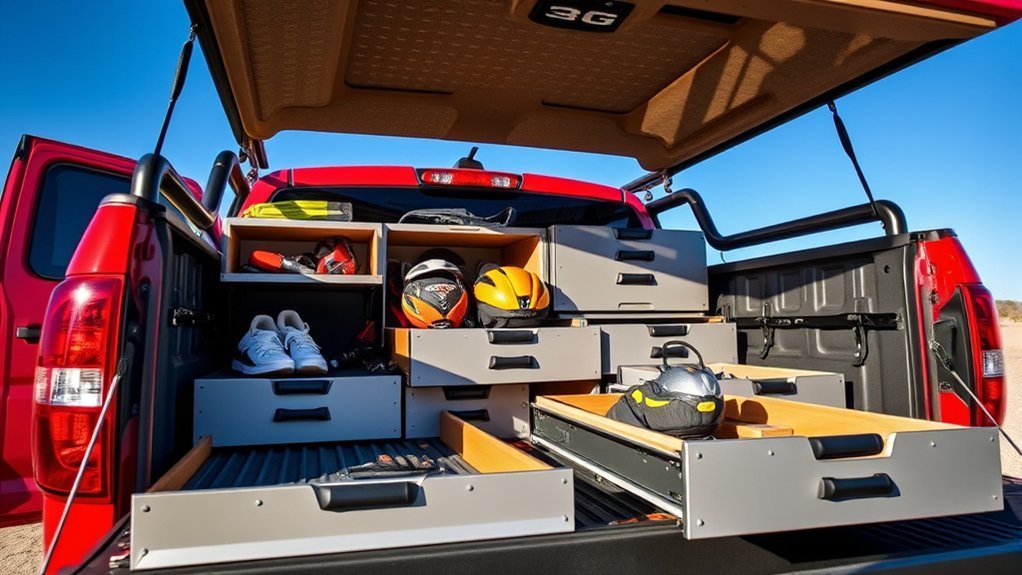
Accessories can improve access and organization, but each one adds weight and may compete for the same mounting points. Plan the full system before drilling or permanently mounting any single part.
- Sliding cargo trays: Bring heavy gear toward the tailgate and reduce climbing into the bed.
- Ladder and overhead racks: Carry long items above the bed while leaving the floor available. Secure the front and rear of long cargo and follow the rack’s load limit.
- Lockable toolboxes: Protect valuable equipment and provide fast access from the side or tailgate.
- Track systems: Allow adjustable cleats, bike mounts, dividers, and other accessories when the track and fasteners are rated for the load.
- Bed lighting: Helps you inspect straps, labels, and small parts after dark. Use fused, weather-rated components and approved wiring routes.
- Tailgate steps or grab handles: Improve access, but they do not turn the tailgate into a load stop unless the vehicle manual specifically allows that use and the cargo is still secured.
Affordable Truck Bed Storage Solutions for Budget-Conscious Buyers
You can improve organization without installing a full drawer system. Start with one problem area, such as loose hand tools or grocery bags, and solve it with the smallest setup that works.
- Use sturdy latching bins in two or three sizes rather than many mismatched containers.
- Add labels to the top and end of each bin so they remain readable when stacked.
- Use a rubber bed mat to reduce sliding and protect the bed floor.
- Install a removable divider or cargo bar for light loads.
- Use rated straps or a cargo net attached to approved points.
- Repurpose sound materials for dividers or a platform only when the design is strong, smooth, sealed, and positively restrained.
DIY plywood drawers or sleeping platforms can save money, but weigh the finished system and include that weight in the payload calculation. Seal exposed wood, round sharp corners, prevent fasteners from contacting the truck body, and secure the structure so it cannot move during emergency braking.
How to Choose the Right Truck Bed Storage Solution
Use this process before buying:
- Measure the bed and access points. Record bed length, width, wheel-well spacing, rail height, and cover clearance.
- List the cargo. Note the largest item, heaviest item, highest-value item, and the gear needed most often.
- Check payload. Subtract occupants, accessory weight, and other cargo from the limit on the vehicle label.
- Choose the level of security. Decide whether concealment is enough or whether you need a locked metal box or drawer.
- Choose the level of weather protection. Match the solution to rain, snow, dust, road salt, and wet gear.
- Confirm fitment. Verify year, make, model, cab, bed length, liner, rails, cover, and hitch compatibility.
- Review installation and removal. Check drilling, wiring, torque, maintenance, warranty, and how quickly the bed can return to an open configuration.
- Plan securement. Identify exactly how each bin, drawer, appliance, rack, and long item will be held in place.
- Dry-fit and test. Make sure the tailgate, drawers, lids, cover, and cab-side storage all open without contact.
- Recheck after driving. Stop after a short trip to inspect straps, clamps, and any new noises or movement.
Popular Truck Bed Storage Products and Who They Suit
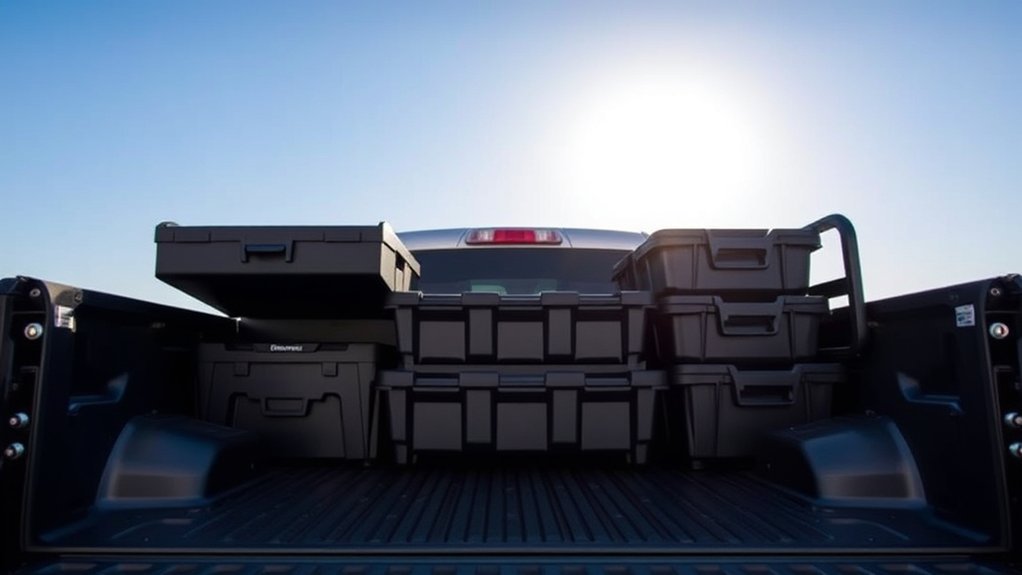
The following products show how different designs solve different problems. They are examples, not universal recommendations, and each requires fitment and payload checks.
- Dometic GO Hard Storage 50L: A portable, stackable choice for camping or mixed-use gear that needs a sealed container and built-in tie-down points.
- DECKED Drawer System: A full-bed organization system for owners who want long drawers below a load deck and do not mind the added weight and cost.
- TruckVault Base Camp 3: A heavy, lockable three-drawer system with a removable sleeping platform for one or two people. Its listed 275–300-pound weight makes payload planning especially important.
- BamBeds platform: A removable, model-specific sleeping platform for selected trucks. It suits campers who want under-platform storage without a permanently installed drawer system.
- BEDSLIDE: A family of sliding platforms for users who need to reach deep cargo from the tailgate. Select a model by dimensions, capacity, and truck fitment.
- Ladder or headache rack: A useful option for long material or overhead equipment when the rack, mounts, truck, and securement method are all rated for the load.
Frequently Asked Questions
Can I install storage solutions in any truck model?
Portable bins and nets work in many trucks, but fitted toolboxes, covers, drawers, slides, racks, and sleeping platforms are usually application-specific. Verify the model year, make, model, cab, bed length, liner, rail system, hitch, and cover before buying.
How can I prevent my items from sliding around?
Use a non-slip bed mat to reduce movement, then contain and secure the cargo with dividers, rated straps, or a cargo net attached to approved anchor points. Put heavy items low, keep them away from the tailgate when possible, and recheck the load after a short drive.
Are there any DIY storage ideas for truck beds?
Yes. Common projects include plywood dividers, removable platforms, milk-crate retainers, and simple drawer boxes. Use sound materials, smooth sharp edges, seal wood, keep access to drains and factory hardware, weigh the finished project, and anchor it so it cannot shift.
What materials are best for truck bed storage solutions?
High-density plastic works well for portable weather-resistant bins. Aluminum offers corrosion resistance at a lower weight than many steel designs. Steel provides strength and security but is heavier and needs good corrosion protection. Sealed plywood can work for DIY platforms when it is properly supported and secured.
How do I clean and maintain my truck bed storage?
Remove loose dirt, wash approved surfaces with mild soap and water, clear drain paths, dry the system, and inspect seals, locks, slides, straps, anchors, and mounting hardware. Use only manufacturer-approved lubricants and cleaners.
Does a truck bed storage system reduce payload?
Yes. The system’s installed weight counts as cargo or added equipment and reduces the amount of payload left for passengers, tools, supplies, and trailer tongue weight. Use the truck’s Tire and Loading Information label and the product’s actual installed weight.
Are tonneau covers completely waterproof?
Usually not. Most are designed to be weather-resistant. Correct fit, intact seals, clear drain tubes, and a properly closed tailgate can reduce water entry, but sensitive cargo should still go inside sealed containers.
Should I drill into the truck bed to install storage?
Only when the product instructions require it and the drilling location has been confirmed safe. Inspect both sides of the panel for wiring, hoses, the fuel system, structural parts, and existing hardware. Use the required corrosion protection and torque values, or have a qualified installer do the work.
Conclusion
Optimizing truck bed storage is less about packing in more equipment and more about building a safe, repeatable system. Measure the real usable space, verify vehicle-specific fitment, count every accessory against payload, and secure every load. Whether you choose simple bins, a toolbox, drawers, a slide, a cover, or a custom platform, the right setup should protect your gear without limiting the truck’s safe operation.
Sources
- National Highway Traffic Safety Administration — Secure Your Load — cargo securement guidance, crash statistics, and state-law overview
- Dometic GO Hard Storage 50L — product features, tie-down points, weather protection, and current manufacturer pricing
- DECKED Drawer System — fit-specific drawer design, deck capacities, materials, installation, and weather protection
- BEDSLIDE 1000 Classic — platform dimensions, capacity, profile height, and fitment information
- LEER Tonneau Cover Guide — cover types, fitment, weather resistance, and security considerations
- TruckVault Base Camp 3 — drawer count, sleeping platform, approximate installed weight, and lock options







Leave a Reply