
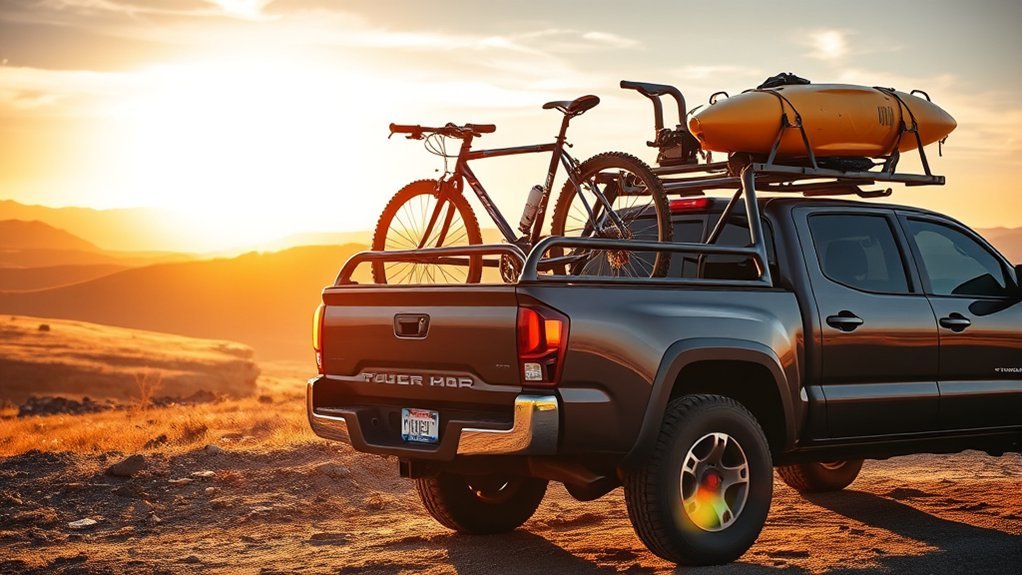
A truck bed rack adds support above or alongside a pickup bed so you can carry ladders, lumber, kayaks, bicycles, rooftop tents, and other long or bulky gear. The right rack can free bed space and improve organization, but it does not increase your truck’s payload. Safe use depends on vehicle-specific fitment, correct installation, rated tiedowns, and staying within every applicable weight limit.
Quick Answer
Choose a truck bed rack that fits your exact truck, bed length, rail system, tonneau cover, and intended cargo. Never rely on the rack’s advertised capacity alone. The safe limit is the lowest rating among the rack, crossbars, mounts, accessories, truck payload, axle ratings, and any separate on-road or off-road limit.
Key Takeaways
- Verify the truck’s model year, bed length, rail design, payload label, and accessory compatibility before buying a rack.
- A rack supports cargo but does not secure it; use rated straps and suitable anchor points for every load.
- On-road, off-road, static, and dynamic weight ratings are not interchangeable.
- Follow the rack manufacturer’s instructions and torque specifications instead of using generic bolt-tightening advice.
- Inspect the rack after installation, after rough-road travel, and before carrying heavy or high-value equipment.
Understanding Truck Bed Racks
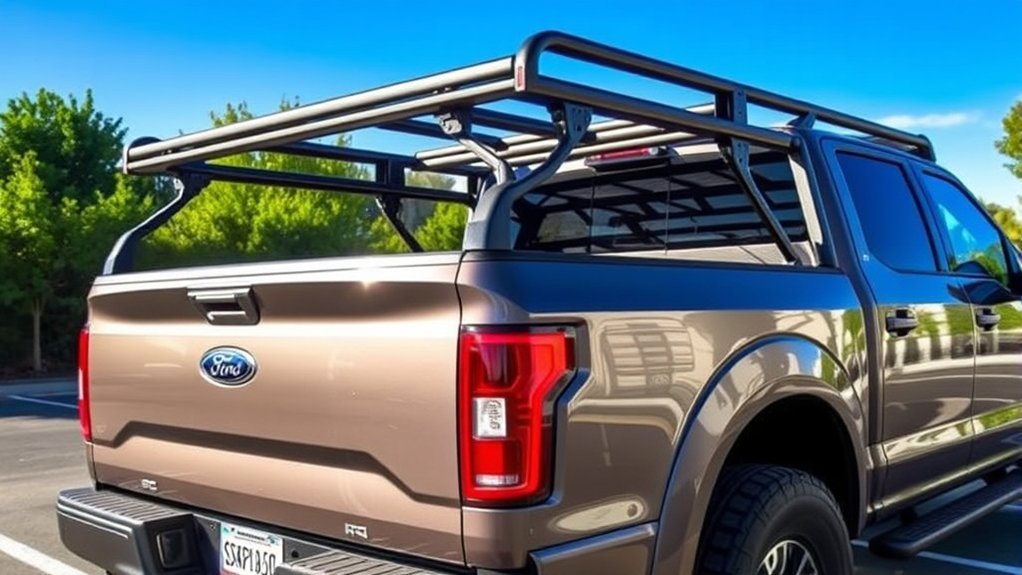
A truck bed rack is a frame attached to the bed rails, stake pockets, factory tracks, tonneau-cover tracks, or another manufacturer-approved mounting point. Depending on its design, it may carry cargo above the bed, support accessories at mid-height, protect the cab, or create mounting space along the sides.
A rack can make a pickup more useful for work and recreation by moving long items above the bed floor. That leaves room below for toolboxes, camping supplies, coolers, or other equipment. Adjustable and removable systems can also let you change the truck’s setup between jobs or trips.
Note: A truck bed rack does not increase the vehicle’s payload, Gross Vehicle Weight Rating, or axle ratings. The rack and all attached equipment count as cargo and reduce the payload available for everything else.
Benefits of a Truck Bed Rack
The main benefit is additional cargo positioning. Long items such as ladders, pipe, lumber, kayaks, and canoes can extend across two crossbars instead of resting diagonally in the bed. This can improve support and leave more of the bed floor available.
Other practical benefits include:
- Better organization: Purpose-built mounts can separate bicycles, recovery boards, fuel containers, tools, and camping equipment.
- More usable bed space: Elevated cargo leaves room for shorter equipment below.
- Accessory mounting: Some systems accept T-slot hardware, side rails, load stops, awnings, lighting brackets, and rooftop tents.
- Cab protection: A properly selected cab-protector or headache rack can help shield the rear window from shifting material.
- Flexible setup: Adjustable or removable racks can be changed when the truck needs to carry tall items in the bed.
The usable capacity of a rack system is determined by its weakest component—not by the largest number printed on one part.
Types of Truck Bed Racks
The best design depends on what you carry, how often you remove the rack, and whether the truck has a tonneau cover, toolbox, bed cap, factory tracks, or composite bed.
| Rack Type | Best For | Main Consideration |
|---|---|---|
| Full-height ladder rack | Ladders, pipe, lumber, canoes, and work materials | Overall vehicle height and wind exposure |
| Mid-height overland rack | Rooftop tents, awnings, recovery gear, and camping equipment | Separate on-road, off-road, and tent requirements |
| Low-profile crossbars | Bikes, boards, cargo boxes, and lower-mounted accessories | Bed access and cargo-to-cab clearance |
| Headache or cab-protector rack | Protecting the cab while supporting long work materials | It does not replace cargo tiedowns or serve as a roll bar |
| Side-mount rack | Occasional ladders or long tools while preserving central bed access | Uneven side loading and model-specific attachment points |
Ladder Racks
Ladder racks normally use front and rear uprights with crossbars positioned near or above cab height. They are useful for long materials that need support at two points. Fixed steel designs are common on work trucks, while adjustable aluminum systems may be easier to remove or reposition.
Check the required crossbar spread, load-stop placement, rear overhang, and clearance above the cab. Do not allow the load to contact the cab or rear glass as the truck and rack flex over bumps.
Headache and Cab-Protector Racks
A headache rack mounts immediately behind the cab and creates a barrier between the cargo area and rear window. Uprights, louvers, mesh, or crossbars can help block shifting ladders, lumber, pipe, and similar materials.
This type of rack is not automatically a certified rollover structure, occupant restraint, recovery point, or lifting point. Continue to secure every load independently with suitable tiedowns.
Overland and Mid-Height Racks
Overland racks are commonly used for rooftop tents, awnings, bicycles, kayaks, recovery boards, water containers, and modular storage. A mid-height design may keep cargo closer to the bed than a cab-height rack, but it can also reduce access to tall items in the bed.
Never assume that all overland racks carry 800 pounds or another category-wide amount. For example, Yakima currently lists a 500-pound on-road rating and a 300-pound off-road rating for its OverHaul HD system. Always use the rating for the exact rack, crossbars, mounting kit, vehicle application, road surface, and accessory combination. See the Yakima OverHaul HD specifications for one example of separate on-road and off-road limits.
Low-Profile and Removable Racks
Low-profile bed bars position crossbars close to the bed rails. They can work well for bicycles, boards, cargo baskets, and equipment that does not need cab-height clearance. Removable racks are useful when the truck occasionally carries appliances, motorcycles, landscaping material, or other tall cargo.
Before choosing a low rack, confirm that the cargo will clear the cab, bed sides, rear window, tailgate, and any folded or rolled tonneau cover.
What to Look for in a Truck Bed Rack
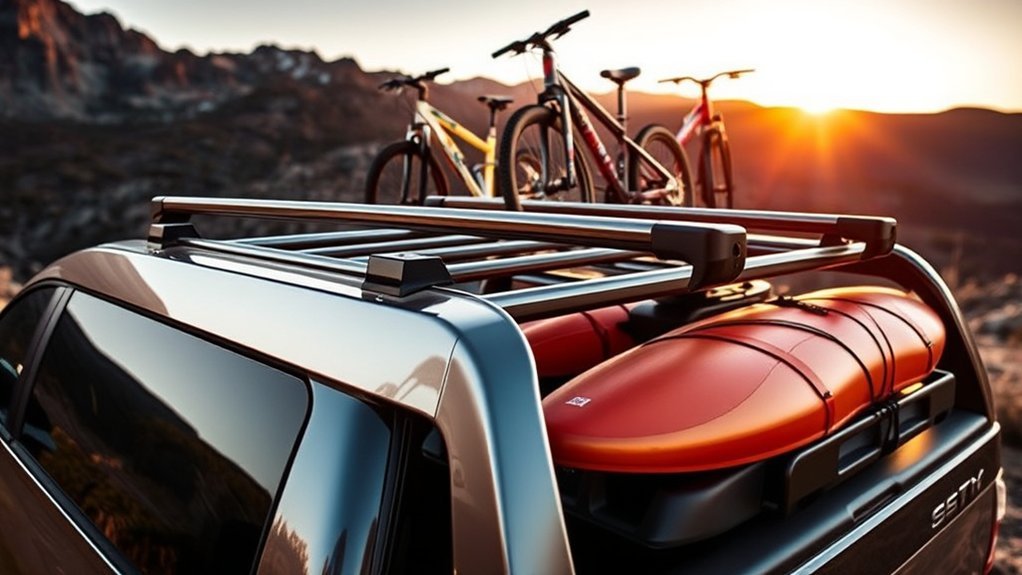
Verify the Exact Vehicle Fit
Start with the truck’s make, model, model year, cab configuration, bed length, bed material, rail shape, and factory track system. A rack listed for one bed length or model year may not fit another version of the same truck.
Also identify anything already mounted to the bed, including:
- Tonneau covers and their side rails
- Crossover or side toolboxes
- Bed caps and liners
- Factory utility tracks
- Stake-pocket covers
- Bed lighting and electrical outlets
- Sports-bar or cab-protector hardware
Use the manufacturer’s current fit guide before ordering. Thule, for example, tells buyers to confirm the vehicle and tonneau-cover combination in the applicable fit guide for its Xscape system. See the Thule Xscape fit information.
Check Every Weight Rating
Do not compare racks using one advertised capacity number. Determine all of the following:
- The complete rack-system rating, including uprights, crossbars, feet, clamps, tracks, and adapters
- The rating of each accessory or cargo mount
- Any lower off-road rating
- Whether the stated number is a moving or stationary-load rating
- The weight of the rack itself
- The truck’s available payload
- The truck’s Gross Vehicle Weight Rating and front and rear Gross Axle Weight Ratings
The vehicle-specific payload appears on the Tire and Loading Information label, normally located around the driver-side door opening. Ford explains that the listed payload is the maximum for that vehicle as built and that passengers, cargo, accessories, and aftermarket equipment use that capacity. Review the Ford payload guidance and your own truck’s manual and labels.
Warning: Never exceed the lowest applicable rack, crossbar, mount, accessory, payload, GVWR, tire, or axle rating. Include the weight of passengers, the rack, the cargo carrier, a rooftop tent, tools, fuel containers, and every other item carried by the truck.
Understand Dynamic, Static, On-Road, and Off-Road Ratings
A dynamic rating applies while the vehicle is moving. A static rating may apply only while parked, such as when people occupy a compatible rooftop tent. An off-road rating may be lower because bumps and vehicle movement create greater forces at the mounts.
Do not calculate a static rating by multiplying the dynamic rating unless the rack or tent manufacturer expressly provides that method. Confirm that the rack, crossbars, tent brackets, and truck application are all approved for the intended use.
Compare Steel and Aluminum
Steel racks are often selected for demanding work use because they can provide high strength and stiffness, but they are generally heavier and need intact coatings to resist corrosion. Aluminum racks are usually lighter and naturally resist red rust, although their joints, fasteners, and coatings still require inspection.
Material alone does not determine safety. Design, mounting method, hardware quality, corrosion protection, fitment, installation, and load placement are equally important.
Choose the Right Mounting Method
Common mounting methods include bed-rail clamps, stake-pocket hardware, factory tracks, tonneau-cover tracks, and drilled mounts. A no-drill system is not automatically compatible with every bed. Composite beds, reinforced rails, utility tracks, and certain covers may require special kits.
Some heavy-duty racks require drilling, while others are designed for no-drill mounting. Check the current instructions before purchase rather than assuming the installation method from product photos.
How to Calculate a Safe Rack Load
- Find the vehicle payload: Read the Tire and Loading Information label on the truck.
- Subtract occupants and existing cargo: Include passengers, tools, a toolbox, bed cover, hitch equipment, and anything else in or on the truck.
- Subtract the rack system: Include uprights, crossbars, clamps, tracks, side rails, adapters, and guards.
- Subtract mounted accessories: Include tent brackets, awnings, bike mounts, cargo baskets, recovery-board mounts, and containers.
- Check axle loading: A truck can remain below GVWR but still overload the rear axle or tires.
- Compare the remaining capacity with the rack-system limit: Use whichever number is lower.
- Apply the correct road-use rating: Use the lower off-road rating when traveling on terrain covered by that restriction.
For a precise result, weigh the loaded truck on a certified vehicle scale and compare the total and axle weights with the truck’s labels and owner’s manual.
Installing a Truck Bed Rack
At a Glance
| Time Required | Often 1–3 hours for a clamp-on system; track-mounted or drilled installations may take longer |
| Difficulty | Moderate; professional installation is sensible when drilling, wiring, or bed modification is required |
| Tools Needed | Rack-specific instructions, tape measure, protective cloth, hand tools, level, and a calibrated torque wrench; drilling tools only when the manual requires them |
| Cost | Varies by rack type, crossbars, fit kits, tonneau adapters, accessories, and professional labor |
Warning: Do not guess bolt torque, substitute hardware, drill the bed, or modify mounting points unless the manufacturer’s instructions specifically authorize it. Incorrect drilling or clamping can damage wiring, bed structures, coatings, fuel-system components, or factory tracks.
1. Confirm Fitment and Read the Instructions
Match every part number to the truck’s model year, bed length, and rail system. Read the complete rack and fit-kit instructions before assembling anything. Check whether the manufacturer requires separate hardware for factory tracks, a composite bed, a tonneau cover, or a toolbox.
2. Inventory and Inspect the Parts
Lay out the uprights, crossbars, feet, clamps, tracks, pads, bolts, washers, nuts, locks, and accessories. Do not install bent parts, cracked welds, damaged threads, missing pads, or substituted fasteners.
3. Prepare the Truck Bed
Park on a level surface, set the parking brake, remove loose cargo, and clean the bed rails. Dirt trapped under a foot or clamp can scratch the finish and prevent the mount from seating evenly.
Inspect the bed rails, stake pockets, tracks, and mounting areas for dents, corrosion, loose trim, or previous repairs. Resolve damage before installing the rack.
4. Assemble the Rack Loosely
Assemble the uprights and crossbars according to the manual, but leave adjustable connections loose enough for alignment. Keep left, right, front, and rear components in their specified positions.
5. Position and Measure the Rack
Place the mounts only at approved locations. Measure crossbar spread, side-to-side position, and front-to-rear alignment. Confirm clearance from the cab, rear window, antenna, tailgate, tonneau cover, toolbox, and bed-mounted controls.
Make sure the load will not contact the cab when the frame and bed move independently over bumps.
6. Tighten Hardware to the Specified Torque
Snug the hardware in the sequence given by the manufacturer, recheck alignment, and then use a calibrated torque wrench for the final tightening. Use only the torque values in the current instructions for that exact rack and mounting kit.
Pro Tip: Record the installation date, rack part number, hardware torque values, and required recheck interval in your maintenance log. Keep a digital copy of the manual in the truck.
7. Install Accessories and Secure the Load
Fit load stops, eye bolts, side rails, bike mounts, tent brackets, or other accessories only where approved. Confirm that accessory fasteners do not bottom out, interfere with the crossbars, or exceed the T-slot or attachment-point rating.
Secure cargo to rated anchor points with straps or tiedowns suitable for the load. Do not rely on friction, bungee cords, the tailgate, or a headache rack alone.
8. Perform a Final Check and Road Test
Push and pull each upright and crossbar to check for movement. Open and close the tailgate and tonneau cover, and verify that the rack does not block required lights, mirrors, cameras, or the license plate.
Begin with a low-speed drive. Stop in a safe place to check the mounts, straps, and cargo. Recheck the hardware after the first trip and at the interval stated in the manual.
Cargo Securement and Road Safety
A rack provides support points, but the driver remains responsible for keeping the cargo from sliding, rolling, lifting, or falling. Use tiedowns with readable ratings and inspect them for cuts, chemical damage, UV deterioration, bent hooks, and damaged stitching.
For long cargo:
- Support the item at two or more suitable points.
- Control forward, rearward, upward, and side-to-side movement.
- Use load stops or end stops when approved for the rack.
- Protect straps from sharp edges.
- Prevent loose strap ends from striking the truck or other vehicles.
- Check state rules for side, front, and rear overhang.
- Add any required daytime flag, nighttime light, or reflector.
- Stop and recheck the load after the first few miles and after rough roads or strong wind.
The FMCSA cargo-securement rules apply to covered commercial motor vehicles and provide a useful safety reference for preventing cargo from shifting or falling. Private pickup owners must follow the laws that apply in their state and locality.
Warning: Never attach a person, pet, seat, hammock, safety line, recovery strap, or lifting device to a truck bed rack unless the manufacturer expressly approves that exact use. A cargo rack is not an occupant-restraint or rescue system.
Tonneau Cover, Toolbox, and Rooftop Tent Compatibility
A universal-looking rack may still conflict with a tonneau cover or toolbox. Bed-rail clamps often occupy the same space as cover rails, while a rolling or folding cover may need additional clearance around the uprights.
Some manufacturers sell adapters for selected tracked covers. Yakima, for example, lists a Tonneau Kit for specific Retrax, Embark, and Pace Edwards track systems. See the Yakima Tonneau Kit compatibility information. Compatibility with one tracked cover does not mean that the rack fits every cover from the same brand.
For a rooftop tent, verify all of the following:
- The rack is approved for rooftop-tent use.
- The crossbar size and spacing meet the tent requirements.
- The tent mounting brackets fit the crossbars.
- The rack’s moving and parked-load ratings are sufficient.
- The truck remains within payload, GVWR, GAWR, and tire limits.
- The tent clears the cab, rear window, tailgate, and accessories.
- The manufacturer allows the intended on-road or off-road use.
Maintenance Tips for a Truck Bed Rack
Clean the Rack and Protect the Finish
Wash off road salt, mud, sand, fertilizer, chemicals, and other corrosive material with mild soap and water. Avoid cleaners that the rack manufacturer prohibits. Dry joints and enclosed areas where water can remain trapped.
Repair coating damage using an approved touch-up method. Pay close attention to steel edges, drilled holes, welds, clamps, and areas where accessories rub against the finish.
Inspect for Damage
Before carrying a load, examine:
- Uprights and crossbars for bends, dents, cracks, or distortion
- Welds and joints for cracking or separation
- Bolts, nuts, tracks, and clamps for looseness or movement
- Bed rails and mounting areas for deformation
- Rubber pads and isolators for wear or displacement
- T-slot hardware and accessory mounts for damaged threads
- Locks, pins, and adjustment mechanisms for correct engagement
Stop using the rack if a mount shifts, a weld cracks, a crossbar bends, hardware repeatedly loosens, or the truck bed deforms. Contact the manufacturer or a qualified installer before loading it again.
Lubricate Moving Parts
Lubricate locks, adjustment mechanisms, removable pins, and other moving components only with products permitted by the manufacturer. Keep lubricant away from strap surfaces, friction clamps, painted areas, or thread-locking compounds when the instructions prohibit it.
Recheck Hardware
Follow the manual’s inspection and torque-recheck schedule. Also inspect the rack after installation, after carrying a heavy load, after off-road travel, after a minor collision, and after removing or reinstalling the system.
Best Places to Buy Truck Bed Racks and Accessories
The safest place to begin is the rack manufacturer’s fit guide. It can confirm compatible trucks, bed lengths, crossbars, clamps, tracks, tonneau adapters, and replacement parts.
Manufacturer websites are also the best source for current instructions, load ratings, recalls, warranty terms, and installation documents. Examples include Thule truck racks, Yakima truck racks, and WEATHER GUARD truck racks.
Specialty truck-accessory dealers can help compare systems and may provide professional installation. Local retailers let you inspect materials and mounting hardware before purchase. General online marketplaces may offer broader pricing, but product listings sometimes combine reviews or specifications from different sizes and model years.
When buying a used rack, verify the complete part number and inspect it for:
- Missing or substituted hardware
- Bent uprights or crossbars
- Cracked welds
- Enlarged drilled holes
- Corrosion under clamps or feet
- Damaged locks or adjustment parts
- Unknown modifications
- Missing vehicle-specific fit components
A low purchase price may not be worthwhile if replacement clamps, tracks, locks, crossbars, or fit kits are no longer available.
Frequently Asked Questions
How much weight can a truck bed rack hold?
There is no universal capacity. Ratings vary by rack, crossbars, mounting hardware, vehicle application, and road use. Some systems also have a lower off-road rating. Use the lowest rating among the rack system, accessories, truck payload, GVWR, axle ratings, and tires.
What are the different types of truck bed racks?
Common types include full-height ladder racks, headache or cab-protector racks, mid-height overland racks, low-profile crossbars, side-mount racks, removable racks, and systems designed for compatible tonneau-cover tracks.
Can a truck bed rack work with a tonneau cover?
Only certain combinations work together. Compatibility depends on the cover’s rail design, the rack mounting method, available adapters, and clearance for opening or rolling the cover. Confirm the exact truck, rack, cover, and fit-kit combination before purchasing.
Can a truck bed rack support a rooftop tent?
It can only do so when the rack and tent manufacturers approve the combination. Verify crossbar size and spacing, tent-bracket fit, moving and parked-load ratings, on-road or off-road limits, and the truck’s remaining payload and axle capacity.
Can you legally sit in a truck bed?
Truck-bed passenger laws vary by state and may include age, employment, parade, agricultural, or restraint exceptions. Check the current motor-vehicle code or DMV guidance for the state where you will drive. For example, California generally requires secure seats and safety belts. Regardless of an exception, do not sit on or attach yourself to a cargo rack because it is not an occupant restraint.
How can someone make $1,000 a day with a pickup truck?
A pickup and rack may support delivery, moving, hauling, cleanup, or contractor work, but no rack guarantees $1,000 in daily income. Gross revenue is not profit. Fuel, insurance, maintenance, taxes, permits, disposal charges, platform fees, equipment, travel time, and local demand determine the actual result.
What should every truck owner keep in the truck?
Useful basics include the owner’s manual, rack instructions, a tire-pressure gauge, warning triangles, a flashlight, work gloves, a first-aid kit, weather-appropriate supplies, and correctly rated cargo straps. Tools and emergency equipment should be secured so they cannot become projectiles.
Conclusion
A truck bed rack can make a pickup more useful, but safe performance begins with fitment and weight verification—not the largest advertised capacity. Match the rack to the exact truck and accessories, include every component in the payload calculation, follow the manufacturer’s torque instructions, and secure cargo independently. Regular inspections and prompt repairs will help the rack remain dependable for work, travel, and recreation.
Sources
- Federal Motor Carrier Safety Administration — Cargo Securement Rules — cargo movement, tiedowns, and securement principles for covered commercial vehicles
- Ford — Vehicle Payload and Towing Calculator Guidance — vehicle-specific payload and Tire and Loading Information labels
- Yakima — OverHaul HD — truck-rack fitment, accessories, and separate on-road and off-road ratings
- WEATHER GUARD — Truck Racks — examples of model-specific capacities and mounting designs
- Thule — Xscape Truck Rack Fit Information — vehicle and tonneau-cover compatibility checks
- California Department of Motor Vehicles — Laws and Rules of the Road — one state example of pickup-bed passenger and overhanging-cargo rules







Leave a Reply