

Track day insurance can protect your car during a high-performance driver education event or another eligible non-competitive track session. However, policies differ widely. Before buying coverage, confirm the event type, covered drivers, vehicle value, deductible, territory, liability protection, and exact start and end times shown in the issued policy.
Quick Answer
Track day insurance usually provides specialty physical-damage coverage for your car during an eligible HPDE or track event. It may not cover liability, injuries, mechanical breakdown, theft, transit, or competitive driving. Read the declarations, exclusions, endorsements, deductible, and loss-settlement terms before entering the track.
Key Takeaways
- Most personal auto policies should not be assumed to cover HPDE or racetrack use.
- A physical-damage policy for your car may not include liability for another vehicle, a barrier, the track, or an injured person.
- Timed competition, drifting, drag racing, autocross, and wheel-to-wheel racing may require different coverage.
- Your deductible may be a percentage of the insured value, making the out-of-pocket amount much larger than a normal road-policy deductible.
- The issued policy—not a website summary, club recommendation, or event waiver—determines what is covered.
At a Glance
| Time Required | About 15–30 minutes to gather details and compare quotes; longer for modified, financed, very high-value, or track-only cars |
| Difficulty | Moderate—policy terms and event classifications require careful review |
| Tools Needed | Event registration, vehicle VIN, modification list, value evidence, driver details, current auto policy, and quote documents |
| Cost | Varies by vehicle value, deductible, event, track, driver, coverage period, modifications, and selected benefits |
Note: This article provides general insurance information, not legal or individualized insurance advice. Availability and terms vary by insurer, state, country, vehicle, driver, track, and event. The declarations, policy forms, exclusions, and endorsements in your issued contract control.
What Is Track Day Insurance and Why Do You Need It?

Track day insurance is specialty coverage designed for certain closed-course driving events. A common example is a high-performance driver education event, or HPDE, where instructors teach car control, braking, cornering, and track safety in a controlled setting.
Many personal auto policies contain exclusions involving racetracks, racing surfaces, speed contests, high-performance driving, or similar activities. The National Association of Insurance Commissioners explains that an auto policy is a legal contract and that its exclusions identify situations the insurer will not cover. Do not rely only on what an agent said when you first bought the policy; review the current form and obtain written clarification.
A specialty track policy may protect your car against covered physical damage while it is on the track, in the paddock, or within another defined coverage area. For example, RLI’s current Track Day program describes single-event physical-damage protection for eligible HPDE events.
Warning: Physical-damage insurance for your own car does not automatically pay for another vehicle, track property, bodily injury, medical bills, or legal defense. Those risks require liability or medical coverage that must be expressly shown in the policy.
Key Differences Between Track Day Insurance and Standard Auto Insurance
Standard auto insurance and track day insurance serve different uses. A personal auto policy is mainly designed for ordinary road use. Specialty track coverage is written for a defined event, location, driver, and vehicle under its own terms.
| Question | Personal Auto Policy | Specialty Track Policy |
| Intended use | Public-road driving and listed everyday uses | Eligible HPDE, open-track, time-trial, or other listed event |
| Damage to your car | Collision or comprehensive coverage may apply on public roads, subject to exclusions | Covered physical damage during the stated event and coverage period |
| Liability to others | Normally part of road coverage, but track exclusions may apply | Often excluded from the physical-damage policy or sold separately |
| Mechanical failure and wear | Generally not treated as a covered collision or comprehensive loss | Usually excluded unless resulting damage qualifies under the policy |
| Deductible | Often a fixed dollar amount | May be a percentage of the insured value with a minimum or maximum |
| Coverage period | Usually a six- or twelve-month policy term | May be one event, several days, or an annual program |
A track-day policy is not a warranty, health plan, or automatic liability policy. It is a contract covering only the risks, people, vehicle, event, territory, and dates listed in its terms.
Fault may not be used in the same way as it is in a third-party road-liability dispute, because a physical-damage claim concerns the insured vehicle. Even so, the insurer still investigates whether the loss resulted from a covered cause and whether any exclusion applies.
What Coverage Options Are Available in Track Day Insurance?
Available coverage differs by provider. Compare each quote line by line rather than choosing a policy only because it uses the words “track day insurance.”
On-Track Physical Damage
This is the core protection in many HPDE policies. It can pay to repair or replace the insured car after a covered collision or other listed physical-damage loss during the event. Confirm whether coverage starts when you enter the facility, when your first session begins, or at another stated time.
Also verify whether the policy covers damage while your car is parked in the paddock. Hagerty and RLI describe coverage that includes the track and paddock, but the issued contract still controls.
Additional Drivers and Instructors
An instructor may be automatically covered under some programs. A friend, family member, co-driver, or secondary driver may need to be named before the event. Never let an unlisted person drive until the insurer confirms eligibility in writing.
Liability, Medical Expenses, and Track Property
Ask whether the policy pays for:
- Damage to another participant’s vehicle
- Damage to guardrails, tire barriers, fencing, timing equipment, or buildings
- Bodily injury claims and legal defense
- Your own medical expenses or those of passengers and instructors
Many physical-damage policies exclude driver liability. Other providers may offer liability through a separate form. The organizer’s liability insurance and the waiver you sign are not substitutes for confirming your own coverage.
Off-Track, Transit, Storage, and Theft Coverage
A normal on-track policy may stop when the event or defined coverage period ends. If you own a dedicated track car, trailer, tools, spare parts, or safety equipment, ask about separate off-track protection.
Lockton Motorsports’ off-track product, for example, describes protection for certain vehicles during storage, transport, loading, unloading, and paddock use, including theft. That does not mean theft or transit is included in every HPDE policy.
Time Trials, Autocross, and Competitive Events
Event labels matter. A policy written for educational, non-competitive sessions may exclude:
- Wheel-to-wheel racing
- Timed or ranked competition
- Drag racing
- Drifting
- Speed or endurance contests
- Autocross unless specifically listed
Some insurers offer optional time-trial coverage or refer competitive risks to another carrier. Submit the organizer’s exact event name and format instead of describing everything as a “track day.”
Supplemental Benefits
Depending on the provider, benefits may include towing, temporary storage, rental reimbursement, pollutant cleanup, modifications, spare parts, or equipment. Check the dollar limit, deductible, covered cause of loss, and whether reimbursement requires prior approval.
How to Determine the Value of Your Vehicle for Insurance Purposes

An accurate insured value helps prevent underinsurance and avoids paying for a limit you cannot support. Start with the amount required to replace the car with one of similar year, trim, condition, mileage, and specification in your market.
- Check comparable vehicles. Review dealer listings, recent sales, specialist-market data, and valuation tools appropriate for the car.
- List every modification. Include wheels, suspension, brakes, roll protection, seats, harnesses, engine work, aero parts, paint, and safety equipment.
- Gather proof. Keep invoices, build sheets, dated photographs, appraisals, and records of major work.
- Account for labor carefully. Parts and labor may not increase market value dollar for dollar, but the insurer may require their replacement cost when setting the limit.
- Update the value. Revisit it after major modifications or meaningful market changes.
Agreed Value, Stated Value, and Replacement Cost
- Agreed value: The insurer and policyholder agree on a value, subject to the policy’s deductible, salvage, exclusions, and endorsements.
- Stated value or stated amount: The selected amount may be a maximum limit rather than an unconditional promise to pay that figure.
- Replacement cost requirement: Some programs require the car to be insured for the full cost of replacing it, including approved modifications.
- Actual cash value: A settlement method that may consider age, condition, depreciation, and market value.
Read the loss-settlement section instead of relying on the label alone. Hagerty’s HPDE overview describes an agreed-value option, while other insurers use different valuation requirements.
Pro Tip: Save your valuation evidence in cloud storage before the event. Photos taken from every side, the VIN, odometer, interior, engine bay, modifications, and receipts can help document the car’s pre-loss condition.
Financed, Leased, Rented, or Borrowed Cars
If the vehicle has a loan, confirm whether the lender must be shown as a loss payee and whether track use violates the finance agreement. Leased vehicles may have contractual restrictions on track use. A policyholder also needs an insurable interest in the vehicle, so borrowed, rented, or arrive-and-drive cars may require special underwriting.
Factors Influencing Track Day Insurance Costs
There is no reliable universal price chart. Quotes depend on the insurer’s rating rules and the details of the risk.
Vehicle Classification Impact
The insured value is a major factor because it affects the insurer’s possible repair or total-loss payment. Make, model, performance, repair complexity, parts availability, modifications, rollover risk, and whether the car is street licensed may also affect eligibility and price.
Do not assume a low-value car will always receive a proportionally low quote. Some policies have minimum premiums, minimum deductibles, track surcharges, or vehicle restrictions.
Driver Experience Evaluation
Insurers may ask about age, driving history, prior track experience, claims, instruction level, and additional drivers. Eligibility rules vary. A normal road-driving history does not automatically replace track experience, and an advanced run group does not guarantee a lower rate.
Event, Track, and Coverage Choices
Other quote factors can include:
- Track and event organizer
- HPDE, open-lapping, or time-trial format
- Number of event days
- Single-event or annual coverage
- Physical-damage limit
- Deductible option
- Liability or supplemental benefits
- Country, state, and covered territory
Cost-Saving Strategies for Track Day Insurance
The best way to save is to compare equivalent protection. A cheap quote with a higher deductible, narrower event definition, no liability, or a lower vehicle limit is not the same product.
Higher Voluntary Excess Benefits
A deductible—called an excess in some countries—is the portion of a covered loss you pay. A higher deductible may reduce the premium, but the saving is not guaranteed.
Track deductibles are often much larger than road-policy deductibles because they may be calculated as a percentage of the insured vehicle value. Before selecting one, convert it to dollars. For example, a 10% deductible on a $60,000 insured value would be $6,000, subject to any policy minimum or maximum.
Choose a deductible you could pay after a major incident without using money needed for repairs, towing, travel, or other obligations.
Join Car Clubs Discounts
Some clubs, organizers, and insurers have partnerships, referral programs, or member benefits. However, membership does not automatically reduce the premium.
Ask these questions before joining for insurance reasons:
- Is there a current written insurance discount?
- Which insurer and policy does it apply to?
- Does it apply to my state, car, track, and event?
- Is the benefit a lower premium, broader eligibility, coaching, or another service?
- Does the membership cost more than the insurance saving?
Compare Single-Event and Annual Policies
A single-event policy may suit a driver attending one or two events. Frequent participants may prefer annual protection if it covers their tracks, cars, drivers, and event formats.
Do not compare only the annual premium. Review deductibles, cancellation rules, vehicle limits, the number of covered cars, excluded tracks, geographic territory, and whether the premium is fully earned once the policy begins.
Do Not Underinsure the Car
Lowering the insured value may reduce a quote, but it can leave a serious gap after a total loss. Some insurers require full replacement value and may reject an artificially low amount. Accurate coverage is usually more important than obtaining the lowest possible premium.
Key Conditions for Securing Track Day Insurance
Insurers and event organizers have separate requirements. Confirm both.
Insurance Eligibility Checklist
- The correct named insured and vehicle owner
- Accurate VIN, year, make, model, and insured value
- Every driver listed or otherwise eligible
- The exact track, organizer, dates, and event format
- Eligible run group and competition status
- Approved vehicle type and modifications
- Correct territory and state availability
- Coverage bound before the stated start time
Event Safety Requirements
The organizer may separately require a technical inspection, approved helmet, suitable clothing, tow hooks, numbers, sound-limit compliance, instructor approval, signed waivers, or other safety equipment. These rules help determine whether you may participate, but they do not expand the insurance policy.
How to Assess Your Track Day Insurance Needs
Start by identifying the financial loss you could handle without insurance. Then compare that amount with the car’s supported replacement value and the deductible.
- Confirm your road-policy exclusion. Search for terms such as track, racing surface, high-performance driving, speed contest, timed event, or competition.
- Classify the event correctly. Obtain the organizer’s written description and schedule.
- Choose the vehicle limit. Include documented modifications and equipment when the policy permits them.
- Calculate the deductible in dollars. Do not rely only on the percentage.
- Review liability exposure. Ask about other cars, track property, bodily injury, and legal defense.
- Check off-track risks. Consider storage, transport, trailer, loading, paddock, weather, vandalism, and theft.
- Verify all drivers. Include instructors, co-drivers, friends, and family members as required.
- Read cancellation terms. Determine what happens if the event is canceled, postponed, or missed.
If a repair bill or total loss would cause serious financial harm, broader protection and a manageable deductible may be more important than the lowest quote.
The Role of Membership in Reducing Track Day Insurance Costs
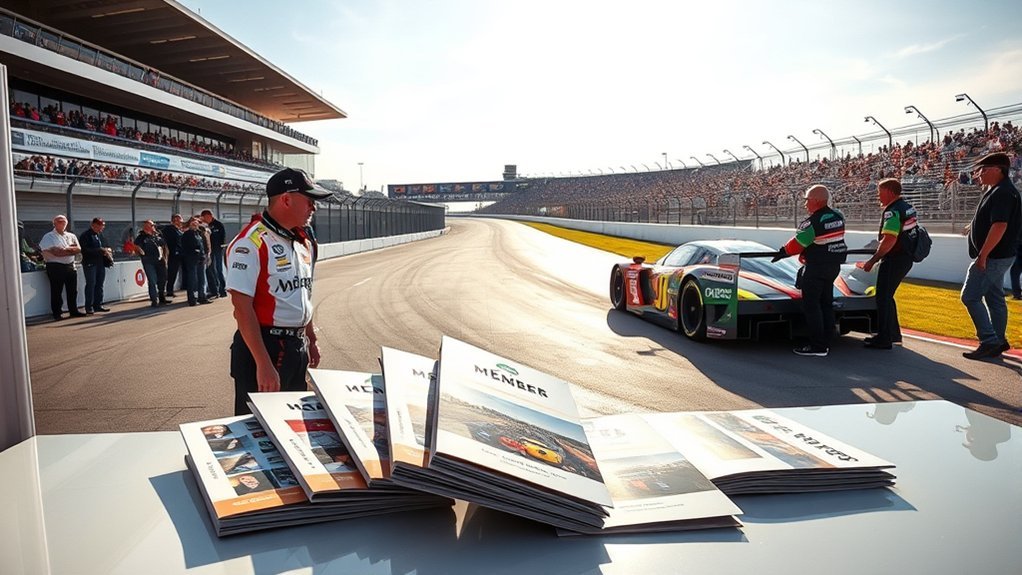
Membership can be useful, but its value should be measured by confirmed benefits rather than assumptions about insurance pricing.
Membership Discounts Explained
A club may negotiate a member offer, refer drivers to a specialist broker, or provide access to an annual insurance program. Ask for the current terms and compare the final quote against other providers using the same vehicle value and deductible.
A partnership logo alone does not prove that every member receives a discount or that the recommended policy is the best fit.
Safe Practices Validation
Driver education, instructor feedback, and well-run events can improve safety and skill. Some insurance programs include coaching or recognize certain event formats. Still, completing a course does not automatically change the premium unless the insurer’s rating rules provide a credit.
Group Benefits Overview
Useful membership benefits may include:
- Driver coaching and classroom instruction
- Access to approved or familiar event organizers
- Technical-inspection resources
- Track guides and safety briefings
- Introductions to specialist insurance providers
- Written discounts or group programs, when available
Choose a club because its events, instruction, and community suit your needs. Treat any insurance saving as a benefit to verify, not a guarantee.
Track Day Preparation: Safety and Insurance Tips
Before the Event
- Download and save the complete policy, declarations, endorsements, and proof of payment.
- Confirm the effective date and time, covered track, organizer, event, vehicle, and drivers.
- Photograph the car’s exterior, interior, odometer, engine bay, wheels, and modifications.
- Keep receipts, appraisal documents, and emergency contact details available offline.
- Inspect tires, wheels, brakes, fluids, steering, suspension, seat mounting, and safety equipment.
- Read the organizer’s passing, flag, pit-lane, sound, helmet, and incident-reporting rules.
- Know the deductible and how you would pay it after a claim.
After an Incident
- Follow the track workers’ instructions and move to a safe location if directed.
- Seek medical attention when needed, even if an injury initially feels minor.
- Report the incident to the organizer and request a copy of its report.
- Photograph the car, impact area, debris, barriers, fluid spills, and surrounding scene when it is safe.
- Record the time, session, corner, weather, witnesses, instructor, and other vehicles involved.
- Contact the insurer promptly using the claims instructions in the policy.
- Do not authorize major repairs, dispose of parts, or surrender salvage until the insurer provides instructions.
- Keep towing, storage, travel, and rental receipts in case a covered reimbursement applies.
Note: A track waiver may affect legal rights, but it does not tell you what your insurance covers. Review the waiver and policy as separate documents.
Questions to Ask Before You Buy
- Is this exact event covered, including its run group and timing format?
- Does coverage include the paddock, pit lane, staging area, or instructor laps?
- Are time trials, autocross, drifting, drag racing, or competition excluded?
- Which drivers are covered, and what age or experience rules apply?
- Does the policy cover damage to another vehicle or track property?
- Are bodily injury, medical expenses, and legal defense included?
- Is the deductible fixed or percentage-based, and is there a minimum or maximum?
- How is a total loss settled, and how is salvage handled?
- Are modifications included in the insured value?
- Are fire, theft, vandalism, weather, transit, and storage covered?
- What towing, rental, cleanup, or storage limits apply?
- When exactly does coverage begin and end?
- What happens if the event is canceled or postponed?
- Is the premium refundable, transferable, or fully earned?
- Must a lender or lienholder be listed?
- What documents are required after a claim?
Frequently Asked Questions
Does track day insurance cover damage to other vehicles?
Not automatically. Many HPDE policies cover physical damage to the insured car but exclude driver liability. Damage to another vehicle, track property, or a person requires liability coverage that is expressly included through the policy, an endorsement, or a separate product.
Can I purchase track day insurance for multiple events?
Yes. Some providers sell single-event policies, while others offer annual or multi-event programs. Compare covered tracks, cars, drivers, event formats, deductibles, limits, territory, cancellation rules, and total annual cost before choosing.
Is there a waiting period before track day insurance takes effect?
There is no universal rule. Some providers can issue same-day coverage, but insurance does not begin until it has been bound and the effective date and time shown in the policy have arrived. Complete the purchase before entering the track and save the issued documents.
Are there age restrictions for covered drivers?
Often. Minimum ages, maximum ages, licensing requirements, driving history, and experience rules vary by insurer and program. Do not assume that being old enough to enter the event makes a driver eligible for the insurance policy.
What happens if my vehicle is stolen during a track day?
Report the theft to law enforcement, the event organizer, and the insurer immediately. Whether the loss is covered depends on the policy. Some on-track physical-damage policies do not include theft, while separate off-track, paddock, storage, or transit coverage may apply.
Will my normal auto insurance cover an HPDE event?
Do not assume it will. Many current personal auto policies contain track, racing-surface, speed-contest, competition, or high-performance-driving exclusions. Read your current policy and ask the insurer for written confirmation that addresses the exact event.
Does track day insurance cover mechanical failure?
Usually not. Engine, transmission, clutch, brake, tire, and other failures caused by breakdown or wear are commonly excluded. A resulting collision may be handled differently, so read the policy’s covered-cause and mechanical-damage wording.
Are time trials and competitive sessions covered?
Only when the policy specifically allows them. A basic HPDE policy may exclude timed, ranked, prize, point-scoring, or wheel-to-wheel activity. Some insurers offer a time-trial option or a separate competitive-motorsport product.
Conclusion
Track day insurance can protect a valuable car from a loss that a personal auto policy may exclude, but the product name alone does not show what you are buying. Confirm the event, vehicle, drivers, value, deductible, liability, territory, effective time, exclusions, and claims process before the first session. The right policy is the one whose written terms match your actual track-day risks and the loss you could not comfortably absorb yourself.
Sources
- National Association of Insurance Commissioners—Auto Insurance — policy structure, exclusions, liability, collision, comprehensive coverage, and consumer review guidance
- RLI Track Day Insurance — current HPDE physical-damage scope, event eligibility, covered drivers, and liability limitation
- Hagerty HPDE and Track Day Insurance FAQ — standard-policy exclusions, additional drivers, racing limitations, and deductible examples
- OpenTrack FAQ — annual and single-event rules, territory, event exclusions, replacement-value requirements, and additional drivers
- Lockton Motorsports HPDE Insurance — event-area coverage, vehicle and modification eligibility, and instructor or secondary-driver examples







Leave a Reply