
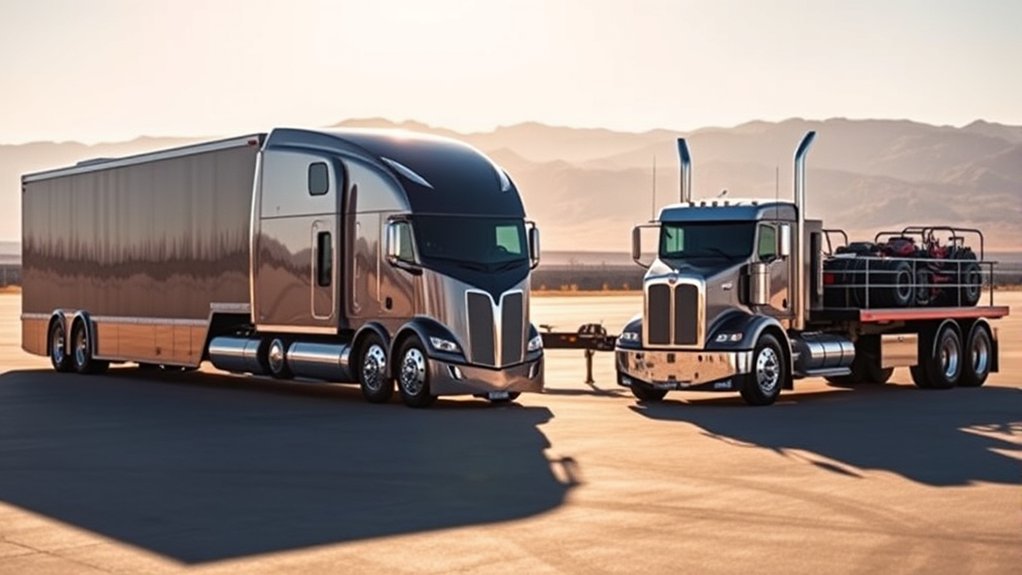
Choosing between towing capacity and payload capacity is not an either-or decision. A truck must stay within both limits at the same time, along with its Gross Vehicle Weight Rating (GVWR), Gross Axle Weight Ratings (GAWR), Gross Combined Weight Rating (GCWR), hitch rating, and tire limits. In many real-world towing setups, payload or rear-axle capacity becomes the first limit.
Quick Answer
Towing capacity is the maximum loaded trailer weight a properly equipped truck may pull. Payload is the weight the truck itself carries, including people, bed cargo, accessories, hitch hardware, and trailer tongue or pin weight. Check both, because a truck can be below its tow rating but still exceed payload, GVWR, or rear GAWR.
Key Takeaways
- Payload includes passengers, cargo, installed accessories, hitch equipment, and the trailer’s tongue or king-pin weight.
- The advertised maximum tow and payload numbers may come from different truck configurations and may not be achievable at the same time.
- Use the truck’s door-jamb labels, owner’s manual, manufacturer towing guide or VIN calculator, and a certified scale—not a brochure maximum alone.
- Choose more payload for heavy bed loads, large families, slide-in campers, and high pin weights; choose more towing capability for heavier trailers while still preserving enough payload.
At a Glance
| Time Required | 15–30 minutes for an initial capacity check; longer if you weigh the loaded combination |
| Difficulty | Easy to moderate |
| Tools Needed | Door-jamb labels, owner’s manual, manufacturer towing guide or VIN calculator, calculator, and preferably scale tickets |
| Cost | Usually free for research; public-scale fees vary by location |
Key Differences Between Towing and Payload Capacity
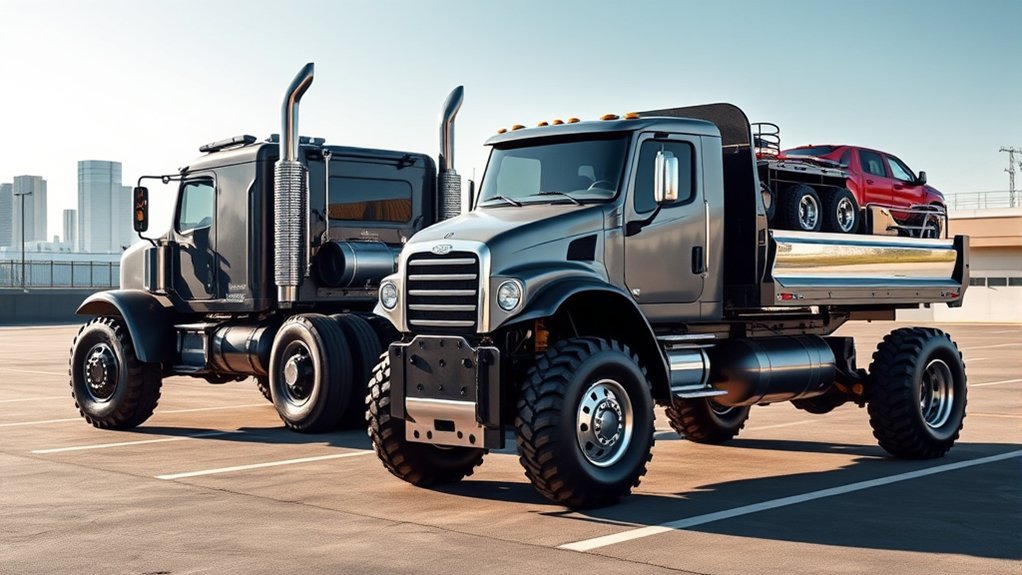
Towing capacity is the maximum allowable weight of a fully loaded trailer for a specific truck configuration when the required towing equipment is installed. It is not simply a measure of engine strength. Cab, bed, drivetrain, axle ratio, powertrain, options, cooling equipment, hitch type, and GCWR can all affect the rating.
Payload capacity is the maximum combined weight the truck can carry. It includes the driver, passengers, cargo in the cab and bed, aftermarket equipment, the hitch or fifth-wheel assembly, and the trailer’s tongue or king-pin weight. For a vehicle-specific number, read the Tire and Loading Information label on the driver-side door area.
| Rating | What It Limits | Where to Verify It |
| Payload | People, cargo, accessories, hitch hardware, and tongue or pin weight carried by the truck | Tire and Loading Information label; owner’s manual |
| GVWR | Maximum loaded weight of the truck itself | Safety Certification label |
| GAWR | Maximum load allowed on each axle | Safety Certification label |
| GCWR | Maximum loaded weight of the truck and trailer together | Manufacturer towing guide or VIN-specific data |
| Towing capacity | Maximum loaded trailer weight for the specific configuration | Owner’s manual, towing guide, or VIN calculator |
A truck can be under its advertised tow rating and still be overloaded on payload, GVWR, rear GAWR, hitch capacity, or tires.
The Risks of Ignoring Your Truck’s Weight Ratings
Exceeding a truck’s towing, payload, axle, hitch, or tire limits can reduce steering control, increase stopping distance, overheat tires and powertrain components, and overload the suspension or rear axle. Poor load placement can also increase trailer sway.
Do not assume that helper springs, air bags, heavier tires, or a weight-distribution hitch increase the manufacturer’s GVWR, GAWR, GCWR, or tow rating. These parts may change ride height or load distribution, but they do not rewrite the ratings on the vehicle labels.
Trailer-brake, equipment, registration, licensing, and speed rules vary by jurisdiction. Check the laws for every state or province on your route instead of assuming one threshold applies everywhere.
Warning: Never tow based only on a model’s headline maximum. Verify the exact truck by VIN and labels, follow the owner’s manual, use the required hitch and braking equipment, and remain below every applicable rating.
Calculating Your Truck’s Payload Capacity
The basic formula is:
Payload capacity = GVWR − actual vehicle weight
For shopping and trip planning, the door-jamb payload label is usually more useful than subtracting a brochure curb weight from GVWR because trim, factory options, dealer-installed equipment, and aftermarket parts change the truck’s actual weight.
Calculate Remaining Payload Step by Step
- Find the label that states the maximum combined weight of occupants and cargo.
- Add the weight of the driver and every passenger.
- Add bed and cab cargo, tools, the hitch or fifth-wheel assembly, and aftermarket accessories that were not included when the label was printed.
- Add the trailer’s loaded tongue weight or king-pin weight.
- Subtract that total from the label’s payload figure.
- Confirm that loaded truck weight stays below GVWR and that each axle stays below its GAWR.
Example: A truck with a 1,900-pound payload label carries 450 pounds of people, 250 pounds of cargo, and 100 pounds of hitch equipment. That leaves 1,100 pounds for trailer tongue weight. If the loaded trailer places 12.5% of its weight on the hitch, payload alone would limit the trailer to about 8,800 pounds—even if the brochure lists a higher tow rating.
This example is only one limit check. The trailer, hitch, receiver, rear axle, tires, GCWR, and manufacturer’s maximum loaded trailer weight must also remain within their ratings.
Pro Tip: Weigh the truck and trailer in loaded travel condition. Separate axle weights reveal a rear-axle overload that a single combined weight may hide.
How Towing and Payload Affect Each Other
Towing and payload are linked because part of the trailer’s weight presses on the truck. Conventional trailer tongue weight commonly falls within a manufacturer-specified range, while fifth-wheel and gooseneck pin weight is often a larger share of trailer weight. Always use the range stated by the truck and trailer manufacturers.
As passengers, bed cargo, accessories, and hitch equipment use more payload, less capacity remains for tongue or pin weight. This can reduce the trailer weight you can handle in practice, even though the published tow rating itself has not changed.
There is no universal rule that a higher tow rating always means a lower payload rating. The two ratings depend on configuration, and added luxury features, four-wheel drive, hybrid hardware, larger wheels, off-road equipment, and accessories often reduce payload by adding vehicle weight. Some higher-GVWR or payload packages can increase available payload.
Benefits and Drawbacks of Prioritizing Towing Capacity
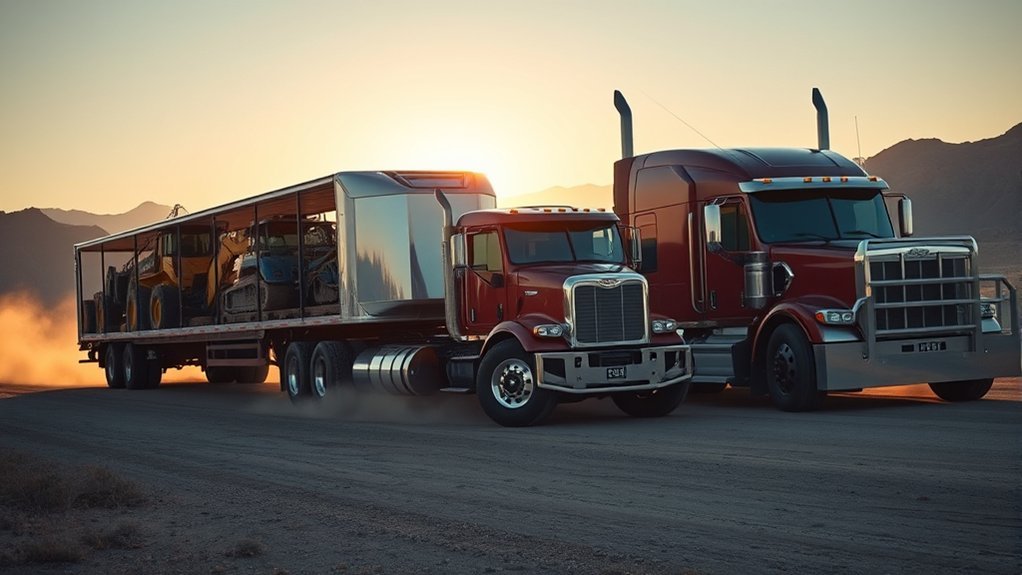
Prioritizing towing capacity makes sense when your main job is pulling a heavy travel trailer, boat, equipment trailer, or enclosed cargo trailer. Look for the required axle ratio, tow package, cooling equipment, integrated trailer-brake controller, suitable receiver, and enough GCWR.
The drawback is that the highest advertised tow configuration may not suit your daily needs. A light configuration can produce a strong tow number but may have fewer comfort features, while a heavily optioned truck can lose payload. A large trailer can also consume much of the available payload through tongue or pin weight.
Advantages and Disadvantages of Focusing on Payload Capacity
Prioritizing payload is useful for construction materials, tools, landscaping supplies, multiple passengers, bed-mounted equipment, and slide-in campers. It is also important for fifth-wheel towing because pin weight and the hitch assembly can use a large share of the truck’s carrying capacity.
Higher-payload configurations may use stiffer springs or less equipment, which can produce a firmer unloaded ride. A high payload rating also does not guarantee a high tow rating; the truck still needs the correct powertrain, axle ratio, hitch, cooling equipment, brakes, and GCWR for the trailer.
2026 Truck Examples: Why Headline Ratings Need Context
Ford lists the properly configured 2026 F-150 at up to 13,500 pounds of towing and 2,440 pounds of payload. Ford also states that towing and payload vary by configuration and may not be achieved at the same time. Its 2026 towing guide tells owners to account for tongue weight, passengers, and cargo within payload, GVWR, and rear GAWR.
Toyota lists the 2026 Tundra at up to 12,000 pounds of towing and 1,850 pounds of payload. Those are model-line maximums, not the rating of every Tundra.
These examples show why you should compare actual trucks by VIN or door label rather than assume that every truck with the same badge has the same capacity.
Note: SAE J2807 provides a standardized performance method manufacturers can use to determine tow-vehicle GCWR and trailer weight ratings, but your vehicle’s published rating and labels remain the limits you must follow.
Choosing the Best Truck for Your Needs in 2026
Assess Your Towing Needs
Estimate the trailer’s loaded weight, not its empty or “dry” weight. Include water, propane, batteries, food, tools, optional equipment, and other cargo. Then verify the required hitch type, trailer brakes, frontal-area limits, weight-distribution requirements, and maximum tongue or pin weight in the manufacturer’s towing guide.
Evaluate Payload Capacity Requirements
Add the heaviest realistic passenger load, cargo, accessories, hitch equipment, and expected tongue or pin weight. Leave room for items that are easy to forget, such as a bed cover, toolbox, running boards, auxiliary fuel tank, generator, or bicycles.
Consider Vehicle Class Options
A midsize pickup may suit a light trailer and modest cargo. A full-size light-duty truck offers more room and capability, while a heavy-duty pickup is often better for high tongue or pin weights, large slide-in campers, and frequent heavy towing. Larger trucks can also cost more to buy and operate and may use more fuel. Do not choose by class name alone; compare the exact truck’s ratings.
Verify the Final Combination
- Confirm the payload label, GVWR, and front and rear GAWR on the truck.
- Confirm the VIN-specific or configuration-specific tow rating and GCWR.
- Check the receiver, ball mount, coupler, hitch, tires, and wheels for lower limits.
- Load the truck and trailer as they will travel, then obtain truck, trailer, and axle weights.
- Reduce or redistribute weight if any rating is exceeded.
Frequently Asked Questions
Does payload matter when towing?
Yes. Trailer tongue or king-pin weight, hitch hardware, passengers, cargo, and accessories all use the truck’s payload. You can be below the trailer tow rating but over payload, GVWR, or rear GAWR.
What is the towing capacity of a 2026 truck?
It depends on make, model, cab, bed, drivetrain, engine, axle ratio, options, and towing equipment. For example, Ford lists a 2026 F-150 maximum of 13,500 pounds, while Toyota lists a 2026 Tundra maximum of 12,000 pounds. Verify the exact vehicle rather than relying on the model-line maximum.
What is the 85% rule for towing?
The “85% rule” is a conservative matching guideline sometimes discussed in towing communities, not a universal U.S. manufacturer rating or legal standard. Do not replace the owner’s manual, tow guide, payload label, GVWR, GAWR, GCWR, or hitch limits with a percentage rule.
What is the 80/20 rule for towing?
There is no single universal “80/20 rule” recognized by all vehicle manufacturers. Some owners choose to keep a personal margin below a maximum tow rating, but a margin does not excuse exceeding payload, axle, tire, hitch, or combined-weight limits.
Does a weight-distribution hitch increase payload or towing capacity?
No. A correctly set up weight-distribution hitch can restore part of the load to the front axle and improve handling, but it does not increase the truck’s GVWR, GAWR, GCWR, payload, receiver rating, or manufacturer tow rating.
Should I use dry trailer weight or loaded trailer weight?
Use the trailer’s actual loaded weight for final checks. Dry weight normally excludes at least some cargo, fluids, dealer-installed items, and personal gear, so it can understate the weight you will tow.
Conclusion
The right truck is not the one with the biggest brochure number. It is the truck that can carry your people, cargo, hitch equipment, and tongue or pin weight while also towing the fully loaded trailer without exceeding GVWR, GAWR, GCWR, hitch, tire, or trailer limits. Verify the exact configuration, calculate the real load, and confirm it on a scale before a demanding trip.
Sources
- Ford 2026 F-150 Towing Information — configuration-specific towing limits, payload interaction, tongue weight, GVWR, GAWR, and GCWR guidance
- Ford Towing Guide and Capacity Definitions — definitions and payload calculation guidance
- Toyota 2026 Tundra Specifications — current maximum towing and payload figures
- SAE J2807 — standardized performance requirements for tow-vehicle GCWR and trailer weight ratings
- 49 CFR 571.110 — federal vehicle-capacity and tire-loading placard requirements for applicable vehicles







Leave a Reply