
Skid plates protect exposed parts beneath a car, truck, SUV, or off-road vehicle from rocks, ruts, branches, road debris, and ground contact. They can be valuable, but the right choice depends on your vehicle’s exact configuration, the terrain you drive, the components already protected, and how much added weight and maintenance you are willing to accept.
Quick Answer
A skid plate is a rigid shield mounted beneath a vehicle to protect components such as the engine oil pan, transmission, transfer case, fuel tank, battery, or differential. You are most likely to need one if you drive off-road, have limited ground clearance, or regularly encounter rocks, deep ruts, snow, or damaged roads.
Key Takeaways
- Skid plates reduce the chance of direct impact or abrasion damage, but they cannot make a vehicle damage-proof.
- Steel favors heavy-impact strength, aluminum reduces weight, and UHMW polyethylene offers low friction and strong abrasion resistance.
- Fitment must match the exact model year, trim, engine, drivetrain, wheelbase, and existing equipment.
- Cooling airflow, exhaust clearance, service access, ground clearance, hardware strength, and installed weight matter as much as the plate material.
- Never work beneath a vehicle supported only by a jack, and always use the manufacturer’s torque specifications.
What Are Skid Plates and Why Are They Important?
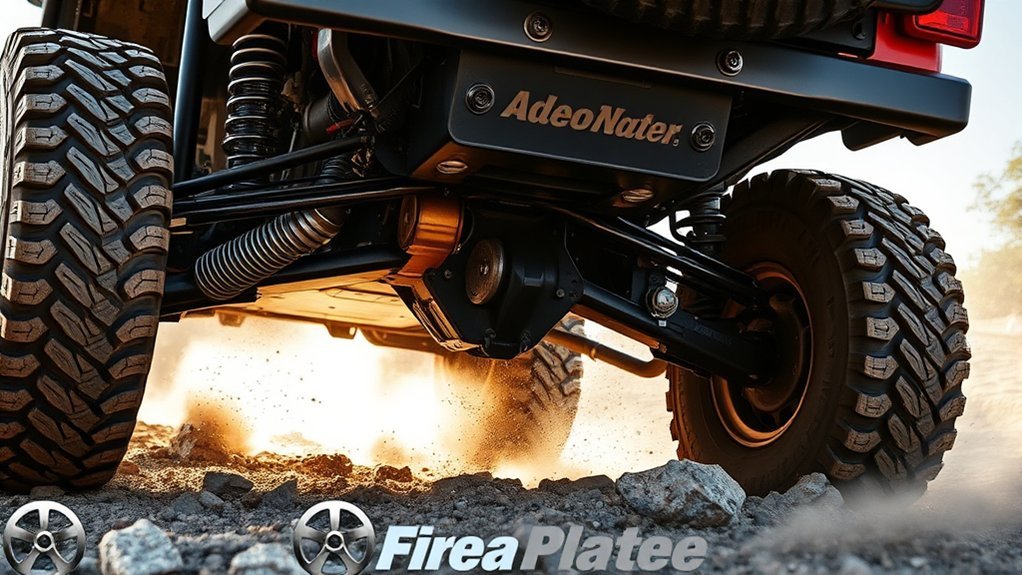
A skid plate is an underbody shield attached to a vehicle’s frame, crossmembers, subframe, or manufacturer-designed mounting points. Depending on the vehicle, an individual plate may protect the engine oil pan, transmission, transfer case, fuel tank, differential, catalytic converter, battery enclosure, cooling components, or suspension mounts.
Manufacturers also use terms such as underbody armor, under-vehicle protection, bash plate, and belly pan. These terms are sometimes used interchangeably, but not every underbody panel is structural armor. A thin plastic splash shield may control airflow and keep out water or dirt without being designed to carry the vehicle’s weight against a rock.
For example, ARB describes steel under-vehicle protection for critical components such as the engine, transmission, and transfer case. Ford also sells a steel front skid plate for specific F-150 model years. These examples show why protection and fitment must be evaluated for a specific vehicle rather than assumed from appearance alone.
The best skid plate is not simply the thickest one. Effective protection depends on material, shape, mounting strength, coverage, clearance, and compatibility with the vehicle.
How Do Skid Plates Protect a Vehicle?
A skid plate places a sacrificial barrier between an obstacle and a vulnerable component. A well-designed plate can spread a load across several mounting points, deflect smaller debris, reduce abrasion, and create a smoother surface that slides over an obstacle instead of catching on it.
Protection depends on several design features:
- Coverage: The plate must cover the vulnerable area without leaving a direct path for a rock, branch, or ledge.
- Formed bends and ribs: Pressed shapes can increase stiffness without relying only on thicker material.
- Mounting points: Strong plates need equally strong brackets, bolts, frame locations, and crossmembers.
- Overlap: Multi-panel systems should overlap in the direction of travel so an obstacle is less likely to catch an exposed edge.
- Recessed hardware: Flush or recessed bolts are less likely to snag rocks and ruts.
- Drainage and cleaning access: Openings can allow water and mud to escape, although they must not expose the component the plate is meant to protect.
- Service access: Oil-drain and filter openings can reduce the need to remove a heavy plate during routine maintenance.
Note: A skid plate reduces risk; it does not guarantee that an oil pan, transmission, battery, fuel tank, or other component will survive every impact. A hard strike can bend the plate into the protected part, damage its mounts, or transfer force into the frame.
Which Components May Need Protection?
| Component | Why It May Need Protection | Important Considerations |
|---|---|---|
| Engine and oil pan | A puncture or severe dent can cause oil loss or interfere with internal clearance. | Oil-drain access, cooling airflow, and clearance from the pan. |
| Transmission | The case, pan, connectors, and cooler lines may be exposed. | Heat, fluid-service access, wiring, and crossmember compatibility. |
| Transfer case | Often positioned near the center of a four-wheel-drive vehicle where it can contact ledges. | Driveshaft movement, exhaust routing, and service access. |
| Fuel tank | Impact or puncture could cause a dangerous leak. | Tank shape, straps, fuel lines, heat shields, and expansion clearance. |
| Differential | The cover or housing can strike rocks in deep ruts. | Suspension travel, fill-plug access, and ground-clearance loss. |
| EV or hybrid battery | The traction-battery enclosure and cooling system may occupy a large part of the floor. | Use only vehicle-approved protection; never drill near high-voltage wiring or the battery enclosure. |
Skid Plate Materials: Steel, Aluminum, UHMW, and Composites
No single material is best for every vehicle. Compare the entire system, including thickness, alloy or grade, formed shape, coverage, brackets, installed weight, surface treatment, and replacement cost.
| Material | Main Advantages | Main Limitations | Often Suits |
|---|---|---|---|
| Steel | Strong, stiff, widely available, repairable, and well suited to repeated hard contact. | Heavier than other choices and vulnerable to corrosion if coatings are damaged. | Rock crawling, heavy vehicles, and high-impact use. |
| Aluminum | Lower weight, useful corrosion resistance, and good protection when properly formed and supported. | Can gouge, bend, or crack depending on alloy, thickness, shape, and impact severity. | Overlanding, trail driving, daily use, and weight-sensitive builds. |
| UHMW polyethylene | Very tough, abrasion-resistant, corrosion-free, and low-friction, helping it slide over obstacles. | May flex more than metal, can require broad support, and is difficult to paint or bond. | UTVs, mud, snow, and terrain where sliding and abrasion are common. |
| Reinforced composite | Can combine low weight, corrosion resistance, stiffness, and shaped coverage. | Properties vary greatly by reinforcement and resin; field repair may be difficult. | Vehicle-specific OEM systems and specialized lightweight applications. |
Steel Skid Plates
Steel is common where resistance to concentrated impacts and repeated dragging is the priority. Its stiffness can help bridge the space between mounting points, although design matters as much as raw thickness. Formed ribs, folded edges, mounting brackets, and crossmembers all affect strength.
Steel needs corrosion protection. Powder coating, zinc plating, galvanizing, or paint can slow rust, but scrapes should be cleaned and touched up before corrosion spreads beneath the coating. Salt, mud, and moisture trapped above the plate can also attack the vehicle’s mounting surfaces.
Aluminum Skid Plates
Aluminum can provide useful protection at a lower installed weight than a comparable steel system. The exact alloy and temper matter. The Aluminum Association notes that aluminum alloy families have different combinations of strength, formability, weldability, and corrosion resistance, so a generic “aluminum” label does not reveal the entire performance level.
Do not assume that every aluminum plate is 4 mm thick or that greater thickness automatically makes it superior. Compare the alloy, formed bends, unsupported spans, bracket design, mounting hardware, and intended terrain.
UHMW Polyethylene Skid Plates
UHMW stands for ultra-high-molecular-weight polyethylene. It is related to HDPE but is selected for especially demanding wear applications. Curbell describes UHMW as tough, low-friction, abrasion-resistant, chemically resistant, and low in moisture absorption.
Those traits help a UHMW plate slide across logs, rocks, snow, and mud without rusting. However, the material can flex, so the plate must have enough thickness and support for its application. It is also difficult to paint with ordinary coatings.
Composite Skid Plates
“Composite” is a broad term rather than one material specification. A product may use glass fiber, carbon fiber, thermoplastic reinforcement, layered polymers, or another construction. Ask for the exact material, operating-temperature range, impact testing, mounting method, and repair or replacement policy.
A composite plate may reduce weight and resist corrosion, but it should not automatically be described as stronger, cheaper, or more impact-resistant than metal. Performance depends on the actual design.
Key Signs You Should Consider Skid Plates
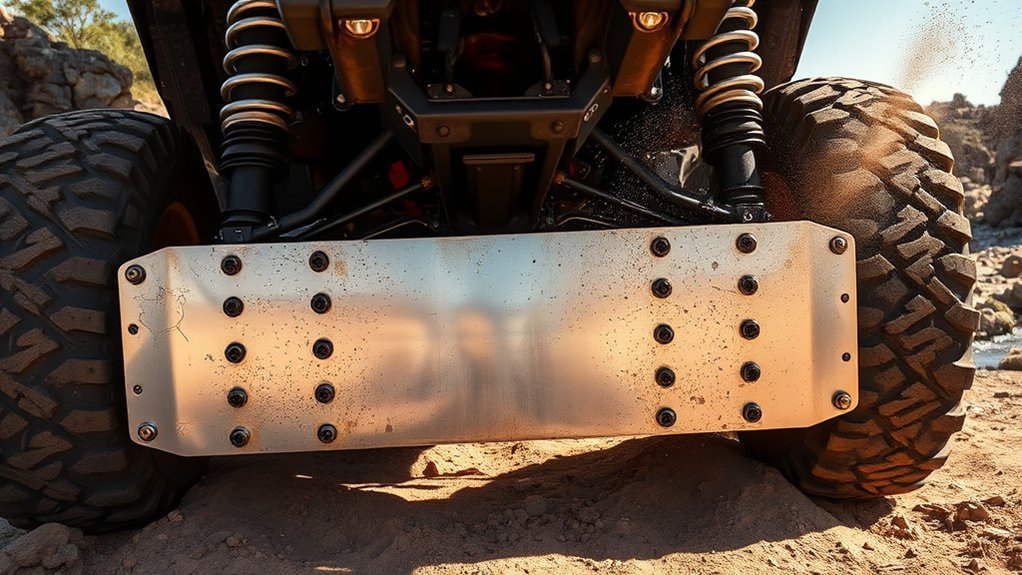
You are more likely to benefit from skid plates when one or more of the following conditions apply:
- You regularly drive on rocky trails, forest roads, deep ruts, construction access roads, or washed-out surfaces.
- Your vehicle has limited ground clearance or a long wheelbase that makes high-centering more likely.
- The oil pan, transmission, fuel tank, battery, or transfer case sits below nearby frame members.
- You have already found fresh scrapes, dents, cracked splash shields, bent brackets, or impact marks beneath the vehicle.
- You travel alone or far from repair facilities, where a fluid leak or damaged driveline component could leave you stranded.
- You drive through deep snow or areas where hidden rocks, frozen debris, and compacted ice may contact the underbody.
- Your vehicle carries valuable cooling, emissions, electrical, or fuel-system components close to the ground.
Off-Road Driving Frequency
Frequent trail use increases exposure to rocks, branches, ruts, ledges, and loose debris. Protection becomes more important as terrain difficulty, vehicle weight, travel speed, and distance from assistance increase.
Gravel roads alone do not automatically require a complete armor system. A well-maintained road driven at a suitable speed may present much less risk than a slow, technical trail with large embedded rocks. Match the protection to the hazards you actually encounter.
Vehicle Ground-Clearance Issues
Repeated scraping on driveways, potholes, snowbanks, or trail obstacles suggests that an exposed component may be at risk. A skid plate can add a barrier, but it also takes up space beneath the vehicle. Check the finished ground clearance before buying.
A plate that hangs below the frame may protect the component while making contact more frequent. A closely fitted system with recessed hardware generally preserves clearance better than a low bracket or exposed bolt head.
Terrain and Trip Consequences
Consider not only the chance of a strike but also what happens afterward. A dented plate may be inconvenient; a punctured oil pan, damaged battery enclosure, broken transmission connector, or leaking fuel system may stop the trip and require towing.
How to Verify Skid Plate Fitment Before Buying
Skid plates are rarely universal. A product that fits one trim or engine may interfere with another configuration. Before ordering, confirm:
- Model year: A redesign or mid-cycle update can change the frame, bumper, cooling system, or underbody layout.
- Trim and package: Off-road packages may already include factory armor or different mounting brackets.
- Engine and transmission: Different powertrains can use different oil pans, exhaust routes, cooling lines, or crossmembers.
- Two-wheel drive, four-wheel drive, or all-wheel drive: Transfer cases and front differentials change the available space.
- Wheelbase and cab or body length: Fuel-tank and frame layouts may differ.
- Factory equipment: Tow hooks, active air dams, intercoolers, recovery points, catalytic converters, and factory plates can conflict.
- Aftermarket modifications: Lift kits, bumpers, exhaust systems, long-travel suspension, differential drops, and frame braces may change fitment.
Use the vehicle identification number to confirm encoded vehicle information through the NHTSA VIN Decoder, then match the result with the skid-plate manufacturer’s fitment list. The VIN alone may not identify every dealer-installed or aftermarket option, so inspect the vehicle as well.
Pro Tip: Compare photographs of the manufacturer’s test vehicle with your underbody before ordering. Look for differences in exhaust routing, tow hooks, crossmembers, cooling ducts, fuel tanks, and existing brackets.
Skid Plate Buying Checklist
Use this checklist instead of choosing by material or thickness alone:
- Exact fitment: Confirm year, trim, engine, drivetrain, wheelbase, and conflicting equipment.
- Required coverage: Identify the components that are actually exposed.
- Mounting design: Prefer frame, subframe, or reinforced crossmember locations specified by the manufacturer.
- Material and construction: Review grade or alloy, thickness, bends, ribs, brackets, and unsupported spans.
- Ground clearance: Check the lowest finished point and exposed hardware.
- Service access: Confirm access to drain plugs, oil filters, fill plugs, grease points, and inspection covers.
- Cooling and heat: Check airflow openings and clearance from exhaust components, catalytic converters, transmissions, and batteries.
- Drainage: Look for a way to remove mud, stones, salt, and water.
- Installed weight: Use the exact manufacturer figure and include brackets and hardware.
- Hardware: Confirm whether the kit includes bolts, spacers, rivnuts, crossmembers, threadlocker, and replacement clips.
- Installation requirements: Determine whether drilling, trimming, bumper removal, or exhaust support is required.
- Warranty: Read the warranty for the exact part number rather than assuming one company-wide term.
Installing Skid Plates Yourself: Step-by-Step Guide
Many bolt-on skid plates can be installed at home, but installation difficulty varies widely. Some kits attach to existing threaded holes, while others require bumper removal, drilling, rivnuts, new crossmembers, or temporary support of nearby components.
At a Glance
| Time Required | About 30 minutes to 3 hours, depending on coverage, access, drilling, and vehicle preparation |
| Difficulty | Moderate for a true bolt-on plate; advanced if drilling, trimming, lifting, or component removal is required |
| Tools Needed | Vehicle-specific instructions, wheel chocks, sockets, wrenches, torque wrench, eye protection, gloves, approved jack and stands or a certified lift; additional tools as specified |
| Cost | A rough planning range is $100 to $1,000 or more for parts, depending on vehicle, material, and coverage; professional labor is additional |
Warning: Never work beneath a vehicle supported only by a jack. Work on a hard, level surface; apply the parking brake; chock the wheels; use the lifting points in the owner’s manual; and support the vehicle with correctly rated stands or a certified lift. Do not drill until you have confirmed the location of fuel lines, brake lines, coolant pipes, wiring, batteries, and high-voltage components.
1. Confirm the Part and Instructions
Match the part number to the exact vehicle configuration. Read the complete manufacturer instructions before lifting the vehicle or removing factory panels. Confirm the required tools, torque values, threadlocker, drilling, trimming, and post-installation checks.
2. Inspect the Mounting Area
Look for bent brackets, stripped threads, rust, damaged splash shields, fluid leaks, loose wiring, crushed lines, and previous impact damage. Correct these problems before covering the area with a new plate.
3. Raise and Support the Vehicle Safely
Follow the vehicle owner’s manual. Use wheel chocks and correctly rated lifting equipment. The OSHA jack standard requires rated capacity to be marked and addresses the need for a firm foundation and blocking where required.
4. Remove Only the Required Parts
Remove factory splash shields, air dams, braces, or skid plates only when directed. Keep the original hardware organized. Do not discard a factory panel until the new system is fully installed and you have confirmed that it replaces all required functions, including airflow control and debris shielding.
5. Install All Hardware Loosely
Position the plate with help or a suitable transmission jack if it is heavy. Start every bolt by hand and leave the hardware loose until all panels, spacers, and brackets are aligned. This reduces cross-threading and prevents one fastener from pulling the plate out of position.
6. Check Clearances
Before final tightening, confirm clearance from the engine, oil pan, transmission, driveshafts, steering, suspension, exhaust, catalytic converters, cooling lines, wiring, and fuel components. Account for engine movement, suspension travel, and exhaust expansion when hot.
7. Tighten to the Specified Torque
Use the torque sequence and values in the skid-plate instructions or factory service information. Do not copy a torque value from another vehicle or use maximum tool force as a substitute. Aluminum threads, rivnuts, captured nuts, and frame hardware can be damaged by overtightening.
8. Perform a Final Inspection
Lower the vehicle and check that no panel hangs loose, contacts moving parts, blocks a drain, or reduces steering or suspension movement. After the manufacturer’s specified break-in distance or first trail trip, inspect the plate and recheck hardware as directed.
Note: Stop and use a qualified installer if the kit requires work near a fuel tank, high-voltage battery, brake line, refrigerant line, structural frame section, or unfamiliar lifting point.
Maintenance Tips for Keeping Skid Plates in Good Condition
Skid plates need inspection because damage may be hidden between the plate and the protected component. Check them after a significant strike, after difficult off-road travel, during oil changes, and before a long remote trip.
- Wash away trapped material: Remove mud, sand, stones, vegetation, road salt, and packed snow from above and around the plate.
- Inspect mounting hardware: Look for loose, missing, stretched, corroded, or cross-threaded bolts and damaged rivnuts.
- Check for contact: A bent plate should not touch the oil pan, transmission, exhaust, driveshaft, battery, or cooling lines.
- Repair damaged coatings: Clean and touch up exposed steel according to the manufacturer’s coating instructions.
- Inspect cracks and bends: Replace a cracked composite or badly distorted plate if it cannot maintain safe clearance and coverage.
- Check service openings: Make sure drain holes and access panels remain open and correctly secured.
- Investigate rattles: A new vibration may indicate loose hardware, a missing spacer, contact with the exhaust, or a bent mounting bracket.
Pro Tip: Photograph the clean plate and its clearances after installation. The reference images make it easier to identify a new bend, shifted bracket, missing bolt, or reduced gap after a trail impact.
Verified Skid Plate Brands and What to Compare
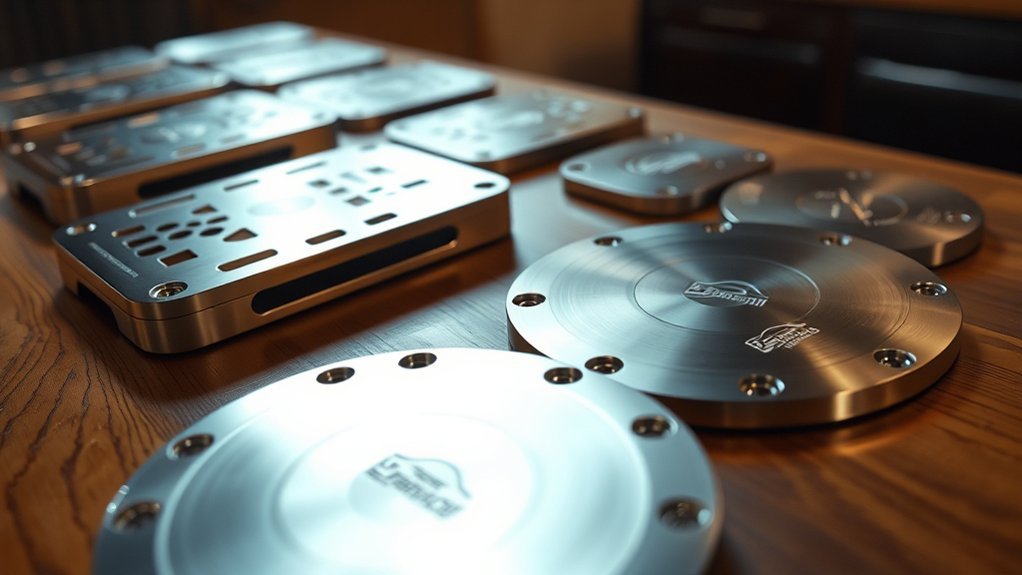
There is no single best brand for every vehicle. Coverage and fitment are often more important than the logo. The following manufacturers illustrate different approaches, but availability, price, material, and warranty must be confirmed for the exact part number.
| Manufacturer | Verified Offering | What to Verify |
|---|---|---|
| Ford | Vehicle-specific OEM steel front protection for listed F-150 model years. | Exact model-year compatibility, factory equipment, installation requirements, and warranty. |
| ARB | Press-formed steel under-vehicle protection for selected 4×4 applications. | Number of panels, protected components, vehicle fitment, finish, service access, and local availability. |
| Ricochet Off-Road | Aluminum and UHMW protection for selected motorcycles, ATVs, UTVs, and other off-road applications. | Material option, coverage, exact machine fitment, included hardware, and current warranty. |
| SuperATV | UHMW full-coverage systems for selected UTVs. | Exact model fitment, installed coverage, thickness, drain access, instructions, and product-specific warranty. |
Do not treat “lifetime warranty,” “no-drill,” “full coverage,” or “easy installation” as company-wide promises. Read the current product page, installation instructions, exclusions, and warranty for the exact plate you plan to buy.
Are Skid Plates Worth It?
Skid plates are usually worthwhile when the likely cost and consequences of underbody damage exceed the drawbacks of the armor. A damaged oil pan, transmission case, fuel tank, battery enclosure, or cooling component can cause a leak, warning lights, reduced performance, an unsafe condition, or a disabled vehicle.
They may be unnecessary when a vehicle stays on maintained pavement, already has suitable factory protection, and has no unusually exposed components. A full steel belly system may also be excessive for occasional graded-road travel when a lighter engine plate addresses the main risk.
Balance these benefits and tradeoffs:
- Benefits: Impact shielding, abrasion resistance, smoother obstacle contact, reduced exposure of critical components, and greater confidence on appropriate terrain.
- Tradeoffs: Added weight, purchase cost, possible ground-clearance loss, more difficult maintenance, trapped debris, corrosion around mounts, noise, and potential airflow or heat problems if the design is unsuitable.
Choose the lightest and simplest system that provides adequate protection for the terrain and consequences you face. More armor is not automatically better.
Frequently Asked Questions
Can skid plates affect vehicle fuel efficiency?
They can, although there is no universal mileage penalty. Added weight may increase energy use, while a poorly designed plate may alter underbody airflow. The actual effect depends on the vehicle, plate weight, shape, speed, tires, load, and driving conditions. Use the exact installed weight rather than estimating from material alone.
How much do skid plates weigh?
There is no dependable universal range. A small component plate, a UTV belly pan, and a multi-panel steel system for a full-size truck can differ greatly. Check the manufacturer’s installed or shipping weight for the exact part number, including brackets and hardware.
Do skid plates require special installation tools?
Some bolt-on plates require only sockets, wrenches, safe lifting equipment, and a torque wrench. Other kits may require drilling, rivnuts, trimming, bumper removal, or additional support equipment. Read the complete instructions before buying or beginning the job.
Can I paint a skid plate?
Steel and aluminum plates can often be refinished with compatible preparation, primer, and coating products. Follow the manufacturer’s instructions, especially on aluminum. Ordinary paint usually adheres poorly to UHMW or HDPE because polyethylene has low surface energy; use only a proven specialty process if the manufacturer permits it.
Are skid plates compatible with every vehicle?
No. Compatibility can change with model year, trim, engine, transmission, drivetrain, wheelbase, tow package, bumper, exhaust, suspension, and factory armor. Match the exact part number and inspect the underbody before ordering.
Can a skid plate cause overheating?
A properly engineered vehicle-specific plate should preserve the required airflow and heat clearance. Problems may occur when a homemade or incompatible plate blocks cooling air, traps hot debris, or sits too close to the exhaust, transmission, engine, or battery. Stop and inspect the installation if temperatures or warning messages change.
Do I need a full set of skid plates?
Not always. Inspect the vehicle and protect the lowest, most vulnerable, and most consequential components first. A front engine plate may be enough for mild travel, while technical rock crawling may justify engine, transmission, transfer-case, fuel-tank, differential, and suspension protection.
Should a bent skid plate be repaired or replaced?
A shallow scrape may be cosmetic. Repair or replace the plate if it is cracked, has damaged mounts, no longer covers the component, touches the oil pan or drivetrain, blocks service access, or has lost required clearance. Follow the manufacturer’s repair policy because bending some heat-treated metals or composites may weaken them.
Conclusion
Skid plates can be a smart investment when your vehicle’s underbody is exposed to rocks, ruts, debris, snow, or repeated ground contact. The right system should protect the components that matter without creating new problems with weight, cooling, service access, heat, noise, or ground clearance.
Choose by exact vehicle fitment, coverage, construction, mounting strength, and intended terrain—not by a universal thickness or a brand claim alone. Install the plate with safe lifting equipment and manufacturer torque specifications, then inspect it after impacts and clean out trapped debris. Properly selected and maintained protection can reduce risk while keeping the vehicle practical to service and drive.
Sources
- National Highway Traffic Safety Administration — VIN Decoder — confirms vehicle information used during fitment checks.
- Occupational Safety and Health Administration — Jack Safety Standard — supports rated-capacity, foundation, blocking, and lifting-safety guidance.
- Ford — F-150 Front Skid Plate Kit — provides an OEM example of vehicle-specific steel underbody protection.
- ARB — Under-Vehicle Protection — supports steel construction and protection of critical drivetrain components.
- Curbell Plastics — UHMW Material Properties — supports UHMW toughness, abrasion resistance, low friction, chemical resistance, and painting limitations.
- The Aluminum Association — Aluminum Alloy Standards — supports the importance of alloy-specific strength, formability, and corrosion properties.







Leave a Reply