
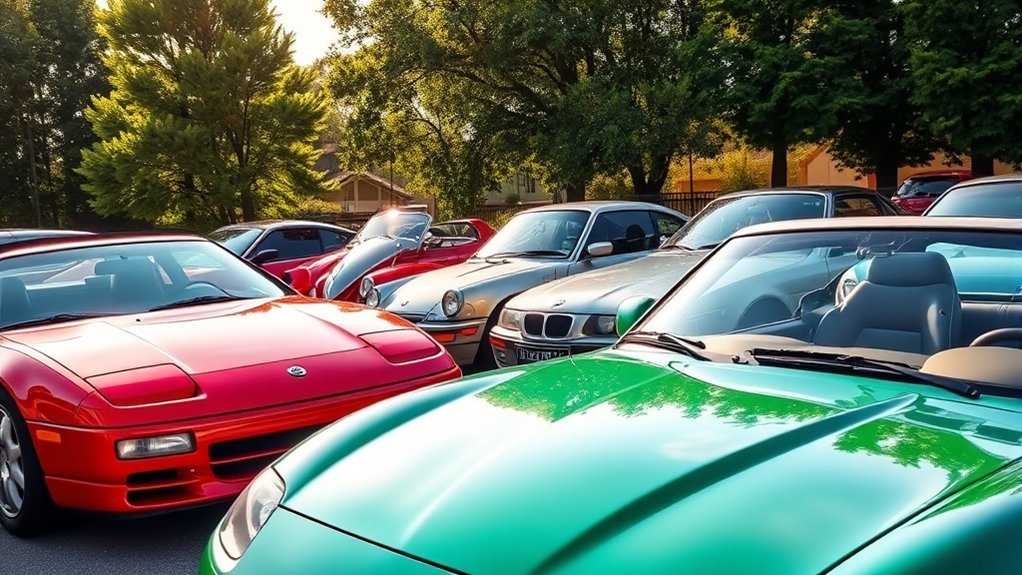
Cars from the 1990s have moved from ordinary used-car status into the modern-classic market. The strongest examples combine distinctive design, engaging performance, cultural importance, usable technology, and enough parts support to remain enjoyable. Models such as the Acura NSX, Toyota Supra, Mazda RX-7, BMW E36 M3, Porsche 911, and Toyota Land Cruiser now attract serious enthusiast attention, but condition and documentation matter more than hype.
Quick Answer
The best 90s classic cars include the Acura NSX, Toyota Supra Turbo, Mazda RX-7, Nissan 300ZX Twin Turbo, BMW E36 M3, Porsche 911, Chevrolet Corvette, Lexus LS 400, and Toyota Land Cruiser. Buy based on condition, originality, service history, parts availability, and inspection results—not on predictions of future appreciation.
Key Takeaways
- A desirable model is not automatically a sound investment. Collector-car values can rise, remain flat, or fall.
- Originality, structural condition, maintenance records, specification, and ownership history usually matter more than low mileage alone.
- Some famous examples need careful date context: the E30 M3 began in the 1980s, the Porsche 996 Carrera 4S arrived for 2002, and the Audi RS5 was not a 1990s model.
- Imported cars require build-date and paperwork verification. In the United States, the federal 25-year safety exemption runs from the vehicle’s exact manufacture date.
- Always obtain an independent pre-purchase inspection from a specialist familiar with the exact generation you are considering.
Why 90s Cars Are Becoming Modern Classics
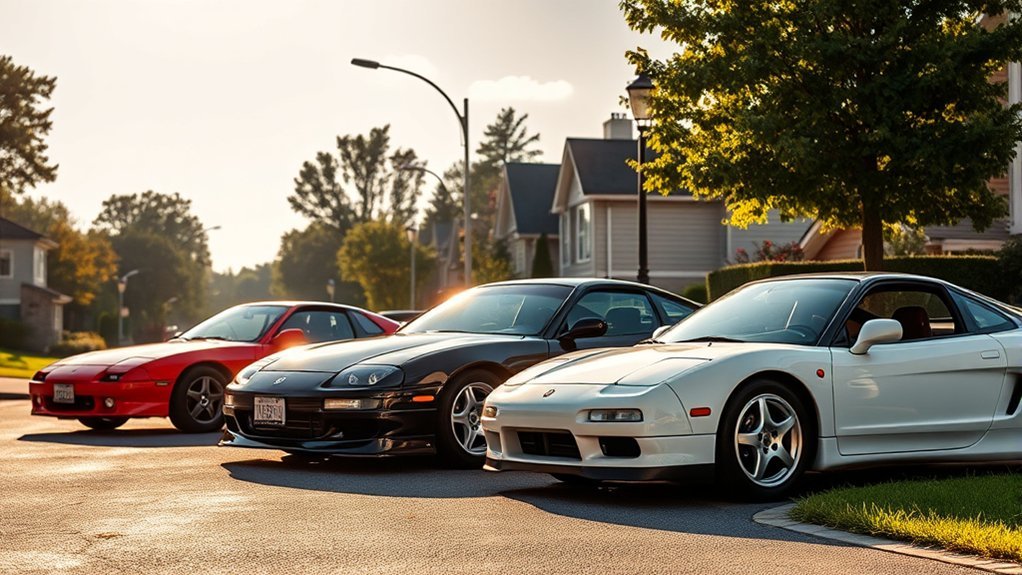
Many 1990s cars are now more than 25 years old, placing them within the age range that collectors, insurers, clubs, and registration programs often associate with classic vehicles. Age alone does not create collector value, however. A model becomes desirable when its design, engineering, rarity, motorsport history, driving experience, or cultural impact gives enthusiasts a reason to preserve it.
The decade also sits at an appealing point in automotive development. Many cars still used hydraulic steering, manual transmissions, relatively low curb weights, simple controls, and naturally aspirated or early turbocharged engines. At the same time, electronic fuel injection, anti-lock brakes, airbags, engine-management systems, and improved diagnostics became increasingly common.
The BMW E30 M3 and Honda NSX illustrate two sides of this transition. The E30 M3 was primarily a late-1980s homologation car, although production continued into the early 1990s. The E36 M3 is the more representative 1990s M3. Honda introduced the NSX in 1990, combining a mid-engine layout, aluminum construction, everyday usability, and Honda’s VTEC engine technology. Honda’s official history describes the NSX launch and its strong early demand in Japan.
The best modern classic is not always the rarest car. It is the car with the right combination of identity, condition, documentation, usability, and long-term owner support.
What Makes a 90s Car Collectible?
No single feature guarantees that a car will become valuable. Collector demand usually reflects several factors working together.
- Distinctive engineering: Mid-engine layouts, high-revving engines, turbocharging, all-wheel drive, rear-wheel drive, lightweight construction, or unusual technology can make a model stand out.
- Recognizable design: Pop-up headlights, clean body lines, wide fenders, compact proportions, and driver-focused interiors give many 1990s cars a clear visual identity.
- Limited or desirable specifications: Performance trims, manual transmissions, factory colors, special editions, and low-production configurations often attract stronger interest.
- Motorsport and media exposure: Racing success, video games, films, magazines, and enthusiast culture can expand demand beyond the car’s original market.
- Originality: Factory paint, original drivetrain components, correct wheels, uncut wiring, and reversible upgrades are usually easier to evaluate than heavily modified examples.
- Condition and documentation: A complete service file, ownership history, factory manuals, keys, window sticker, and repair invoices can separate a carefully preserved car from a neglected one.
- Parts and specialist support: A rare car may be difficult to own if electronic modules, glass, trim, body panels, or drivetrain components are unavailable.
Note: Asking prices do not prove market value. Compare completed sales for cars with similar mileage, condition, transmission, specification, modifications, documentation, and title status.
Iconic Features of 90s Models
Unique Design Elements
The 1990s produced several recognizable design themes. Sports cars such as the Toyota Supra Mk IV, Acura NSX, Mazda RX-7, and Nissan 300ZX used low noses, wide stances, curved glass, integrated spoilers, and smooth bodywork. Pop-up headlights remained common during the first half of the decade, while brighter factory colors appeared on cars such as the Ford Mustang and Honda Civic Si.
The Volkswagen New Beetle arrived near the end of the decade with a rounded roofline and upright cabin inspired by the original Beetle. It represented a different kind of 1990s design: retro styling supported by modern front-wheel-drive mechanicals.
Interiors also changed. Analog gauges remained dominant, but digital displays, automatic climate controls, electronic seat systems, premium audio equipment, and more complex warning systems became increasingly visible. The correct historical point is not that the 1992 Honda Prelude introduced the first digital instrument cluster; digital automotive displays existed earlier. Instead, the decade made electronic interfaces more common across a wider range of vehicles.
Advanced Technology Integration
Electronic fuel injection had largely displaced carburetors in mainstream passenger cars, improving cold starts, drivability, fuel control, and emissions performance. Engine computers became more capable, and later-decade U.S. vehicles increasingly used standardized OBD-II diagnostic systems. The California Air Resources Board’s OBD-II overview explains how onboard systems monitor components that can affect emissions.
Safety equipment also expanded. Anti-lock brakes and frontal airbags became available on more vehicles, although equipment varied by year, trim, market, and body style. A buyer should never assume that every example of a model has the same safety equipment.
Factory navigation appeared in a limited number of late-1990s vehicles and markets, while CD changers, amplified audio systems, and integrated telephone equipment became luxury-car selling points. These systems are historically interesting, but failed displays, obsolete navigation media, leaking display pixels, and unavailable electronic modules can be expensive to address today.
Performance Innovations
Turbocharging, sophisticated all-wheel drive, variable valve timing, advanced suspension design, and improved engine management helped define the decade’s performance cars.
- Turbocharged engines: The Nissan Skyline GT-R, Toyota Supra Turbo, Mitsubishi 3000GT VR-4, Mazda RX-7, and Subaru Impreza WRX STI used forced induction to produce strong performance from relatively compact engines.
- Rotary performance: The third-generation Mazda RX-7 combined a compact twin-turbo rotary engine with a light, balanced chassis. Its engine requires informed maintenance and careful inspection.
- All-wheel-drive systems: Nissan’s Skyline GT-R used the ATTESA E-TS system, while Mitsubishi, Subaru, and Audi developed their own performance-oriented approaches to four-wheel traction.
- Variable valve timing: Honda’s VTEC system helped engines such as the NSX V6 and performance-oriented four-cylinder models deliver both everyday drivability and high-rpm power.
- Lightweight construction: Aluminum body and suspension components helped the NSX achieve performance without relying only on engine output.
The Audi RS5 should not be included as a 1990s example because it arrived later. Audi’s correct 1990s RS milestone is the 1994 RS2 Avant, a turbocharged, all-wheel-drive performance wagon that helped establish Audi’s RS identity.
Best 90s Classic Cars at a Glance
| Model | Why Enthusiasts Want It | Main Buying Risk |
| Acura NSX | Mid-engine layout, aluminum construction, VTEC V6, everyday usability | Deferred timing-belt service, collision repairs, expensive body and trim parts |
| Toyota Supra Turbo | 2JZ-GTE engine, strong aftermarket, recognizable design | Heavy modification, accident history, counterfeit or incomplete factory parts |
| Mazda RX-7 | Low weight, balanced chassis, compact twin-turbo rotary engine | Low compression, overheating, poor modifications, limited specialist knowledge |
| Nissan 300ZX Twin Turbo | Twin-turbo V6, advanced styling, strong grand-touring character | Crowded engine bay, aging hoses and wiring, difficult deferred maintenance |
| BMW E36 M3 | Balanced rear-wheel-drive chassis, practical body styles, strong club support | Cooling-system neglect, worn suspension, rust, track use, interior deterioration |
| Porsche 911 | Distinctive rear-engine layout, strong brand heritage, broad specialist support | High repair costs, incomplete service records, hidden collision or corrosion damage |
| Chevrolet Corvette C4 | V8 performance, removable roof options, broad U.S. parts availability | Aging electronics, weather seals, interior wear, poorly executed modifications |
| Lexus LS 400 | Refined V8, landmark luxury-car engineering, understated design | Age-related electronics, suspension wear, neglected timing-belt service |
| Toyota Land Cruiser | Durability, off-road capability, global reputation, practical body | Rust, neglected driveline service, worn suspension, expensive restoration |
Top Luxury 90s Cars to Consider
Luxury cars from the decade can offer excellent design and engineering, but they are often inexpensive to buy because complex repairs remain costly. Treat purchase price as only the entry fee.
BMW 7 Series E38
The E38 7 Series was produced from 1994 into 2001 and remains admired for its restrained styling, rear-wheel-drive proportions, and broad engine range. BMW lists the E38 750i from 1994 through 2001 and describes it as the generation’s V12 flagship. Buyers should inspect the cooling system, suspension, instrument displays, seat functions, climate controls, headliner, window regulators, and service records.
Mercedes-Benz S-Class W140
The W140 S-Class is the proper Mercedes flagship for most of the decade. It offers substantial construction, quiet road manners, and advanced comfort equipment, but neglected examples can require expensive hydraulic, climate-control, wiring, suspension, and convenience-system repairs.
The 2000 Mercedes-Benz S500 W220 is better treated as a turn-of-the-millennium model rather than a core 1990s selection. Some early examples were manufactured during 1999, but buyers comparing strict model years should separate them from the W140.
Lexus LS 400
The first- and second-generation LS 400 demonstrated that a Japanese luxury sedan could compete through refinement, build quality, a smooth V8, and strong dealer support. The best examples have complete timing-belt, cooling-system, suspension, and fluid-service records.
Jaguar XJR
The supercharged X300-generation Jaguar XJR combines traditional British styling with stronger performance than the standard sedan. Corrosion, cooling-system health, electrical operation, suspension condition, and prior repair quality deserve close attention.
Porsche 911: 993 and Early 996
The air-cooled 993 generation ran through the late 1990s and remains one of the decade’s most recognized premium sports cars. Porsche introduced the water-cooled 996 generation in 1997. The 996 Carrera is therefore a legitimate late-1990s choice, but the 996 Carrera 4S is not: Porsche states that the Carrera 4S joined the range for model year 2002.
Financial Note: Collector cars are speculative assets. Insurance, storage, taxes, maintenance, repairs, transaction fees, and selling costs can exceed any increase in market value. Buy only at a level you can afford even if the car never appreciates.
Best Sports Cars of the 90s
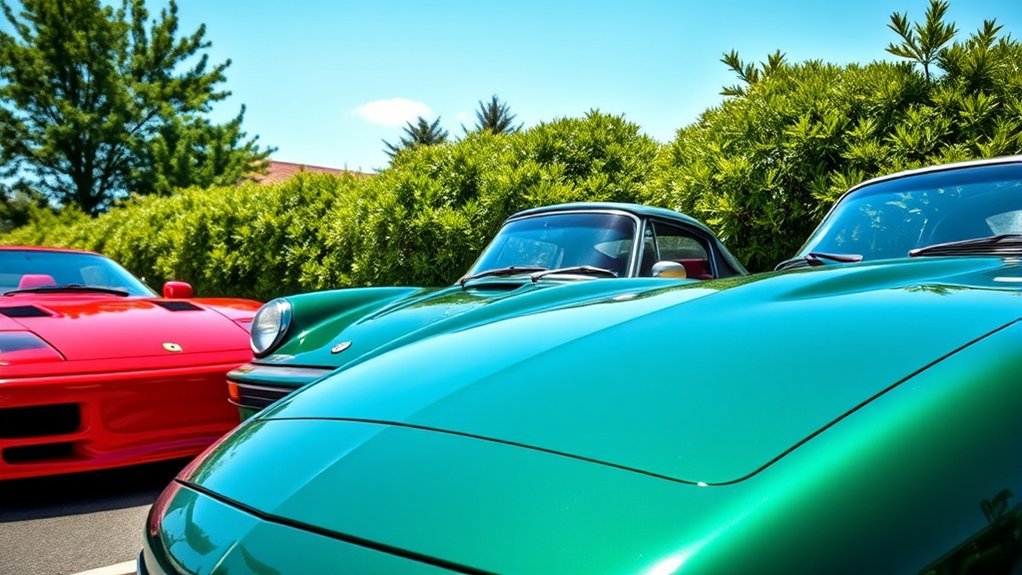
The decade’s strongest sports cars range from accessible American V8 models to technically complex Japanese-market icons.
Acura NSX and NSX-T
The NSX entered production in 1990 and combined a mid-engine chassis, aluminum construction, and a naturally aspirated V6. The removable-roof NSX-T broadened the model’s appeal later in the decade. Honda’s official NSX history documents the 1990 launch and early demand.
Inspect for collision repairs to the aluminum body, timing-belt and water-pump history, transmission-specific concerns, aging climate controls, worn suspension components, and missing factory trim.
Toyota Supra Mk IV
The fourth-generation Supra is known for its strong six-cylinder engines, available twin-turbo system, rear-wheel drive, and substantial tuning culture. That popularity also creates risk. Many cars have been modified, repainted, converted, raced, or rebuilt after collisions.
A factory-style, documented car may be easier to value than a highly modified example. Verify the original engine, transmission, body panels, VIN labels, turbo hardware, emissions equipment, wiring, and ECU.
Mazda RX-7
The third-generation RX-7 remains one of the decade’s most focused sports cars. Its light chassis and compact rotary engine create a distinctive driving experience, but ownership requires a mechanic who understands rotary compression testing, cooling, oiling, ignition, vacuum controls, and turbo-system operation.
Nissan Skyline GT-R
The R32 and R33 Skyline GT-R dominated much of the 1990s discussion, while the R34 arrived in 1999. Nissan’s RB26DETT engine and ATTESA E-TS all-wheel-drive system became central to the model’s reputation.
In the United States, legality depends on the individual car and its paperwork. NHTSA states that the 25-year exemption runs from the exact date of manufacture. A car described merely as a “1999 model” may not qualify until 25 full years have passed from its documented build date.
Chevrolet Corvette C4
The 1994 Corvette used the LT1 V8 in most standard models and offered strong performance with comparatively broad U.S. parts support. The C4 ZR-1, produced during the first half of the decade, adds rarity and a more specialized engine. Inspect the digital displays, weather seals, removable roof, cooling system, suspension, pop-up headlights, and evidence of careless jacking.
Nissan 300ZX Twin Turbo and Mitsubishi 3000GT VR-4
Both cars showcase the decade’s interest in advanced grand-touring technology. The 300ZX Twin Turbo uses a tightly packaged twin-turbo V6. The 3000GT VR-4 combines twin turbochargers with all-wheel drive and other complex systems. Maintenance access and age-related electronic or hydraulic failures can make neglected cars expensive to revive.
Subaru WRX STI and Other Market-Specific Models
The Subaru Impreza WRX STI became a 1990s rally icon outside the United States, but official U.S. sales came later. American buyers seeking a domestic-market 1990s Subaru performance car may instead encounter the Impreza 2.5 RS. Always identify the market, chassis code, engine, transmission, and import history rather than relying only on a seller’s badge description.
Affordable 90s Enthusiast Cars
Not every worthwhile 1990s car is an exotic or limited-production model. Less expensive choices can offer strong club support, simpler repairs, and more opportunities for regular use.
- Honda Civic Si: Light weight, manual transmission, simple controls, and strong aftermarket support. Watch for theft history, engine swaps, cut wiring, rust, and incomplete suspension work.
- Acura Integra GS-R and Type R: High-revving engines and sharp front-wheel-drive handling. Confirm trim authenticity, VINs, drivetrain identity, and theft or collision history.
- Ford Mustang GT and SVT Cobra: V8 power, broad parts availability, and a large owner community. Inspect rear structure, torque boxes, convertible rigidity, cooling, modifications, and signs of drag-racing use.
- BMW E36 3 Series: Balanced handling and wide parts support. Cooling-system age, rear suspension mounting points, rust, oil leaks, and interior deterioration are common inspection priorities.
- Mazda Miata: Simple roadster design, low running costs, and extensive parts support. Inspect rocker panels, lower fenders, chassis rails, rain drains, top condition, and previous track modifications.
- Volkswagen New Beetle: Distinctive late-1990s styling and practical front-wheel-drive mechanicals. Electrical faults, interior plastics, cooling components, and deferred timing-belt service may affect ownership costs.
- Honda Prelude: A refined coupe with strong handling and available performance-oriented engines. Check for oil consumption, timing-belt history, transmission behavior, rust, and modified suspension geometry.
Best 90s SUVs and Off-Roaders
Toyota Land Cruiser 80 and 100 Series
The 80 Series represents most of the decade and is known for a solid-axle layout and strong off-road ability. Toyota released the 100 Series in January 1998, so 1998 and 1999 examples are genuine 1990s vehicles. Toyota’s vehicle history explains that the 100 Series succeeded the 80 while retaining body-on-frame construction.
Inspect the frame, body mounts, axle seals, steering, cooling system, suspension, four-wheel-drive operation, service history, and evidence of hard off-road use.
Land Rover Defender 90
The Defender 90 offers simple styling and strong off-road character, but market specification matters. North American, European, and later imported vehicles may differ in engines, safety equipment, bodywork, and legal documentation. Rust in the frame, bulkhead, doors, and body supports can be more serious than cosmetic paint flaws.
Jeep Grand Cherokee
The ZJ Grand Cherokee covered most of the decade, while the WJ arrived for 1999. Both combine everyday comfort with four-wheel-drive capability. Verify transfer-case operation, axle and differential condition, cooling-system health, electrical accessories, steering wear, rust, and signs of poorly installed suspension lifts.
Nissan Pathfinder and Ford Explorer
The Nissan Pathfinder offered a practical mix of truck-based construction and daily usability. The Ford Explorer helped popularize the family-oriented SUV while retaining towing and four-wheel-drive capability in many configurations. Condition varies widely because these vehicles were often used as ordinary transportation rather than preserved as collectibles.
Mitsubishi Montero and Lexus LX 450
The Mitsubishi Montero offers serious off-road hardware and distinctive styling, while the Lexus LX 450 combines Land Cruiser foundations with additional luxury equipment. Parts supply, rust, deferred drivetrain service, and model-specific trim availability should be checked before purchase.
How to Inspect a 90s Classic Before Buying
A complete inspection should verify the car’s identity, history, structure, mechanical condition, electronics, and legal status. Do not let fresh paint, a detailed engine bay, or a low odometer reading replace evidence.
- Confirm the VIN and model identity. Compare the dashboard VIN, door or body labels, stamped chassis numbers, title, registration, service invoices, and import documents. Confirm the engine, transmission, trim level, and model year.
- Research the title and history. Check for salvage, rebuilt, flood, theft, odometer, lien, and accident records. Review ownership history and verify that the seller’s identity matches the legal paperwork.
- Inspect the body in consistent light. Look for paint mismatch, overspray, uneven panel gaps, disturbed fasteners, cracked seam sealer, welds, filler, distorted rails, and missing VIN labels.
- Check for rust underneath. Inspect frame rails, rocker panels, floor pans, suspension mounts, subframes, wheel arches, battery areas, windshield channels, spare-wheel wells, and body mounts.
- Request a cold start. A warm engine can conceal hard starting, smoke, timing noise, weak compression, cooling problems, or poor idle control.
- Check every fluid. Review engine oil, coolant, brake fluid, transmission fluid, differential oil, power-steering fluid, and hydraulic-system fluid where applicable. Fluid color alone does not prove internal condition.
- Operate every electrical feature. Test lights, windows, locks, mirrors, seats, gauges, warning lamps, climate controls, audio equipment, sunroof, convertible top, active suspension, and four-wheel-drive controls.
- Scan compatible diagnostic systems. Later vehicles may support standardized OBD-II access, while earlier cars may require manufacturer-specific tools or procedures.
- Road-test the car. Evaluate clutch engagement, transmission shifts, steering, brakes, wheel bearings, suspension noise, engine temperature, boost behavior, alignment, and vibration.
- Hire an independent specialist. The mechanic should be chosen by the buyer and should understand the specific model, engine, drivetrain, and known failure points.
Warning: Never crawl under a vehicle supported only by a jack, and never open a hot cooling system. Arrange a lift inspection at a qualified shop when the underside cannot be examined safely.
The Federal Trade Commission advises buyers to obtain an independent inspection because a vehicle-history report may reveal accidents or flood history but usually will not identify mechanical problems.
Pro Tip: A well-documented car with sensible mileage and recent preventive maintenance is often a better purchase than a lower-mileage car that has sat unused, lacks records, or needs every age-related service at once.
Buying an Imported 90s Car in the United States
Japanese- and European-market cars can offer specifications that were never sold in the United States, but import status must be verified before money changes hands.
The National Highway Traffic Safety Administration states that a motor vehicle at least 25 years old may be imported without being required to comply with all Federal Motor Vehicle Safety Standards. The 25-year period is measured from the vehicle’s date of manufacture.
Verify the following:
- The exact manufacture month and year.
- The foreign registration or export certificate.
- The translated ownership documents where required.
- The customs entry documents.
- The DOT HS-7 declaration.
- EPA emissions-import paperwork.
- The state title and registration path.
- The chassis number and its match to every document.
- Whether the car was previously seized, exported, bonded, or titled incorrectly.
Do not rely on a seller’s statement that a vehicle is “25-year legal.” Ask an importer, attorney, state motor-vehicle agency, or other qualified professional to review questionable paperwork before purchase.
Common Problems With Aging 90s Cars
Even a low-mileage car can suffer from age rather than use. Common concerns include:
- Cracked coolant hoses, fuel hoses, vacuum lines, seals, and suspension bushings.
- Corroded grounds, brittle wiring insulation, failed relays, and unavailable electronic modules.
- Clouded or leaking displays.
- Hardened tires that still show acceptable tread depth.
- Old timing belts, accessory belts, tensioners, and water pumps.
- Leaking heater cores, radiators, evaporators, power-steering systems, and hydraulic components.
- Shrunken leather, cracked dashboards, sagging headliners, broken plastic clips, and brittle trim.
- Rust hidden by undercoating, body filler, replacement carpet, or fresh paint.
- Contaminated fuel systems after long storage.
- Aftermarket alarms, stereos, engine controls, and lighting connected with damaged factory wiring.
Model-specific specialist knowledge remains essential. A rotary RX-7, aluminum-bodied NSX, V12 BMW, air-cooled Porsche, twin-turbo 300ZX, and solid-axle Land Cruiser require very different inspection methods.
Caring for Your 90s Classic Car
- Follow a model-specific maintenance schedule. Use the factory manual as the starting point and shorten intervals when age, climate, storage, or driving conditions justify it.
- Replace age-expired components. Timing belts, tires, rubber brake hoses, coolant hoses, fuel hoses, and seals may require replacement even when mileage is low.
- Keep the cooling system healthy. Overheating can damage aluminum cylinder heads, head gaskets, rotary-engine seals, turbochargers, and plastic cooling components.
- Use correct fluids and parts. Avoid assuming that a modern universal fluid is compatible with an older transmission, differential, brake, hydraulic, or cooling system.
- Store the car in a dry, ventilated space. Control moisture, prevent rodent access, maintain the battery correctly, and avoid trapping condensation beneath a non-breathable cover.
- Drive it regularly when practical. A complete warm-up and road cycle can help circulate fluids, exercise seals, charge the battery, and reveal problems before they become severe.
- Preserve removed factory parts. If you install reversible upgrades, label and store the original wheels, radio, suspension, intake, exhaust, lights, and trim.
- Document every service. Keep dated invoices, photographs, mileage records, part numbers, inspection reports, and notes about modifications.
Classic-car communities can help locate specialists and discontinued parts, but forum advice should be checked against factory service information and experienced technicians.
Frequently Asked Questions
What is the 20/3/8 rule for buying a car?
The 20/3/8 guideline generally means putting at least 20% down, financing for no more than three years, and keeping the monthly payment at or below about 8% of gross monthly income. It is a budgeting guideline, not a law or a guarantee that a purchase is affordable. Insurance, repairs, storage, taxes, and maintenance must also fit your budget.
What is the 30-60-90 rule for cars?
The 30-60-90 rule usually refers to major maintenance checkpoints around 30,000, 60,000, and 90,000 miles. It is only a general reminder. The manufacturer’s schedule for the exact model, engine, transmission, market, and operating conditions should determine which services are actually required.
Which 90s cars are most likely to become classics?
Strong candidates include the Acura NSX, Toyota Supra Turbo, Mazda RX-7, Nissan Skyline GT-R, Nissan 300ZX Twin Turbo, BMW E36 M3, Porsche 911, Chevrolet Corvette, Lexus LS 400, and Toyota Land Cruiser. Rarity, originality, condition, specification, documentation, and long-term parts support matter more than the nameplate alone.
What is Dave Ramsey’s rule on cars?
Ramsey Solutions commonly recommends that the combined value of all vehicles and other motorized assets remain below half of annual household income and generally promotes paying cash instead of carrying a car loan. That is one company’s budgeting philosophy, not a universal financial standard. Consider your full financial position and consult a qualified adviser when needed.
Conclusion
The best 90s classic cars combine a memorable driving experience with enough quality, documentation, and parts support to remain usable. The Acura NSX, Toyota Supra, Mazda RX-7, BMW E36 M3, Porsche 911, Chevrolet Corvette, Lexus LS 400, and Toyota Land Cruiser are compelling examples, but the badge alone does not make a good purchase.
Choose the cleanest, best-documented example you can afford, verify its identity and legal status, and pay for a specialist inspection. Preserve factory parts, address age-related maintenance before cosmetic upgrades, and budget for ownership rather than assuming appreciation. A 1990s car should first be something you value driving and caring for; any future increase in price should be treated as uncertain.
Sources
- Honda Global: The NSX / 1990 — supports the NSX launch history and engineering context.
- Porsche Newsroom: 25 Years of the 996 Generation — supports the 996 timeline and the 2002 arrival of the Carrera 4S.
- Audi MediaCenter: RS History — supports the 1994 RS2 Avant as Audi’s relevant 1990s RS model.
- Toyota: Land Cruiser 100 Vehicle Lineage — supports the January 1998 launch of the 100 Series.
- National Highway Traffic Safety Administration: Importation and Certification FAQs — supports the federal 25-year import rule and manufacture-date requirement.
- Federal Trade Commission: Buying a Used Car From a Dealer — supports vehicle-history research and independent pre-purchase inspections.







Leave a Reply