
A road trip with your dog can be safe and enjoyable when you prepare for more than food and bathroom stops. Your dog needs suitable identification, a secure restraint, a comfortable travel area, an appropriate feeding plan, regular breaks, confirmed lodging, and an emergency plan. You should also check health and entry requirements for every destination before leaving.
Quick Answer
Before taking a road trip with your dog, schedule any needed veterinary care, confirm destination rules, update identification, and pack food, water, medications, records, and first aid supplies. Secure your dog in a properly fitted, independently crash-tested harness or anchored crate, plan frequent breaks, and never leave your dog alone in a parked vehicle.
Key Takeaways
- Confirm that your dog is healthy enough for travel and ask your veterinarian about anxiety, nausea, medications, feeding, and special health needs.
- Use a correctly installed, independently crash-tested restraint or a secured travel crate; never let your dog roam inside the vehicle.
- Carry identification, veterinary records, medications, food, water, cleanup supplies, and an appropriate pet first aid kit.
- Use breaks for water, bathroom needs, controlled exercise, and a quick health check.
- Verify each hotel, campground, state, territory, country, and border-crossing requirement before the trip.
- Never leave your dog unattended in a parked vehicle, even in the shade or with the windows cracked.
At a Glance
| Planning Time | Begin several weeks ahead when veterinary care, travel training, health certificates, border documents, or lodging reservations may be needed. |
| Difficulty | Easy to moderate, depending on your dog’s health, behavior, destination, and experience with car travel. |
| Essential Gear | Crash-tested restraint or secured crate, leash, identification, food, water, bowls, medications, records, bedding, waste bags, towels, and first aid supplies. |
| Likely Cost | Varies. Possible expenses include veterinary care, a certified restraint, medications, travel documents, lodging fees, and emergency care. |
Note: This guide provides general travel-safety information. It does not replace advice from your veterinarian, who can assess your dog’s health, prescribe medication, and recommend feeding or travel adjustments based on individual needs.
Essential Preparations for a Dog Road Trip
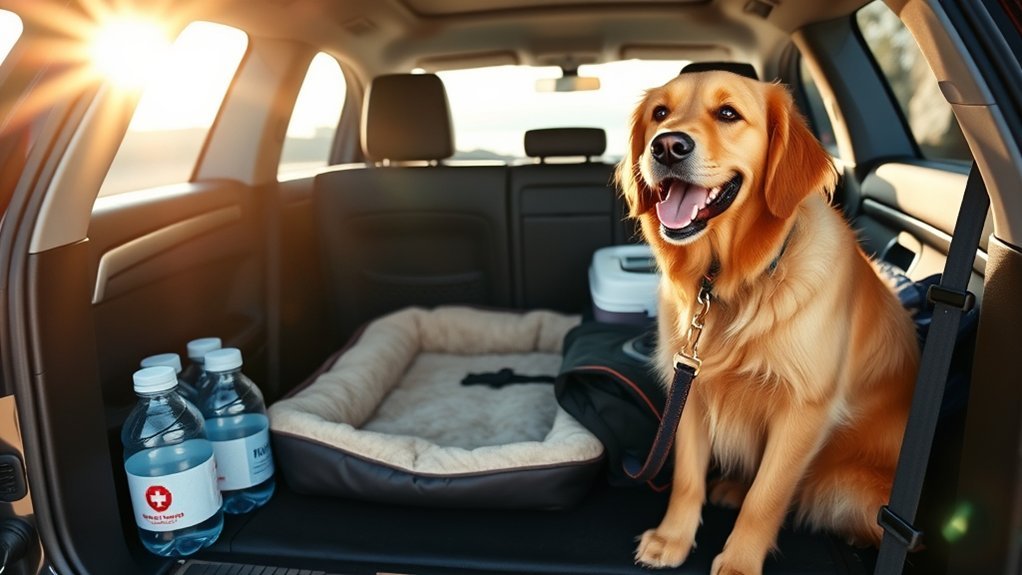
Start by deciding whether the trip is appropriate for your dog. A dog who becomes severely distressed in a vehicle, has uncontrolled motion sickness, is recovering from surgery, or has serious heart, breathing, mobility, or temperature-regulation problems may be safer with a trusted sitter or boarding provider.
Contact your veterinarian before a long trip if your dog has a medical condition, takes medication, has not traveled before, or shows drooling, vomiting, panic, trembling, nonstop vocalizing, or attempts to escape in the car. Ask whether an examination, vaccine update, parasite prevention, medication refill, or destination-specific health document is needed.
Practice With Short Car Trips
Do not make a full-day drive your dog’s first car experience. Begin with the parked vehicle, allowing your dog to enter, settle into the restraint or crate, receive a reward, and leave. Progress to short drives around the block and then to calm destinations such as a walking trail.
Use the same crate, harness, bedding, and loading routine you plan to use on the trip. Keep early sessions short and stop before your dog becomes overwhelmed. If anxiety increases instead of improving, consult your veterinarian or a qualified behavior professional.
Update Identification and Records
Your dog should wear a secure collar with an identification tag showing a current mobile number. Add a second temporary tag with your destination or another reachable contact when useful.
If your dog has a microchip, verify that the registration company has your current telephone number, email address, and emergency contact. A microchip cannot help reunite you with your dog if the registration information is outdated.
Carry digital and paper copies of:
- Rabies and other vaccination records
- Your dog’s medication list, doses, and prescribing clinic
- Relevant medical conditions and allergies
- Your regular veterinarian’s contact information
- Any required certificate of veterinary inspection or destination document
- A recent, clear photo showing your dog’s face and full body
Check State, Territory, and Border Requirements
Do not assume ordinary vaccination records are enough. The USDA Animal and Plant Health Inspection Service explains that receiving states and territories may require a health certificate, vaccines, tests, or treatments. Requirements can also differ for Hawaii, U.S. territories, international destinations, and tribal lands.
For an international road trip, check both the destination’s entry rules and the requirements for returning home. As of July 2026, the CDC requires a Dog Import Form receipt for every dog entering or returning to the United States. Age, microchip, rabies, health, port-of-entry, and additional documentation rules depend on the dog’s vaccination and travel history.
Pro Tip: Check official travel requirements before paying for nonrefundable lodging. Some certificates and rabies documents must be completed within specific time windows or before the dog leaves the United States.
Packing Essentials for Your Dog Road Trip
Pack your dog’s supplies in one easy-to-reach container rather than burying them beneath luggage. Keep water, a leash, waste bags, medication, and records accessible from the passenger area or the top of the cargo compartment.
Dog Road Trip Packing Checklist
- Food plus extra: Bring enough of your dog’s regular diet for delays. Sudden food changes can cause digestive upset.
- Safe food storage: Keep food dry and sealed. For border travel, review customs rules because some destinations restrict pet food or animal-origin products even when commercially packaged.
- Fresh water: Carry water from home when your dog is sensitive to changes, plus refillable containers for the route.
- Travel bowls: Pack stable or collapsible bowls that are easy to clean.
- Medication: Bring enough for the trip plus a reasonable delay, stored according to the label.
- Records: Carry vaccination, health, medication, microchip, and destination documents.
- Two leashes: Keep a spare in case one is lost or damaged.
- Harness and collar: Use identification on the dog even when a separate automotive restraint is installed.
- Waste bags: Bring more than the expected number of stops will require.
- Bedding: Pack a familiar, washable bed or blanket.
- Towels and cleaning supplies: Include paper towels, pet-safe cleaner, disposable gloves, and sealable bags.
- Grooming supplies: Pack a brush, paw wipes, and any coat or skin products your dog normally uses.
- Weather protection: Bring appropriate paw protection, a coat, a cooling mat, shade, or rain gear based on conditions and your dog’s needs.
- First aid supplies: Include gauze, nonstick pads, adhesive tape, blunt-tip scissors, tweezers, disposable gloves, saline, a digital thermometer, and emergency contact details.
Warning: Do not give your dog human pain relievers, motion-sickness products, sedatives, supplements, or leftover pet medication unless your veterinarian has specifically directed you to use that product and dose for your dog.
Creating a Comfortable and Secure Space in the Car
Set up your dog’s travel area before loading the rest of the vehicle. The space should provide enough room to sit, stand, turn, and lie in a normal position without allowing the dog to roam through the cabin.
Use familiar bedding if it does not interfere with the restraint or create excess heat. Protect the seat or cargo floor with a nonslip, washable liner. Secure loose luggage so it cannot fall onto the dog during a sudden stop.
Choose the Right Restraint
The safest practical choices are a properly fitted automotive harness or travel crate that has undergone independent crash testing. Review the current Center for Pet Safety certified product list rather than relying only on marketing phrases such as “car safe” or “crash tested.”
- Follow the restraint manufacturer’s sizing and installation instructions.
- Attach an automotive harness only at the points the manufacturer specifies.
- Never secure a dog to the vehicle by the neck collar.
- Anchor a crate so it cannot slide, tip, or become a projectile.
- Keep the dog away from an active front-passenger airbag.
- Check straps and attachment points at each major stop.
If a crash-tested option is unavailable, Cornell University’s College of Veterinary Medicine advises securing a carrier on the floor behind a front seat when the carrier fits safely in that location. Review its complete dog travel safety guidance before departure.
Control Temperature and Airflow
Use the vehicle’s heating or air conditioning to maintain a safe, comfortable cabin. A slightly open window may provide airflow while the vehicle is moving, but the opening must not allow your dog to put its head, paws, or body outside.
Watch the sun’s position during the drive. A dog in the rear seat or cargo area may be exposed to direct sunlight even when the driver feels comfortable. Window shades can help, provided they do not block the driver’s view.
Warning: Never leave your dog alone in a parked vehicle. Shade, cracked windows, running a quick errand, or mild outdoor temperatures do not remove the risk. Vehicles can become dangerously hot, and cold conditions can also threaten a dog’s health.
Food, Water, and Motion Sickness
Offer water during breaks and whenever your dog appears thirsty, but avoid forcing a large amount at once. Keep water available more often in warm weather, at high elevation, or when your dog pants heavily.
Meal timing depends on your dog. A large meal immediately before a winding drive can worsen nausea in some dogs. Cornell notes that dogs prone to motion sickness may benefit from avoiding a full meal for four to six hours before travel. However, puppies, diabetic dogs, dogs taking food-dependent medication, and dogs with other health concerns may require a different plan, so ask your veterinarian.
Signs of Car Sickness
- Repeated lip licking or swallowing
- Drooling more than usual
- Yawning, whining, or restlessness
- Hunched posture or reluctance to enter the car
- Retching or vomiting
- Diarrhea during or soon after travel
Stop safely if your dog becomes sick. Allow quiet recovery, offer a small amount of water when appropriate, and contact a veterinarian if vomiting repeats, your dog cannot keep water down, blood is present, the abdomen appears swollen, or your dog becomes weak or unresponsive.
For recurring nausea, ask your veterinarian about diagnosis and prescription treatment before the trip. Anxiety and motion sickness can occur together, but they may require different management.
Keeping Your Dog Calm and Occupied During Long Drives
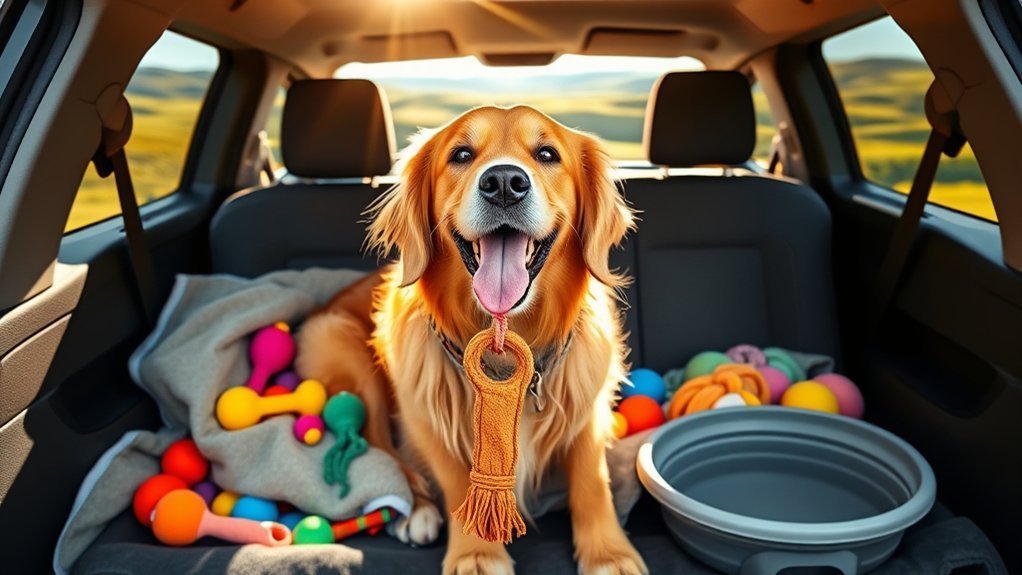
Most dogs do not need constant entertainment while the vehicle moves. A dog who is comfortable, securely restrained, and given suitable breaks may sleep for much of the journey. The goal is calm behavior, not nonstop stimulation.
Rotate Familiar Travel Toys
Pack two or three durable toys your dog has already used safely. Rotate them during parked breaks or when a passenger can supervise. Avoid toys that roll under the driver’s pedals, squeak loudly enough to distract the driver, or break into small pieces.
A new toy may increase excitement rather than reduce it. Test new items at home before relying on them during travel.
Use Chew Items Carefully
Choose a size-appropriate chew that cannot be swallowed whole and that has not previously caused vomiting, broken teeth, or digestive problems. Inspect it regularly and discard it if pieces begin to break away.
Chewing is safest during a parked break with direct supervision. The driver should not be expected to monitor a chewing dog while operating the vehicle.
Try Quiet Music if Your Dog Enjoys It
Some studies involving kennelled dogs suggest that certain music may support calmer behavior, but the evidence does not show that classical music reliably treats travel anxiety. You may try soft music at a low volume and observe your dog’s response.
Turn it down or off if your dog pants, trembles, vocalizes, repeatedly licks their lips, tries to hide, or cannot settle. Music should support a calm travel routine, not replace gradual training or veterinary care.
Why Regular Breaks Are Essential
Plan a safe stop approximately every two to three hours as a starting point for a healthy adult dog. This is not a fixed rule. Puppies, seniors, dogs taking certain medications, dogs with urinary or digestive conditions, and dogs who are anxious or unaccustomed to travel may need more frequent stops.
Use a Safe Stop Routine
- Park away from moving traffic whenever possible.
- Attach the walking leash before opening the crate or vehicle door.
- Check the ground for broken glass, hot pavement, ice, spilled chemicals, wildlife, and discarded food.
- Offer a bathroom opportunity and fresh water.
- Take a controlled walk suited to your dog’s age, fitness, and the weather.
- Inspect the paws, restraint, bedding, and travel area before reloading.
Provide Controlled Physical Activity
A five- to ten-minute walk may be enough for many dogs during an ordinary stop. High-energy dogs may need longer movement when weather and location allow. Avoid strenuous exercise immediately after a large meal or in hot, humid conditions.
Use a leash even when the area appears empty. Unfamiliar noises, wildlife, other dogs, or traffic can cause an otherwise reliable dog to bolt.
Watch for Anxiety and Fatigue
Stress signs include repeated panting when the cabin is cool, pacing, trembling, drooling, whining, barking, refusal to take a familiar treat, attempts to escape, or an inability to settle after a break.
If the signs continue, shorten the driving segment and find a quiet place to reassess. Severe panic can injure the dog or distract the driver and may require veterinary or behavioral help before travel continues.
A successful stop is not measured only by miles or minutes. It gives your dog time to drink, eliminate, move safely, and show you whether they are coping well with the trip.
How to Find Pet-Friendly Places to Stay
A “pet-friendly” listing does not guarantee that the property accepts every dog. Before booking a hotel, rental, or campground, confirm the policy directly with the property and save the response.
Ask about:
- Pet fees, deposits, and cleaning charges
- Weight, breed, age, and number-of-dog limits
- Whether dogs may be left alone in the room
- Crate requirements
- Restricted floors, rooms, trails, beaches, or common areas
- Designated relief areas and waste-disposal stations
- Noise rules and penalties
- Nearby walking areas and emergency veterinary clinics
Read recent reviews from dog owners, but treat the property’s current written policy as the controlling information. Rules can change after a review is posted.
When you arrive, inspect the room for dropped medication, food, cleaning chemicals, pest bait, open balconies, gaps in fencing, and other hazards. Place water, bedding, and the crate in a quiet location away from the door.
Finding Dog-Friendly Restaurants and Activities
Use map and travel apps to create a shortlist, then call the business before arriving. Patio access, local health rules, weather closures, and dog policies may change. Ask whether dogs are allowed only outside and whether water, shade, and safe spacing from other animals are available.
Do not leave your dog in the car because a restaurant or attraction does not admit pets. Use takeout, outdoor seating, a drive-through, or a trusted local pet-care service instead.
Special Considerations by Age, Breed, and Health
Puppies
Puppies may need more frequent bathroom stops and are often more prone to motion sickness. Their vaccination series may also be incomplete, which can make busy rest areas, dog parks, and communal relief spaces inappropriate. Ask your veterinarian where the puppy can safely walk.
Senior Dogs
Senior dogs may need a ramp, nonslip surface, orthopedic bedding, more frequent breaks, and easier access to water. Keep medication on schedule across time-zone changes and discuss any adjustment with the prescribing veterinarian.
Short-Muzzled Dogs
Brachycephalic dogs, including Bulldogs, Pugs, and similar short-muzzled breeds, can have greater difficulty cooling themselves and may have underlying airway problems. Maintain a cool cabin, avoid strenuous activity in heat, and seek veterinary guidance before a long trip.
Dogs With Medical Conditions
Dogs with diabetes, seizures, heart disease, respiratory disease, kidney disease, urinary problems, severe arthritis, or recent surgery need an individualized travel plan. Identify emergency clinics along the route and carry enough medication and supplies for delays.
Emergency Preparedness for Dog Road Trips
Save the telephone numbers and addresses of emergency veterinary hospitals near your destination and along isolated portions of the route. Call ahead when possible because clinic hours, services, and patient capacity can change.
Build a Practical Pet First Aid Kit
A travel kit may include:
- Disposable gloves
- Sterile gauze and nonstick wound pads
- Self-adhering bandage material
- Medical tape
- Blunt-tip scissors
- Tweezers
- Sterile saline
- A digital thermometer reserved for the dog
- A clean towel or blanket
- A spare leash
- A basket muzzle that fits your dog, when safe to use
- Veterinary and poison-control contact information
- Written medication and medical information
First aid is temporary support while obtaining veterinary help. A frightened or injured dog may bite even when normally gentle. Do not muzzle a dog that is vomiting, struggling to breathe, unconscious, or suffering facial trauma.
Formal pet first aid training is more reliable than trying to learn CPR during an emergency. The American Red Cross provides dog CPR guidance and pet first aid training.
Know When to Get Emergency Help
Stop driving and contact an emergency veterinarian for symptoms such as:
- Difficulty breathing, blue or pale gums, or collapse
- Repeated vomiting or inability to keep water down
- A swollen or painful abdomen
- Seizure activity
- Uncontrolled bleeding
- Severe weakness, disorientation, or loss of consciousness
- Suspected poisoning
- Major trauma or a fall from the vehicle
- Heavy panting with drooling, vomiting, weakness, confusion, or collapse
If heat illness is suspected, move the dog to air conditioning or shade, begin cooling with cool—not ice-cold—water, and contact an emergency veterinarian immediately. Do not delay veterinary care simply because the dog appears to improve.
Prepare for a Missing Dog
Keep a recent photo and microchip details accessible. If your dog escapes, notify the local animal-control agency, nearby shelters, veterinary clinics, the microchip registry, the lodging property, and local law enforcement when traffic safety is involved.
Do not chase a frightened dog toward traffic. Use familiar food, bedding, a calm voice, and help from local professionals when available.
Essential Car Safety Rules
- Secure your dog before the vehicle starts moving.
- Keep the dog out of the driver’s lap and footwell.
- Position the dog away from an active front-passenger airbag.
- Never attach an automotive tether to a neck collar.
- Do not allow your dog to ride loose in an open pickup bed.
- Do not let your dog put their head or body outside the window.
- Secure luggage, bowls, crates, and other loose objects.
- Use climate control rather than relying on an open window.
- Attach the walking leash before opening the vehicle door.
- Offer water and bathroom opportunities during planned stops.
- Inspect the restraint for twisting, wear, or loose attachment points.
- Never leave your dog alone in the parked vehicle.
The American Veterinary Medical Association’s vehicle-safety guidance provides additional information about protecting pets in and around cars.
Frequently Asked Questions
Can I give my dog medication for travel anxiety?
Only under veterinary direction. Your veterinarian may recommend training, environmental changes, calming aids, prescription medication, or a combination based on your dog’s health and symptoms. Do not use human medication, leftover prescriptions, sedatives, or supplements without approval. Some drugs can impair breathing, coordination, temperature control, or emergency response.
How do I find dog-friendly restaurants on the road?
Search travel or map apps for outdoor dog-friendly dining, then call the restaurant to confirm its current policy. Ask whether dogs are allowed on the patio, whether the patio is open, and whether shade and water are available. Never leave your dog in the vehicle when a restaurant cannot accommodate them.
Is it safe for my dog to stick their head out the window?
No. Flying debris can injure the eyes, face, or ears, and a sudden stop or collision can throw the dog against the window or out of the vehicle. Keep your dog secured inside and use the vehicle’s climate-control system for ventilation.
What should I do if my dog gets car sick?
Stop in a safe location and allow your dog to recover quietly. Offer a small amount of water when appropriate and clean the travel area. For repeated drooling, nausea, or vomiting, ask your veterinarian about meal timing, gradual car acclimation, and prescription anti-nausea treatment. Seek urgent care for repeated vomiting, blood, abdominal swelling, severe weakness, or inability to keep water down.
Are there breed-specific travel considerations?
Yes. Short-muzzled dogs can have greater breathing and heat-control risks. Large dogs require a restraint or crate designed for their size, while very small dogs need equipment that fits without allowing escape. Coat type, body shape, health, and temperament may matter more than breed alone, so ask your veterinarian about individual risks.
How often should I stop during a road trip with my dog?
A stop about every two to three hours is a useful starting point for many healthy adult dogs. Puppies, seniors, anxious dogs, and dogs with urinary, digestive, or medical needs may require more frequent stops. Adjust the schedule based on your dog’s behavior, water intake, medication, weather, and normal bathroom routine.
Can my dog ride in the front passenger seat?
The rear passenger area is generally safer. An active front airbag can seriously injure a dog, and a dog near the driver can interfere with steering, pedals, or visibility. Secure the dog in a correctly installed restraint or anchored crate away from active airbags.
What documents does my dog need for a road trip?
Carry identification, vaccination records, medication information, and relevant medical records. The receiving state, territory, or country may also require a health certificate, vaccines, tests, treatments, microchip, or official forms. Dogs entering or returning to the United States must meet current CDC requirements, including a CDC Dog Import Form receipt.
Conclusion
A safe road trip with your dog begins before the engine starts. Confirm your dog’s health and destination requirements, update identification, choose a properly tested restraint, and pack supplies where you can reach them. During the drive, maintain a comfortable temperature, stop according to your dog’s needs, and watch for nausea, anxiety, pain, or overheating.
Confirm lodging and emergency veterinary options before each major leg of the route. Most importantly, keep your dog secured while the vehicle moves and never leave them alone in a parked car. These steps protect your dog, reduce driver distraction, and give both of you a better chance of enjoying the journey.
Sources
- Cornell University College of Veterinary Medicine — Traveling Safely With Your Dog — vehicle restraint, acclimation, motion sickness, lodging, and health-certificate guidance.
- American Veterinary Medical Association — Pet Safety in Vehicles — parked-car, vehicle, and passenger-safety recommendations.
- USDA APHIS — State-to-State Pet Travel — current state and territory animal-entry requirements.
- Centers for Disease Control and Prevention — Dog Importation FAQs — U.S. entry and re-entry forms, microchip, age, rabies, and travel-history requirements.
- U.S. Food and Drug Administration — Travel Training for You and Your Pets — crate acclimation, veterinary planning, and medication cautions.
- Center for Pet Safety — CPS-Certified Products — independently tested automotive harness, carrier, and crate information.







Leave a Reply