

Oil change intervals are not one-size-fits-all. The right schedule depends on your vehicle’s model year, engine, required oil specification, mileage, elapsed time, driving conditions, and oil-life monitor. Use the manufacturer’s instructions as the final authority rather than relying on a universal 3,000-, 5,000-, or 10,000-mile rule.
Quick Answer
Follow the oil change interval in your owner’s manual or oil-life monitor, including its mileage and time limit. Many late-model gasoline vehicles fall near 5,000 to 10,000 miles or 6 to 12 months, but short trips, idling, towing, dust, track use, and other severe conditions may shorten that schedule.
Key Takeaways
- Your owner’s manual, maintenance guide, or oil-life monitor controls the interval—not the oil bottle alone.
- Change the oil when either the mileage or calendar limit arrives, whichever comes first.
- Synthetic oil may support a longer interval only when the vehicle manufacturer allows it.
- A red oil-pressure warning is an urgent problem, not a routine maintenance reminder.
- Dark oil alone does not prove that the oil has reached the end of its service life.
- Sonoma County drivers should base timing on short trips, idling, towing, dust, and other actual operating conditions—not coastal air alone.
Note: This guidance applies to vehicles with an internal-combustion engine, including gasoline, diesel, and most hybrids. Battery-electric vehicles do not use engine oil, although they still require other scheduled maintenance.
Why Regular Oil Changes Are Essential for Engine Longevity
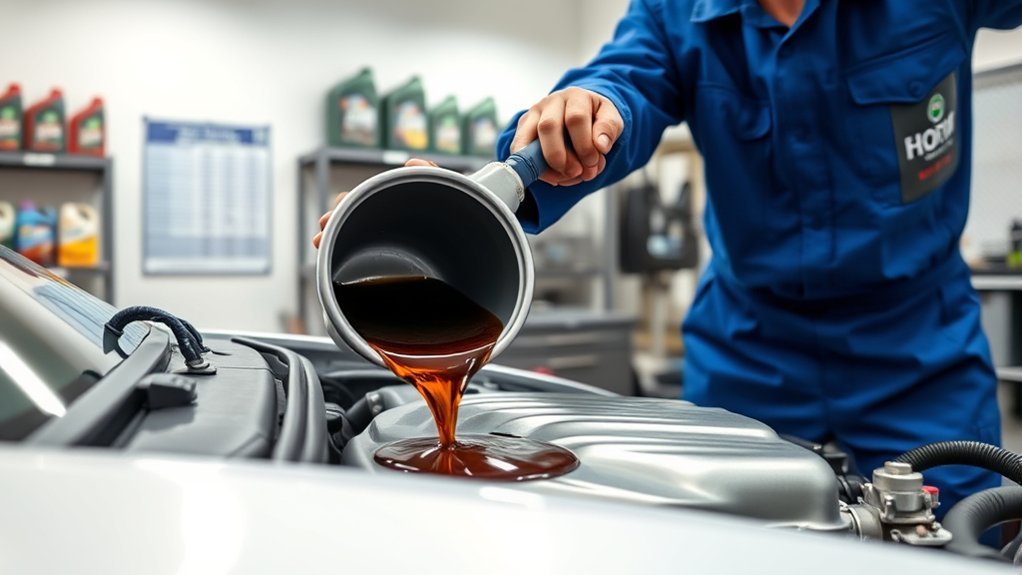
Engine oil creates a protective film between moving parts, carries heat away from critical surfaces, suspends contaminants, and helps control sludge and deposits. As oil ages, heat, moisture, fuel dilution, soot, and combustion byproducts can reduce its ability to perform those jobs.
Changing the oil and filter at the correct interval helps limit wear and keeps oil passages, bearings, piston rings, timing components, and turbocharger parts properly lubricated. Waiting far beyond the approved interval can increase the risk of deposit buildup, reduced oil flow, and accelerated wear.
The correct oil change interval is a vehicle-specific maintenance limit—not a universal mileage rule.
Changing oil much earlier than required is not automatically better, either. It raises maintenance costs and creates more used oil without necessarily improving protection. The goal is to follow the schedule designed for your engine and the way you use it.
How to Find the Correct Oil Change Interval
Use this process instead of choosing an interval from a generic chart:
- Identify the exact vehicle. Confirm the model year, engine, fuel type, and drivetrain. Vehicles sharing the same name may use different engines and schedules.
- Check the owner’s manual or maintenance guide. Look for “scheduled maintenance,” “engine oil,” “normal use,” and “special operating conditions.”
- Verify both mileage and time. A schedule may say 10,000 miles or 12 months, whichever comes first. Low annual mileage does not cancel the calendar limit.
- Review the severe-service list. Use the shorter schedule only when your driving matches conditions listed by the manufacturer.
- Follow the oil-life monitor. If equipped, service the vehicle when the monitor or dashboard message instructs you, subject to any maximum time or mileage stated in the manual.
- Record the service. Save the date, mileage, oil viscosity, specification, filter, and receipt for future maintenance and warranty documentation.
Pro Tip: Use the VIN in the manufacturer’s owner portal when possible. It reduces the chance of following a schedule for the wrong engine, trim, or model year.
Manufacturer schedules vary. For example, Toyota states that applicable vehicles requiring 0W-20 synthetic oil may use a 10,000-mile or 12-month oil change interval. That Toyota example should not be applied automatically to another vehicle.
Ford’s Intelligent Oil-Life Monitor calculates service timing using vehicle operation, conditions, and elapsed time. Other manufacturers use different algorithms, limits, and dashboard messages.
| Situation | What Controls the Change |
|---|---|
| Normal use | The normal mileage and time schedule in the manual or maintenance guide. |
| Severe use | The shorter schedule listed for the specific operating conditions your vehicle experiences. |
| Low yearly mileage | The calendar limit, even when the mileage limit has not been reached. |
| Oil-life monitor | The monitor message plus any maximum mileage or time limit stated in the manual. |
| Unknown service history | Check the oil level and condition, inspect for problems, and establish a documented baseline with the correct oil and filter. |
Mileage Versus Time: Which Comes First?
Follow whichever limit arrives first. A vehicle driven only 3,000 miles in a year may still need an annual oil change if its schedule says 10,000 miles or 12 months. Moisture, fuel dilution, oxidation, and repeated cold starts can affect oil even when annual mileage is low.
Time limits also matter when a vehicle is stored, driven only on weekends, or used for many short errands. Starting the engine briefly without allowing it to reach full operating temperature may be harder on the oil than one longer trip covering the same distance.
Note: Topping off low oil does not reset the maintenance schedule. Adding oil restores the level, but it does not remove contaminants or replace the used filter.
The Difference Between Synthetic and Conventional Oil
Synthetic oil is generally formulated for stronger resistance to oxidation, temperature extremes, and deposit formation. Conventional oil can still protect an engine when it meets every viscosity, performance, and manufacturer approval required for that vehicle.
The key point is that oil type and oil change interval are separate decisions. Switching to synthetic oil does not automatically authorize a longer interval. Use the interval stated by the vehicle manufacturer unless an approved maintenance program says otherwise.
| Comparison | Synthetic Oil | Conventional Oil |
|---|---|---|
| Change interval | May support longer service when the manufacturer permits it. | May have a shorter schedule in some applications, but the manual still controls. |
| Temperature performance | Typically offers stronger low-temperature flow and high-temperature oxidation resistance. | Can be suitable when it meets the required viscosity and performance standard. |
| Best use | Often required for turbocharged, high-output, hybrid, cold-climate, or extended-service applications. | Appropriate only where the manufacturer allows it and the product meets every required approval. |
| Selection rule | Match the required SAE viscosity, API/ILSAC category, and any manufacturer-specific specification. Do not choose by the words “synthetic” or “conventional” alone. | |
Check the Oil Specification, Not Just the Viscosity
Labels such as 0W-20 and 5W-30 describe viscosity, but viscosity is only one requirement. The oil may also need a specific API, ILSAC, European, diesel, or automaker approval.
As of July 2026, the API Motor Oil Guide identifies API SQ and ILSAC GF-7A/GF-7B as current gasoline-engine-oil standards introduced in March 2025. The guide states that GF-6A and GF-6B remain current until October 1, 2026. Always confirm backward compatibility and any manufacturer-specific approval before changing products.
Understanding Normal vs. Severe Driving Conditions for Oil Changes

“Severe service” does not necessarily mean aggressive driving. In maintenance schedules, it often describes operating patterns that create more heat, contamination, fuel dilution, moisture, dust, or engine hours for each mile traveled.
Depending on the vehicle, severe conditions may include:
- Repeated short trips, especially when the engine rarely reaches full operating temperature
- Long periods of idling or low-speed operation
- Frequent stop-and-go traffic
- Towing, hauling heavy loads, or carrying rooftop cargo
- Driving on dirt, gravel, or unusually dusty roads
- Very hot or very cold operation
- Police, taxi, delivery, rideshare, or other high-idle commercial use
- Track events, racing, or repeated high-load performance driving
- Some off-road or mountain-driving conditions
Only use a shorter severe-service interval when your manufacturer lists the condition and your vehicle experiences it regularly. A few short trips do not automatically create a universal 5,000-mile schedule, just as occasional highway driving does not automatically qualify a vehicle for the longest possible interval.
How Local Conditions in Sonoma County Affect Oil Change Timing
Sonoma County’s location does not create one special oil change interval for every vehicle. Your actual route and use matter more than the county name or coastal climate.
Drivers making repeated short trips around Santa Rosa, Rohnert Park, Petaluma, or other urban areas may accumulate substantial engine starts and warm-up cycles without many miles. Extended congestion and idling can also consume oil life without adding much to the odometer.
A steady Highway 101 commute may be easier on the oil than repeated short errands because the engine remains at operating temperature. However, highway use does not override the vehicle’s calendar limit or oil-life-monitor message.
Rural gravel roads, ranch access, construction dust, towing on grades, and frequent unpaved-road use may qualify for special operating-condition maintenance if they appear in your manual. Wildfire smoke or ash should also prompt an inspection of the engine air filter, but it does not automatically require an oil change unless the manufacturer’s guidance or an inspection supports one.
Coastal salt is mainly a corrosion concern for the underbody, brake parts, fasteners, and exposed metal. It is not, by itself, a reason to shorten the crankcase-oil interval. Wash salt deposits from the vehicle and follow the normal corrosion inspections recommended by the manufacturer.
Signs Your Vehicle Needs Immediate Attention
Scheduled oil changes and urgent engine warnings are not the same. Use the following distinctions:
Oil-Change or Maintenance Reminder
A maintenance message or low oil-life percentage usually means the scheduled oil-and-filter service is due soon or now. Arrange the service within the period stated in the manual and reset the monitor only after the work is completed.
Red Oil-Pressure Warning Light
Warning: If the oil-pressure warning remains on while the engine is running, pull over as soon as it is safe, shut off the engine, and do not continue driving merely to reach a service shop. Check the oil level according to the owner’s manual. If the level is adequate or the warning remains after adding the correct oil, arrange professional diagnosis or towing.
Low pressure can result from a low oil level, a leak, a failing pump, a blocked pickup, a faulty sensor, internal wear, or another problem. An ordinary oil change may not correct the cause.
Low Oil Level
If the dipstick or electronic level display shows low oil, add the exact approved oil in small amounts and avoid overfilling. A low level does not always mean the oil is due for replacement, but repeated loss requires an inspection for leaks or oil consumption.
Dark Oil
Oil often darkens as its detergents suspend combustion deposits. According to Mobil’s technical guidance on oil condition, color and thickness alone are not dependable measures of oil quality. Follow the documented interval unless the oil is contaminated, milky, gritty, fuel-diluted, or otherwise abnormal.
Burning Smell, Smoke, Leaks, or Unusual Noise
A burning-oil odor may indicate oil leaking onto a hot surface. Blue or blue-gray exhaust can indicate oil entering the combustion chamber. Knocking, ticking, or rattling may result from low oil, low pressure, worn components, or another mechanical fault.
Check the level immediately and arrange diagnosis. Do not assume that replacing the oil alone will solve the problem.
How to Check Your Engine Oil Level
- Park on level ground and follow the warm-engine or cold-engine procedure in the owner’s manual.
- Shut off the engine and wait for the specified drain-back time.
- For a dipstick, remove it, wipe it clean, reinsert it fully, and remove it again to read the level.
- For an electronic system, follow the dashboard or infotainment procedure and any temperature requirements.
- If the level is low, add the specified oil gradually and recheck it.
- Do not fill above the maximum mark. Overfilling can cause foaming, increased crankcase pressure, leaks, or other problems.
Check the level more often if the engine has a known leak, consumes oil, tows frequently, runs at sustained high speed, or has recently undergone repairs.
Should You Change Your Oil Yourself or Hire a Pro?

A DIY oil change can reduce labor cost and lets you choose the oil and filter. It also requires the correct tools, lifting procedure, drain-plug torque, filter installation, refill capacity, spill control, and disposal plan.
Professional service may be the better choice when the vehicle has limited ground clearance, an enclosed underbody panel, an unfamiliar cartridge filter, a complicated reset procedure, a warranty or maintenance plan, or signs of leakage or engine trouble.
| Option | Advantages | Main Risks or Limits |
|---|---|---|
| DIY | Control over parts, oil specification, workmanship, and service records. | Unsafe lifting, hot oil, spills, stripped drain threads, double-gasketed filters, incorrect capacity, or improper disposal. |
| Professional | Convenience, lift access, inspection opportunities, service documentation, and easier handling of shields or cartridge filters. | Higher cost and the need to verify that the shop uses the correct oil, quantity, filter, and drain-plug procedure. |
Warning: Never work beneath a vehicle supported only by a jack. Use manufacturer-approved lifting points, correctly rated jack stands or ramps, wheel chocks, eye protection, and gloves. Allow hot components and oil to cool enough to handle safely.
Dispose of Used Oil and Filters Correctly
Collect used oil in a clean, sealed, leak-resistant container. Do not mix it with antifreeze, brake fluid, gasoline, solvents, water, or other liquids. Drain the filter and recycle it where local rules allow.
The U.S. Environmental Protection Agency explains that used motor oil can pollute soil and water and should be taken to an approved collection or recycling location.
For local residents, Zero Waste Sonoma provides no-cost residential curbside collection guidance. It instructs residents to use an oil-recycling container or clean, dry plastic jug with a screw-on lid, place the drained filter in a sealed bag, contact the local hauler before pickup, and take contaminated oil to the appropriate household hazardous-waste service.
Sources
- Toyota Oil Change Information — manufacturer example of a mileage-and-time interval for applicable 0W-20 vehicles.
- Ford Intelligent Oil-Life Monitor — explains usage-based oil-life calculations.
- API Motor Oil Guide — current API SQ, ILSAC GF-7, viscosity, performance-category, and oil-mixing guidance.
- Mobil Light-Duty Vehicle Oil FAQ — oil condition, viscosity, lubrication, and color guidance.
- U.S. EPA Used-Oil Recycling Guidance — safe handling and environmental disposal information.
- Zero Waste Sonoma Motor Oil and Filter Recycling — current local collection and contamination instructions.
Frequently Asked Questions
Can I mix synthetic and conventional oil in my engine?
A small emergency top-off is generally better than operating with a dangerously low oil level, provided the added oil has the correct viscosity and required performance category. API advises using the same viscosity grade and service category when mixing is necessary. Mixing can reduce the benefits of the higher-performing oil, so use one approved product at the next complete change.
What happens if I skip an oil change?
The oil may become increasingly contaminated, oxidized, diluted, or depleted of useful additives. That can promote deposits, restrict oil flow, and increase wear. Being slightly overdue does not create an exact instant of engine failure, but you should arrange service promptly instead of repeatedly extending the interval.
How do I know when my oil is low?
Check the dipstick or electronic oil-level display using the procedure in the owner’s manual. Do not wait for a warning light. If the level repeatedly drops between services, inspect the vehicle for leaks, oil consumption, exhaust smoke, or other mechanical problems.
Is it safe to drive after the oil change interval?
An interval is a maintenance limit, not a countdown to a predictable failure. If you are overdue, check the oil level and schedule the change as soon as practical. Do not continue driving when a red oil-pressure warning stays on, the engine is knocking, the oil level is critically low, or a major leak is present.
Does oil type affect fuel efficiency?
Oil viscosity and friction performance can affect efficiency, but the safest choice is the exact viscosity and specification approved by the vehicle manufacturer. Using oil that is thicker or otherwise different from the required grade may reduce efficiency or protection. The word “synthetic” alone does not guarantee better fuel economy.
Do I need an oil change if I have not reached the mileage limit?
Yes, when the calendar limit arrives first. A schedule written as “10,000 miles or 12 months” requires service at 12 months even if the vehicle has traveled fewer than 10,000 miles.
Does topping off the oil replace an oil change?
No. Topping off corrects the oil level, but it does not remove suspended contaminants, drain degraded oil, or replace the used filter. Continue to follow the scheduled mileage, time, or monitor-based interval.
Conclusion
The best oil change interval is the one approved for your exact vehicle and operating conditions. Confirm the model year and engine, follow both the mileage and time limits, use the specified oil and filter, and pay attention to the oil-life monitor. Short trips, idling, towing, dust, and high-load use may shorten the schedule when the manufacturer classifies them as severe service.
Check the oil level between services, treat an oil-pressure warning as urgent, and investigate leaks, smoke, odors, or engine noise instead of assuming an oil change will fix them. Consistent, documented maintenance protects the engine without wasting usable oil or relying on unsupported mileage rules.







Leave a Reply