
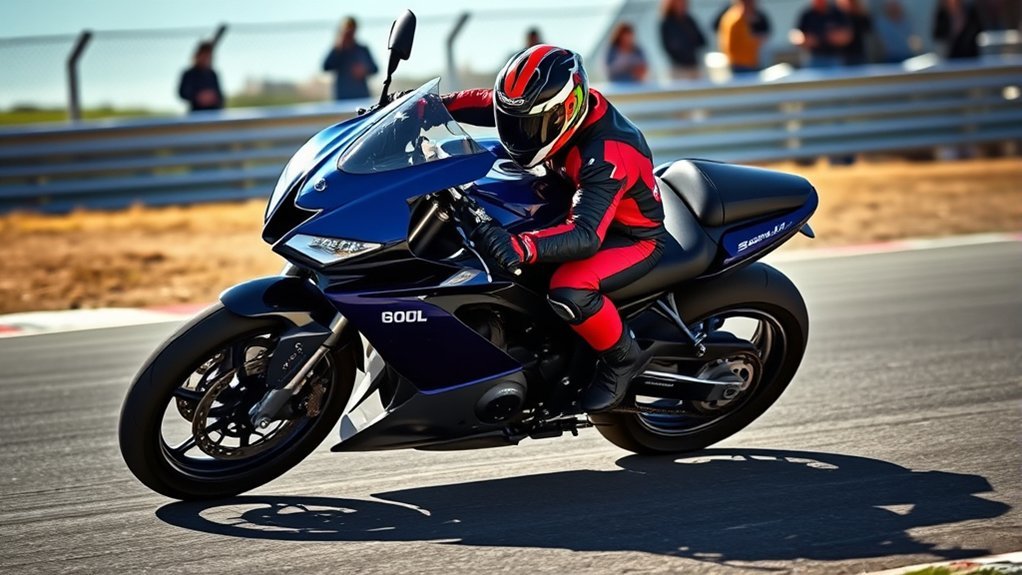
Your first motorcycle track day should be about learning, consistency, and safe decision-making—not chasing lap times. Good preparation starts before you reach the circuit. Choose a beginner-friendly event, read its current rules, inspect your motorcycle, pack accepted protective gear, arrive rested, and be ready to follow instructions from coaches, marshals, and technical inspectors.
Quick Answer
To prepare for your first motorcycle track day, register in the beginner group, read the event manual, inspect your tires, brakes, controls, chain, and fluids, and wear organizer-approved gear. Arrive before registration closes, attend the rider meeting, hold a predictable line, ask for coaching, and stop riding if you or the motorcycle are not fit to continue.
Key Takeaways
- Your organizer’s current technical, gear, passing, age, and schedule rules override any general track-day checklist.
- A familiar, reliable motorcycle in sound condition is usually better for a beginner than a faster or heavily modified machine.
- Use a damage-free full-face helmet and protective clothing that meet the exact standards listed for your event.
- Attend the mandatory briefing, learn the flags, ride in the correct group, and remain predictable when being passed.
- Build speed only after your vision, braking, line choice, and control inputs become smooth and repeatable.
- Hydration, food, sleep, shade, and between-session motorcycle checks are part of track-day safety.
At a Glance
| Time Required | Plan several hours for registration review, motorcycle preparation, and packing, followed by a full event day. Exact schedules vary. |
| Difficulty | Beginner-friendly for a rider who can already operate the motorcycle confidently at normal road speeds. A track day is not a basic learn-to-ride course. |
| Tools Needed | Accurate tire gauge, air source, basic hand tools, manufacturer-specified torque tools, tape, zip ties, rags, and any equipment required by the organizer. |
| Cost | Varies by track and organizer. Budget for registration, possible gate or membership fees, fuel, transport, food, tires, lodging, coaching, and optional rental equipment. |
What to Expect on Your First Motorcycle Track Day
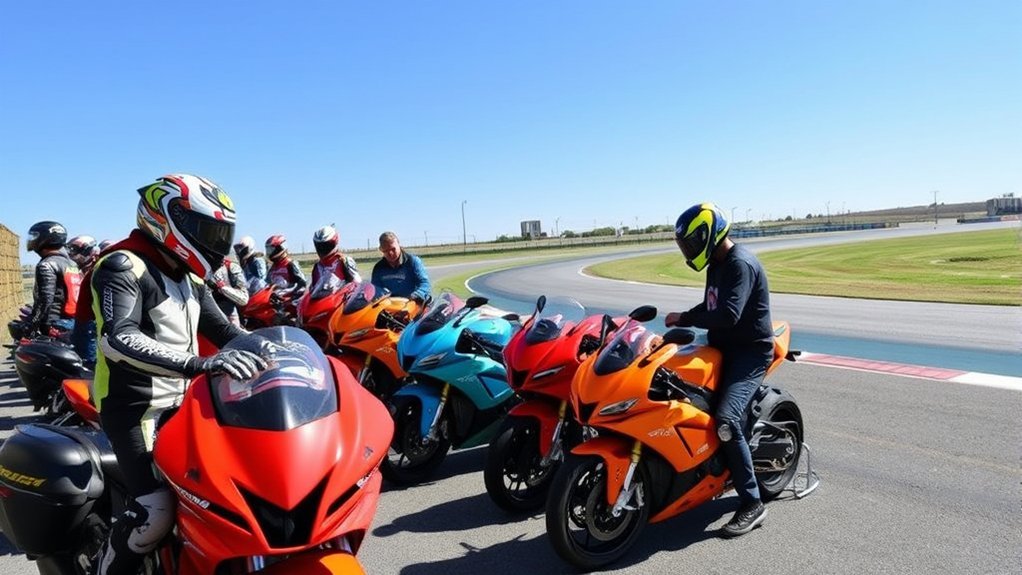
It is normal to feel both excited and nervous when you arrive. A typical day begins with registration and a technical inspection of your motorcycle and riding gear. You may need to show identification, sign a waiver, receive a group sticker or wristband, and take the motorcycle through an inspection line.
A mandatory rider meeting normally follows. Staff will explain the day’s schedule, passing rules, pit procedures, flags, track conditions, and emergency instructions. Missing this meeting can prevent you from riding, so arrive early enough to unload, register, prepare the motorcycle, and complete inspection without rushing.
Most standard events divide riders into skill groups such as Novice, Intermediate, and Advanced. New track riders should register in the beginner or novice group even if they have years of street experience. Street riding provides useful control skills, but closed-course lines, passing rules, corner speed, and visual references are different.
Some organizers use sessions of about 20 minutes followed by rest and classroom time. Others use a different rotation or schedule. A controlled sighting lap or coached familiarization session may be included, but it is not guaranteed. The event’s final email and rider meeting are the only reliable sources for the exact format. One organizer’s explanation of its 20-minute rotation is available in the Sportbike Track Time FAQ.
Your first track day is not a race. The fastest path to improvement is to be predictable, repeatable, and willing to accept coaching.
Between sessions, you will have time to drink, eat, rest, inspect the motorcycle, review a section of the track, and speak with an instructor. A paddock or pit space may be outdoors, under a canopy, or in a garage where available. Do not assume a garage, electricity, compressed air, fuel, food, or tire service will be provided.
Warning: Motorcycle track riding is an inherently dangerous activity that can cause serious injury or death. Follow the organizer, track staff, corner workers, tire provider, and motorcycle manufacturer. Do not ride while impaired, ill, dangerously fatigued, dehydrated, or aware of an unresolved motorcycle defect.
Before You Register
Choose an organizer that clearly explains its beginner program, technical inspection, gear rules, passing rules, staffing, weather policy, and cancellation terms. A strong beginner program should offer a separate novice group, classroom instruction, access to coaches, and a clear method for asking for help.
A track day normally assumes that you already know how to start, stop, shift, turn, and control your motorcycle comfortably. For example, Sportbike Track Time states that its events do not teach basic motorcycle operation and that participants must be comfortable riding at normal highway speeds. Review the organizer’s entry requirements before paying for a spot.
- Choose the correct group: Register as a novice when you are new to track riding. Do not select a faster group to ride with friends.
- Confirm motorcycle eligibility: Some motorcycles, fuel types, modifications, noise levels, or vehicle classes may be restricted.
- Confirm age rules: Minor-rider requirements can include a competition license, driver license, guardian signature, additional waiver, or on-site guardian.
- Read the weather policy: Many events run in light rain, while a venue may stop activity for unsafe conditions.
- Review camera rules: Helmet-mounted cameras may be prohibited, and motorcycle-mounted cameras may require a separate tether.
- Check arrival and gate details: Confirm opening time, registration deadline, gate fee, camping rules, fuel access, electricity, and paddock restrictions.
- Review personal coverage: Read the waiver and check whether your health, vehicle, roadside-assistance, or other insurance applies. Do not assume a street policy covers closed-course riding or motorcycle damage.
Note: Save the final event email to your phone and bring a printed copy when practical. It may contain a schedule, gate instructions, required forms, track map, emergency contact number, and rules that differ from the organizer’s general website.
Essential Preparations Before Hitting the Track
Do not wait until the event morning to discover worn brake pads, a damaged tire, a loose chain, or a leaking fork seal. Complete your main inspection several days before the event so there is time to obtain parts or professional service.
Motorcycle Technical Inspection
The exact inspection standard comes from your organizer. Published track-day technical and gear requirements show how detailed the rules can be, including tire condition, brakes, lenses, mirrors, throttle operation, coolant, valve-stem caps, wheel weights, and license-plate hardware.
| Preparation Task | What to Check |
|---|---|
| Tires and wheels | Adequate organizer-approved condition; no cords, cracking, cuts, punctures, embedded objects, severe flat spots, damaged rims, loose weights, or uncapped valve stems. |
| Brakes | Sufficient pad material, firm lever and pedal feel, secure calipers, sound rotors, correct fluid level, and no leaks. Replace worn parts early enough to test them before the event. |
| Controls | Throttle closes by itself, kill switch works, levers are secure, grips do not rotate, steering moves freely, and foot controls operate without binding. |
| Chain or belt | Correct manufacturer-specified slack and alignment, secure adjusters, sound sprockets or pulleys, and no tight spots, damaged links, fraying, or missing hardware. |
| Fluids | No oil, fuel, brake-fluid, fork-oil, or coolant leaks. Caps, drain plugs, filters, hoses, and reservoirs must be secure and comply with the event’s rules. |
| Fasteners and bodywork | No loose panels, exhaust parts, stands, racks, luggage, guards, or accessories. Use the motorcycle service manual for torque specifications rather than guessing. |
| Lights, mirrors, and plate | Remove or cover glass, mirrors, lights, turn signals, reflectors, and license-plate hardware exactly as required. Do not tape over a hot headlight unless the organizer permits it. |
| Fuel and battery | Enough fuel for the planned sessions, secure fuel cap, no seepage, firmly mounted battery, protected terminals, and no loose wiring. |
| Gear required | Accepted full-face helmet, suit or approved riding clothing, gauntlet gloves, over-the-ankle boots, and any required back or chest protector. |
| Arrival plan | Allow time to unload, secure a pit space, register, inspect the motorcycle, dress, and attend the full rider meeting. |
| Hydration & snacks | Bring water, an electrolyte option, and light meals or snacks that are easy to eat between sessions. |
Warning: Some track-day groups restrict ethylene-glycol coolant because it is difficult to clean from the racing surface. Never open a hot cooling system. Let the engine cool fully, follow the motorcycle service manual, protect your skin and eyes, contain spills, and dispose of used coolant according to local requirements.
Pro Tip: Perform a home inspection early, then repeat a shorter check after unloading. A motorcycle that passed inspection in the garage can develop a leak, loose fastener, low tire, or transport damage before the first session.
Prepare the Day Before
- Check the forecast and pack for heat, cold, wind, or rain.
- Charge communication devices and any approved camera equipment.
- Fill the tow vehicle and obtain motorcycle fuel if the venue does not sell it.
- Load the motorcycle with appropriate straps and wheel support. Recheck every tie-down before driving.
- Pack identification, registration confirmation, waivers, license documents, emergency contact information, and payment for possible gate fees.
- Lay out every piece of riding gear and check zippers, seams, fasteners, visor operation, and fit.
- Eat a normal meal, avoid alcohol or intoxicants, and get enough sleep.
What to Bring for a Full Track Day
- Approved helmet with a clean visor and an optional clear replacement visor
- Riding suit or organizer-approved jacket and pants
- Gauntlet gloves, track boots, and required back or chest protection
- Base layers, spare socks, hat, sunscreen, and hearing protection
- Water, electrolyte drinks, light meals, and easy-to-digest snacks
- Tire-pressure gauge, air pump or compressor, and valve-stem tool if appropriate
- Basic hand tools, correctly sized torque tools, tape, zip ties, rags, and nitrile gloves
- Chair, shade canopy with secure weights, ground cover, and weather layers
- Fuel jug where allowed, funnel, chain-care supplies, and approved fluids
- Front or rear stands and tire warmers only when needed and used correctly
- Phone, charger, paper schedule, track map, emergency information, and spare key
- Trailer ramp, tie-downs, wheel chock, and recovery plan if transporting the motorcycle
Secure every loose object in the paddock. Wind can move a canopy, chair, bottle, tool, or body panel into another person or motorcycle. Use proper canopy weights rather than relying on light stakes alone.
Key Safety Gear for Motorcycle Track Days
Your protective equipment must meet the exact rule for your event and riding group. Do not rely on a general statement such as “DOT, ECE, or Snell” without checking the accepted standard, helmet age, damage policy, and suit requirements.
In the United States, a DOT label represents the manufacturer’s certification that the helmet complies with FMVSS No. 218. NHTSA explains that it does not pre-approve helmets and warns riders about novelty helmets and fake labels in its motorcycle helmet guidance.
Snell certification should be described by the named standard rather than as “Snell-approved.” The Snell Foundation’s current standards page includes M2025D and M2025R for motorcycling. For events accepting European certification, review the organizer’s wording and the official UN Regulation No. 22.06 information.
The Motorcycle Safety Foundation’s protective-gear guidance supports using a full-face helmet, abrasion-resistant clothing, gloves, over-the-ankle boots, eye protection, and optional impact-protection upgrades.
- Helmet: Use a damage-free, correctly fitted full-face helmet with an intact retention system and clear, secure visor. Follow the manufacturer’s inspection and replacement guidance after an impact.
- Suit: A one-piece leather suit is widely accepted. A two-piece suit may need a full or substantial connecting zipper. Some novice groups permit approved textile equipment, while faster groups may require leather.
- Gloves: Use full-finger gauntlet gloves that cover the wrist and remain secure when pulled.
- Boots: Choose motorcycle boots that cover the ankle and protect the shin, heel, toe, and ankle.
- Back and chest protection: Some groups require a separate back protector. A soft pad built into a suit may not satisfy the rule. Chest protection may be recommended or required by some events.
- Hearing protection: Properly inserted earplugs can reduce fatigue and exposure to engine and wind noise while still allowing you to hear important signals.
Note: Borrowed gear is not automatically safe gear. A loose helmet, short gloves, oversized boots, or a suit that prevents normal movement can interfere with control and may fail inspection.
Choosing Your Track Day Motorcycle
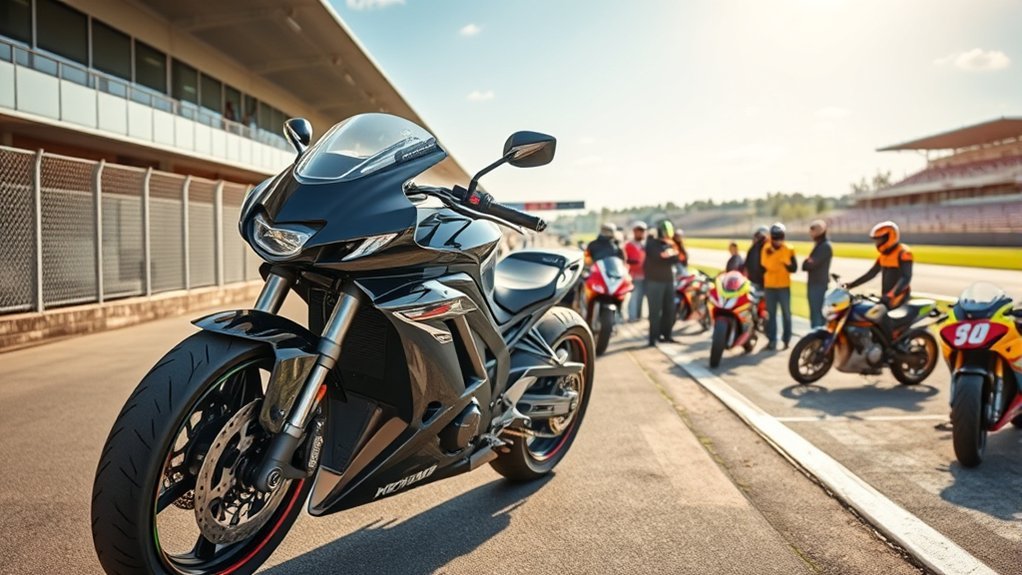
The best motorcycle for a first track day is usually one you already understand. It should be mechanically sound, predictable, suitable for the organizer’s speed and lean-angle requirements, and comfortable enough for you to operate without searching for controls.
A powerful sportbike is not required. A lighter twin, standard motorcycle, middleweight sportbike, or another approved machine may be easier to manage. The motorcycle’s condition and your familiarity with it matter more than the horsepower figure.
If you do not own a suitable motorcycle, a rental may be available through a selected organizer or third-party company. Confirm the rental’s damage policy, deposit, gear requirements, fuel policy, tire support, transport, and group restrictions before booking.
Motorcycle Type Considerations
Sportbikes are designed for cornering, braking, and high-speed riding, but they are not automatically the best beginner choice. A motorcycle with moderate power, neutral handling, adequate ground clearance, sound suspension, and strong brakes may be easier to learn on.
Ask the organizer before registering with a cruiser, touring motorcycle, dual-sport, small-displacement motorcycle, electric motorcycle, unusual modification, or machine with limited ground clearance. “Street legal” does not guarantee “track eligible.”
Remove luggage, loose accessories, phone mounts, center stands, mirrors, and other items only when required or when removal can be performed safely. Do not disconnect safety equipment or modify wiring without understanding the motorcycle and the event rule.
Performance Requirements
Your motorcycle does not need performance modifications. A stock machine with fresh maintenance is often easier to inspect, ride, and troubleshoot than a heavily modified motorcycle.
- Use tires that meet the organizer’s condition standard and suit the expected weather and pace.
- Confirm that brake pads, rotors, fluid, lines, lever, and pedal are in sound condition.
- Make sure the throttle closes by itself and the engine-stop switch works.
- Check the chain or belt, sprockets, wheel bearings, steering, suspension, and controls.
- Repair every fluid leak before arriving.
- Secure wheel weights, valve-stem caps, bodywork, exhaust parts, and license-plate hardware.
Some organizers publish a requirement such as tires having at least 50% of their new condition. That is an organizer rule, not a universal measurement. Read the current inspection standard instead of assuming the same percentage applies everywhere.
Safety Features Importance
ABS, traction control, riding modes, and adjustable suspension can be useful, but they do not replace sound technique or mechanical preparation. Their behavior varies by motorcycle and setting.
Use a mode you understand. Do not disable ABS or traction control because another rider does so, and do not make large suspension changes based on a generic internet setup. Start with the manufacturer’s baseline and seek help from a qualified trackside technician or coach when adjustment is needed.
Comfortable ergonomics also matter. You should be able to reach the controls, move your upper body, grip the tank with your legs, and operate the brakes and shifter without strain. Fatigue and awkward control access can reduce concentration late in the day.
Tire Pressure, Fuel, and Warm-Up
There is no single correct track-day tire pressure for every motorcycle, tire, rider, pace, or weather condition. A pressure that works for one racing tire may be wrong for a street tire with a different construction.
- Ask the tire manufacturer, approved trackside tire vendor, or an experienced event technician for a starting pressure.
- Confirm whether the recommendation is a cold pressure, off-warmer pressure, or immediately-after-session pressure.
- Use the same accurate gauge each time.
- Record the pressure and the condition in which it was measured.
- Make small changes and adjust only one variable at a time.
- Inspect the tire surface for damage or unusual wear, but do not diagnose suspension or pressure from appearance alone.
Do not copy a pressure from a forum without confirming the exact tire model and measurement method. Likewise, do not assume that the street placard pressure is automatically the best track setting.
Most novice riders using suitable street or track-day tires do not need tire warmers unless the tire maker or trackside vendor recommends them. Warmers add stands, electricity, timing, and handling risks. When they are used, follow the tire manufacturer’s temperature and pressure guidance.
Begin each session at a controlled pace. Tires, brakes, your body, and your attention all need time to settle. A warm tire does not make the first lap a qualifying lap.
Track-Day Rules, Flags, and Etiquette
Track-day etiquette is based on predictability. You are sharing the circuit with other riders who must be able to anticipate your path. The rider meeting will explain the exact rules, and those instructions override this summary.
Attend the Rider Meeting and Learn the Flags
| Common Signal | General Meaning |
|---|---|
| Yellow flag | A hazard is ahead. Reduce pace, avoid passing as instructed, and remain alert for workers, debris, or a stopped rider. |
| Red flag | The session has been stopped. Reduce pace smoothly and follow the event’s stated return or stopping procedure. |
| Black flag | A rider or motorcycle may need attention. Report to the designated pit official as explained during the briefing. |
| Checkered flag | The session is ending. Complete the cool-down or exit procedure and enter the pit as instructed. |
Flag details and display locations can differ. Look at every corner station during the first sessions and do not rely only on the rider ahead of you.
Hold a Predictable Line
- Ride your normal line and allow the faster rider to complete the pass under the group’s rules.
- Do not weave, move aside suddenly, or look backward while approaching a corner.
- Do not brake unexpectedly on a straight because another rider is behind you.
- Follow the passing zones and minimum-clearance rules for your group.
- Never turn a track day into an informal race.
- If another rider behaves unsafely, report it to a coach or event director instead of confronting the rider on track.
Warning: Trying to “help” a faster rider by changing your line can create a collision. Be smooth and predictable. The passing rider is responsible for making the pass within the event’s rules.
Use the Correct Pit Entry and Exit
Learn the pit entrance, pit exit, merge point, speed limit, and hand or leg signals during the briefing. Signal before slowing for pit entry, move off the active line as instructed, and avoid abrupt braking.
When leaving the pit, remain within the designated lane until the blend point. Check that the track is clear without drifting into the active line. If you miss the pit entrance, complete another lap rather than making a sudden correction.
Effective Techniques for Rapidly Mastering the Track
You will learn faster by reducing the number of tasks you are trying to solve at once. Begin with track direction, vision, line choice, and smooth control use. Speed should increase only after those basics become consistent.
Visualize the Track Layout
Review a current track map before riding. Mark the pit entrance, pit exit, corner numbers, long straights, linked corners, and major changes in elevation. Onboard video from a reputable instructor can help you recognize the layout, but camera position and speed can distort distance.
- Create a simple track map with corner numbers and major direction changes.
- Identify where the organizer expects riders to enter and leave the circuit.
- Review braking, turn-in, apex, and exit areas without treating them as fixed racing instructions.
- Walk the circuit only when the venue permits it.
- Use a racing simulation only to learn direction and corner order, not to build motorcycle control “muscle memory.”
Break Down the Track Into Sections
Choose one or two connected corners as the goal for a session. Work first on seeing the corner and arriving at a repeatable speed. Then refine the line, braking release, steering input, and exit.
Observe instructors and ask for a follow session when available. A coach can show the event’s preferred line and then watch your riding. Increase pace gradually rather than trying to copy an advanced rider’s speed or body position.
After each session, ask:
- Where did I feel rushed?
- Which reference point was difficult to see?
- Was my braking smooth and completed at a safe point?
- Did I maintain a predictable line?
- What single change should I practice next?
Use Reliable Landmarks
Permanent, easy-to-see reference points can improve consistency. Examples include pavement seams, curbing, braking boards, buildings, marshal posts, and other fixed features.
Avoid depending entirely on a cone because it can be moved or struck. Choose reference points that remain visible while your eyes are directed toward the corner.
- Use a braking reference to begin slowing consistently.
- Use a turn-in reference to avoid steering too early.
- Look through the corner toward the exit rather than staring at the apex.
- Move a reference only after discussing the reason with a coach.
Build Speed in the Right Order
Start with smooth controls and a repeatable path. Add pace only when you can see the next reference, complete each action without panic, and maintain space around other riders.
Lap times can be useful later, but they are a poor first-day goal. A quicker lap created by late braking, missed flags, or an unstable line is not useful progress.
Dealing With Anxiety on the Track: Tips for Focus
Feeling anxious is common, especially before the first session. Reduce the mental load by setting one small goal, such as finding the flag stations, identifying the pit entrance, or riding a smooth line through one section.
Visualize the first few corners at a calm pace. Use slow breathing while waiting in the staging area, relax your grip, lower your shoulders, and remind yourself that you can return to the pit at any time.
Controlled exposure works better than forcing speed. Ride at a pace that leaves enough attention for flags, coaches, other riders, and unexpected conditions. If you feel overwhelmed, finish the lap safely, signal for pit entry, and speak with an instructor.
Pro Tip: Give each session one goal. “Find every corner station” or “stay relaxed on the controls” is more useful than “go faster.”
Do not ignore fatigue. Repeated mistakes, missed reference points, tunnel vision, headache, nausea, cramps, unusual irritability, or slow reactions are reasons to rest. Skipping one session is safer than trying to recover while riding.
What to Do If Something Goes Wrong
The rider meeting is the primary source for incident procedures. Listen closely because the safest response depends on the track, runoff area, location, surface, and direction from corner workers.
If You Run Off the Track
Look toward the safe path through the runoff area and avoid abrupt steering, braking, or throttle changes on grass, gravel, or wet ground. Do not rush back onto the pavement. Reduce speed, follow marshal instructions, and rejoin only at an approved point when the track is clear.
If the Motorcycle Has a Problem
If you feel a new vibration, loss of power, soft brake, loose control, smoke, or fluid on the motorcycle, stop pushing the pace. Signal, move away from the normal line when safe, and exit according to the briefing.
Do not continue circulating with a suspected leak. Fluid can reach your own tire and the racing surface. After returning to the paddock, shut the motorcycle down, identify the cause, clean any contamination, and obtain reinspection when required.
After a Crash or Red Flag
Follow the corner workers. Do not run across an active circuit, attempt to retrieve equipment without permission, or restart a damaged motorcycle automatically. Accept medical evaluation when offered, even when you initially feel able to continue.
A crashed motorcycle and protective gear should be inspected before reuse. Levers, wheels, controls, tires, brake components, fluid systems, helmet, suit seams, gloves, and boots may have damage that is not obvious at first glance.
Warning: Never re-enter the track, continue riding, or handle a damaged motorcycle against a marshal’s or technical inspector’s direction.
How to Reflect and Improve After Each Track Session
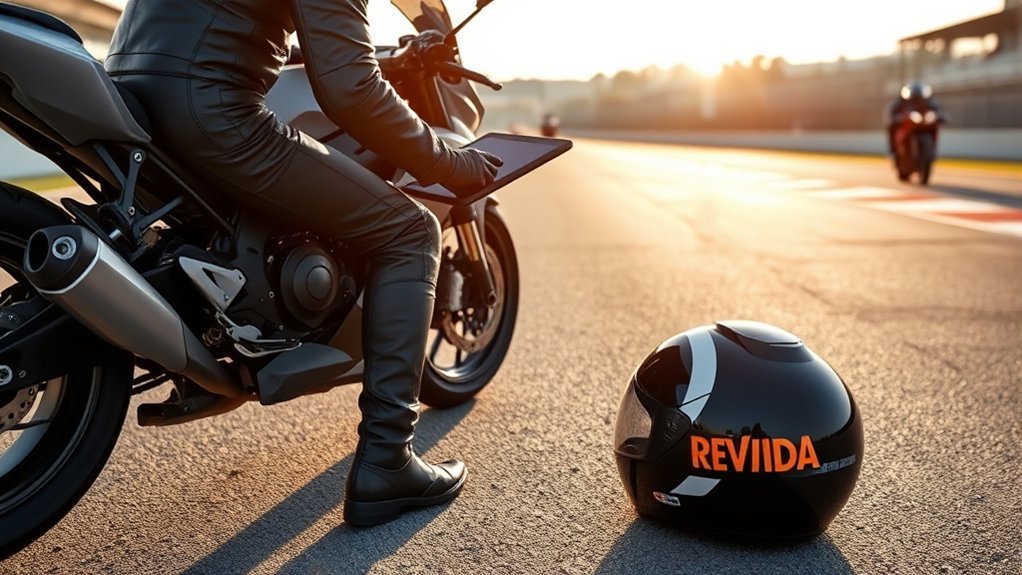
Take a few minutes after each session to cool down, drink, and inspect the motorcycle before analyzing your riding. Check tire condition and pressure, controls, chain or belt, fluids, bodywork, and anything that felt different on track.
Use a simple review process:
- What went well? Identify one repeatable action, reference point, or section.
- What felt difficult? Name the exact corner, control input, or moment that caused uncertainty.
- What is the next goal? Choose one change for the next session.
Reviewing lap times can help later, but do not treat them as the main measure of a first track day. Smooth lines, fewer rushed decisions, better flag awareness, and consistent reference points are stronger signs of progress.
Speak with an instructor or experienced control rider during the break. Describe the specific problem instead of asking only how to become faster. “I lose sight of the exit in Turn 4” gives a coach more useful information than “How do I lower my lap time?”
Keep a short journal with weather, tire information, setup changes, physical condition, and riding observations. Video can help with line selection and body position only when the organizer permits the camera and mount. Some organizations prohibit helmet-mounted cameras and require motorcycle-mounted cameras to have a separate tether.
At the end of the day, allow the motorcycle to cool, check for damage or leaks, load it securely, clean the paddock, and account for every tool and piece of equipment. Do not drive home when dangerously tired.
Frequently Asked Questions
Can beginners participate in motorcycle track days?
Yes. Many events have a novice group with classroom and on-track coaching. However, a track day normally assumes that you can already operate the motorcycle confidently at ordinary road speeds. Register in the beginner group and tell the instructors that it is your first event.
What should I bring for a full day at the track?
Bring your registration documents, organizer-approved helmet and riding gear, water, electrolyte drinks, food, shade, a chair, weather layers, tire gauge, air source, basic tools, tape, zip ties, rags, emergency information, fuel where needed, and secure motorcycle-transport equipment.
Are there any age restrictions for track-day participants?
There is no universal minimum age. Rules depend on the organizer, venue, motorcycle class, license status, guardian presence, and waiver requirements. Confirm every minor-rider rule with both the organizer and the circuit before registering.
How do I find a reputable track-day organizer?
Look for a separate novice group, published technical and gear requirements, clear passing rules, classroom and on-track coaching, qualified corner staff, emergency support, transparent weather and cancellation policies, and current event instructions. Reviews can provide context, but official rules should guide your decision.
What are common mistakes to avoid on a track day?
Common mistakes include arriving late, missing the rider meeting, selecting the wrong group, failing technical inspection, copying another rider’s tire pressure, changing lines while being passed, looking backward, chasing lap times, ignoring fatigue, and continuing with a suspected mechanical problem.
Do I need a sportbike for my first track day?
No. You need a motorcycle that the organizer accepts and that is mechanically sound, predictable, and suitable for the circuit. A familiar middleweight or standard motorcycle may be easier to learn on than a powerful sportbike.
What tire pressure should I use at a motorcycle track day?
There is no universal pressure. Ask the tire manufacturer, approved trackside vendor, or event technician for your exact tire, motorcycle, pace, and weather. Confirm whether the number is measured cold, off a warmer, or immediately after a session.
Can I ride my motorcycle to the track?
You may be able to ride to an event, but confirm the organizer’s preparation rules first. Consider how you will carry tools, food, water, and gear, and how you will get home after a mechanical problem, damaged tire, crash, severe weather, or exhausting day.
What happens if it rains on a track day?
Policies vary. Some events continue in rain, while the venue or event director may stop riding when conditions become unsafe. Read the weather and cancellation policy, bring rain protection, and use tires and riding inputs appropriate for the conditions.
Conclusion
Preparing for your first motorcycle track day can feel demanding, but each part of the checklist serves a purpose. Read the event rules, prepare the motorcycle early, wear accepted protective gear, attend the full briefing, and use the novice instructors.
Every experienced track rider began with unfamiliar corners, new procedures, and a slower pace. Focus on smooth control, clear vision, predictable lines, and one improvement at a time. A successful first day is one in which you learn, return to the paddock safely, and understand what to practice next.
Sources
- Sportbike Track Time — Technical and Gear Requirements — examples of motorcycle inspection, equipment, coolant, camera, and rider-gear rules.
- Sportbike Track Time — Frequently Asked Questions — novice instruction, rider prerequisites, and an example of 20-minute group rotations.
- National Highway Traffic Safety Administration — Choose the Right Motorcycle Helmet — DOT labeling, FMVSS No. 218, and unsafe-helmet guidance.
- Motorcycle Safety Foundation — Personal Protective Gear — helmet, clothing, glove, boot, armor, eye, and hearing-protection guidance.
- Snell Foundation — Current Helmet Standards — current Snell motorcycle certification standards, including M2025D and M2025R.
- United Nations Economic Commission for Europe — UN Regulation No. 22.06 — official international protective-helmet regulation.




Leave a Reply