
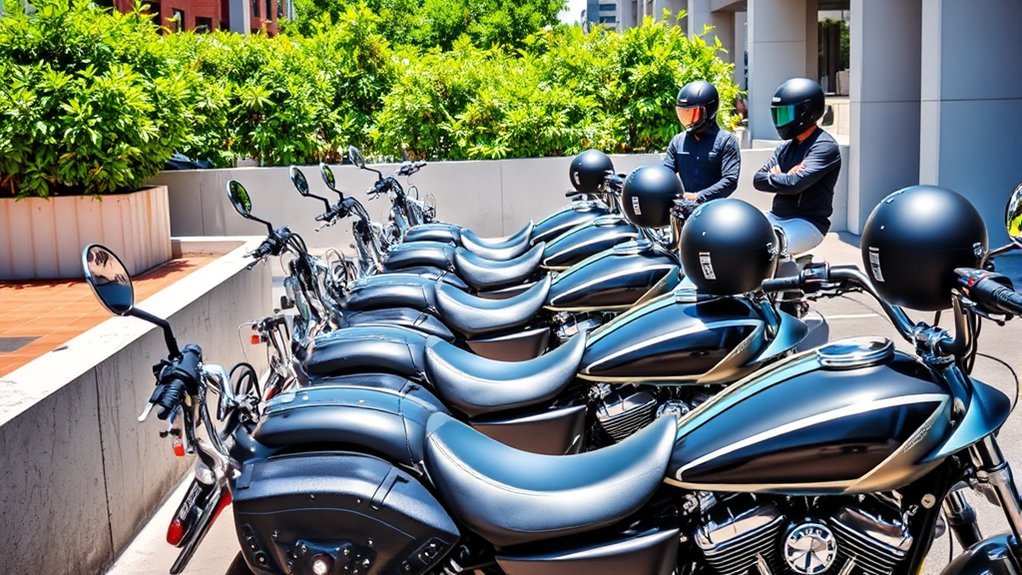
Parking a motorcycle in New York City takes more than finding a gap at the curb. Motorcycles generally follow the same parking signs and restrictions as other vehicles, but NYC has a special rule that allows them to park at an angle. Before leaving your bike, read the entire block, confirm that the space is legal for ordinary vehicles, pay any required meter, and secure the motorcycle without blocking pedestrians.
Quick Answer
In NYC, a motorcycle may be parked parallel or at an angle to the curb. If angled, at least one wheel must touch the curb and no part may extend more than six feet from it. Follow every posted restriction, pay any required meter, keep the plate visible, and never park on the sidewalk.
Key Takeaways
- NYC allows angle parking for motorcycles when at least one wheel touches the curb and no part of the bike extends more than six feet from it.
- Motorcycles must obey parking signs, Alternate Side Parking rules, time limits, loading restrictions, and meter requirements.
- Do not use sidewalks, bike lanes, pedestrian ramps, crosswalks, driveways, bus stops, or commercial-vehicle-only spaces.
- When paying through ParkNYC or a Pay-by-Plate meter, enter the correct license plate and the zone for the side of the street where the bike is parked.
- Photograph the motorcycle, nearby signs, curb position, meter confirmation, and license plate before walking away.
At a Glance
| Time Required | About 2–5 minutes to inspect signs, position the motorcycle, pay, and document the space |
| Difficulty | Easy once you know how to read NYC parking signs |
| Tools Needed | Phone or camera, meter payment method or ParkNYC, disc lock, and an optional hardened chain or alarm |
| Cost | Free in a legal non-metered space; otherwise the posted meter, garage, or private-lot rate applies |
Note: Parking signs, emergency orders, meter rates, and penalty schedules can change. The signs at the location and current information from NYC DOT, NYC311, and the Department of Finance control. This guide is general information, not legal advice.
Essential Tips for Parking Your Motorcycle in NYC
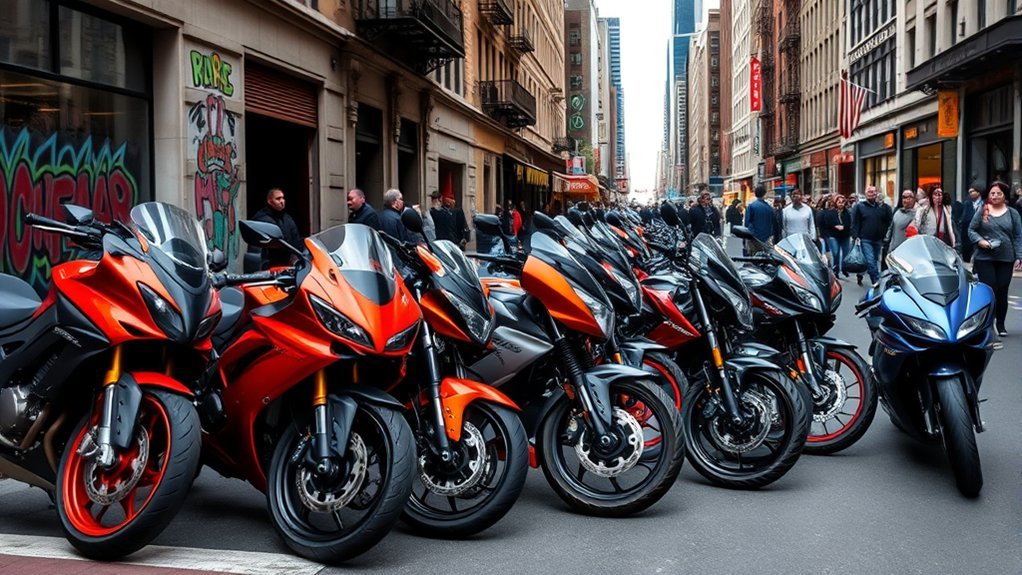
Use the same basic routine every time you park. It takes only a few minutes and can prevent a ticket, tow, or stolen motorcycle.
- Read every sign that may govern the block. Look in both directions because NYC rules may require only one sign for a block. Check the days, hours, arrows, vehicle types, street-cleaning times, and temporary notices.
- Confirm that ordinary passenger vehicles may use the space. Do not assume a space is legal because a meter is present. A commercial-vehicle-only zone is not legal for a passenger motorcycle.
- Check nearby hazards and reserved areas. Stay clear of hydrants, crosswalks, intersections, pedestrian ramps, driveways, bike lanes, bus stops, loading zones, construction areas, and permit-only spaces.
- Position the motorcycle correctly. You may park parallel to the curb or use the motorcycle-specific angle-parking rule described below.
- Keep the license plate readable. Do not let a cover, chain, bag, mud, or another object hide the plate.
- Pay immediately when required. Use the correct meter instructions, plate number, and ParkNYC zone.
- Document the space. Take wide photos showing the motorcycle, curb, signs, meter or payment confirmation, and surrounding landmarks.
- Lock the motorcycle. Use more than the steering lock when practical, especially for overnight parking.
Pro Tip: Take one wide photo from each end of the block. A close-up of a single sign may not show an arrow, another controlling sign, a driveway, or the motorcycle’s position relative to the curb.
Understanding NYC Motorcycle Parking Regulations
Motorcycles, motor scooters, and mopeds generally follow the same NYC parking rules as other vehicles. However, NYC provides a specific exception that permits these vehicles to park at an angle to the curb.
According to NYC311’s motorcycle parking guidance, an angled motorcycle must meet both of these conditions:
- At least one wheel must touch the curb.
- No part of the motorcycle may be more than six feet from the curb.
A motorcycle may park at an angle in NYC, but at least one wheel must touch the curb and the motorcycle must remain within six feet of it.
You may also park parallel when that is safer, required by a sign, or necessary to remain inside marked lines. When parking parallel, face the lawful direction of traffic and stay close to the curb. Parking opposite the direction of traffic can lead to a violation.
Angle parking does not override other rules. You still cannot extend into a travel lane, bike lane, crosswalk, driveway, pedestrian ramp, reserved space, or another prohibited area.
How to Read NYC Parking Signs
Start with the most restrictive rule that applies at the time you plan to leave the motorcycle:
- No Stopping: You may not stop voluntarily during the stated hours except when traffic conditions, an officer, or an emergency requires it.
- No Standing: You may stop briefly to pick up or drop off passengers, but you may not wait or load property.
- No Parking: You may briefly load or unload passengers or property, but you may not leave the motorcycle parked.
Then check for street-cleaning times, loading rules, permit restrictions, school-day language, bus-stop markings, temporary construction notices, and arrows showing where a restriction begins or ends.
Warning: A paid meter does not make an otherwise prohibited space legal. You can still receive a ticket or be towed for parking in a No Standing zone, commercial-vehicle-only space, bus stop, bike lane, driveway, or other restricted location.
Alternate Side Parking Rules
Alternate Side Parking, commonly called ASP, allows street cleaning. Motorcycles must move during the posted restriction just like other vehicles. Check the whole block because one sign may control a large section of curb.
NYC may suspend ASP for holidays, weather, or emergencies. A suspension does not always suspend meters or unrelated parking restrictions. Check the current status through the NYC DOT Alternate Side Parking page or NYC311 before relying on a suspension.
Why You Need to Pay for Parking Meters
A motorcycle must pay when it occupies a legal metered space during the meter’s operating hours. Meter rates and time limits vary by location, and some higher-demand areas use progressive pricing for a second hour.
As published by NYC DOT when this guide was updated, first-hour passenger-meter rates ranged from $1.50 to $5.50. Second-hour rates were higher in some zones and reached $9 in the Midtown Core and Lower Manhattan. Always rely on the rate displayed at the space because pricing can change.
| Payment System | What a Motorcycle Rider Must Do |
|---|---|
| ParkNYC | Select the correct motorcycle plate, enter the six-digit zone for the side of the street where you parked, choose the time, and confirm the session. |
| Pay-by-Plate Meter | Enter the motorcycle’s plate accurately and complete payment. No dashboard receipt is needed when the system records payment by plate. |
| Pay-and-Display Meter | Follow the meter’s posted display instructions and secure the receipt so enforcement personnel can read it without the receipt blowing away or being removed. |
| Pay-by-App-Only Location | Use ParkNYC and verify the plate, zone, time limit, and active session before leaving. |
The official ParkNYC instructions warn that selecting the wrong plate or zone can result in a violation. The zone is tied to the specific side of the street, so a zone across the road may be different.
NYC provides a five-minute grace period for meter and ParkNYC transactions and after an expiration time. Treat that protection as a safeguard for ordinary timing or payment issues, not as permission to plan an overstay. Keep the payment confirmation in case a ticket is issued during the protected period.
How to Identify Legal Parking Spaces for Your Motorcycle
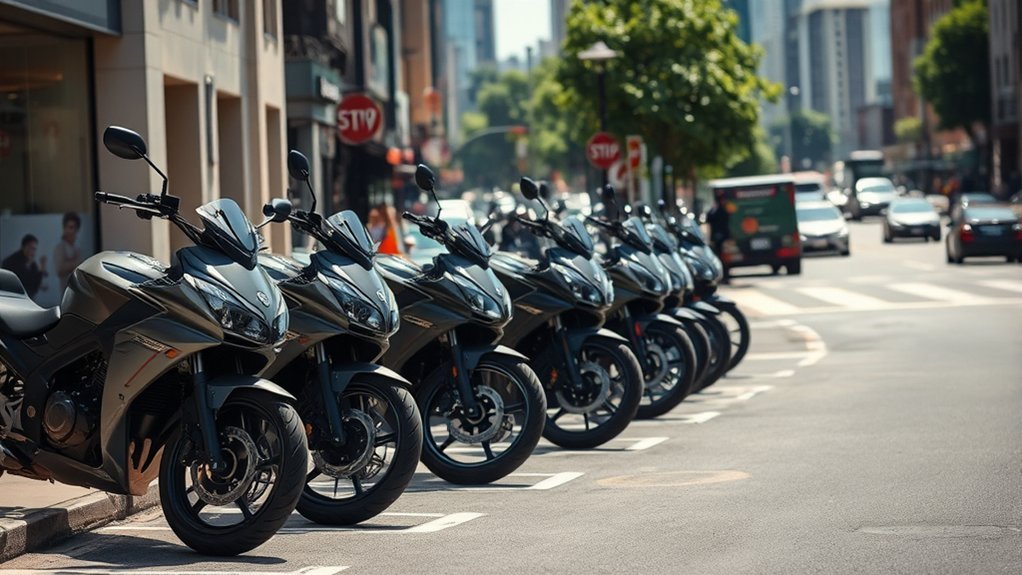
A legal space is not simply an open piece of curb. Use this sequence before committing to a spot:
- Look up and down the block. Identify every sign with an arrow pointing toward the space.
- Match the day and time. A legal overnight space may become an ASP, loading, school, or No Standing zone in the morning.
- Check the permitted vehicle type. Avoid commercial-vehicle-only meters, truck-loading zones, taxi stands, car-share spaces, EV-charging spaces, and permit areas unless your motorcycle legally qualifies.
- Inspect the pavement and curb area. Look for bike-lane markings, pedestrian ramps, crosswalks, driveways, bus stops, hydrants, construction barriers, and marked parking-space boundaries.
- Leave enough roadway clearance. Angle parking must stay within the six-foot motorcycle limit and must not block traffic.
- Confirm payment requirements. Check the meter, ParkNYC zone, and time limit before shutting down the bike.
Places Where You Must Not Park
Do not park a motorcycle in any of the following locations unless an official sign or authorized direction clearly permits it:
- On a sidewalk
- Inside a marked bicycle lane
- In front of a pedestrian ramp
- In a crosswalk, including an unmarked crosswalk at an intersection
- Inside an intersection
- In front of a driveway
- Within 15 feet of a fire hydrant
- In a bus stop, taxi stand, or reserved loading area
- In a No Stopping, No Standing, or active No Parking zone
- In a commercial-vehicle-only metered space
- Beyond marked parking-space boundaries when the markings apply
- Where the motorcycle would extend into a travel lane or block traffic
The current NYC Department of Finance violation schedule lists substantial penalties for sidewalk parking, bike-lane parking, hydrant obstruction, crosswalk parking, and blocking pedestrian ramps.
Common Parking Mistakes to Avoid
Most motorcycle parking tickets come from a small group of preventable errors: reading only one sign, assuming a narrow space is motorcycle-only, paying a meter in a prohibited zone, obscuring the plate, or leaving the bike during an upcoming restriction.
Ignoring Signage Restrictions
Do not read only the sign directly beside the motorcycle. Walk far enough in each direction to find signs and arrows that may govern the space. Temporary paper signs and construction notices can override the normal pattern for the block.
Pay particular attention to restrictions that begin later. A space that is legal at 8 p.m. may become an ASP, No Standing, or loading zone early the next morning.
Obstructing Sidewalks Illegally
Motorcycles, scooters, and mopeds may not park on NYC sidewalks. The current Department of Finance schedule lists a $115 penalty for stopping, standing, or parking on a sidewalk, although penalty schedules can change.
Do not place a wheel, stand, top case, handlebar, or other part of the motorcycle over the sidewalk line. Also keep chains and covers from creating a pedestrian trip hazard.
Failing to Use Meters Correctly
Meter compliance involves more than submitting payment. Common mistakes include:
- Entering the wrong plate number
- Selecting a car instead of the motorcycle in ParkNYC
- Using the zone from the opposite side of the street
- Paying after the maximum parking time has already been reached
- Failing to secure a required Pay-and-Display receipt
- Assuming payment legalizes a commercial-only or otherwise restricted space
- Ignoring a restriction that begins before the paid session ends
If a meter is broken, read its instructions and the surrounding signs. A broken or missing meter does not automatically allow unlimited parking.
What to Do If Your Motorcycle Is Towed
First determine whether the motorcycle was removed by the NYPD, a City Marshal or Sheriff, a private property owner, or another authority. The retrieval and dispute process depends on who ordered the tow.
Know the City Tow Process
The NYC Department of Finance towing guide says:
- The NYPD may tow a vehicle for illegal parking or invalid registration or insurance.
- A City Marshal or the Sheriff may tow when more than $350 in parking-ticket or camera-violation debt is in judgment.
- You can locate a city-towed vehicle through the Find Towed Vehicle service or by calling 311.
- The ticket that caused an NYPD parking tow is paid or disputed separately through the Department of Finance.
For an NYPD tow-pound retrieval, be prepared to bring the motorcycle’s current registration, a valid driver’s license, and current proof of insurance. Verify the current documentation and payment requirements before traveling to the pound.
Warning: Act promptly after a tow. Storage charges and judgment-related requirements can increase the cost, and unclaimed vehicles may eventually be subject to auction procedures.
Dispute a Parking Ticket or Improper Tow
Do not begin a city-ticket dispute by sending a generic appeal to the towing company. For an NYPD parking tow, retrieve the motorcycle through the city process and challenge the underlying ticket through the Department of Finance within the stated deadline.
- Locate the motorcycle. Use the city’s Find Towed Vehicle service or call 311.
- Identify the towing agency. Confirm whether the NYPD, Sheriff, Marshal, or a private operator removed it.
- Preserve evidence. Save photos, ParkNYC records, meter receipts, witness information, and images of every sign on the block.
- Retrieve the motorcycle promptly. Bring the required identification, registration, insurance, and payment method.
- Dispute the underlying violation. Use the official NYC parking-ticket dispute process.
- Address a private tow separately. Review the property’s signs, tow authorization, receipt, and applicable private-towing complaint process.
How to Park Your Motorcycle on Busy NYC Streets
On a crowded street, do not squeeze into a space simply because the motorcycle physically fits. Confirm that the curb section is legal and that your bike will not prevent another vehicle from leaving, interfere with a loading operation, or extend into moving traffic.
- Approach slowly and signal before moving toward the curb.
- Check for oil, gravel, steel plates, steep crowns, potholes, and soft pavement before putting a foot or stand down.
- Choose parallel or legal angle positioning based on signs, markings, traffic clearance, and stability.
- When angled, place at least one wheel against the curb and keep the full motorcycle within six feet of it.
- Leave the transmission in gear when appropriate for the motorcycle and slope.
- Turn the handlebar and use the side or center stand according to the manufacturer’s instructions.
- Check that no luggage, mirror, handlebar, or wheel projects into a bike lane or active roadway.
- Pay, photograph, lock, and cover the motorcycle as needed.
Some non-metered curb spaces are free, but “free” does not mean unrestricted. ASP, residential rules, school restrictions, loading hours, temporary signs, and other regulations may still apply.
Protecting Your Motorcycle From Theft While Parked
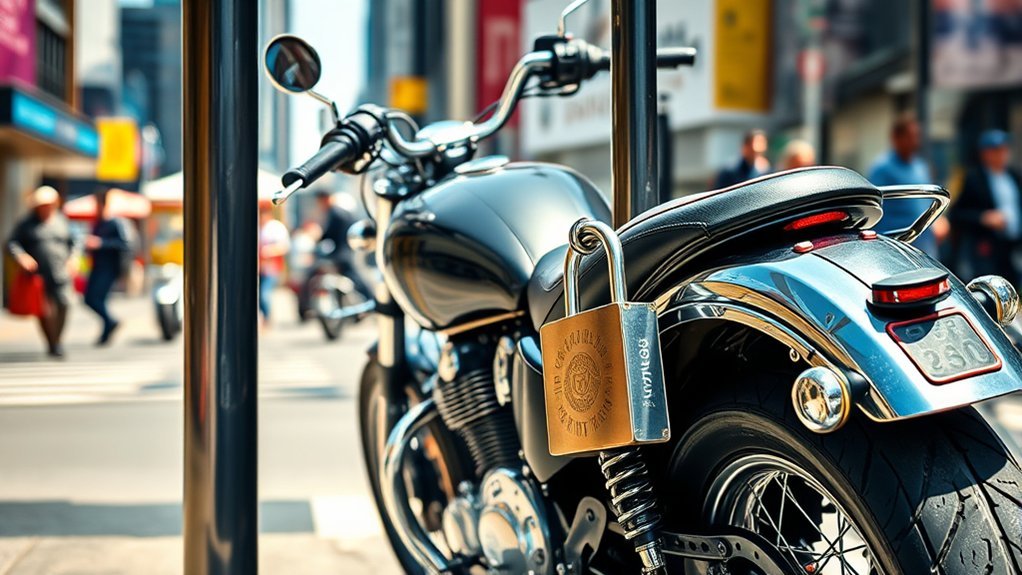
Choose a visible, well-lit area with regular foot traffic when possible. Avoid isolated spots that give a thief time and privacy.
Layered security is more effective than relying on one device:
- Engage the motorcycle’s steering lock.
- Use a hardened disc lock, preferably with an alarm and reminder cable.
- Use a quality chain through the frame or a difficult-to-remove wheel component.
- Add a fitted cover that does not hide the license plate or create a pedestrian hazard.
- Consider a concealed tracker with current service and battery status.
- Remove keys, documents, electronics, helmets, and loose luggage.
- Record the VIN, plate, distinguishing marks, and current photographs.
Do not attach a motorcycle to a hydrant, parking meter, street sign, tree, railing, pedestrian facility, or other public object unless you know that doing so is authorized and will not damage property or obstruct access. A chain stretched across walking space can create a hazard even when the motorcycle itself is in the roadway.
Pro Tip: Place a disc lock on a wheel where it is easy for you to notice before riding. A bright reminder cable from the lock to the handlebar helps prevent accidental movement with the lock installed.
How to Handle Motorcycle Parking on Private Property
Get permission before parking on private property unless the location clearly offers public motorcycle parking. A space that looks unused may still be controlled by a building owner, garage operator, tenant, or property manager.
Before entering a private garage or lot, confirm:
- Motorcycles are accepted.
- The posted rate applies to motorcycles.
- There are height, ramp, access, or overnight restrictions.
- The operator allows disc locks, chains, covers, alarms, or attached luggage.
- You know the closing time and retrieval procedure.
- The receipt identifies the business and explains any claim or damage-reporting process.
Photograph the rate board and the motorcycle at entry. Keep the ticket or digital receipt until the bike is safely returned.
Connecting With the NYC Motorcycle Community for Support
Other local riders can help you understand how a neighborhood operates in practice, but community advice should not replace the signs at the curb or current city rules.
Local Meetups and Events
At local rides, training events, and owner gatherings, ask experienced riders about:
- Garages that routinely accept motorcycles
- Areas with recurring theft or vandalism concerns
- Secure overnight options
- Seasonal construction and street closures
- Recommended locks, covers, trackers, and insurance documentation
Verify any suggested curb location yourself. Enforcement conditions and posted restrictions may have changed since another rider last used the space.
Online Forums and Groups
Neighborhood forums and motorcycle groups can provide recent reports about temporary signs, stolen bikes, closed garages, damaged meters, and active construction. Check the date and source of each post, then confirm official rules through NYC311 or NYC DOT.
Frequently Asked Questions
What Is the 1% Rule in Motorcycles?
There is no universal motorcycle law or accepted safety standard requiring riders to spend 1% of a motorcycle’s value on training or gear each year. Budget according to the condition of your equipment, your training needs, the type of riding you do, and manufacturer replacement guidance.
What Does Two Fingers Down Mean for Bikers?
Two fingers pointed downward is a common informal greeting between riders. It generally expresses respect or a wish to keep both wheels on the road. It is not a traffic signal or legal requirement, and riders should keep full control of the motorcycle when conditions demand both hands.
What Is the 12-Second Rule for Motorcycles?
The New York State Motorcycle Safety Program Manual advises riders to scan their path of travel about 12 seconds ahead. This helps identify developing hazards early. It is a riding observation technique, not a motorcycle parking rule.
What Is the Proper Way to Park a Motorcycle in NYC?
Follow all posted restrictions and park either parallel or at a legal angle. When angled, at least one wheel must touch the curb and no part of the motorcycle may extend more than six feet from it. Keep the plate visible and remain clear of sidewalks, bike lanes, crosswalks, driveways, hydrants, and traffic.
Do Motorcycles Have to Pay NYC Parking Meters?
Yes. A motorcycle in a legal metered space must pay during the posted meter hours. Follow the instructions for ParkNYC, Pay-by-Plate, Pay-and-Display, or any other system used at that location.
Can a Motorcycle Park Between Two Cars in NYC?
It may use an otherwise legal curb space if the motorcycle complies with signs, markings, meter rules, curb-position requirements, and roadway-clearance rules. Do not block either car, occupy a prohibited gap, or assume that a small opening beside a driveway, crosswalk, hydrant, or pedestrian ramp is legal.
Can You Park a Motorcycle on the Sidewalk in NYC?
No. NYC prohibits motorcycles, motor scooters, and mopeds from parking on sidewalks. The current city violation schedule lists a $115 penalty, although fine amounts may change.
How Far Must a Motorcycle Be From a Fire Hydrant in NYC?
A parked motorcycle must remain at least 15 feet from a fire hydrant. Its small size does not create an exception to the hydrant-clearance rule.
Conclusion
Parking a motorcycle in NYC is manageable when you use the same routine every time. Read the entire block, confirm the space is legal for a passenger vehicle, position the motorcycle within NYC’s curb rules, pay with the correct plate and zone, photograph the location, and lock the bike. Never let a convenient-looking gap tempt you onto a sidewalk, into a bike lane, beside a hydrant, or inside another restricted area.
Sources
- NYC311: Parking Signs and Rules — motorcycle angle-parking requirements and sidewalk prohibition
- NYC Department of Transportation: Parking Meter Rates — current meter zones and published rates
- NYC311: ParkNYC Parking Payment — zone numbers, plate entry, payment records, and grace periods
- NYC Department of Finance: Violation Codes and Fines — sidewalk, meter, hydrant, crosswalk, bike-lane, plate, and commercial-zone violations
- NYC Department of Finance: Towed Vehicles — tow agencies, vehicle location, retrieval, and ticket-dispute procedures
- New York State DMV Motorcycle Safety Program Manual — rider scanning and roadside safety guidance






Leave a Reply