
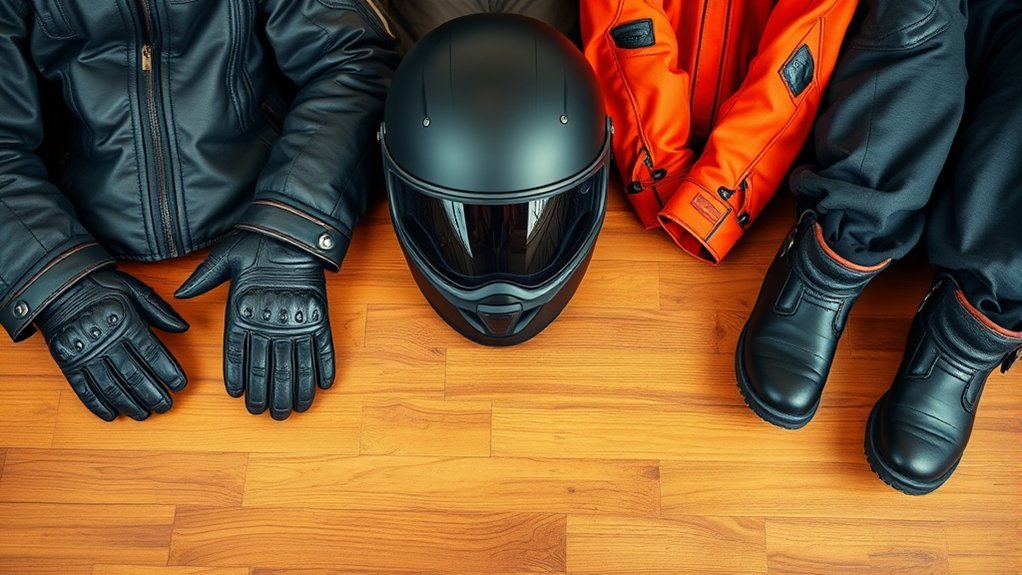
Choosing motorcycle gear as a new rider can feel confusing, especially when labels, prices, and product claims all sound similar. Start with a properly fitted full-face helmet, a motorcycle-specific jacket and pants, full-finger gloves, and over-the-ankle riding boots. Buy for protection and fit first, then add comfort, weather, and visibility features.
Quick Answer
Beginner motorcycle gear should include a new DOT-compliant full-face helmet, eye protection, an abrasion-resistant jacket and pants with correctly placed armor, full-finger gloves, and over-the-ankle motorcycle boots. Every item should remain secure in a riding position without restricting your controls, vision, breathing, or movement.
Key Takeaways
- In the United States, choose a helmet labeled as compliant with DOT FMVSS No. 218; NHTSA does not pre-approve individual helmets.
- Buy your helmet new. A used helmet may have hidden impact, age, heat, chemical, or fit-related damage.
- Look beyond marketing terms such as “heavy-duty.” Check garment, armor, glove, and boot labels for recognized protective standards when available.
- Fit matters as much as features. Armor must stay over the joint, boots must stay fastened, and gloves must not interfere with the controls.
- Protective equipment can reduce the risk or severity of some injuries, but it cannot prevent every crash or guarantee that a rider will not be hurt.
At a Glance
| Time Required | Allow 30–90 minutes for a full fitting session, plus time to compare labels and return policies. |
| Difficulty | Beginner-friendly, but helmet shape and armor placement may require help from an experienced fitter. |
| Tools Needed | Soft measuring tape, manufacturer size charts, a mirror, and access to a motorcycle or seated riding position. |
| Cost | Variable. A complete new street-riding kit costs several hundred dollars or more, depending on materials, certifications, climate features, and sales. |
Why Protective Gear Is Essential for Beginners
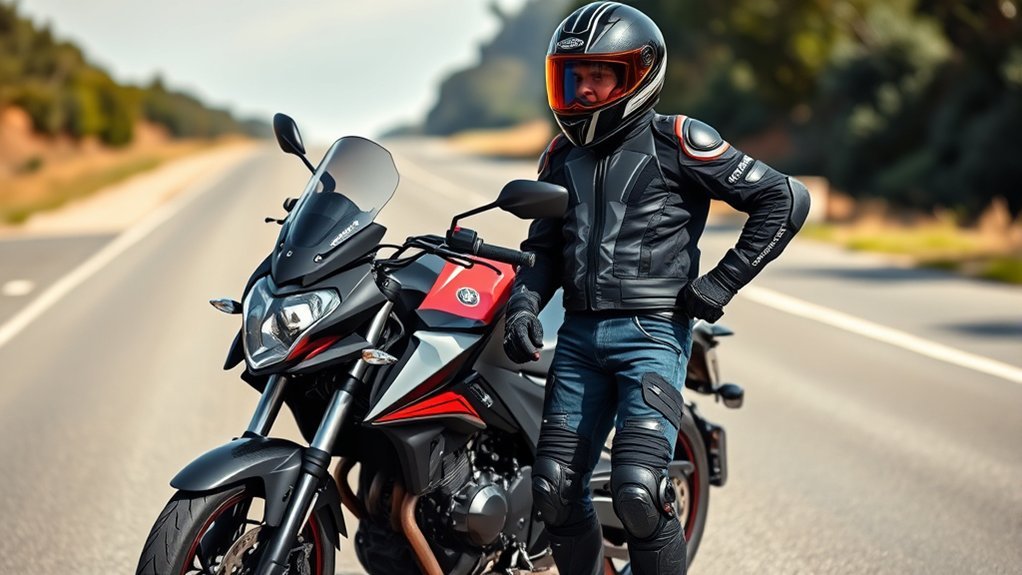
A motorcycle does not have the enclosed structure, seat belts, or airbags found in a passenger car. That leaves the rider more exposed during a fall or collision. In 2024, NHTSA reported 6,228 motorcyclists killed in U.S. traffic crashes, representing 16% of all traffic deaths.
Protective equipment cannot prevent a crash, but it can help manage some of the forces, abrasion, weather, noise, and debris a rider may face. A peer-reviewed crash study found that riders wearing motorcycle jackets, pants, or gloves were less likely to be admitted to a hospital than riders without those items. The strongest benefits were seen when purpose-built clothing included impact armor.
Gear should be chosen for the slide, impact, weather, and visibility conditions a rider may face—not only for how it looks while standing in a store.
Warning: No helmet, armor, jacket, or boot can guarantee survival or prevent every injury. Training, sober riding, legal speeds, following distance, hazard awareness, and regular practice remain essential.
Essential Budget-Friendly Motorcycle Gear for New Riders
A low price does not automatically mean unsafe, and a high price does not automatically mean better protection. Start with verified labels, secure fit, coverage, and a return policy. Premium graphics, brand names, electronics, and luxury liners should come after the protective basics.
| Gear | Minimum Buying Goal | Budget Strategy |
|---|---|---|
| Helmet | New, full-face, correct shape and size, with the required certification for your location | Choose a plain color or prior-year graphic from an authorized seller rather than buying used |
| Jacket | Abrasion-resistant shell, secure closures, and shoulder and elbow armor | Look for removable liners and replaceable armor instead of paying for fashion details |
| Pants | Motorcycle-specific material with knee protection and secure waist and ankle closures | Compare overpants, riding jeans, and textile pants based on your commute and climate |
| Gloves | Full-finger coverage, palm reinforcement, secure wrist closure, and good control feel | Avoid decorative gloves that lack a retention strap or reinforced palm |
| Boots | Over-the-ankle coverage, secure fastening, oil-resistant grip, and protection around the ankle | Choose a simple street boot before paying for waterproof membranes or premium styling |
If you cannot afford a complete protective kit, postpone street riding while you save or look for legitimate clearance items. Do not treat the helmet, gloves, boots, jacket, or pants as optional simply because one item costs more than expected.
Pro Tip: Try on the entire kit together. A jacket cuff, glove gauntlet, pants hem, and boot opening may fit well alone but leave exposed skin or create pressure when combined.
What to Know About Motorcycle Helmets
A full-face helmet gives the most complete head and face coverage. Open-face and half helmets leave the chin and face more exposed, while some off-road helmets require separate goggles. Your helmet must also comply with the laws and standards that apply where you ride.
Understanding DOT, ECE, and Snell Labels
For street use in the United States, look for a helmet labeled as compliant with Federal Motor Vehicle Safety Standard No. 218. A current rear label should identify the manufacturer or brand, model, “DOT,” “FMVSS No. 218,” and “CERTIFIED.”
NHTSA does not approve individual helmet models before they go on sale. Manufacturers self-certify compliance, and NHTSA may later test helmets and order a recall when a model fails. For that reason, buy from an established dealer and avoid novelty helmets, fake labels, unknown marketplace sellers, and helmets with unusually thin liners.
Some helmets also meet UN Regulation No. 22, 06 series, commonly called ECE 22.06, or a voluntary Snell M2025D or M2025R standard. These programs use different tests and approval systems. An extra label may be useful, but it does not replace the certification legally required in your location.
How a Motorcycle Helmet Should Fit
- Measure your head. Wrap a soft tape above your eyebrows and around the widest point at the back of your head. Compare the result with the specific manufacturer’s chart.
- Match your head shape. Helmets may suit round, intermediate-oval, or long-oval heads. Pain at the forehead or sides can signal a shape mismatch rather than the wrong numbered size.
- Check even pressure. A new helmet should feel firm around the crown and cheeks without sharp pain, numbness, or a pressure point.
- Fasten the strap. Shake your head and gently try to roll the helmet forward and backward. It should not rotate freely or come off.
- Wear it indoors. NHTSA suggests wearing a new helmet for 30–45 minutes before riding to identify pressure points that were not obvious at first.
- Check vision and controls. Confirm that the eye port, shield, vents, chin strap, and any glasses work without blocking your view or breathing.
Warning: Buy a motorcycle helmet new. A used helmet may have an unknown crash history, compressed liner, missing label, modified shell, worn retention system, or exposure to damaging heat, fuel, paint, and solvents.
Helmet Care and Replacement
Follow the helmet maker’s cleaning and replacement instructions. Use only approved cleaners or mild soap and water. Do not drill the shell, cut the liner, paint it with an unapproved coating, or store it near fuel, solvents, direct high heat, or a hot exhaust.
Replace a helmet after a significant impact while it is being worn, or have it evaluated through the manufacturer when that service is available. Replace it sooner if the shell, liner, strap, buckle, or fit has deteriorated. Snell recommends replacement after about five years of normal use, but the helmet manufacturer’s instructions and the helmet’s actual condition should control your decision.
Choosing the Right Motorcycle Jacket Gear for Safety and Comfort
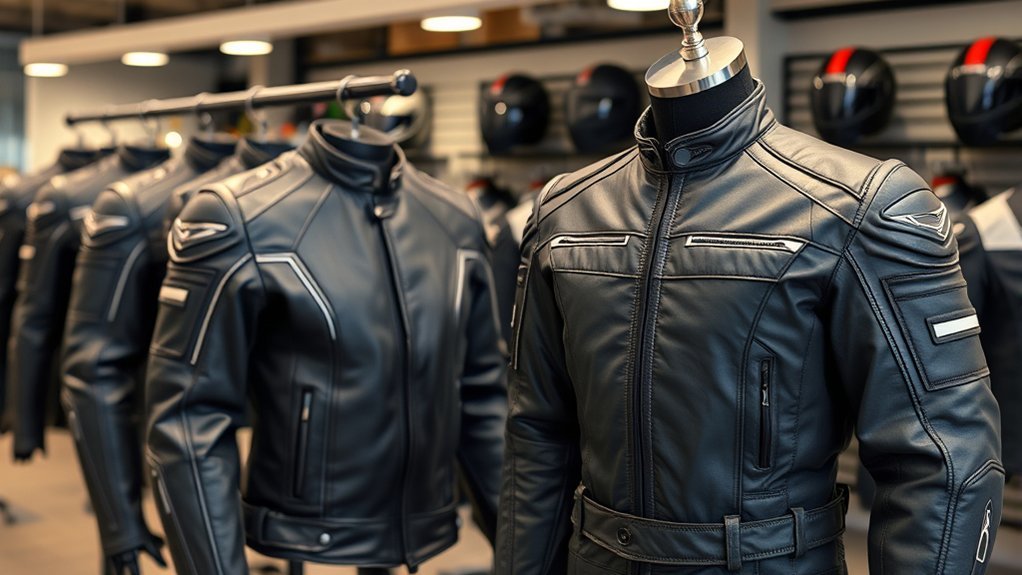
A motorcycle jacket should resist abrasion, keep its armor in place, and remain securely closed during a slide. Leather and purpose-built textile materials can both work when the garment is designed and tested for motorcycle use.
When comparing jackets, check these features:
- Protective label: European-market garments may show an EN 17092 classification. Class AAA provides the highest test level within that garment series, AA balances protection and comfort, and A is intended for lighter-duty riding conditions.
- Impact armor: Look for shoulder and elbow protectors labeled to EN 1621-1. Level 2 protectors transmit less force in the standard test than Level 1 protectors, although they may be thicker or less ventilated.
- Back protection: Some jackets include only a foam placeholder. Check whether a real EN 1621-2 back protector is included or sold separately.
- Closures: The main zipper, cuffs, collar, and waist should stay closed without relying on loose snaps alone.
- Seam construction: Protective zones should use strong seams and durable panels rather than thin stretch fabric.
- Weather control: Vents, waterproof layers, and removable insulation improve comfort, but they should not allow the jacket or armor to shift.
- Visibility: Reflective panels or bright sections can help other road users notice you, especially in low light.
Try the jacket while leaning forward with your arms extended as they would be on the motorcycle. The sleeves should still cover your wrists, the back should not rise above your waistband, and the elbow and shoulder armor should remain centered.
Selecting Motorcycle Pants and Footwear
Ordinary denim can tear quickly when it slides across pavement. Choose motorcycle-specific pants or riding jeans made with tested abrasion-resistant construction, secure seams, and correctly positioned knee protection. Hip protectors are also valuable when the garment accepts them.
Check pants while sitting in your normal riding posture. Knee armor that looks centered while standing may rise above the kneecap when your legs bend. The waist should stay secure, and the cuffs should overlap the boots without catching the foot controls.
Motorcycle boots should cover the ankle and stay on the foot during a sudden pull. Look for:
- Secure laces, buckles, zippers, or hook-and-loop closures
- Ankle cups or reinforced ankle areas
- A firm sole with oil-resistant traction
- Toe and heel reinforcement
- A low-profile toe that can move under the shift lever
- No loose lace loops that can catch a peg, chain, or control
Very stiff racing boots may provide more structure but can be uncomfortable for walking. Short urban boots may be easier to wear but often provide less shin coverage. Choose the design that fits your riding while maintaining secure ankle protection.
Must-Have Accessories: Quality Gloves, Armor, and Additional Safety Gear
Hands often reach toward the ground during a fall, so full-finger motorcycle gloves are essential. Additional equipment such as eye protection, hearing protection, reflective material, and rain layers can improve comfort and help you stay focused.
Essential Glove Features
Choose gloves that fit closely without pulling your fingers away from the controls. Useful features include:
- A reinforced palm and abrasion-resistant outer material
- A secure wrist-retention strap that prevents the glove from pulling off
- Impact protection over the knuckles and vulnerable finger areas
- Pre-curved fingers that match a natural grip
- Minimal excess material at the fingertips
- Enough flexibility to use the clutch, brake, throttle, switches, and visor
- A longer gauntlet for added wrist coverage in cold or wet conditions
Some protective motorcycle gloves are tested to EN 13594. A test label can help you compare products, but fit and secure retention are still essential.
Importance of Body Armor
Impact protectors are designed to reduce the force transmitted to areas such as the shoulders, elbows, back, hips, and knees. They work only when they remain over the intended body part.
With the garment fastened, push each protector up, down, and sideways. Excessive movement may mean the garment is too large or the armor pocket needs adjustment. Replace cracked, permanently compressed, badly deformed, or crash-damaged protectors according to the manufacturer’s instructions.
Eye, Hearing, Weather, and Visibility Gear
- Eye protection: Use a closed face shield or impact-resistant motorcycle goggles when the helmet does not provide a shield. Keep it clean and replace deeply scratched lenses.
- Hearing protection: Properly fitted motorcycle earplugs can reduce wind noise while still allowing useful traffic sounds. Check local rules and choose plugs designed for safe use.
- Rain protection: A waterproof over-layer can keep insulation and protective clothing from becoming soaked. Avoid loose fabric that can flap or contact hot parts.
- Cold-weather layers: Add thin insulating layers that do not make the jacket, pants, or helmet too tight.
- Hot-weather gear: Choose ventilated motorcycle garments rather than riding in ordinary clothing. Dehydration and overheating can reduce attention.
- Visibility: Bright colors and reflective panels can improve conspicuity, but never assume another driver has seen you.
How to Check Motorcycle Gear Fit Before Riding
- Put on the same base layers you expect to wear while riding.
- Fasten every zipper, strap, cuff, buckle, and waist adjustment.
- Sit in your motorcycle’s normal riding position or copy that posture on a stable chair.
- Turn your head fully in both directions and confirm that the helmet and jacket do not block movement.
- Reach for the grips and make sure the sleeves and gloves still overlap.
- Bend your knees and confirm that knee armor stays centered.
- Move your feet as if shifting and braking. The boots must not catch or prevent control movement.
- Check for exposed skin between the jacket, gloves, pants, and boots.
- Walk, squat, and move your arms to find painful seams, numbness, or restricted circulation.
- Keep tags attached until you have completed the indoor fit test and reviewed the return policy.
Note: Protective gear should feel secure, but numbness, sharp pain, reduced breathing, blocked vision, or limited control movement are signs of a poor fit—not a normal break-in period.
How to Shop for Motorcycle Gear on a Budget
Budget shopping should reduce extra features, not essential coverage. Compare current prices only after checking fit, labels, armor, construction, and seller reputation.
Prioritize Essential Gear First
Build the budget around a complete core kit:
- A new DOT-compliant full-face helmet for U.S. street use
- A motorcycle jacket with shoulder and elbow armor
- Motorcycle pants or riding jeans with knee protection
- Full-finger gloves with secure wrist retention
- Over-the-ankle motorcycle boots
- Eye protection when it is not built into the helmet
Once the core kit fits correctly, add a back protector, hip armor, rain gear, thermal layers, hearing protection, and higher-visibility pieces. Do not spend most of the budget on one premium item while leaving other body areas unprotected.
Explore Secondhand Options
Some used garments may offer good value, but only when their age, condition, protective labels, and crash history can be evaluated. A low price is not worth hidden damage.
| Gear Type | Secondhand Guidance |
|---|---|
| Helmet | Buy new. A certification sticker does not reveal impacts, liner compression, storage damage, age, or modification. |
| Jacket or pants | Consider only if the material, seams, zippers, closures, labels, and armor pockets are intact and the item has no crash damage. |
| Armor | Avoid pieces that are cracked, permanently compressed, cut, badly warped, or known to have taken an impact. |
| Gloves | Check palm wear, seams, fingers, knuckle protection, and the wrist-retention closure. Reject stretched or damaged gloves. |
| Boots | Check sole separation, worn tread, ankle structure, closures, crush damage, and fit. Replace loose or damaged laces. |
Look for Sales Events
Clearance sales, prior-year colors, dealer open houses, manufacturer promotions, and end-of-season discounts can lower the cost of legitimate gear. Verify that the product still has the required certification label and all original armor, liners, straps, and instructions.
- Compare the exact model number rather than relying on a similar product name.
- Check the seller’s return and exchange policy before ordering.
- Be cautious of prices far below every established dealer.
- Inspect labels and packaging for misspellings, missing manufacturer information, or fake certification marks.
- Check current recalls when buying a helmet or other regulated equipment.
Motorcycle Gear Care and Replacement
Cleaning and storage affect both comfort and service life. Follow the manufacturer’s label instead of applying one cleaning method to every product.
- Helmet: Use approved cleaners or mild soap and water. Keep solvents, fuel, high heat, and unapproved paint away from the shell and liner.
- Textile garments: Remove armor only when the instructions allow it. Close fasteners before washing and restore water repellency with an approved treatment when needed.
- Leather: Use leather-compatible cleaning and conditioning products. Allow wet leather to dry naturally away from direct heat.
- Gloves and boots: Dry them at room temperature. Check palms, soles, seams, closures, and waterproof liners regularly.
- Armor: Inspect it after a fall or hard impact. Replace it when cracked, crushed, deformed, or outside the maker’s recommended service life.
Replace any garment when worn-through panels, torn structural seams, broken closures, or damaged armor pockets could prevent it from staying in place. Cosmetic fading alone may not make an item unsafe, but structural damage does.
Common Beginner Motorcycle Gear Mistakes
- Buying a helmet based only on head circumference without checking head shape
- Choosing a loose jacket so it feels comfortable while standing
- Assuming ordinary denim, work boots, or fashion leather provide motorcycle-level protection
- Wearing gloves without a secure wrist closure
- Buying a used helmet because the outer shell looks clean
- Paying for electronics or graphics before completing the core protective kit
- Using armor that shifts away from the joint
- Riding with loose laces, open jacket cuffs, or unfastened helmet straps
- Ignoring heat, cold, rain, dehydration, or wind noise until concentration is affected
- Assuming bright clothing guarantees that another road user will see the motorcycle
Pre-Ride Gear Check
- Helmet shell, shield, liner, strap, and buckle show no new damage.
- Chin strap is correctly fastened.
- Eye protection is clean and clear.
- Jacket and pants are fully closed.
- Armor is centered over the shoulders, elbows, hips, back, and knees.
- Glove wrist straps are secure.
- Boots are fastened, and laces cannot contact the motorcycle.
- No loose layer can touch the chain, wheel, exhaust, or controls.
- Weather layers do not restrict steering, vision, breathing, or circulation.
Frequently Asked Questions
What motorcycle gear do I need as a beginner?
A beginner needs a new, properly fitted full-face helmet that meets the required local standard, eye protection, a motorcycle jacket and pants with armor, full-finger gloves, and over-the-ankle motorcycle boots. Hearing protection, rain gear, reflective material, and temperature-appropriate layers are also useful.
What is the 1% rule in motorcycles?
There is no recognized motorcycle-safety rule requiring riders to spend 1% of a motorcycle’s value on gear. An inexpensive motorcycle does not make the rider’s head, hands, joints, or feet less valuable. Build the budget around a complete protective kit, correct fit, and applicable safety standards.
What is the 12-second rule for motorcycles?
The 12-second concept refers to scanning well ahead for developing hazards, not maintaining a 12-second following distance. MSF guidance calls for at least a two-second following gap in normal conditions. Add more space when the road is wet, visibility is poor, traffic is unpredictable, or stopping may take longer.
What kills most motorcyclists?
Motorcycle deaths do not have one universal cause. Fatal crashes include both single-vehicle and multi-vehicle events, with factors such as speeding, alcohol impairment, roadway hazards, loss of control, limited visibility, and other road users failing to detect a motorcycle. Gear can reduce some injury risks, but training and defensive riding are needed to reduce crash risk.
Can a beginner buy used motorcycle gear?
A used jacket or pair of pants may be acceptable after a careful inspection of the material, seams, closures, labels, and armor. Buy the helmet new because its impact history and internal condition may be impossible to confirm. Reject any item with crash damage, torn structural seams, worn-through panels, cracked armor, or unreliable closures.
How tight should motorcycle gear fit?
Motorcycle gear should fit closely enough to keep armor and protective panels in place, but it should not cause numbness, sharp pressure, blocked breathing, reduced vision, or difficulty using the controls. Test the complete kit in your normal riding position before removing the tags.
Conclusion
Beginner motorcycle gear is more than a helmet and a sturdy-looking jacket. A safer kit combines a new, properly fitted helmet, motorcycle-specific clothing, secure impact armor, full-finger gloves, and boots that protect the ankles and remain on the feet. Check recognized labels, test every item in a riding position, and avoid used helmets or damaged protective equipment.
Protective gear cannot remove every risk, but careful selection can improve coverage, comfort, and confidence. Pair it with professional rider training, sober riding, legal speeds, adequate following distance, and regular skill practice.
Sources
- National Highway Traffic Safety Administration — Motorcycle Safety — current U.S. motorcycle fatality data and helmet guidance.
- NHTSA — Choose the Right Motorcycle Helmet — helmet fit, FMVSS No. 218 labeling, self-certification, and novelty-helmet warnings.
- Motorcycle Safety Foundation — Personal Protective Gear — helmet, clothing, glove, boot, visibility, and weather guidance.
- Motorcycle Protective Clothing: Protection From Injury or Just the Weather? — peer-reviewed study of protective clothing and crash-related hospitalization.
- UNECE — UN Regulation No. 22, 06 Series — protective helmet and visor requirements.
- EUR-Lex — Harmonized Protective-Equipment Standards — current listing that includes EN 17092 motorcycle protective-garment standards.


Leave a Reply