
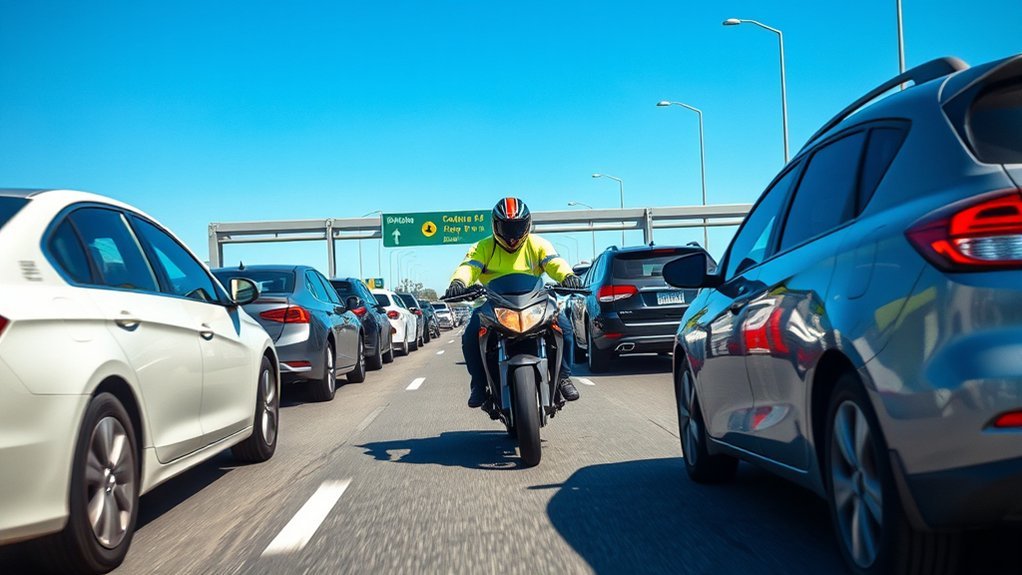
Lane splitting and lane filtering laws are not uniform across the United States. As of July 19, 2026, California has the broadest statewide rule, Minnesota permits limited lane splitting and filtering, and Arizona, Colorado, Montana, and Utah permit narrower forms of low-speed filtering. Everywhere else, riders should verify the current state code before moving between lanes.
Quick Answer
Lane splitting or filtering is expressly permitted statewide in six states, but the rules differ. California allows the broadest lane splitting. Minnesota allows limited splitting and filtering. Arizona, Colorado, Montana, and Utah allow low-speed filtering only under specific traffic, roadway, and speed conditions. Do not assume the maneuver is legal elsewhere.
Key Takeaways
- California and Minnesota permit some movement between lanes while surrounding traffic is moving, but Minnesota imposes strict speed limits and location exclusions.
- Arizona, Colorado, Montana, and Utah authorize only limited filtering under state-specific conditions.
- California law does not set a numerical lane-splitting speed cap, but unsafe speed or movement can still lead to a citation or liability.
- A maneuver can be legal yet still unsafe because of blind spots, lane changes, doors, road seams, trucks, and limited escape space.
- State laws change. Check the current statute or official motorcycle handbook before every interstate trip.
Lane Splitting, Lane Filtering, and Lane Sharing: Key Differences
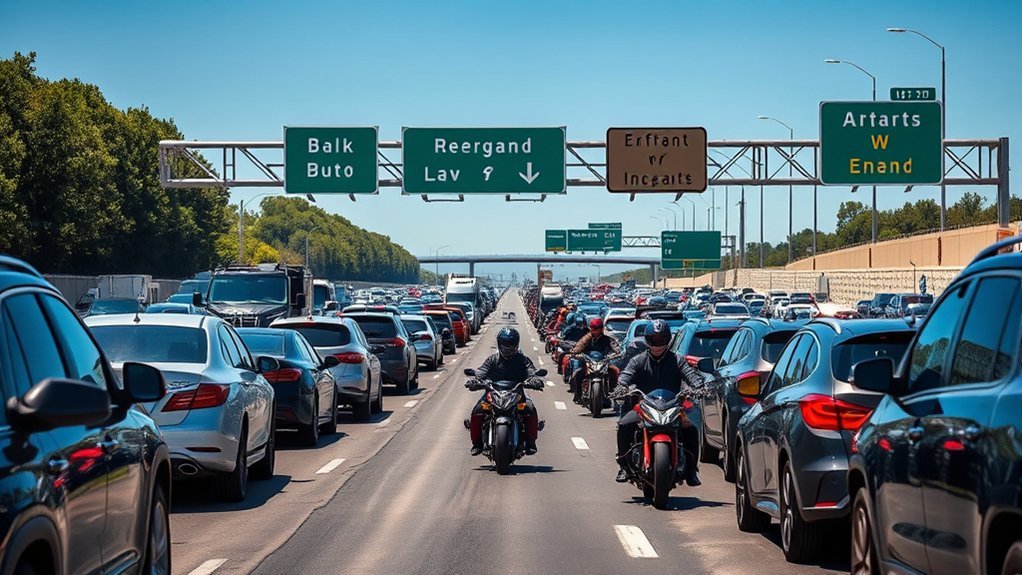
These terms are often used interchangeably, but state laws may define them differently:
- Lane splitting generally means riding a motorcycle between rows or lanes of vehicles while traffic is moving.
- Lane filtering usually means passing between stopped or very slow vehicles at a low speed.
- Lane sharing can refer to a motorcycle and another vehicle occupying one lane. It may also describe two motorcycles riding side by side, which many states allow when done safely.
- Shoulder riding is not the same as filtering. A filtering law does not automatically authorize use of the shoulder, bicycle lane, median, or oncoming lane.
Note: A state may use a different definition from the everyday meaning. The statutory wording controls, including what vehicle qualifies, how fast the motorcycle may travel, how fast surrounding traffic may move, and where the maneuver may occur.
Lane Splitting Laws by State: 2026 Snapshot
| State | Status | Main Conditions |
|---|---|---|
| California | Broad lane splitting is legal. | The statute defines lane splitting but sets no numerical speed cap. Riders must still operate safely and obey all other traffic laws. |
| Minnesota | Limited lane splitting and filtering are legal. | Motorcycle speed may not exceed 25 mph or surrounding traffic by more than 15 mph. The law excludes roundabouts, school zones, certain work zones, and freeway or expressway on-ramps. |
| Arizona | Stopped-traffic filtering is legal. | Two-wheeled motorcycle; vehicle being passed is stopped; at least two same-direction lanes; posted limit 45 mph or less; rider speed 15 mph or less; movement must be safe. |
| Colorado | Stopped-traffic filtering is temporarily authorized. | Two-wheeled motorcycle; traffic stopped; rider speed 15 mph or less; lane wide enough; safe conditions. No shoulder, oncoming lane, or prohibited right-side pass. Authorization is scheduled to repeal September 1, 2027 unless extended. |
| Montana | Low-speed filtering is legal. | Two-wheeled motorcycle; surrounding vehicle stopped or moving no faster than 10 mph; rider speed no faster than 20 mph; lane must be wide enough; operation must remain reasonable and prudent. |
| Utah | Stopped-traffic filtering is legal; moving-traffic lane splitting is prohibited. | Motorcycle; stopped vehicle; at least two same-direction lanes or a qualifying off-ramp; road limit 45 mph or less unless on an off-ramp; rider speed 15 mph or less; not on an on-ramp; movement must be safe. |
| States not listed above | Do not assume splitting or filtering is lawful. | Many states prohibit riding between lanes or passing within the same lane. Others may apply general lane-use, unsafe-passing, careless-driving, or reckless-driving laws. Verify the current state code and official guidance. |
Warning: This article provides general legal and safety information, not legal advice. State statutes, court interpretations, local rules, and enforcement practices can change. Check the official law before riding and consult a local attorney about a citation or crash.
Why Lane-Splitting Legal Status Is Often Misreported
Online lists often divide every state into “legal” or “illegal,” but the real picture can be more complicated. Some states expressly authorize a narrow maneuver. Some expressly prohibit riding between lanes or passing another vehicle within the same lane. Others do not use the phrase lane splitting but may still allow officers to cite a rider under broader traffic laws.
That distinction matters. The absence of a statute named “lane splitting” is not reliable permission. A rider may still violate rules on lane position, passing, signaling, shoulders, speed, careless driving, or reckless driving. Penalties can also vary by the exact offense, the rider’s speed, whether a crash occurred, and whether the conduct endangered another road user.
California Lane Splitting Rules
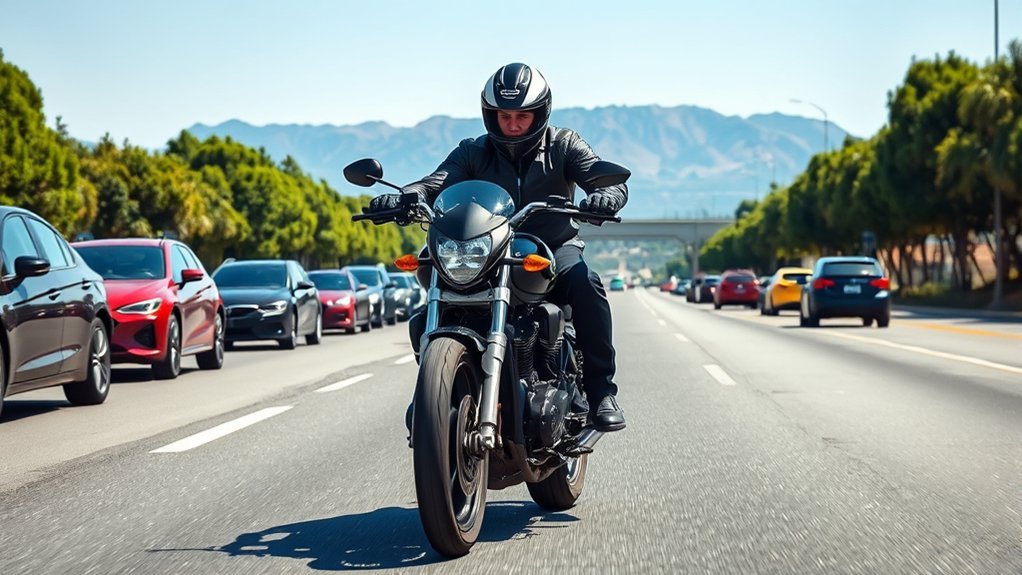
California has the broadest statewide treatment of lane splitting. California Vehicle Code section 21658.1 defines lane splitting as operating a two-wheeled motorcycle between rows of stopped or moving vehicles on divided or undivided roads. The California Driver’s Handbook tells drivers that lane splitting is legal.
The statute does not create a numerical maximum speed or speed-difference limit for lane splitting. That does not make every maneuver lawful. A rider can still be cited for unsafe speed, unsafe lane movement, reckless driving, or another violation based on the circumstances.
Pro Tip: Treat a small speed difference as a safety margin, not as permission to force a pass. When the gap narrows, traffic speeds rise, or drivers begin changing lanes, merge back into a normal lane position.
Minnesota Lane Splitting and Filtering Rules
Minnesota’s law took effect July 1, 2025 and is broader than stopped-traffic filtering. Under Minnesota Statutes section 169.974, subdivision 5, a motorcycle may overtake and pass another vehicle in the same direction and within the same traffic lane when:
- The motorcycle is traveling no faster than 25 mph.
- The motorcycle is traveling no more than 15 mph faster than traffic in the relevant lanes.
- The maneuver is not in a roundabout approach, travel area, or exit.
- The maneuver is not in a school zone.
- The maneuver is not in a work zone with only one travel lane available.
- The maneuver is not on a freeway or expressway on-ramp where traffic is queued.
Minnesota law also states that another driver may not intentionally impede a motorcycle operating under the authorized conditions. That protection does not remove the rider’s duty to use reasonable care.
Arizona Lane Filtering Rules
Arizona Revised Statutes section 28-903 permits a two-wheeled motorcycle to pass a stopped vehicle and operate between lanes only when the movement can be made safely. The street must have at least two adjacent lanes traveling in the same direction, the posted speed limit must be 45 mph or less, and the motorcycle may not exceed 15 mph.
Traditional lane splitting through moving traffic remains outside this exception. Once traffic begins moving, the rider should merge into a normal lane position rather than continue between lanes.
Utah Lane Filtering Rules
Utah permits filtering under Utah Code section 41-6a-704. The motorcycle must pass a stopped vehicle, travel no faster than 15 mph, and use a road with at least two adjacent same-direction lanes. The road’s posted limit must be 45 mph or less, unless the rider is on a qualifying off-ramp. Filtering is not allowed on an on-ramp, and the movement must be safe.
Utah now separately prohibits moving-traffic lane splitting under Utah Code section 41-6a-704.1, effective January 1, 2026. A conviction can trigger motorcycle-endorsement or driver-license consequences, with longer sanctions for repeat offenses.
Montana Lane Filtering Rules
Under Montana Code Annotated section 61-8-392, a two-wheeled motorcycle may filter past a vehicle that is stopped or traveling no faster than 10 mph. The motorcycle may not exceed 20 mph. The lane must be wide enough to pass safely, and conditions must allow continued reasonable and prudent operation.
Montana’s law does not impose the 45-mph roadway limit used in Arizona and Utah, but the surrounding-traffic and motorcycle-speed limits still sharply restrict when filtering is legal.
Colorado Lane Filtering Rules
Colorado’s Senate Bill 24-079 took effect August 7, 2024. It authorizes a rider on a two-wheeled motorcycle to pass stopped traffic at no more than 15 mph when the lane is wide enough and conditions permit safe, prudent operation.
The rider may not pass on the right shoulder, use a lane carrying traffic in the opposite direction, or pass to the right of a vehicle in the far-right lane on a non-limited-access highway. The authorization is scheduled to repeal on September 1, 2027 unless lawmakers extend or replace it after reviewing safety data.
Safety Tips for Lane Splitting and Filtering
Legal permission is not a requirement to split or filter. Skip the maneuver whenever the space, traffic pattern, road surface, weather, visibility, or your skill level makes it uncomfortable.
- Confirm every condition first. Check traffic speed, posted speed, number of lanes, road type, vehicle type, and prohibited locations.
- Keep the speed difference small. A large closing speed gives you less time to react to a lane change, door, mirror, pothole, or pedestrian.
- Scan wheels and gaps. A front wheel turning, a growing gap, or a driver looking toward another lane can warn of a sudden move.
- Avoid large-vehicle blind spots. Do not linger beside buses, trucks, trailers, or wide vehicles. Their drivers may not see you, and the available space can disappear quickly.
- Watch the road seam. Paint, raised markers, metal plates, debris, oil, and uneven pavement can reduce traction or deflect the front wheel.
- Leave an escape route. Do not enter a gap that offers no safe place to merge if traffic starts moving.
- Do not use the shoulder unless a separate law allows it. Filtering authorization normally does not include shoulders, bicycle lanes, medians, or opposing lanes.
- Wear complete protective gear. Use a compliant helmet, gloves, abrasion-resistant clothing, over-the-ankle footwear, and eye protection. Review the National Highway Traffic Safety Administration’s motorcycle safety guidance.
Warning: Never assume a driver sees you or will leave the gap open. Drivers may change lanes without signaling, open a door, move toward the lane line, or react unpredictably when surprised.
What the Safety Research Actually Shows

A frequently cited 2015 UC Berkeley SafeTREC study examined 5,969 motorcyclists involved in California traffic collisions from June 2012 through August 2013. Among the crash-involved riders, those who were lane splitting were less often rear-ended by another vehicle: 2.6% compared with 4.6% for riders who were not lane splitting.
In the California crash sample, lane-splitting riders were rear-ended less often, but they were more likely to rear-end another vehicle. The study supports cautious, low-differential riding—not a claim that lane splitting is always safer.
The same study found lower observed rates of head, torso, and fatal injury among lane-splitting riders in the crash sample. It also found that injury risk rose as traffic speed and the motorcycle’s speed difference increased. The researchers described lane splitting as relatively safe when traffic was moving at 50 mph or less and the motorcycle was no more than 15 mph faster.
Those results require context. This was an observational analysis of riders already involved in collisions, not a randomized experiment or a before-and-after study of legalization. Lane-splitting riders in the sample also differed from other riders in helmet use, alcohol use, passenger carriage, riding time, and speed. The findings should guide safer behavior, not be presented as proof that lane splitting prevents a fixed percentage of crashes.
Liability, Citations, and Insurance
Legal lane splitting does not automatically protect a rider from fault after a crash. Insurers, police, lawyers, and courts may examine the rider’s speed, speed difference, visibility, lane position, signals, road conditions, and whether every statutory condition was met. They may also examine the other driver’s lane change, signaling, lookout, and any intentional blocking.
A citation can affect an insurance claim, but it does not always decide civil liability by itself. Likewise, lane splitting does not automatically increase an insurance premium. Premium changes usually depend on the insurer’s rating rules, claim history, fault determination, violations, location, and other risk factors.
If you receive a citation, stay calm and avoid arguing at the roadside. Record the location, traffic speed, posted limit, lane layout, weather, and any video or witness information. Read the exact statute listed on the ticket and its deadline. A local traffic attorney can explain defenses, court procedure, insurance effects, and license consequences.
Current 2026 Law Trends and What May Change Next
The national trend has moved toward narrowly defined, low-speed filtering rather than unrestricted lane splitting. Arizona, Colorado, Montana, and Utah use detailed conditions involving stopped or slow traffic, low rider speeds, safe lane width, and roadway restrictions. Minnesota’s 2025 law is broader because it permits limited passing while traffic is moving, but it still caps the motorcycle at 25 mph and a 15-mph speed difference.
Colorado is the clearest near-term change to watch because its authorization is scheduled to end September 1, 2027 unless the legislature acts. Other states continue to consider bills, but a proposed bill is not law. Before relying on a news story or advocacy post, check whether the bill passed, was signed, reached its effective date, and was later amended or repealed.
Note: For an interstate trip, save the official statute pages for every state on your route. Recheck them shortly before departure, especially when a law has a sunset date or a recent effective date.
Frequently Asked Questions
Can lane splitting raise my insurance premium?
Not automatically. A premium may change after a moving violation, at-fault crash, claim, or other rating event. The effect depends on the insurer, state rules, driving record, fault decision, and policy. Legal lane splitting by itself does not guarantee an increase.
Are there special age restrictions for lane splitting?
The laws reviewed here generally regulate the motorcycle, traffic, speed, and roadway rather than creating a separate lane-splitting age. However, ordinary licensing, permit, training, passenger, and helmet restrictions still apply. A permit holder should check whether permit conditions limit the maneuver.
How does lane splitting affect accident liability?
Liability is fact-specific. A legal maneuver may still be negligent if performed too fast or without enough space. An illegal maneuver may be evidence against the rider, but the other driver’s unsafe lane change, failure to signal, distraction, or intentional blocking may also affect fault.
Can an electric motorcycle lane split or filter?
Usually only if the vehicle fits the state’s legal definition of a motorcycle and satisfies any two-wheel requirement. Electric mopeds, autocycles, three-wheelers, and low-speed devices may fall under different definitions, so check registration documents and the statute.
Is riding on the shoulder considered lane filtering?
No. Filtering generally occurs within or between traffic lanes. Shoulder use is governed by separate laws and is often prohibited. Colorado’s filtering law, for example, expressly bars passing on the right shoulder.
What should I do if I am cited for lane splitting?
Read the exact offense and response deadline, preserve video and witness information, photograph the lane layout if safe, and write down traffic conditions while they are fresh. Consider speaking with a traffic attorney licensed in that state, especially if the citation threatens a motorcycle endorsement or follows a crash.
Can a driver intentionally block a filtering motorcycle?
Drivers should not intentionally close a gap, open a door, or move toward a rider. Minnesota expressly prohibits intentionally impeding an authorized motorcycle maneuver. Other states may address dangerous blocking through general reckless-driving, assault, or road-rage laws.
Sources
- California Vehicle Code section 21658.1 and the California Driver’s Handbook — California’s definition and legal treatment of lane splitting.
- Arizona Revised Statutes section 28-903 — Arizona’s stopped-traffic filtering conditions.
- Utah Code section 41-6a-704 and section 41-6a-704.1 — permitted filtering and prohibited moving-traffic lane splitting.
- Montana Code Annotated section 61-8-392 — Montana’s traffic-speed and motorcycle-speed limits.
- Colorado Senate Bill 24-079 and Minnesota Statutes section 169.974 — the newer Colorado and Minnesota rules, restrictions, and effective dates.
- UC Berkeley SafeTREC, Motorcycle Lane-splitting and Safety in California — collision-sample findings on rear-end crashes, injuries, traffic speed, and speed differential.
Conclusion
Lane splitting laws now fall into three practical groups: broad permission in California, limited moving-traffic permission in Minnesota, and low-speed filtering exceptions in Arizona, Colorado, Montana, and Utah. Outside those rules, do not treat legal silence as permission. Verify the official statute, meet every condition, keep your speed difference low, and merge back whenever the gap or traffic pattern becomes unsafe.






Leave a Reply