
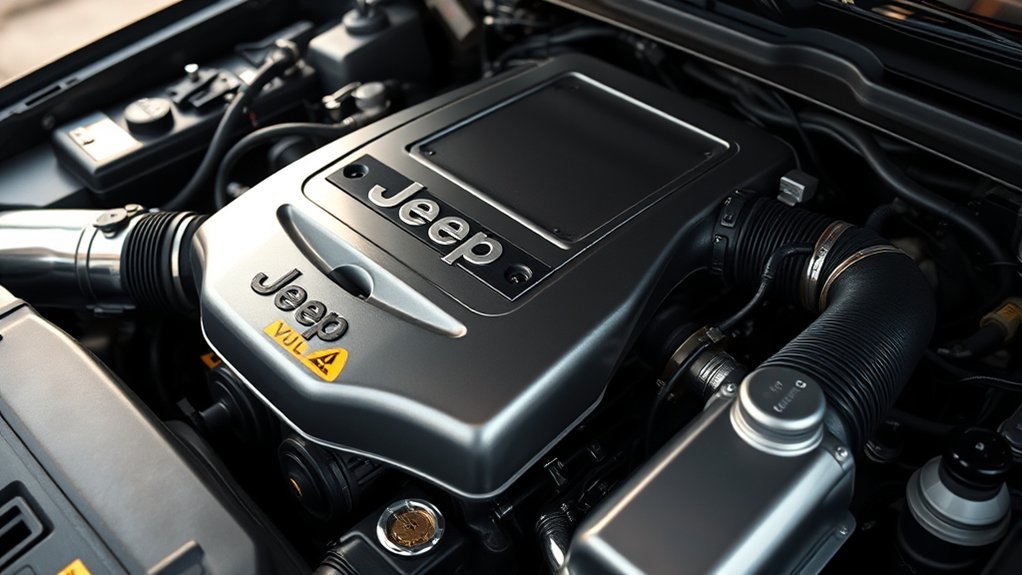
The 2005 Jeep Grand Cherokee Laredo’s available 4.7L PowerTech V8 offers useful towing torque and stronger acceleration than the standard V6, but many online specifications mix it up with earlier High Output engines or the revised 2008 version. The most important correction is simple: 287 refers to the engine’s cubic-inch displacement, not its horsepower.
Quick Answer
The 2005 Jeep Grand Cherokee 4.7L PowerTech V8 was published with approximately 230–235 horsepower and 290–305 lb-ft of torque in different factory documents. It uses 87-octane regular fuel, holds 6 quarts of SAE 5W-30 oil with a filter, and requires close attention to its cooling system.
Key Takeaways
- 287 is displacement: The engine is approximately 287 cubic inches, not 287 horsepower.
- Factory figures vary: Jeep documents circulated with 230 hp/290 lb-ft and 235 hp/305 lb-ft ratings.
- Regular fuel is correct: The stock 2005 4.7L is designed for 87-octane regular unleaded gasoline.
- Oil specification: Use API-certified SAE 5W-30 oil; capacity is 6 U.S. quarts with a filter.
- Control heat: Coolant loss or overheating should be investigated immediately because the engine uses aluminum cylinder heads.
2005 Jeep Grand Cherokee 4.7L V8 Specifications
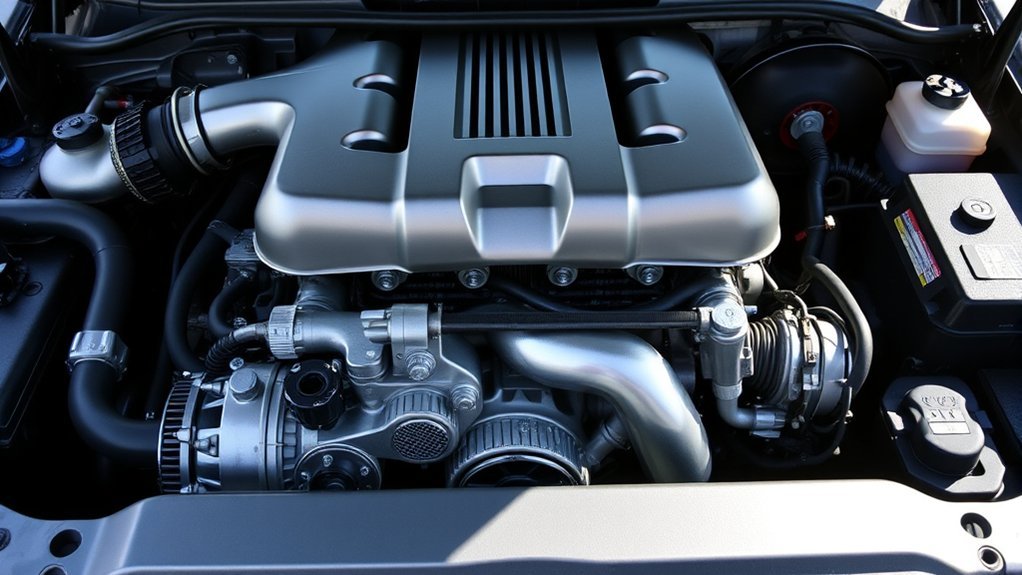
The 4.7L PowerTech is a naturally aspirated, 90-degree V8 with a cast-iron block, aluminum cylinder heads, chain-driven single overhead camshafts, and two valves per cylinder. It uses sequential multi-port electronic fuel injection and was paired with the 545RFE automatic transmission.
Jeep’s preliminary 2005 technical specification sheet lists 230 horsepower and 290 lb-ft. A separate factory sales brochure published 235 horsepower and 305 lb-ft. Because both documents circulated, specifications reproduced by vehicle databases and parts catalogs do not always match.
| Specification | 2005 4.7L PowerTech V8 |
|---|---|
| Displacement | 4,701 cc, approximately 4.7 liters or 287 cubic inches |
| Configuration | 90-degree V8, chain-driven SOHC, 16 valves |
| Construction | Cast-iron block and bedplate with aluminum-alloy cylinder heads |
| Published output | Approximately 230–235 hp, depending on the factory publication |
| Published torque | Approximately 290–305 lb-ft, depending on the factory publication |
| Compression ratio | 9.0:1 |
| Maximum engine speed | 6,000 rpm, electronically limited |
| Fuel requirement | 87-octane regular unleaded, using the U.S. (R+M)/2 rating |
| Oil specification | API-certified SAE 5W-30 meeting the applicable Chrysler specification |
| Oil capacity | 6 U.S. quarts, or approximately 5.7 liters, with filter |
| Cooling-system capacity | Approximately 14 U.S. quarts, or 13.25 liters |
| Transmission | 545RFE electronically controlled automatic with five forward ratios |
The number 287 describes the 4.7L engine’s approximate cubic-inch displacement. It is not the engine’s horsepower rating.
Why 2005 4.7L Engine Specifications Often Conflict
Confusion usually comes from combining specifications from three different versions of the PowerTech V8:
- Earlier WJ High Output engine: Certain 2002–2004 Grand Cherokee Limited and Overland models offered a separate 4.7L High Output engine with different internal parts and tuning.
- 2005 WK 4.7L: The redesigned 2005 Grand Cherokee used the standard 9.0:1 PowerTech V8. It was not the earlier WJ High Output package.
- Revised 2008 4.7L: The later engine received major cylinder-head, intake, combustion, and ignition changes and produced approximately 305 horsepower. Those specifications do not apply to a stock 2005 engine.
Note: Do not identify the engine from an online listing alone. Check the underhood emissions label, the eighth VIN character, the vehicle’s build information, and part numbers before ordering internal engine, ignition, cooling, or emissions components.
Performance and Fuel Economy
The 4.7L gives the 2005 Grand Cherokee stronger low- and mid-range response than the 3.7L V6, especially when carrying passengers, climbing grades, or towing. Exact acceleration times should not be treated as a fixed factory specification. Results vary with two- or four-wheel drive, axle ratio, transfer case, tires, elevation, fuel quality, vehicle weight, and the condition of a now decades-old engine and transmission.
Jeep’s preliminary technical sheet published an estimated 14 mpg city and 20 mpg highway for the 4.7L under the testing method used at that time. Current displayed estimates may differ because EPA procedures and database presentation have changed. Owners can compare the appropriate drivetrain through the U.S. Department of Energy fuel-economy lookup.
A sudden decrease in fuel economy is more useful diagnostically than a comparison with a best-case rating. Check for low tire pressure, dragging brakes, incorrect engine temperature, stored trouble codes, misfires, restricted airflow, aging oxygen sensors, or transmission and torque-converter problems.
Fuel Requirements for the 2005 4.7L V8
The stock 2005 4.7L PowerTech V8 is designed to run on 87-octane regular unleaded gasoline. Mid-grade or premium fuel is not required under normal operation and does not automatically add horsepower, improve fuel economy, or clean the engine.
A brief light spark-knock sound under heavy load can sometimes occur without indicating damage, but persistent or heavy knocking should be diagnosed. Possible causes include poor-quality or contaminated fuel, excessive combustion-chamber deposits, overheating, lean operation, a sensor or wiring fault, or incorrect ignition control.
Pro Tip: If knocking, hesitation, or a check-engine light appears after refueling, keep the receipt and note the station and pump number. Scan the vehicle for codes before assuming that higher-octane fuel will solve the problem.
Essential Maintenance for the 4.7L V8
Good maintenance matters more than chasing aftermarket performance claims. Start with the vehicle’s factory owner’s manual, then adjust the plan for mileage, service history, climate, towing, off-road use, and current mechanical condition.
| Item | Original guidance and practical check |
|---|---|
| Engine oil and filter | The original Schedule A interval was 6,000 miles or six months. Schedule B called for 3,000 miles or three months under severe conditions. Check the level regularly and before long trips. |
| Oil refill | Add approximately 6 quarts with a new filter, run the engine, shut it off, wait for the oil to drain back, and verify the final level with the dipstick. Do not rely on container quantity alone. |
| Spark plugs | The original service schedule used a 30,000-mile replacement interval. Use the exact plug design and gap specified for the VIN and engine calibration. |
| Cooling system | Maintain the correct HOAT-compatible coolant mixture. Investigate repeated top-offs, stains, odors, or unexplained temperature changes rather than continually adding coolant. |
| Air filter and intake | Inspect at routine services and more frequently in dusty conditions. Confirm that the air box, ducts, vacuum hoses, and electrical connectors are properly sealed. |
| Belts and hoses | Check for cracking, glazing, swelling, softness, leakage, and contact with nearby components. Replace questionable parts before towing or long-distance travel. |
| Transmission, transfer case, and axles | Use the exact specified fluid for the installed drivetrain. The transmission, transfer cases, and differentials do not all use interchangeable fluids. |
The owner’s manual specifies HOAT antifreeze/coolant and calls for a proper mixture with distilled water. Mixing incompatible coolant types can reduce corrosion protection and create deposits. Coolant color alone is not a dependable way to identify chemistry.
Warning: Never remove the radiator or coolant pressure cap while the engine is hot. Escaping steam and pressurized coolant can cause severe burns. If the temperature gauge rises into the hot range, the warning light comes on, or steam appears, stop safely, shut the engine off, and allow it to cool completely.
Common 4.7L V8 Problems and Diagnostic First Steps
The symptoms below do not prove that a particular part has failed. They provide a starting point for inspection and testing. Reading diagnostic trouble codes, checking fluid levels, inspecting wiring, and performing pressure, compression, or leak-down tests can prevent unnecessary parts replacement.
| Symptom | Possible causes | First checks |
|---|---|---|
| Overheating or coolant loss | External leak, weak pressure cap, thermostat fault, fan problem, water-pump issue, restricted radiator, air pocket, or internal engine leak | Let the engine cool; check level and visible leaks; inspect the fan and belt; pressure-test the system; test for combustion gases if no external leak is found. |
| Oil smell or oil on the engine | Valve-cover gasket seepage, crankcase-ventilation problem, oil-filter or drain-plug leak, front-cover leak, or spilled oil | Clean the area, verify the oil level, inspect from the highest wet point downward, and repair the confirmed source. |
| Misfire, rough idle, or flashing check-engine light | Worn or incorrect plug, failed coil, injector problem, vacuum leak, low compression, wiring fault, or fuel-pressure issue | Read codes and freeze-frame data; inspect the plug and coil on the affected cylinder; test injector operation and compression if the fault remains. |
| Rattle during startup | Low oil level, delayed oil pressure, timing-chain tensioner or guide wear, incorrect filter, or internal wear | Verify level and oil specification; determine whether the sound is external or internal; measure oil pressure; inspect the timing system if the noise persists. |
| Ticking or low-oil-pressure warning | Low oil, incorrect viscosity, pressure-sender fault, pickup restriction, oil-pump problem, or bearing and valvetrain wear | Shut the engine off if the warning remains on; verify the level; confirm actual pressure with a mechanical gauge before continued operation. |
| Poor acceleration or high fuel use | Stored engine or transmission fault, restricted intake or exhaust, incorrect coolant temperature, misfire, fuel-delivery problem, or dragging brakes | Scan all modules, inspect live data, verify operating temperature, check fuel trims, and compare wheel temperatures after a drive. |
Severe overheating deserves extra attention. The 4.7L uses aluminum cylinder heads, and continued driving while hot can lead to warpage, head-gasket damage, loss of compression, or valve-seat problems. If a misfire begins immediately after an overheating event, a compression and leak-down test may be more useful than repeatedly replacing ignition parts.
When to Stop Driving
Shut the engine off and arrange diagnosis or towing when any of the following occurs:
- The oil-pressure warning stays on after startup.
- The temperature gauge reaches the hot zone or steam is visible.
- The check-engine light flashes continuously during a misfire.
- Coolant or oil is pouring onto hot exhaust components.
- A loud knock, grinding sound, or persistent timing-chain rattle develops.
How to Confirm Your Jeep Has the 4.7L V8
The Laredo was sold with more than one engine, so trim name alone is not enough. Confirm the engine before buying parts or following specifications.
- Read the underhood emissions label. It identifies the engine family and displacement used for emissions certification.
- Check the VIN. Use the 17-character VIN with an official decoder or dealer parts system rather than relying only on a seller’s description.
- Compare factory part data. The official 2005 WK Chrysler parts catalog helps distinguish engine and drivetrain applications.
- Inspect installed components. Engine swaps are possible on an older vehicle, so compare labels, casting information, wiring, intake parts, and control-module data when the history is uncertain.
Check for Open Recalls by VIN
Recall status is vehicle-specific. Enter the VIN at the NHTSA recall lookup to see whether the Jeep has an unrepaired safety recall. The VIN is visible through the lower driver-side windshield and on the driver-door label, registration, and insurance documents.
A model-year search can show general campaigns, investigations, and manufacturer communications, but only a VIN search can identify unrepaired recalls associated with a particular vehicle. Recall repairs are normally completed by an authorized dealer at no charge when the vehicle is covered by an open campaign.
Frequently Asked Questions
How much horsepower does a 2005 Jeep Grand Cherokee 4.7L have?
Jeep’s preliminary 2005 technical sheet lists 230 horsepower, while a factory sales brochure lists 235 horsepower. The safest historical description is approximately 230–235 horsepower. The frequently repeated number 287 is the engine’s approximate cubic-inch displacement.
Is the 2005 Jeep 4.7L a High Output engine?
No. The 2005 WK Grand Cherokee used the standard 9.0:1 PowerTech V8. The earlier WJ High Output engine and the substantially revised 2008 4.7L have different specifications and should not be used as direct references for a stock 2005 engine.
What fuel should the 2005 4.7L V8 use?
Use 87-octane regular unleaded gasoline in a stock, properly operating engine. Mid-grade or premium is not required and normally does not increase power or fuel economy.
What oil and capacity does the 4.7L V8 require?
The original specification calls for API-certified SAE 5W-30 engine oil. Capacity is 6 U.S. quarts, or about 5.7 liters, with a filter. Always verify the final level on the dipstick after running the engine and allowing the oil to drain back.
How often should the spark plugs be replaced?
The original service schedule used a 30,000-mile spark-plug interval. Confirm the correct plug number and gap for the VIN because later 4.7L engines and other Chrysler applications may use different ignition parts.
Is overheating serious on the 4.7L PowerTech V8?
Yes. Continued operation while overheating can damage the aluminum cylinder heads, head gaskets, valvetrain, and other internal components. Stop safely, let the engine cool completely, and diagnose the cooling system before driving farther.
Are there hidden Easter eggs on the 2005 Jeep Grand Cherokee?
Some Jeep vehicles contain molded symbols or design details, but there is no dependable factory list proving that every 2005 WK includes the often-repeated mountain silhouette or secret-compartment claims. Features can vary by trim, market, and component revision, and they have no connection to the 4.7L engine’s specifications.
Conclusion
The 2005 Jeep Grand Cherokee Laredo’s 4.7L PowerTech V8 is a 287-cubic-inch engine producing approximately 230–235 horsepower, not a 287- or 305-horsepower engine. It is designed for 87-octane regular fuel and uses 6 quarts of SAE 5W-30 oil with a filter. Regular oil service, correct HOAT coolant, timely spark-plug replacement, and prompt investigation of overheating, misfires, leaks, or oil-pressure warnings give the engine its best chance of remaining dependable.
Sources
- Chrysler 2005 Jeep Grand Cherokee Technical Specifications — engine construction, preliminary output, fuel requirement, capacities, transmission, and fuel-economy figures.
- 2005 Jeep Grand Cherokee Factory Sales Brochure — alternate factory-published horsepower and torque figures.
- Jeep Owner’s Manuals and User Guides — manufacturer manual portal and model-specific operating guidance.
- 2005 Jeep Grand Cherokee Owner’s Manual, Archived Copy — oil schedule, cooling-system warnings, coolant chemistry, and maintenance information.
- Official Chrysler 2005 WK Parts Catalog — model, engine, and component identification.
- National Highway Traffic Safety Administration Recall Lookup — VIN-specific open recall information.







Leave a Reply